
Immagine: Cancer Prevention Research on Watermelon Antioxidants in a Modern Laboratory
Pubblicato:
Ultimo aggiornamento: 16 agosto 2026 alle ore 19:08:38 UTC
High-resolution conceptual image of a modern laboratory where a researcher studies watermelon antioxidants for cancer prevention research, featuring scientific equipment, fresh watermelon samples, laboratory glassware, and analytical visualizations without any commercial branding.
Cancer Prevention Research on Watermelon Antioxidants in a Modern Laboratory
Versioni disponibili di questa immagine
I file immagine disponibili per il download qui sotto sono meno compressi e ad alta risoluzione - e di conseguenza di qualità superiore - rispetto alle immagini incorporate negli articoli e nelle pagine di questo sito, che sono più ottimizzate per le dimensioni dei file al fine di ridurre il consumo di banda.
Taglia regolare (1,536 x 1,024)
Dimensione grande (3,072 x 2,048)
Dimensioni molto grandi (4,608 x 3,072)
Dimensione extra large (6,144 x 4,096)
Dimensioni comiche (1,048,576 x 699,051)
- Sto ancora caricando... ;-)
Descrizione dell'immagine
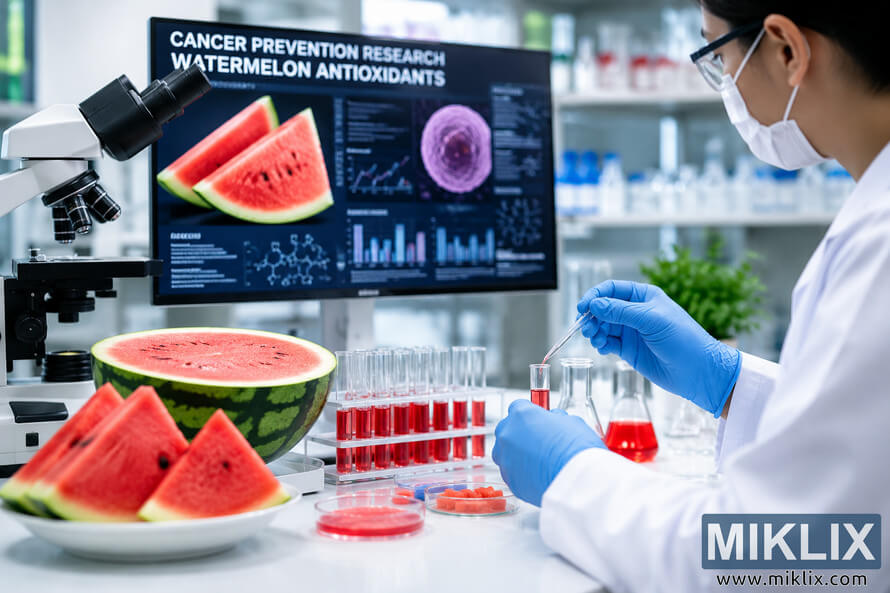
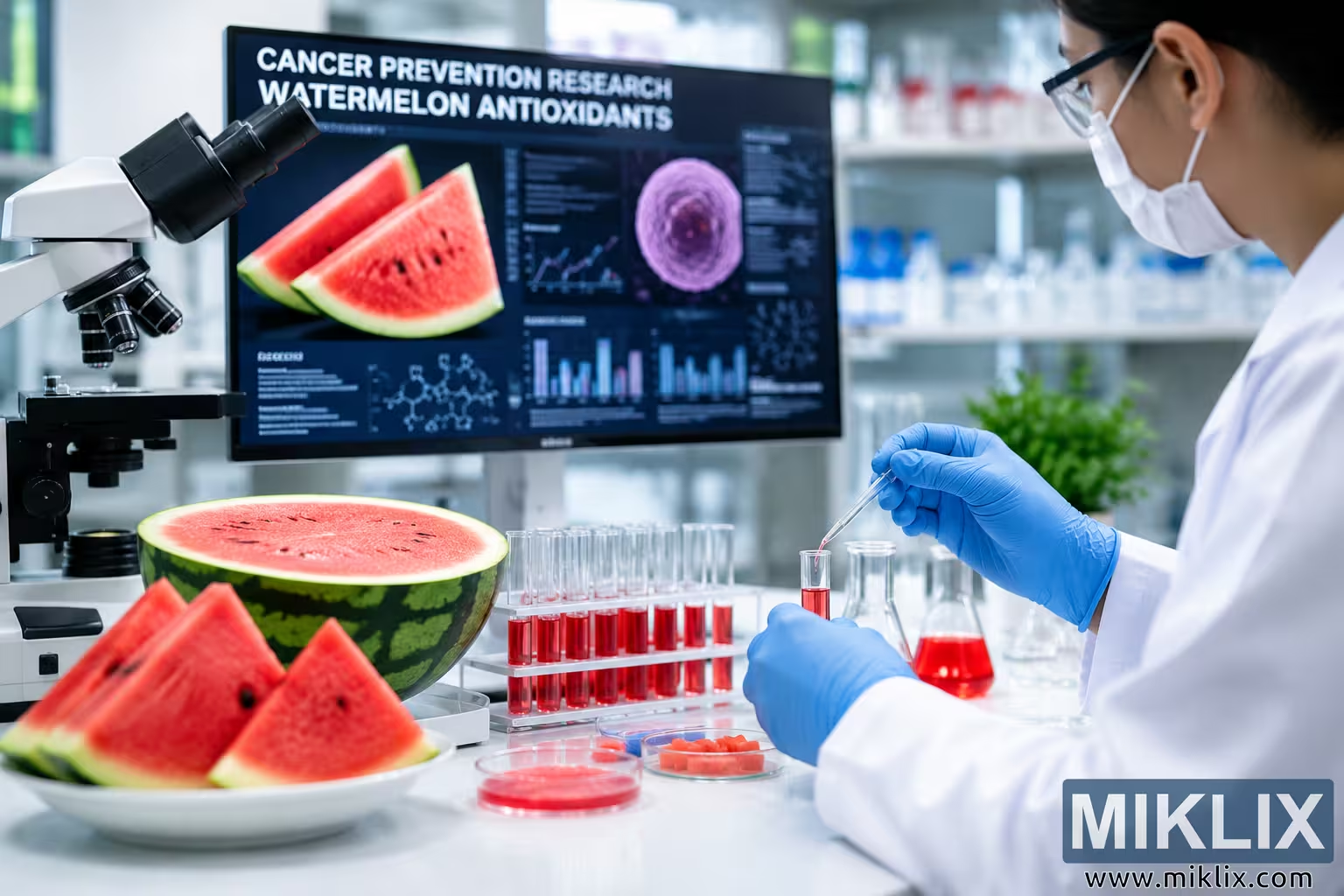
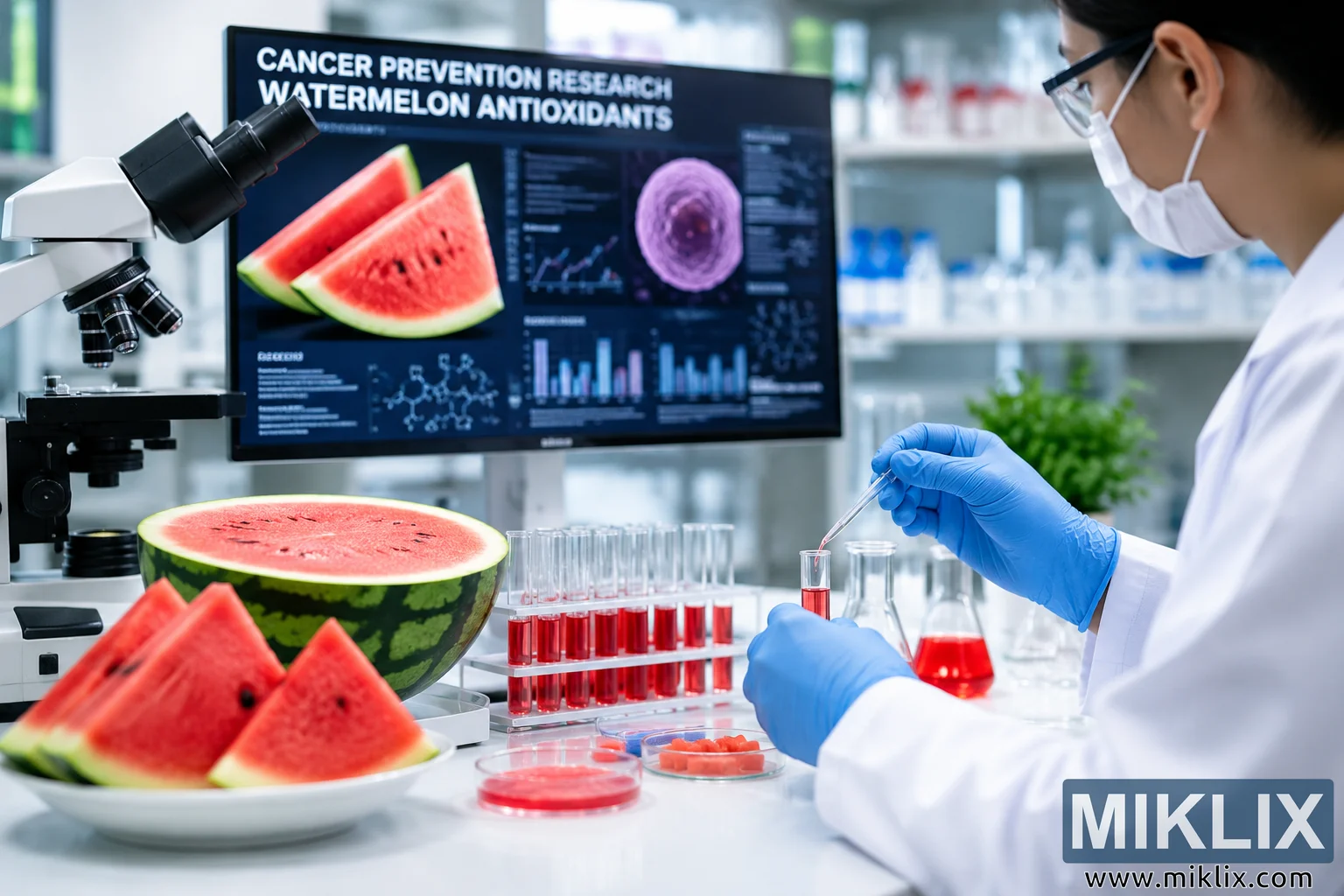
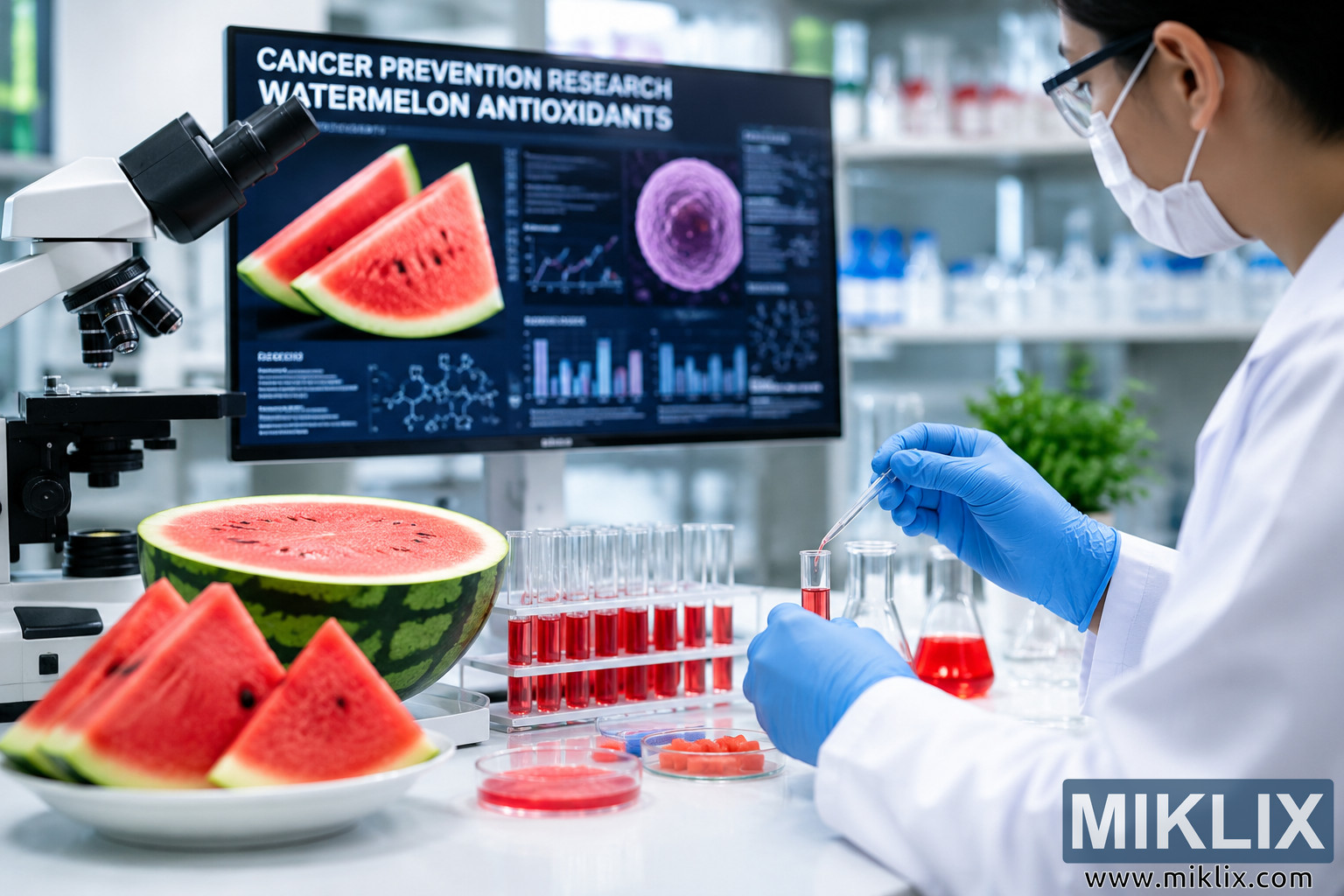
This landscape-oriented illustration presents a bright, contemporary biomedical research laboratory focused on the scientific investigation of antioxidants derived from watermelon and their potential relevance to cancer prevention research. The environment is clean, organized, and illuminated by soft natural and laboratory lighting that emphasizes a clinical yet welcoming atmosphere. The image is clearly conceptual rather than documentary, serving as a visual representation of ongoing nutritional and biomedical research rather than evidence of any specific scientific finding.
On the right side of the composition, a laboratory researcher is dressed in a white lab coat, protective gloves, a face mask, and clear safety glasses. The researcher is carefully transferring a small volume of vivid pink-red liquid into a laboratory test tube using a precision pipette. The posture conveys concentration, precision, and adherence to laboratory best practices. Although the person's facial features are mostly obscured by protective equipment and the viewing angle, the body language communicates careful attention to experimental procedures.
Occupying the left foreground is a high-quality laboratory microscope positioned beside freshly cut watermelon samples. Several triangular slices of watermelon rest on a white plate, while a larger halved watermelon displays its bright red flesh, pale rind, and scattered dark seeds. These fruit samples visually reinforce the research subject by connecting the fresh agricultural product with laboratory analysis. The watermelon appears ripe, vibrant, and freshly prepared, suggesting that samples are being examined for naturally occurring bioactive compounds such as antioxidants.
Across the laboratory bench are multiple scientific instruments and materials. A transparent rack contains numerous glass test tubes filled with liquids in varying shades of red and pink, implying different concentrations or stages of sample preparation. Nearby are laboratory flasks and shallow culture dishes containing similarly colored materials, adding depth and realism to the scientific workspace. The glassware is clean and neatly arranged, contributing to the impression of a carefully managed research environment.
Dominating the central background is a large digital display showing stylized scientific visualizations. The monitor features the prominent heading "Cancer Prevention Research: Watermelon Antioxidants" together with graphical elements including charts, molecular-style diagrams, analytical plots, and a large circular microscopic visualization rendered in shades of purple. These graphics are illustrative rather than representing actual experimental data, symbolizing the analysis of nutritional compounds and biological processes. The display reinforces the central concept of laboratory-based nutrition research while avoiding references to any specific institution or commercial organization.
The background laboratory shelves are softly blurred, containing bottles, laboratory containers, and research supplies that enhance the sense of depth through shallow depth-of-field photography. A small green plant introduces a subtle natural element that contrasts with the predominantly white and stainless-steel laboratory environment, creating a balanced composition between nature and scientific investigation.
The overall color palette combines crisp whites, cool blues, vivid reds, and fresh greens. The white laboratory surfaces emphasize cleanliness, while the bright watermelon flesh and laboratory samples provide strong visual focal points. Blue nitrile gloves and scientific equipment add contrast without distracting from the primary subject. The lighting creates gentle reflections on glass surfaces and polished laboratory instruments, contributing to a realistic, high-resolution appearance.
Conceptually, the image communicates the interdisciplinary relationship between nutrition science, food chemistry, antioxidant research, and biomedical investigation. It illustrates the process of examining naturally occurring plant compounds under controlled laboratory conditions. Importantly, the scene should be interpreted as an artistic representation of scientific research rather than proof of medical efficacy or clinical outcomes. The image does not claim that watermelon antioxidants prevent, treat, or cure cancer, but instead visualizes the broader theme of investigating dietary compounds for their biological properties. No commercial branding, product placement, institutional logos, or identifiable trademarks are visible anywhere in the composition, allowing the focus to remain entirely on scientific inquiry, laboratory methodology, and the conceptual exploration of nutrition-related cancer prevention research.
L'immagine è correlata a: Watermelon: The Hydrating Superfruit You Should Eat More Often