
画像: Proper Mulch Application Around a Quince Tree Base
出版された:
最終更新日 2026年3月5日 21:48:03 UTC
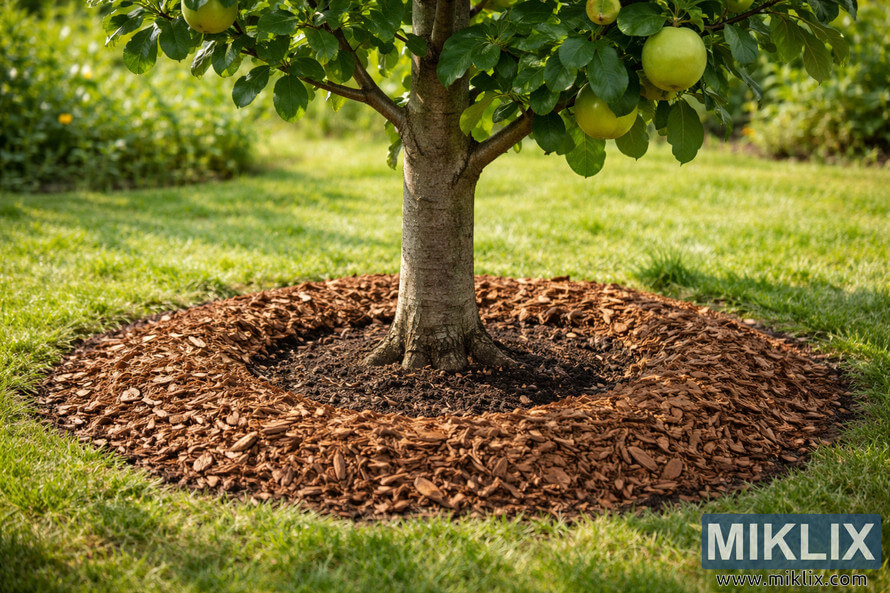
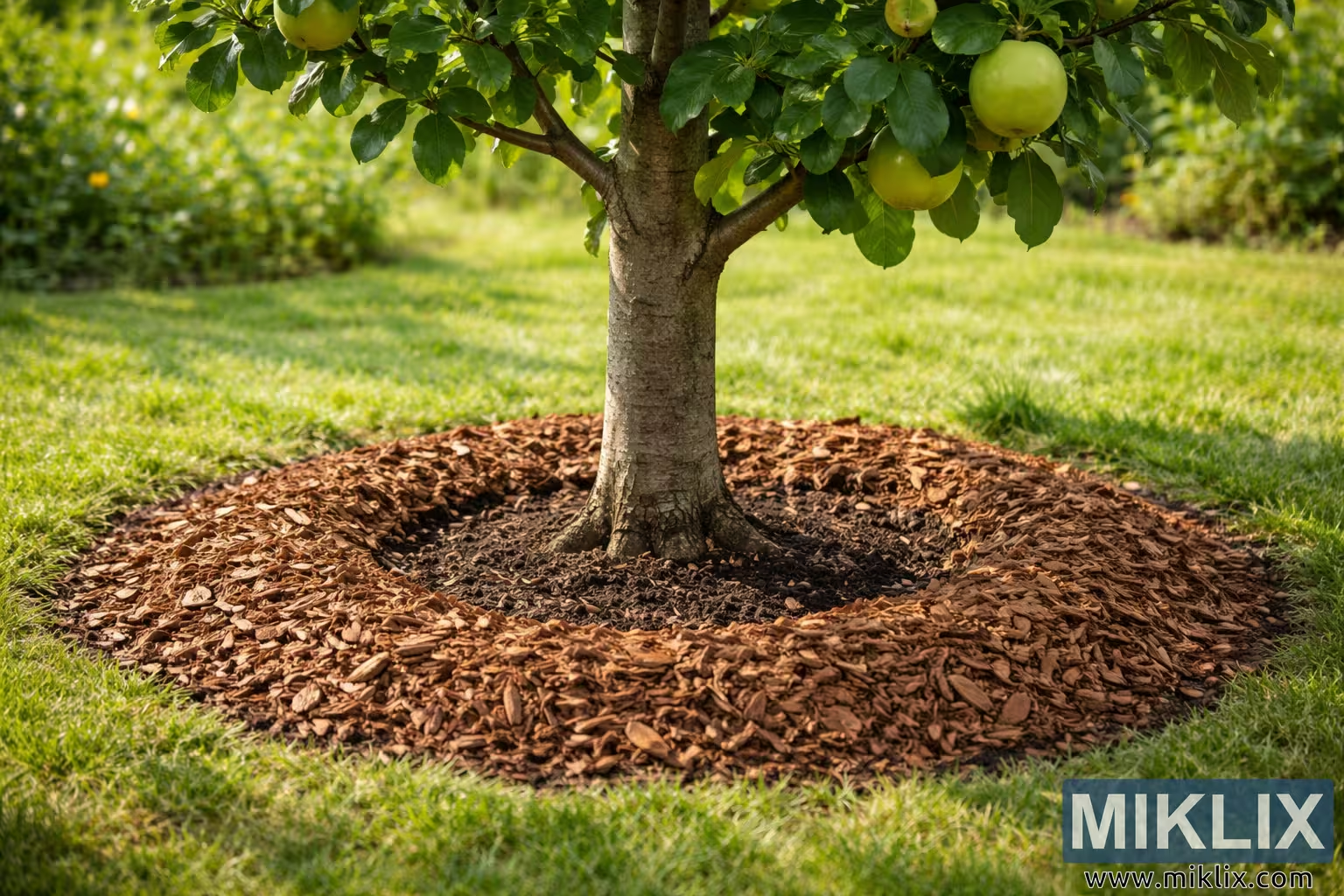
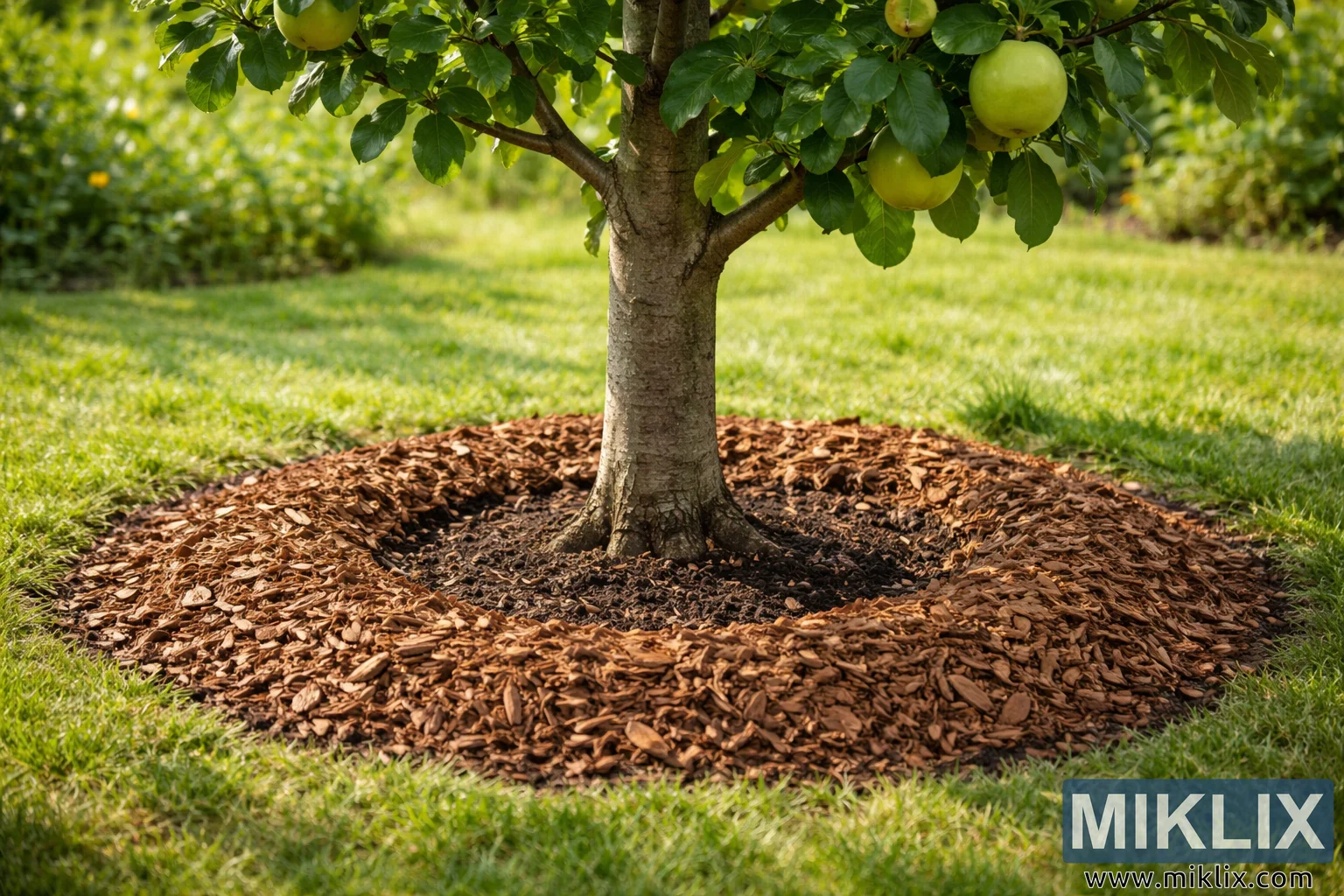
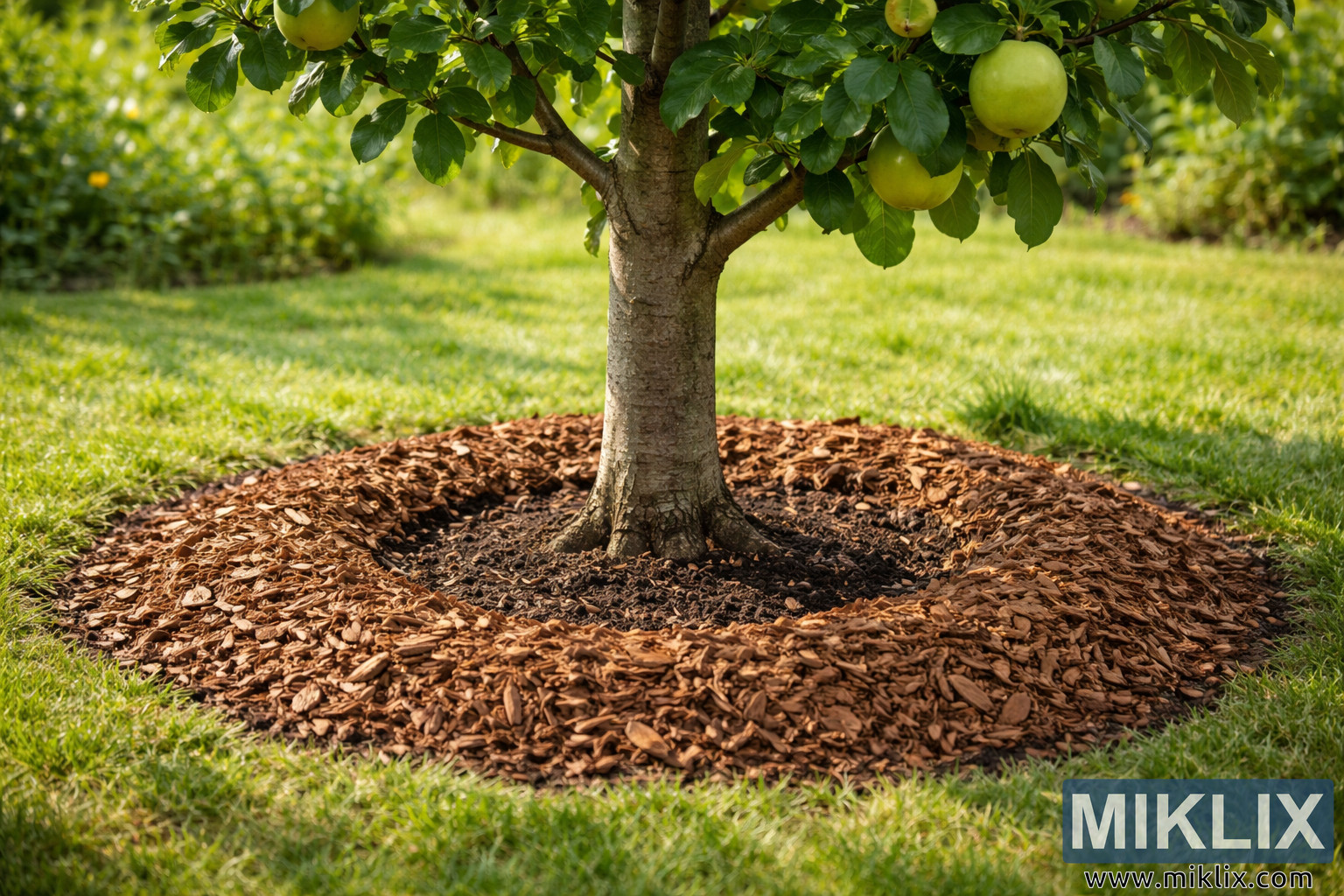
High-resolution landscape image showing correct mulch application around a quince tree, with a visible root flare and a wide, evenly spread ring of wood chips.
Proper Mulch Application Around a Quince Tree Base
この画像の利用可能なバージョン
以下のダウンロード可能な画像ファイルは、帯域幅の消費を抑えるためにファイルサイズが最適化されている当ウェブサイトの記事やページに埋め込まれている画像よりも、圧縮率が低く、解像度が高く、その結果、品質が高くなっています。
レギュラーサイズ (1,536 x 1,024)
大きいサイズ (3,072 x 2,048)
非常に大きなサイズ (4,608 x 3,072)
特大サイズ (6,144 x 4,096)
非常に大きなサイズ (1,048,576 x 699,051)
- まだアップロード中だ。)
画像説明
This high-resolution landscape photograph presents a carefully mulched quince tree growing in a well-maintained garden setting. The composition centers on the lower trunk and root flare of the tree, clearly illustrating proper mulch application techniques. The trunk rises vertically from the soil, its textured gray-brown bark sharply defined in the crisp natural light. At the base, the root flare is fully visible above the soil line, demonstrating correct planting depth and ensuring the tree’s health and long-term stability.
Surrounding the base is a wide, evenly distributed ring of organic wood chip mulch. The mulch forms a neat, circular layer extending outward several feet from the trunk, creating a distinct boundary between the tree’s planting area and the surrounding green lawn. Importantly, the mulch is pulled back several inches from the trunk itself, preventing direct contact with the bark. This visible gap avoids the common mistake known as “volcano mulching,” where mulch is piled against the trunk and can cause moisture buildup, rot, and pest problems. Instead, the mulch is applied in a flat, slightly mounded layer that gently tapers toward the outer edge, promoting water infiltration while protecting the root zone.
The wood chips are medium-sized and uniformly spread, providing a consistent texture and warm, earthy color contrast against the vibrant green grass. Beneath the mulch, dark, rich soil is visible in small sections near the trunk, reinforcing the sense of proper ground preparation. The mulch layer appears to be approximately two to three inches thick, which is ideal for moisture retention, temperature regulation, and weed suppression without suffocating the roots.
Above the base, the quince tree displays healthy foliage. Glossy green leaves catch the sunlight filtering through the canopy, and several ripening yellow-green quinces hang from the branches, suggesting late summer or early autumn. The background is softly blurred, keeping attention focused on the tree’s base and the correct mulching technique while still conveying a lush, thriving garden environment.
Overall, the image serves as a clear visual example of best practices for mulching around fruit trees. It highlights the importance of maintaining a visible root flare, keeping mulch away from the trunk, applying an appropriate depth, and extending the mulch ring outward to cover the critical root zone. The scene communicates both horticultural care and aesthetic order, demonstrating how proper mulch application supports tree health while enhancing the overall appearance of a landscape.
画像は関連するものです: Complete Guide to Growing Your Own Quince Trees