
画像: Onion Plant Infected with White Rot Disease in Soil
出版された:
最終更新日 2026年3月22日 21:44:06 UTC
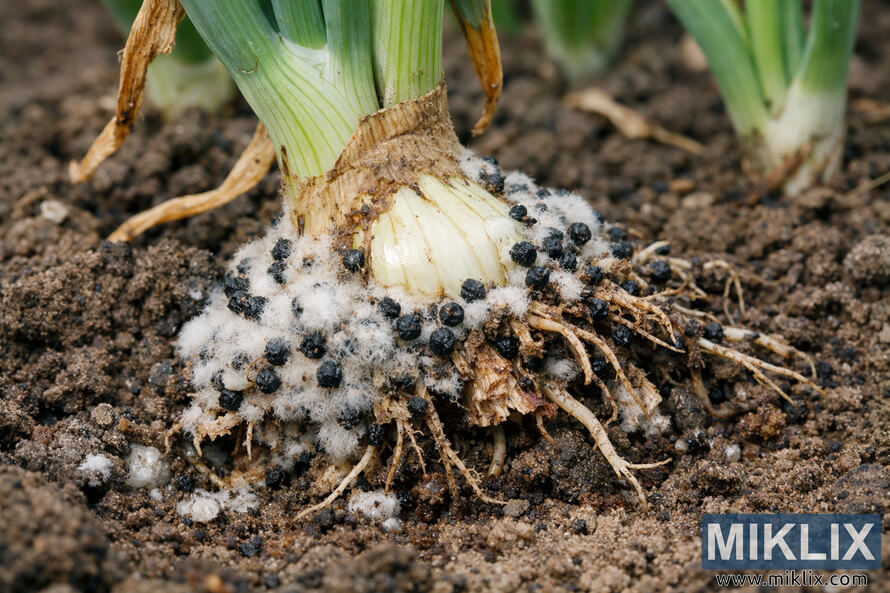
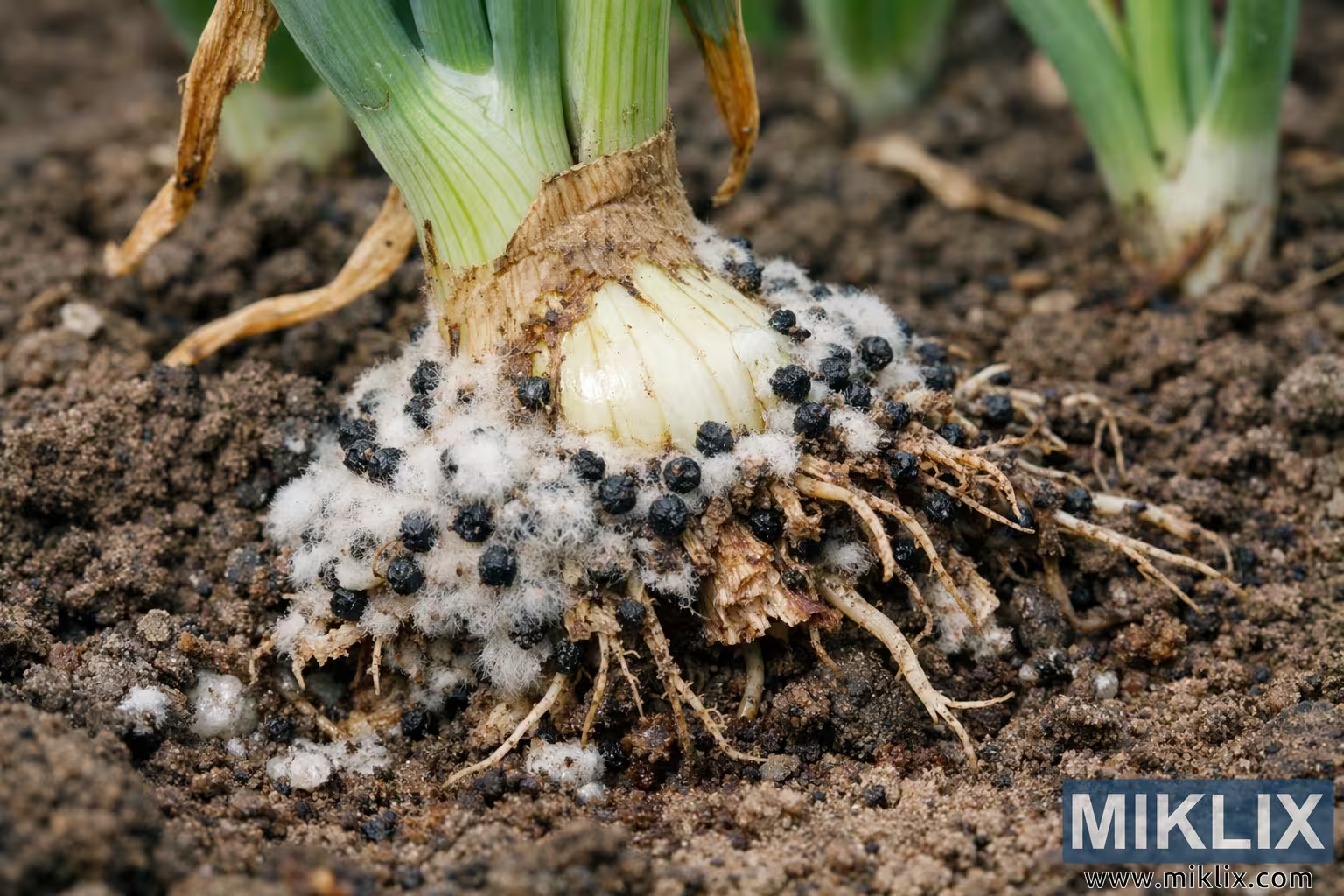
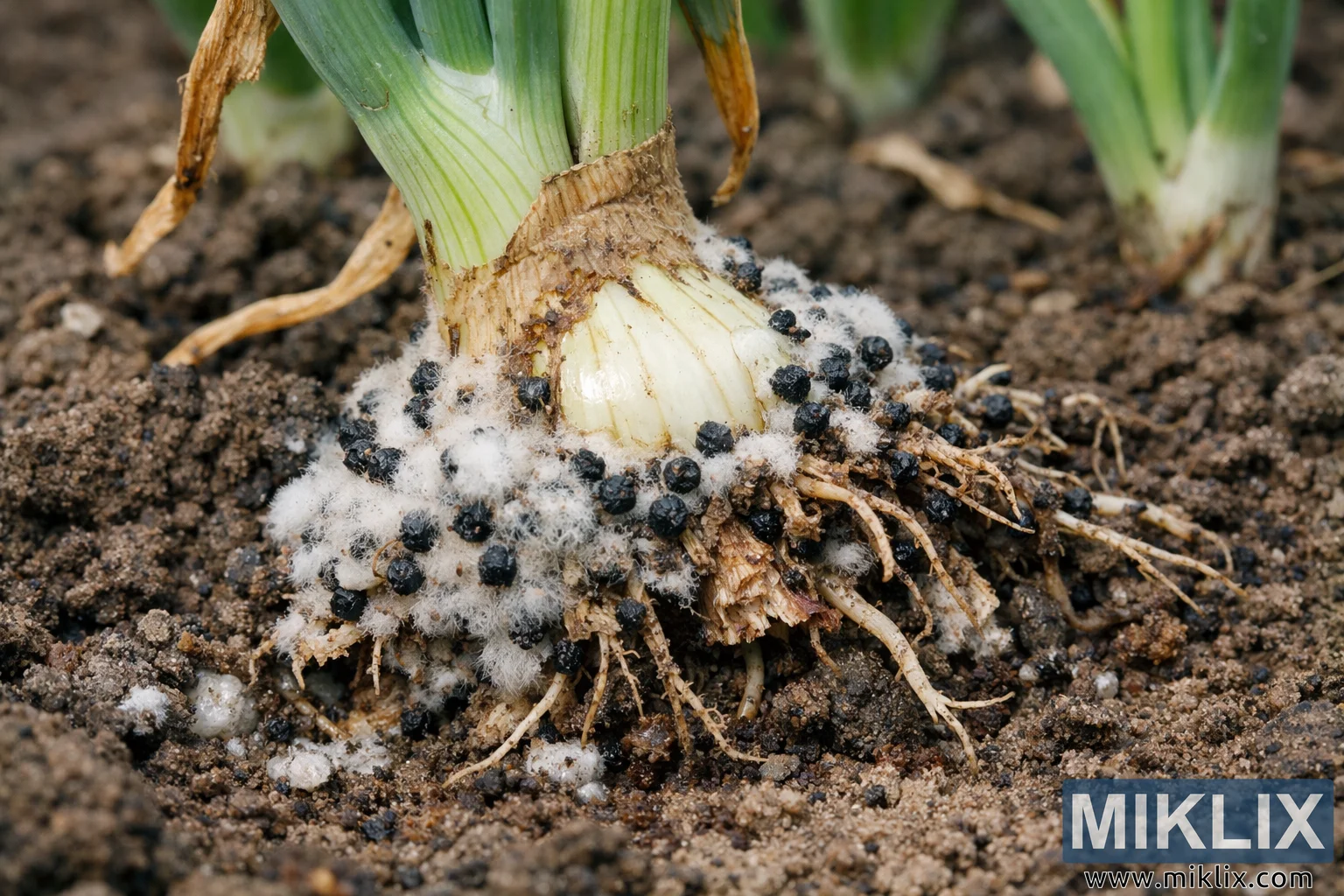
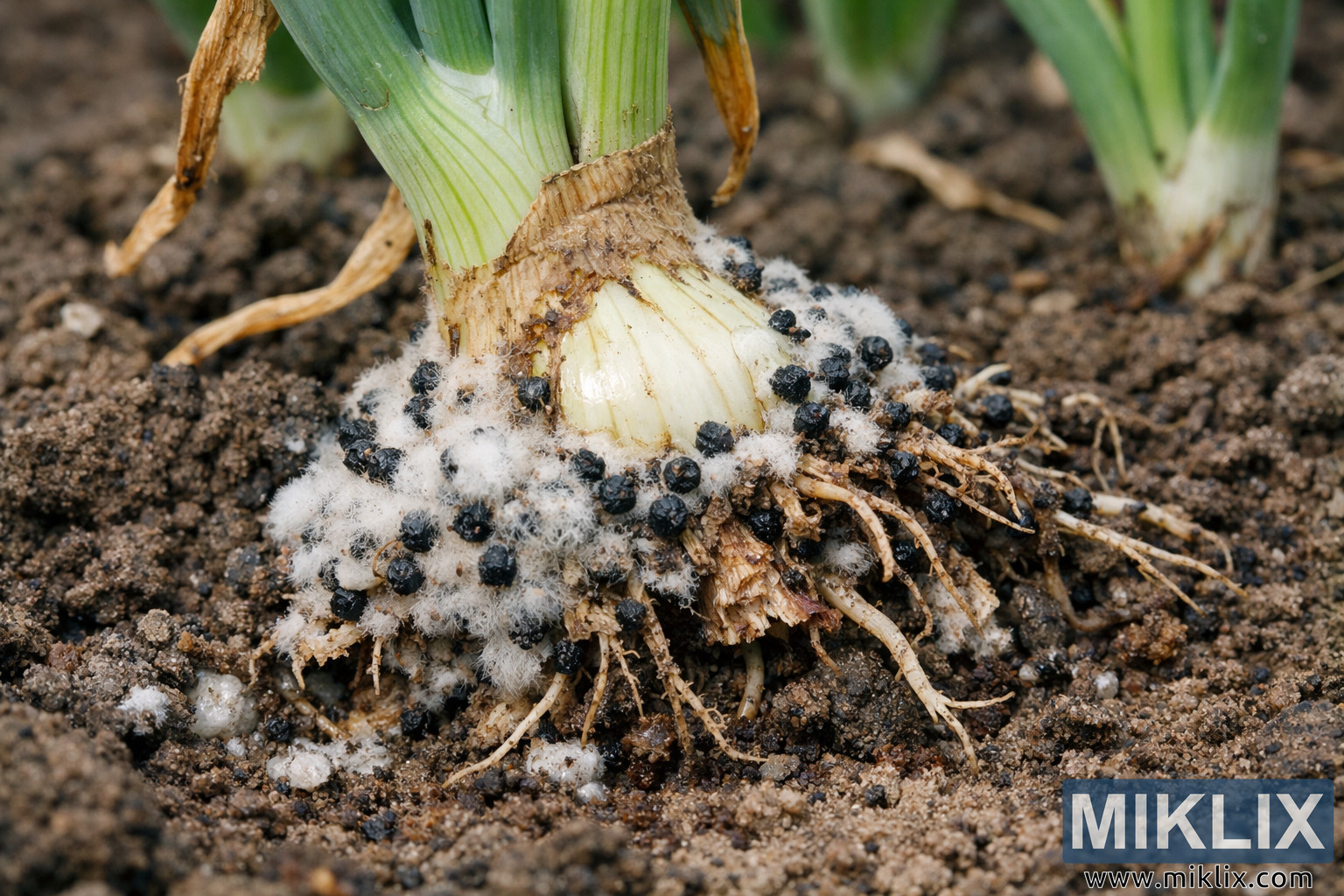
Detailed close-up image of an onion plant infected with onion white rot disease, showing white fungal growth and black sclerotia around the bulb and roots in moist soil.
Onion Plant Infected with White Rot Disease in Soil
この画像の利用可能なバージョン
以下のダウンロード可能な画像ファイルは、帯域幅の消費を抑えるためにファイルサイズが最適化されている当ウェブサイトの記事やページに埋め込まれている画像よりも、圧縮率が低く、解像度が高く、その結果、品質が高くなっています。
レギュラーサイズ (1,536 x 1,024)
大きいサイズ (3,072 x 2,048)
非常に大きなサイズ (4,608 x 3,072)
特大サイズ (6,144 x 4,096)
非常に大きなサイズ (1,048,576 x 699,051)
- まだアップロード中だ。)
画像説明
A highly detailed, close-up landscape image shows a shallow onion plant growing in dark, slightly moist soil while clearly exhibiting symptoms of Onion White Rot Disease. The central focus of the image is the partially exposed onion bulb emerging from the soil surface. Surrounding the base of the bulb and the root zone is a dense layer of white, cotton-like fungal mycelium that spreads outward across the soil particles and decaying plant tissue. Embedded within this white fungal growth are numerous small, round, black sclerotia that resemble tiny seeds or grains of pepper. These structures are scattered densely around the base of the plant and cling to the fungal mat covering the bulb and roots.
The onion bulb itself appears pale and slightly glossy, with its outer layers still intact but showing subtle signs of deterioration near the base where the fungal infection is most active. The lower stem, where the bulb transitions into the leaves, shows light discoloration and slight browning around the neck area. From this neck, several upright green onion leaves extend upward and slightly out of frame. While the leaves are mostly green, the tips of some leaves show early signs of stress, including mild yellowing and slight drying at the edges.
The root system is partially exposed and clearly visible beneath the bulb. Many of the roots appear damaged or decaying, tangled within the fungal growth. The white mycelium wraps around these roots, forming a thick, fuzzy coating that spreads outward across the surrounding soil surface. The soil itself appears granular and textured, composed of small clumps and particles of sand and organic matter. Tiny fragments of soil adhere to the fungal mat and the decaying plant tissue.
In the softly blurred background, additional onion plants can be seen emerging from the soil, suggesting that the plant is growing within a cultivated garden bed or agricultural field. The shallow depth of field keeps the infected plant sharply in focus while the background plants remain out of focus, emphasizing the disease symptoms at the base of the primary onion. Natural daylight illuminates the scene evenly, highlighting the contrast between the white fungal growth, the dark soil, and the pale onion bulb. The overall composition visually documents the characteristic signs of Onion White Rot Disease, particularly the white fungal mycelium and distinctive black sclerotia clustered around the bulb and root zone.
画像は関連するものです: Growing Shallots: Your Complete Guide to a Bountiful Harvest