
画像: Bee Pollinating a Watermelon Flower in Natural Garden Setting
出版された:
最終更新日 2026年3月27日 17:51:39 UTC
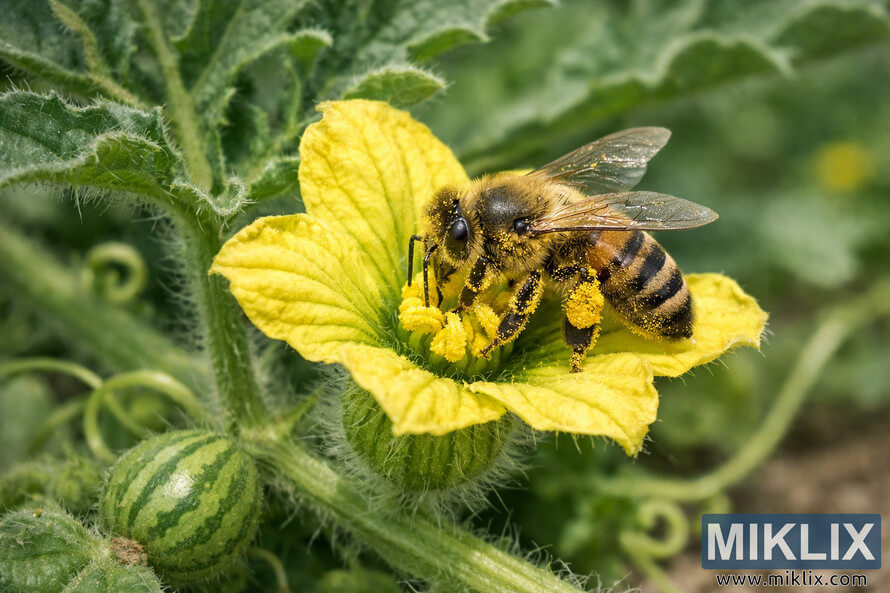
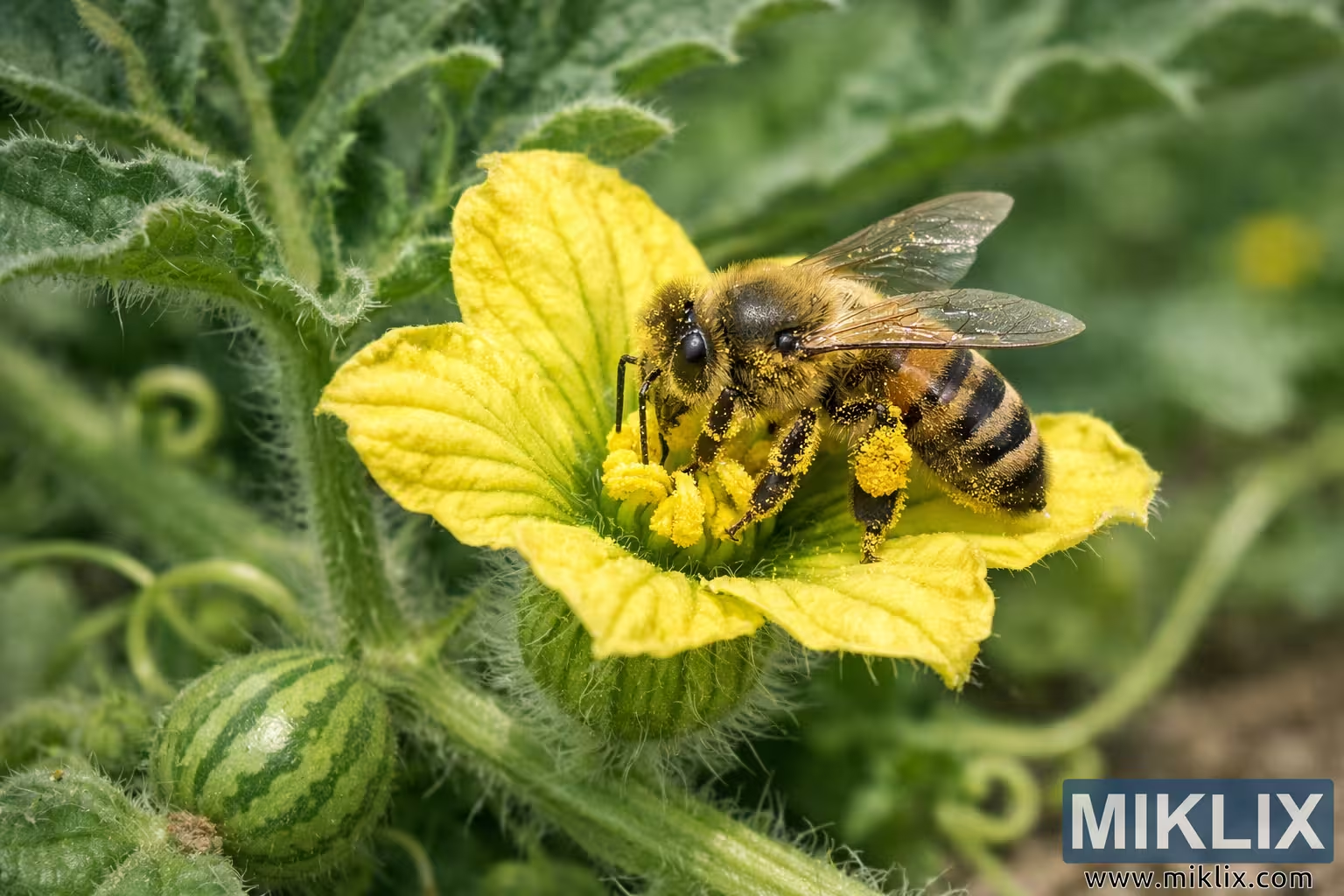
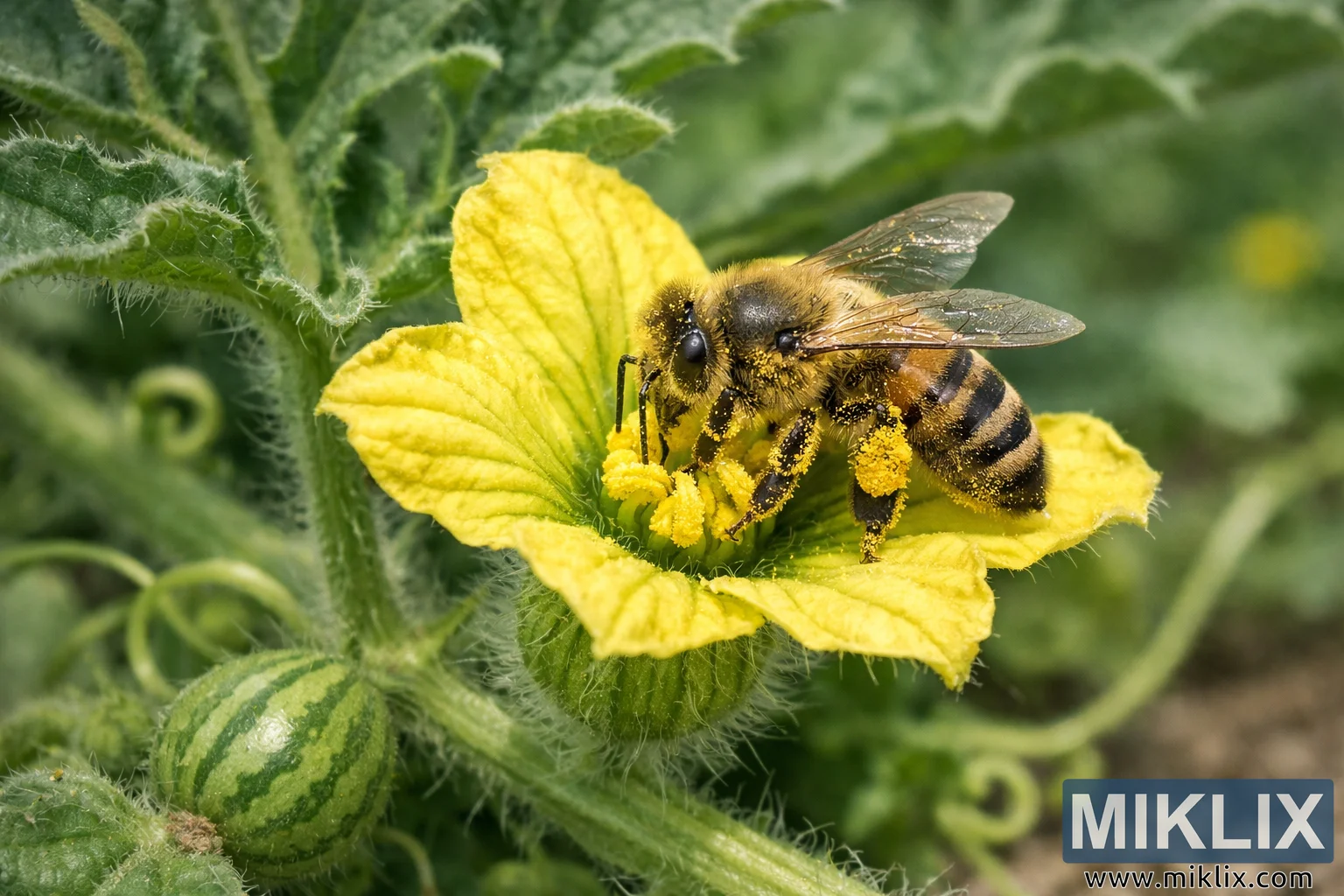
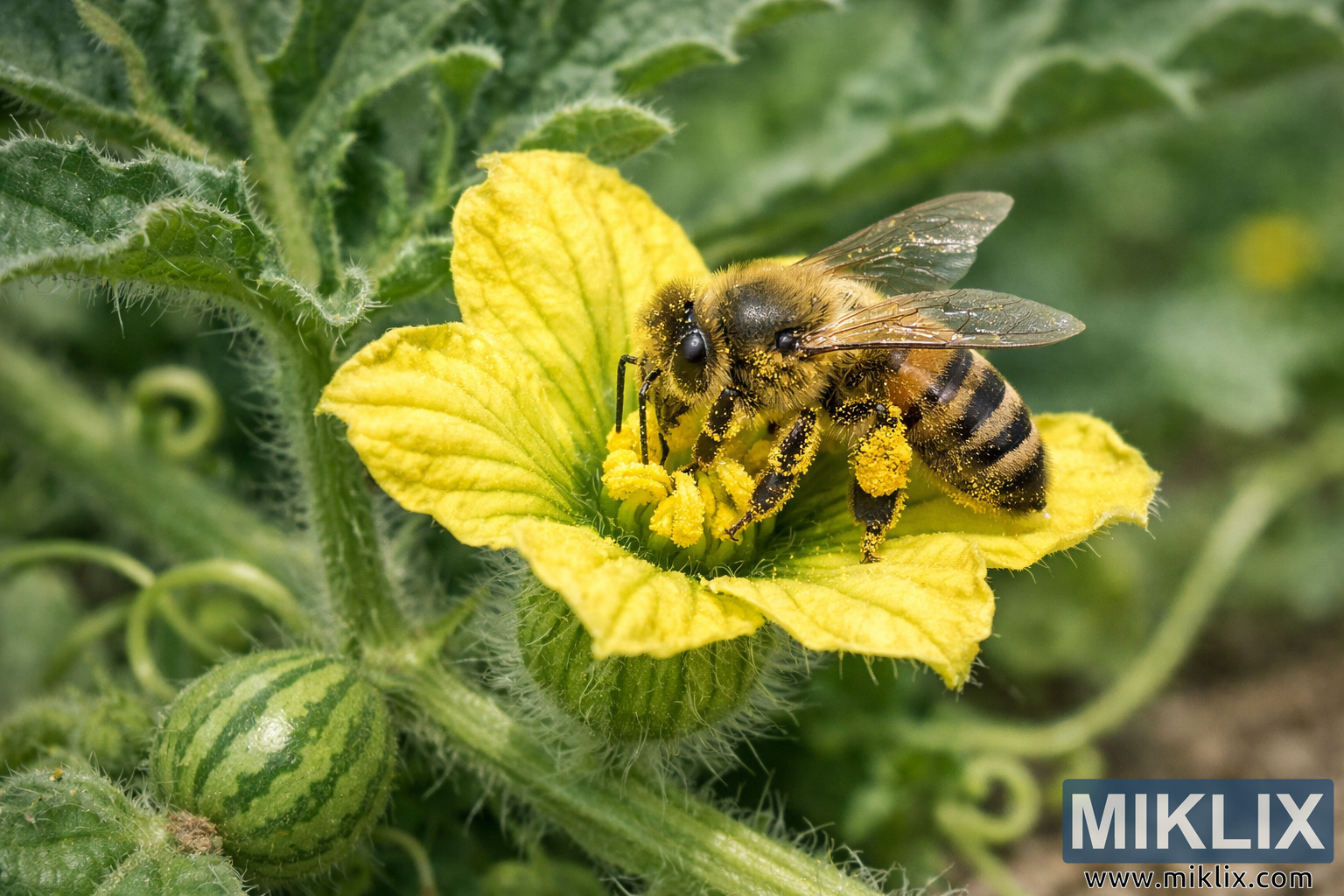
Macro photo of a honeybee pollinating a yellow watermelon flower, illustrating the natural pollination process essential for watermelon fruit development.
Bee Pollinating a Watermelon Flower in Natural Garden Setting
この画像の利用可能なバージョン
以下のダウンロード可能な画像ファイルは、帯域幅の消費を抑えるためにファイルサイズが最適化されている当ウェブサイトの記事やページに埋め込まれている画像よりも、圧縮率が低く、解像度が高く、その結果、品質が高くなっています。
レギュラーサイズ (1,536 x 1,024)
大きいサイズ (3,072 x 2,048)
非常に大きなサイズ (4,608 x 3,072)
特大サイズ (6,144 x 4,096)
非常に大きなサイズ (1,048,576 x 699,051)
- まだアップロード中だ。)
画像説明
A detailed macro photograph shows a honeybee actively pollinating a bright yellow watermelon flower in a natural garden environment. The scene captures a single honeybee positioned on the center of the blossom as it collects nectar and pollen. The bee’s body is covered with fine grains of yellow pollen, especially visible on its legs and the hairs of its thorax and abdomen. Its translucent wings extend slightly backward and catch soft natural light, revealing delicate veins and subtle reflections.
The watermelon flower has wide, gently curved petals with a vivid golden-yellow color and a textured surface that radiates from the flower’s center. The reproductive structures of the flower are clearly visible beneath the bee, where the insect is making contact with pollen-bearing parts of the bloom. This interaction illustrates the natural pollination process: as the bee gathers nectar and pollen for food, it simultaneously transfers pollen between flowers, enabling fertilization and the development of fruit.
Surrounding the flower are the characteristic fuzzy stems and curling tendrils of a watermelon vine. The plant’s green leaves and stems are covered with fine hairs, adding texture and realism to the scene. Just below the blossom, a small developing watermelon fruit can be seen attached to the vine. The young fruit has a round shape with distinct light and dark green stripes, indicating an early stage of growth that follows successful pollination.
The background is softly blurred with shades of green, suggesting additional foliage and plants in the garden while keeping the focus on the bee and the flower. This shallow depth of field emphasizes the pollination moment and highlights the relationship between the pollinator and the plant.
Overall, the image illustrates an important ecological interaction between insects and flowering crops. Bees play a crucial role in agriculture by transferring pollen between flowers, which enables fruit formation in many plants including watermelons. The photograph captures this natural process in action, combining fine detail, vibrant color, and a clear demonstration of how pollinators support plant reproduction and food production.
画像は関連するものです: Growing Watermelons: Your Complete Guide to Juicy, Homegrown Success