
画像: Healthy vs Problematic Mustard Plants in Garden Comparison
出版された:
最終更新日 2026年3月7日 18:30:02 UTC
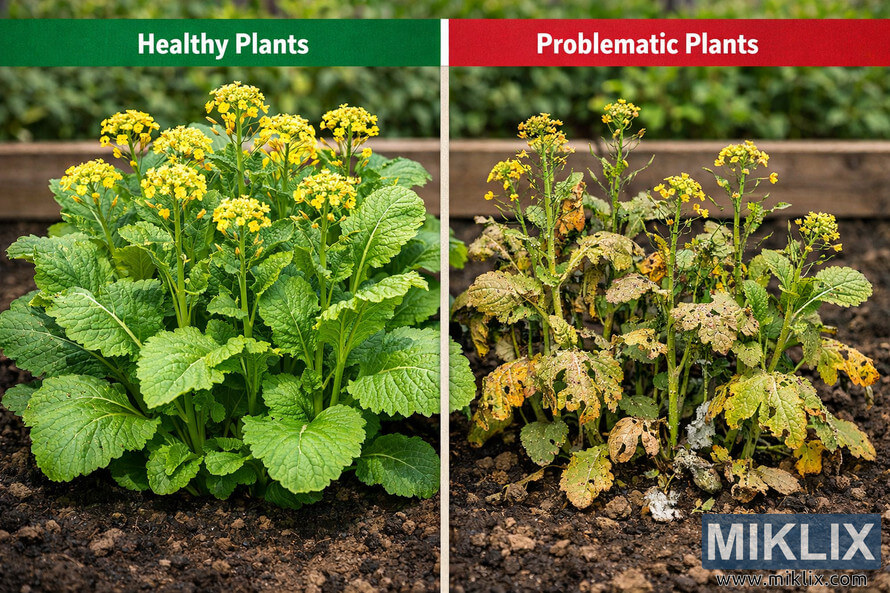
Landscape photo comparing thriving mustard plants with vibrant foliage and blooms to struggling plants affected by pests, discoloration, and poor soil conditions in a garden setting.
Healthy vs Problematic Mustard Plants in Garden Comparison
この画像の利用可能なバージョン
以下のダウンロード可能な画像ファイルは、帯域幅の消費を抑えるためにファイルサイズが最適化されている当ウェブサイトの記事やページに埋め込まれている画像よりも、圧縮率が低く、解像度が高く、その結果、品質が高くなっています。
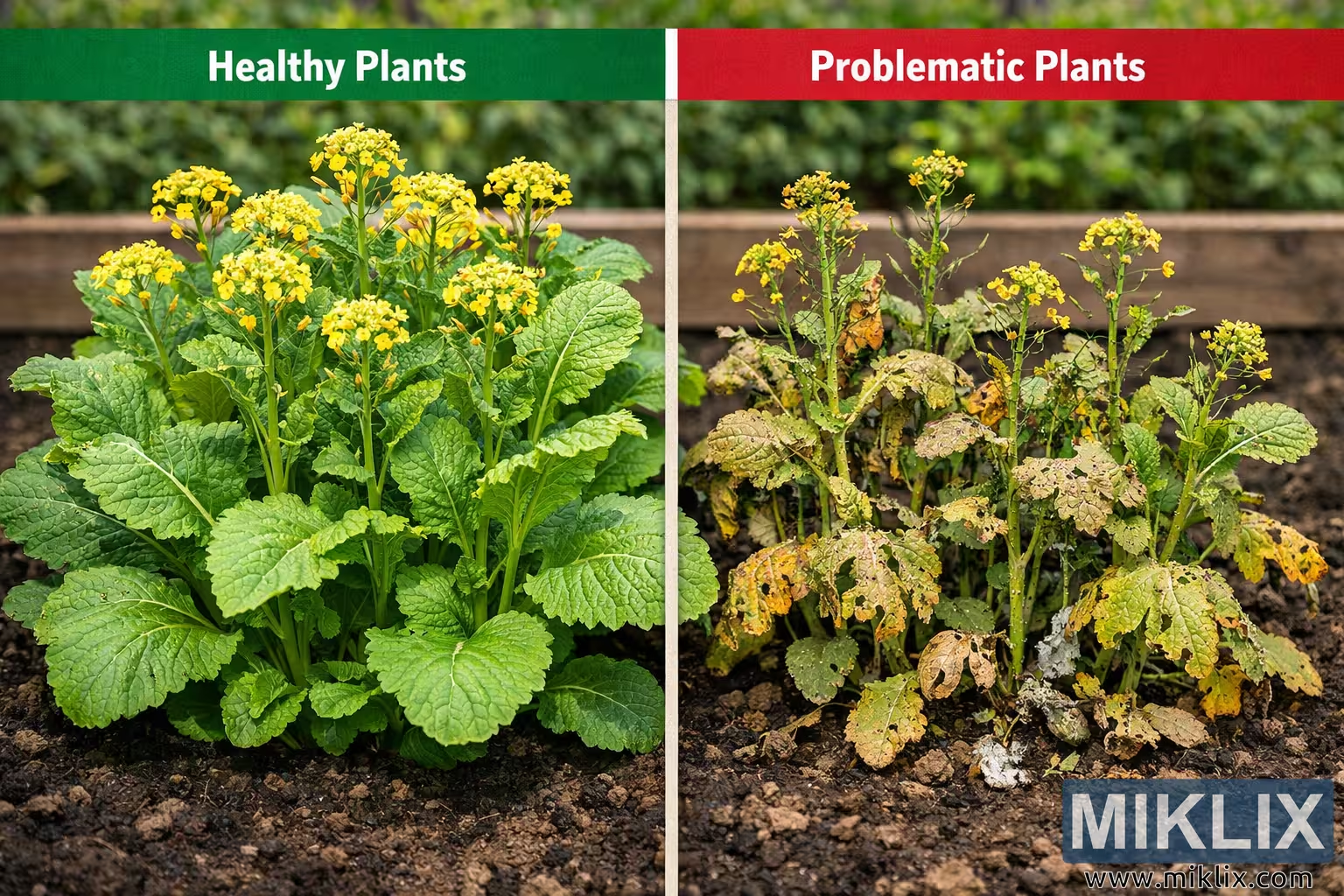
レギュラーサイズ (1,536 x 1,024)
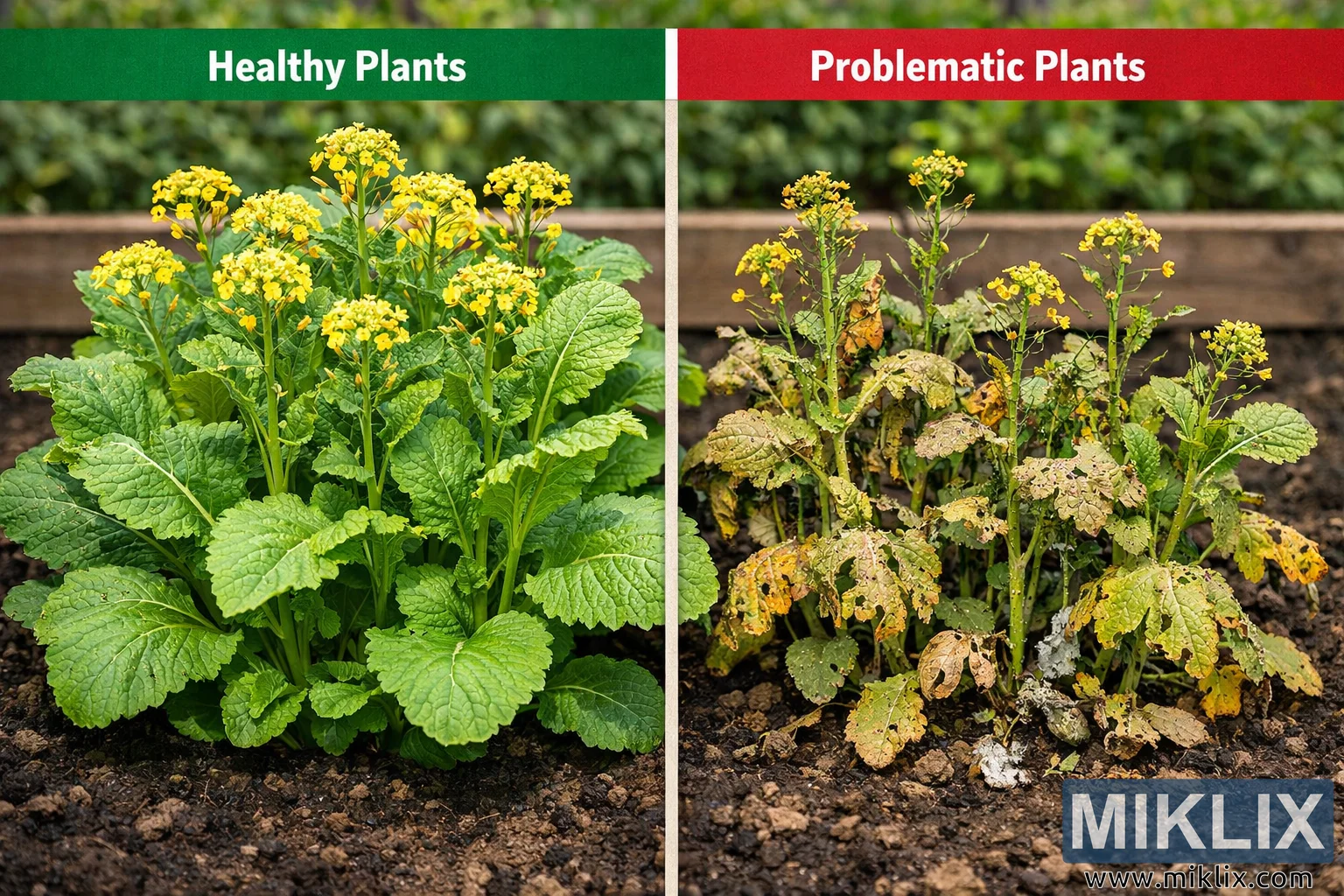
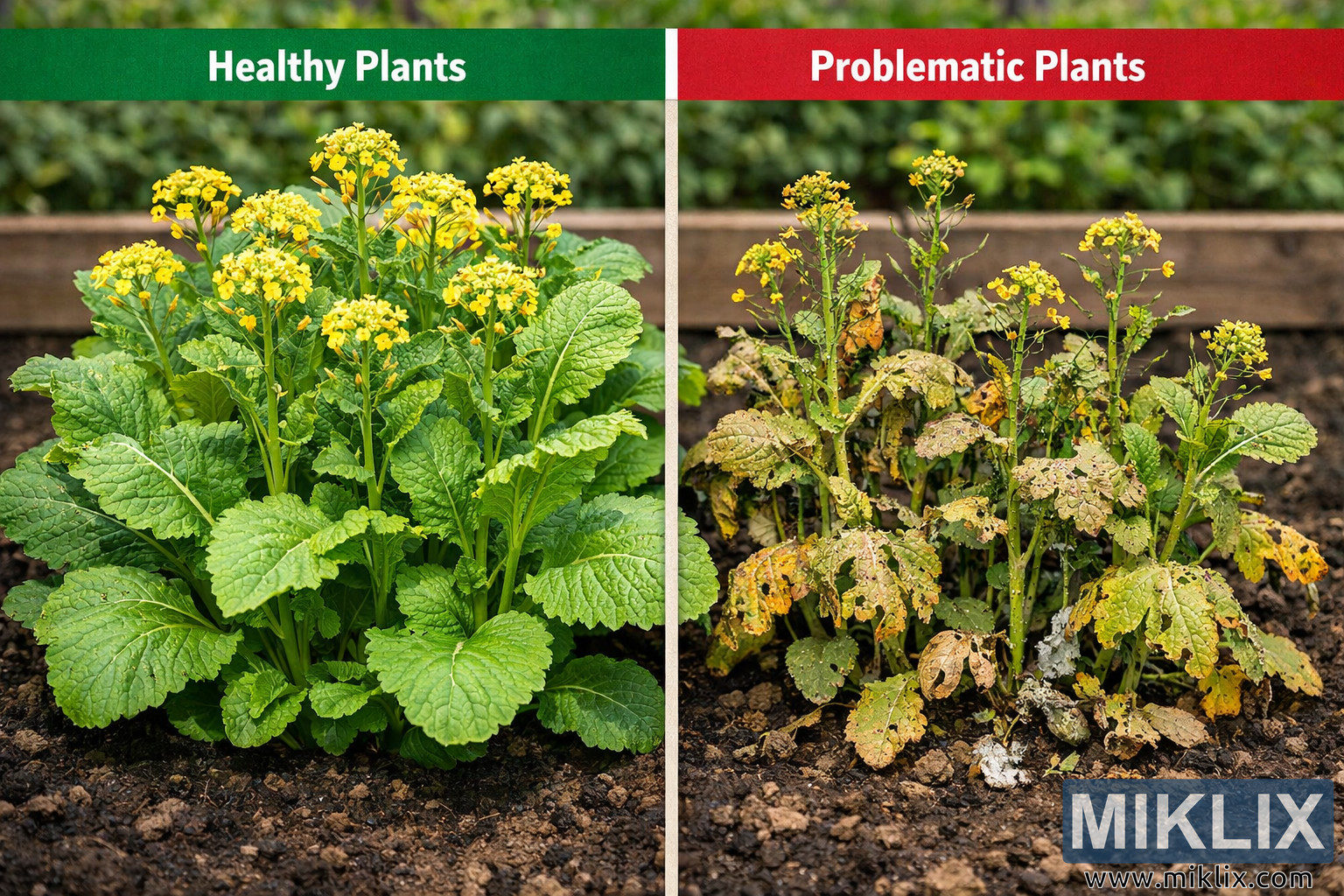
大きいサイズ (3,072 x 2,048)
非常に大きなサイズ (4,608 x 3,072)
特大サイズ (6,144 x 4,096)
非常に大きなサイズ (1,048,576 x 699,051)
- まだアップロード中だ。)
画像説明
This high-resolution landscape photograph presents a clear side-by-side comparison of mustard plants growing in a garden bed, visually contrasting healthy growth with problematic development. The composition is divided vertically into two equal sections, creating a direct visual study of plant condition under similar environmental circumstances. On the left side, the healthy mustard plants appear vigorous and well-established. Their leaves are broad, richly green, and slightly textured with visible veins, indicating strong nutrient uptake and proper hydration. The foliage looks dense and layered, forming a compact cluster that spreads outward from sturdy, upright stems. Above the leafy base, small clusters of bright yellow flowers bloom confidently, adding height and signaling active growth and reproductive vitality. The soil beneath these plants appears dark, moist, and crumbly, suggesting good organic content and appropriate watering. The overall impression on this side is one of balance, vitality, and optimal garden care.
In contrast, the right side of the image shows mustard plants that are clearly under stress. The leaves are discolored, with shades of pale green, yellow, and brown indicating nutrient deficiencies or disease. Many leaves display irregular holes and ragged edges, evidence of pest damage. Some foliage appears wilted or curled, and certain stems look thinner and less robust compared to the healthy plants. A few flower clusters remain, but they are smaller and less vibrant, suggesting that the plant’s energy is compromised. The soil on this side looks lighter, drier, and slightly compacted, with small cracks and a rougher texture that may point to inconsistent watering or poorer soil structure. Subtle signs of mold or residue on lower leaves further reinforce the impression of disease or environmental stress.
A narrow divider between the two sections emphasizes the contrast, guiding the viewer’s eye from flourishing growth to decline. The background remains softly blurred, keeping the focus on the plants and allowing the differences in leaf color, texture, and structural strength to stand out prominently. The lighting appears natural and even, as if captured during daylight hours, enhancing the authenticity of the garden setting. Together, the two halves of the photograph function as an educational visual comparison, demonstrating how soil quality, moisture levels, pest management, and overall care directly influence the health and productivity of mustard plants in a home garden environment.
画像は関連するものです: Complete Guide to Growing Your Own Mustard Plants