
surati Organized Homebrewing Workspace with Belma Hops and Brewing Equipment
გამოქვეყნებულია:
ბოლო განახლება: 15 სექტემბერი, 2026, 17:18:09 UTC
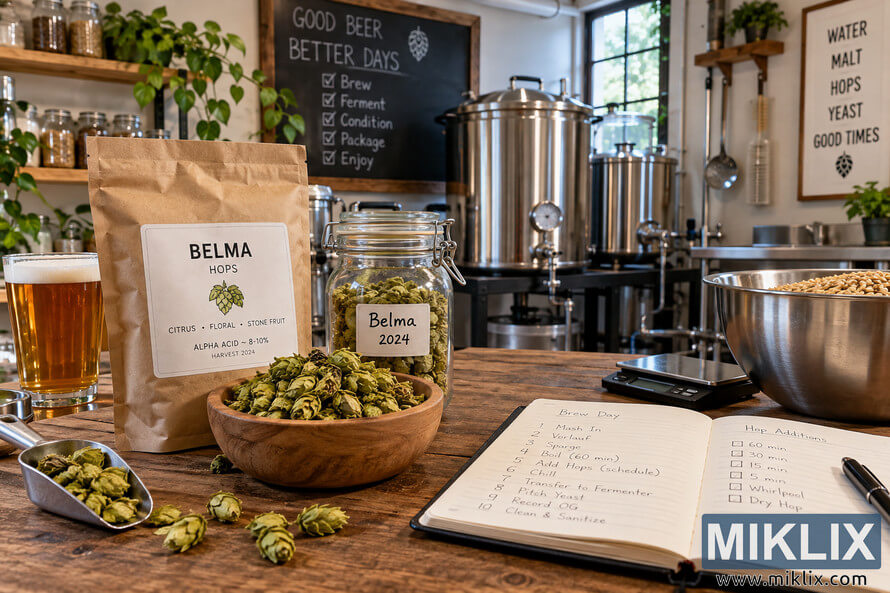
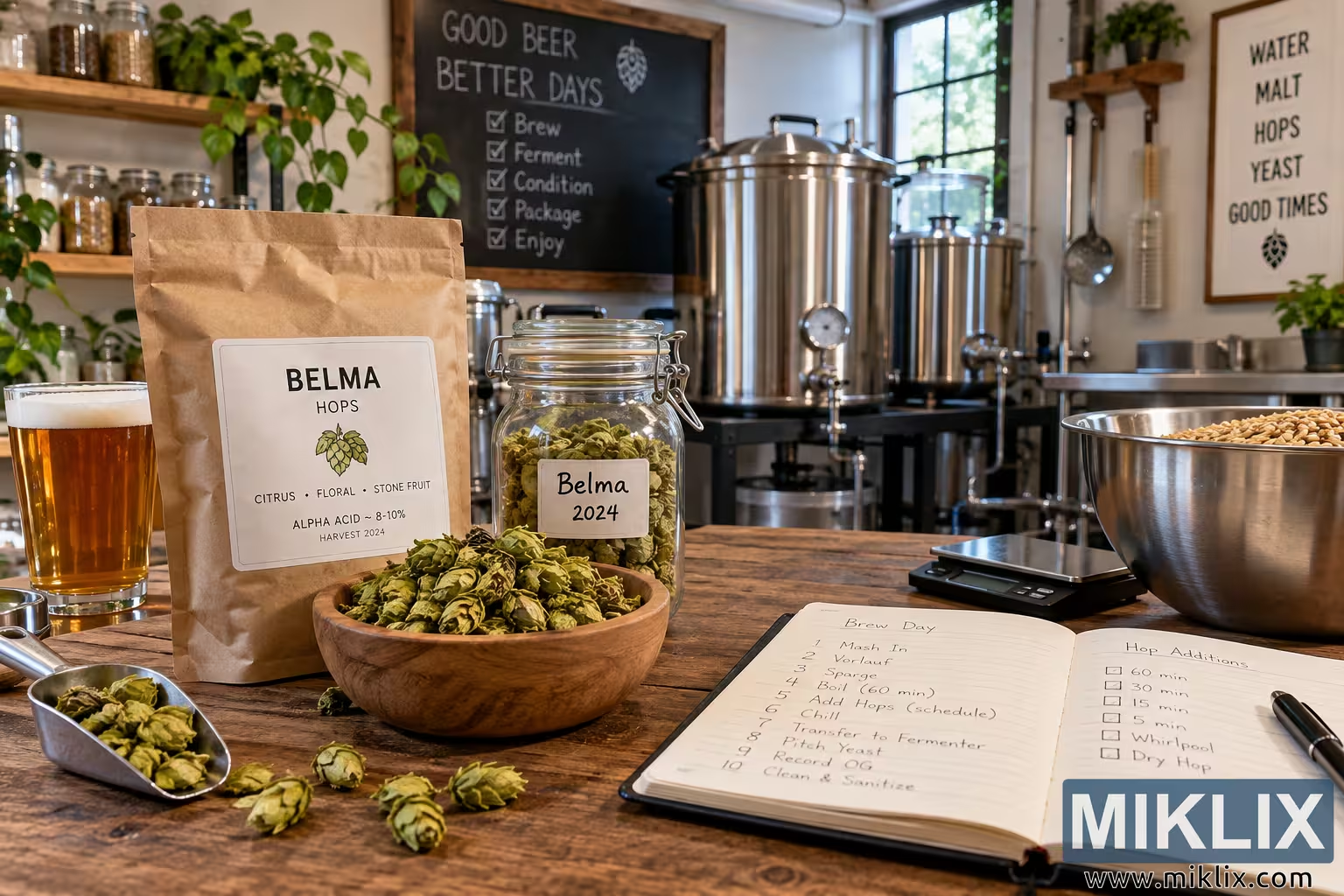
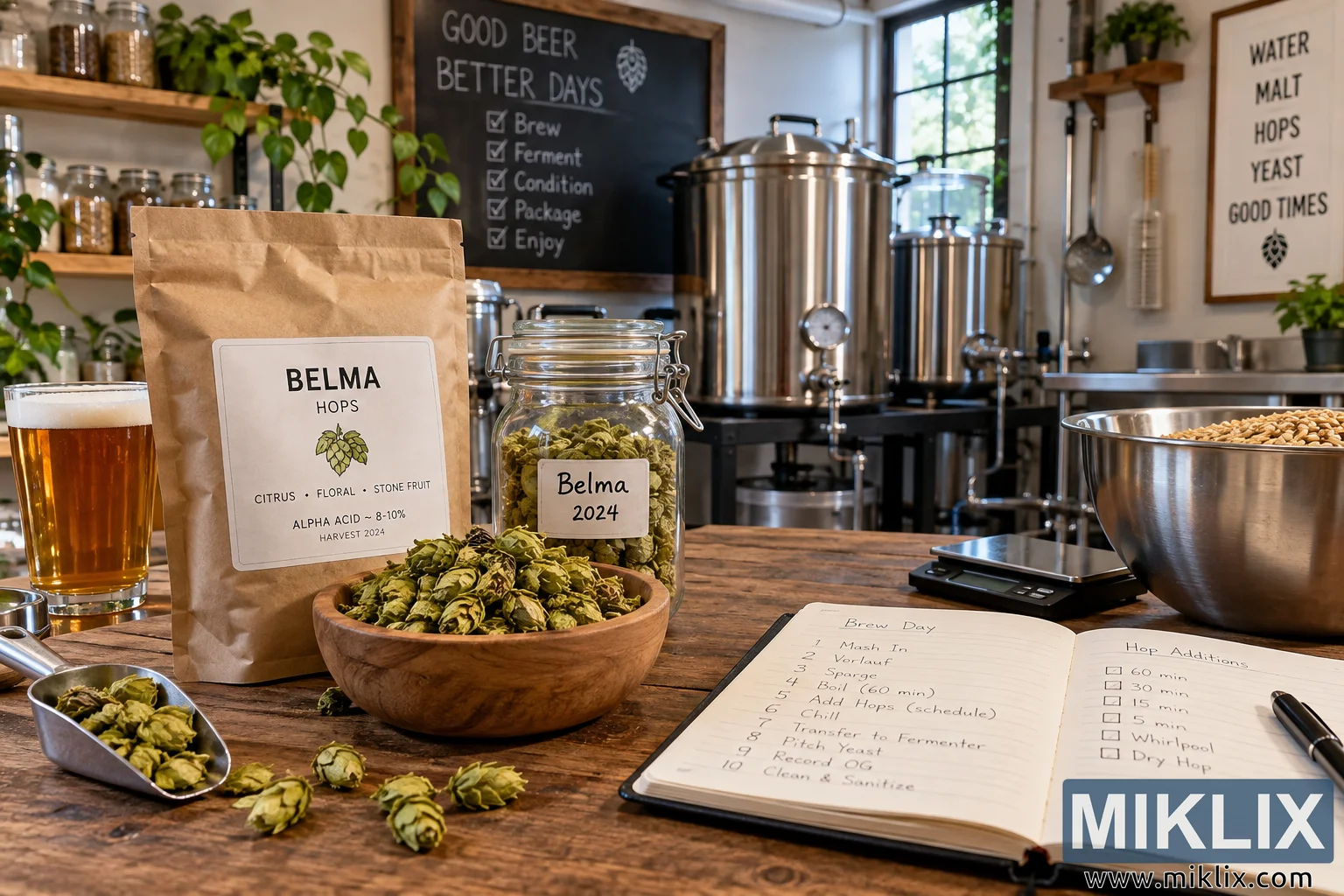
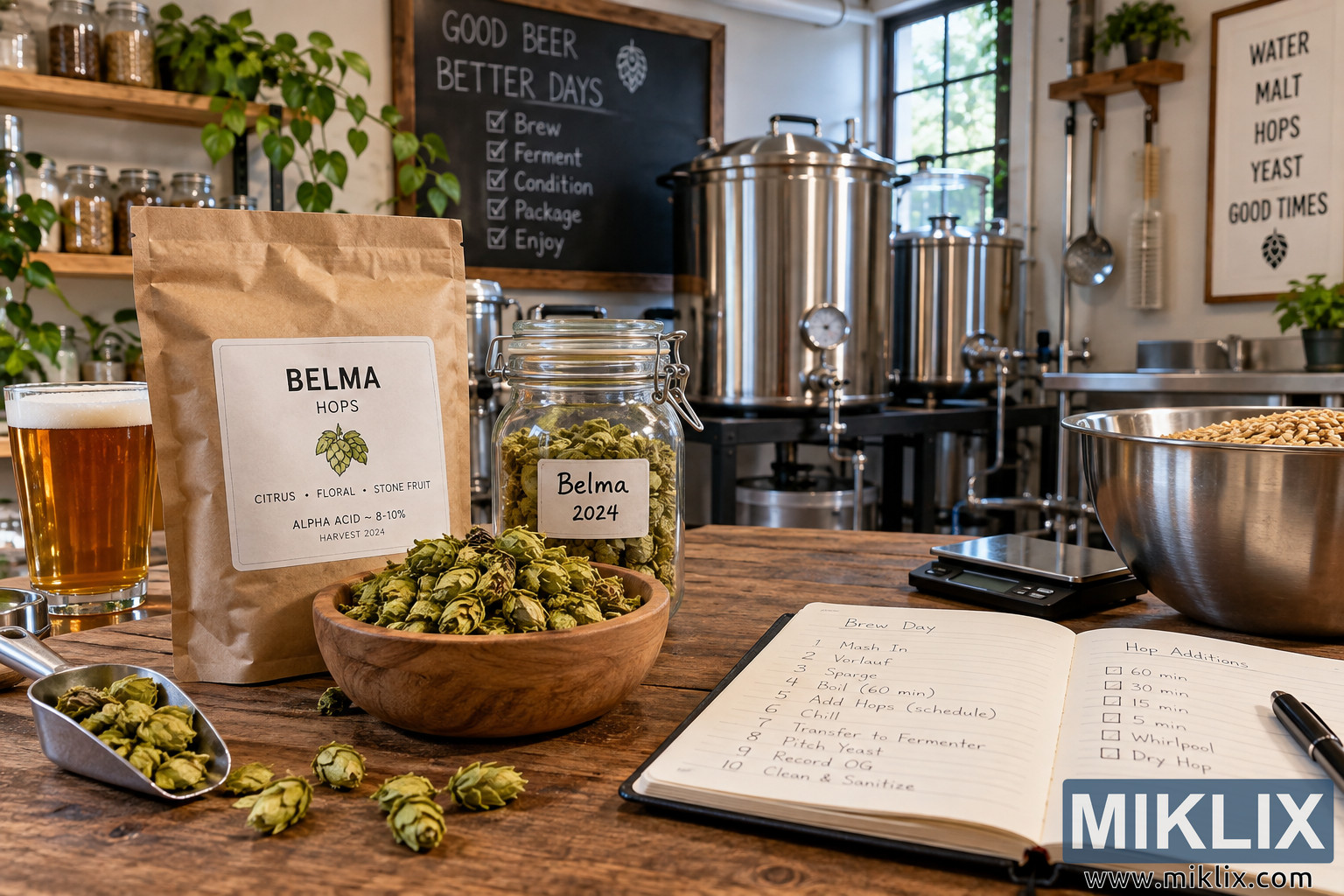
Organized homebrewing workspace featuring Belma hops, grain, brew-day notes, stainless-steel kettles and brewing equipment in a warm, bright workshop.
Organized Homebrewing Workspace with Belma Hops and Brewing Equipment
ამ სურათის ხელმისაწვდომი ვერსიები
ქვემოთ ჩამოსატვირთად ხელმისაწვდომი სურათების ფაილები ნაკლებად შეკუმშული და უფრო მაღალი გარჩევადობისაა - და შესაბამისად, უფრო მაღალი ხარისხის - ვიდრე ამ ვებსაიტზე განთავსებულ სტატიებსა და გვერდებში ჩასმული სურათები, რომლებიც უფრო ოპტიმიზირებულია ფაილის ზომის მიხედვით, რათა შემცირდეს გამტარუნარიანობის მოხმარება.
ჩვეულებრივი ზომა (1,536 x 1,024)
დიდი ზომა (3,072 x 2,048)
ძალიან დიდი ზომა (4,608 x 3,072)
ძალიან დიდი ზომა (6,144 x 4,096)
კომიკურად დიდი ზომის (1,048,576 x 699,051)
- ჯერ კიდევ მიმდინარეობს ატვირთვა... ;-)
სურათის აღწერა
A wide, highly detailed photograph depicts an organized homebrewing workspace arranged in a bright, inviting room with a warm rustic-industrial character. The composition is viewed from approximately countertop height, placing the ingredients and brewing notes in the foreground while larger stainless-steel brewing equipment fills the background. Natural daylight enters through a dark-framed window near the rear of the room, combining with warm interior illumination to create a clean, realistic atmosphere. The overall workspace appears carefully maintained and thoughtfully arranged, balancing practical brewing equipment with wooden surfaces, glass storage containers, greenery, and decorative brewing-themed elements.
At the center-left of the foreground stands a large upright kraft-paper bag containing hops. The plain brown package has a simple cream-colored label identifying the contents as Belma hops, accompanied by a small illustrated hop cone and additional descriptive information. The packaging has a natural, utilitarian appearance appropriate for brewing ingredients, with subtle folds and creases in the paper that contribute to the photographic realism. Immediately in front of the bag is a shallow wooden bowl overflowing with dried green hop cones. Individual cones display varied shades of muted green and yellow-green, along with the layered, papery texture characteristic of dried whole hops. Several loose hop cones have spilled naturally across the wooden work surface around the bowl.
Behind the wooden bowl is a clear glass storage jar with a hinged metal clasp and transparent lid. The jar is partially filled with additional dried hops and bears a small handwritten-style label indicating Belma and a harvest year. Its transparent glass reveals the irregular shapes and compressed layers of the hop cones inside. To the lower left, a stainless-steel ingredient scoop rests diagonally on the table. It contains several hop cones, while more hops are scattered beside it. The reflective metal surface of the scoop contrasts with the rough, warm grain of the wooden countertop and the soft organic texture of the hops.
On the far left of the foreground is a clear pint glass filled with amber-colored beer. The beer has a rich golden-orange hue and is topped by a narrow layer of pale foam. Light passing through the glass gives the liquid a luminous appearance and provides a visual connection between the raw brewing ingredients and the finished beverage. Only generic brewing imagery is present; there are no commercial logos or recognizable consumer brands.
The right side of the foreground is devoted to brewing preparation and record keeping. An open notebook lies across the wooden surface, angled slightly toward the viewer. Its pages contain handwritten brew-day notes and a numbered sequence of brewing tasks, including stages associated with mashing, boiling, adding hops, chilling, transferring, pitching yeast, recording measurements, and cleaning. The facing page contains a hop-addition checklist with several possible timing intervals. A dark pen rests on the open notebook, suggesting that the brewer is actively documenting the process. The notebook reinforces the sense of an orderly, methodical workspace rather than a decorative display.
Farther to the right sits a compact digital kitchen scale with a flat metallic weighing platform and dark base. Beside and slightly behind it is a large stainless-steel mixing bowl filled with pale golden brewing grain. The grain introduces another important brewing ingredient into the scene and provides a textural contrast with the green hops. The placement of the grain, scale, notebook, and hops suggests that ingredients are being measured and organized in preparation for a brewing session.
The middle and rear portions of the image contain substantial stainless-steel brewing equipment. A large polished brewing kettle dominates the center background. It has a fitted lid, sturdy handles, fittings near its base, and a round dial gauge on the front. Its reflective metal body catches highlights from the window and surrounding room. Additional stainless-steel vessels and cylindrical brewing equipment stand nearby, connected or positioned as part of a compact homebrewing setup. Pipes, valves, fittings, and other functional details contribute to the impression of a serious but accessible small-scale brewing station. A stainless work surface and sink area are visible toward the right rear, further emphasizing cleanliness and practical organization.
The rear wall adds both storage and visual warmth. Wooden shelves on the left hold multiple clear glass jars containing various grains and dry ingredients in different shades of tan, beige, and brown. Green trailing houseplants are positioned among the jars and extend across portions of the shelving, softening the industrial appearance of the stainless equipment. Additional plants appear around the room, giving the workspace a fresh, lived-in quality without making it feel cluttered. Brewing utensils hang neatly near the work area, including a large metal spoon or strainer and a long cleaning brush.
A large framed chalkboard occupies a prominent position on the back wall. Written in casual white chalk lettering is a positive brewing-themed message, accompanied by a simple hop illustration and a checklist representing major stages of the brewing process. The chalkboard adds a handcrafted workshop character and visually echoes the checklist in the open notebook. On the right wall, a separate framed typographic print lists the four foundational beer ingredients—water, malt, hops, and yeast—followed by a lighthearted reference to good times and a small hop graphic. These decorative elements remain generic and do not depict actual commercial branding.
The photograph uses a landscape composition with strong depth. The foreground ingredients are rendered sharply enough to reveal the textures of paper packaging, dried hop petals, glass, wood, metal, grain, and notebook paper, while the background retains abundant recognizable detail. The color palette combines warm brown wood, amber beer, green hops and plants, pale grain, cream-colored walls, black accents, and cool silver stainless steel. Reflections on the brewing vessels and glassware enhance the sense of depth and cleanliness. The lighting feels natural and balanced rather than dramatic, giving the scene the polished appearance of a high-resolution editorial photograph about craft brewing or homebrew organization.
Overall, the image presents homebrewing as a structured, ingredient-focused craft. Every major component has a clear place: hops are stored in a bag and glass jar, loose hops are portioned into a bowl and scoop, grain is ready for weighing, brewing steps are recorded in an open notebook, and the kettles and vessels are clean and prepared in the background. The combination of practical equipment, natural ingredients, careful record keeping, organized storage, warm wood, greenery, and daylight creates an inviting workspace that feels both technically capable and comfortably domestic. The Belma hops serve as the principal visual subject, while the surrounding equipment establishes the broader context of an organized homebrewing environment.
სურათი დაკავშირებულია: Hops in Beer Brewing: Belma