
surati Homebrewing Fermentation Temperature Control Setup with Fresh Hops
გამოქვეყნებულია:
ბოლო განახლება: 17 სექტემბერი, 2026, 16:27:05 UTC
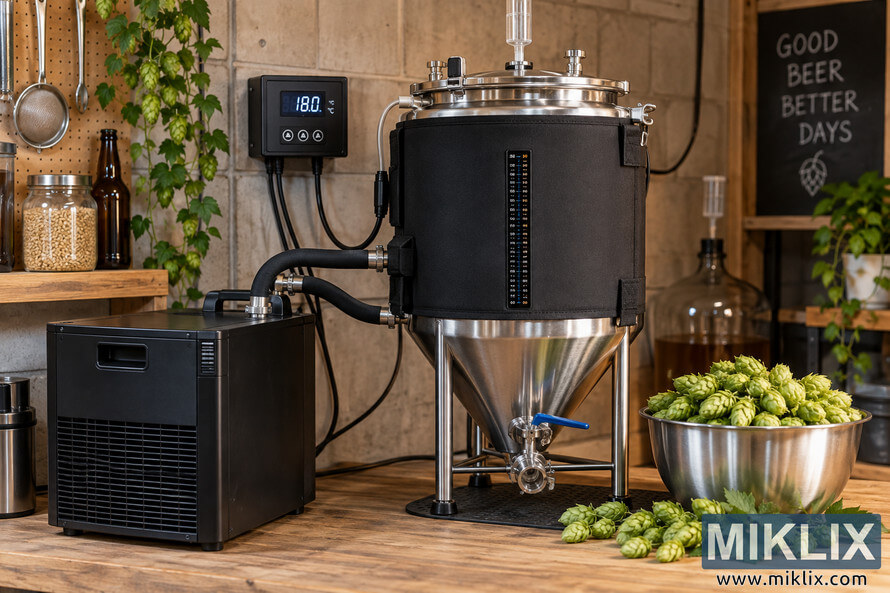
Detailed homebrewing fermentation temperature-control setup featuring an insulated stainless-steel fermenter, cooling system, digital 18.0°C controller, brewing equipment, and fresh green hops.
Homebrewing Fermentation Temperature Control Setup with Fresh Hops
ამ სურათის ხელმისაწვდომი ვერსიები
ქვემოთ ჩამოსატვირთად ხელმისაწვდომი სურათების ფაილები ნაკლებად შეკუმშული და უფრო მაღალი გარჩევადობისაა - და შესაბამისად, უფრო მაღალი ხარისხის - ვიდრე ამ ვებსაიტზე განთავსებულ სტატიებსა და გვერდებში ჩასმული სურათები, რომლებიც უფრო ოპტიმიზირებულია ფაილის ზომის მიხედვით, რათა შემცირდეს გამტარუნარიანობის მოხმარება.
ჩვეულებრივი ზომა (1,536 x 1,024)
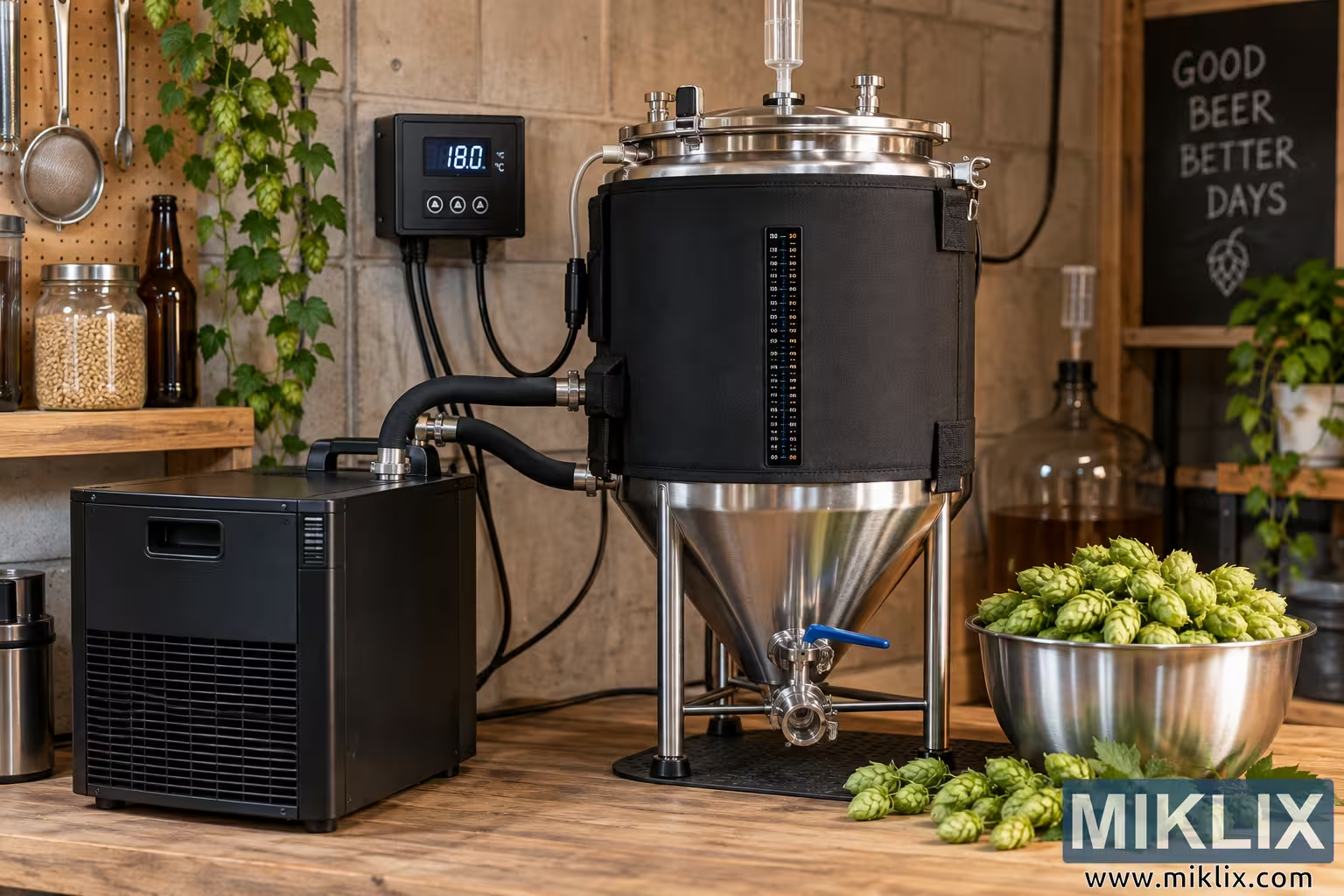
დიდი ზომა (3,072 x 2,048)
ძალიან დიდი ზომა (4,608 x 3,072)
ძალიან დიდი ზომა (6,144 x 4,096)
კომიკურად დიდი ზომის (1,048,576 x 699,051)
- ჯერ კიდევ მიმდინარეობს ატვირთვა... ;-)
სურათის აღწერა
A high-resolution, landscape-oriented photograph depicts a carefully organized homebrewing fermentation temperature-control setup in a warm, workshop-like indoor environment. The central subject is a large stainless-steel conical fermenter positioned on a sturdy wooden workbench. The fermenter has a cylindrical upper body that transitions into a polished conical lower section, supported by several straight stainless-steel legs. Its reflective metal surfaces give the equipment a clean, professional appearance while still fitting naturally into the practical homebrew setting. Around the cylindrical portion of the vessel is a thick black insulating jacket. The jacket appears tightly fitted and secured around the fermenter, helping reduce unwanted heat exchange with the surrounding room and illustrating the importance of maintaining a stable fermentation temperature.
Mounted on the wall to the upper left of the fermenter is a compact digital temperature controller. Its illuminated display prominently reads 18.0 degrees Celsius, suggesting a fermentation environment maintained at a cool and carefully regulated temperature. Several black cables run downward from the controller toward the brewing equipment. The controller has simple, generic buttons and contains no visible commercial branding. The clear numerical display makes temperature management one of the strongest visual themes of the scene.
To the left of the fermenter sits a substantial black temperature-control or cooling unit. It has a rectangular housing, a carrying handle on top, and a large ventilation grille across the lower portion of its front face. Two thick insulated hoses emerge from connections near the top of the unit and curve toward the fermenter. Metal hose clamps and fittings secure the connections. Together, the controller, cooling unit, insulated tubing, and fermenter jacket form an immediately understandable temperature-control system: the equipment appears designed to circulate temperature-controlled fluid around or through the fermentation vessel so that the beer can ferment within a stable thermal range. Electrical cables and hoses are visible but arranged in a reasonably tidy and functional manner, reinforcing the impression of a real, actively used homebrewing installation.
The fermenter itself includes several additional brewing details. A clear airlock rises from the lid at the top, visually indicating that the vessel is being used for fermentation. Multiple stainless-steel fittings and ports are arranged around the polished lid. On the front of the insulated jacket is a narrow vertical temperature or measurement strip with small markings. At the bottom of the conical section, stainless-steel valves and sanitary fittings provide access for transferring or draining the contents. One valve has a bright blue lever handle, creating a small visual accent against the otherwise neutral combination of steel, black insulation, wood, and concrete.
Fresh green hop cones are prominently displayed in the foreground and background, representing the hop ingredient specified for the brewing concept. On the right side of the workbench, a large stainless-steel mixing bowl is filled generously with pale green hop cones. Additional hop cones and leafy pieces are scattered naturally across the wooden surface in front of the bowl and fermenter. The hops have layered, tightly formed cones with varied green tones, giving the foreground an organic texture that contrasts strongly with the smooth industrial surfaces of the brewing equipment. More hop vines climb vertically along the wall on the left side of the image, with green leaves and hanging cones adding a living botanical element to the workspace. The image presents these hops generically and does not show packaging, logos, trademarks, or other actual brand identifiers.
The surrounding environment resembles a dedicated homebrew workshop, utility room, garage, or basement brewing area. Behind the equipment is a wall constructed from light gray-beige masonry blocks, which contributes to the practical, slightly industrial atmosphere. On the far left, a wooden pegboard holds stainless-steel brewing and kitchen tools, including a large mesh strainer and long-handled utensils. A small wooden shelf beneath the tools supports a clear glass jar filled with pale grain and a plain brown glass bottle without a label or recognizable branding. These objects subtly communicate the broader brewing process without distracting from the fermentation equipment in the center.
In the right background, a large clear glass carboy or demijohn contains a quantity of dark amber-brown liquid. A fermentation airlock is fitted into its neck, suggesting another batch or stage of fermentation taking place nearby. The vessel is softly out of focus compared with the central fermenter, which creates depth while retaining enough detail to establish its purpose. A small green plant in a simple pot sits farther to the right, complementing the hop greenery and softening the workshop environment.
A black chalkboard occupies part of the upper-right background. Written on it in informal white chalk lettering is the phrase GOOD BEER BETTER DAYS, accompanied by a simple hand-drawn hop-cone symbol. The writing functions as decorative workshop signage rather than commercial branding. Its handmade appearance reinforces the personal, enthusiast-driven nature of the brewing space.
Warm natural-looking light enters the scene from the right and front, illuminating the wooden workbench and creating bright highlights on the stainless-steel fermenter, valves, fittings, and bowl. The background remains slightly softer and darker, directing attention toward the main equipment. The photographic composition balances the large black cooling unit on the left with the bowl of fresh hops on the right, while the tall fermenter forms the dominant central anchor. The 18.0-degree temperature display is clearly visible near the upper-left portion of the main subject, making the concept of controlled fermentation apparent at a glance.
Overall, the photograph portrays a sophisticated but believable homebrewing fermentation station focused on precise temperature management. Stainless-steel brewing hardware, insulated circulation hoses, a digital controller, cooling equipment, an insulated conical fermenter, fermentation airlocks, grain, glass vessels, and abundant fresh green hops collectively communicate a serious homebrew operation. The warm wood, masonry wall, climbing hop plants, and handcrafted chalkboard decoration prevent the setting from feeling sterile, instead giving it an inviting artisanal character. No actual product brands, company logos, branded packaging, or recognizable trademarks are visible in the scene.
სურათი დაკავშირებულია: Hops in Beer Brewing: Bor