
Fermenting Beer with White Labs WLP067 Coastal Haze Ale Yeast Blend
გამოქვეყნებულია:
ბოლო განახლება: 17 მაისი, 2026, 19:29:21 UTC
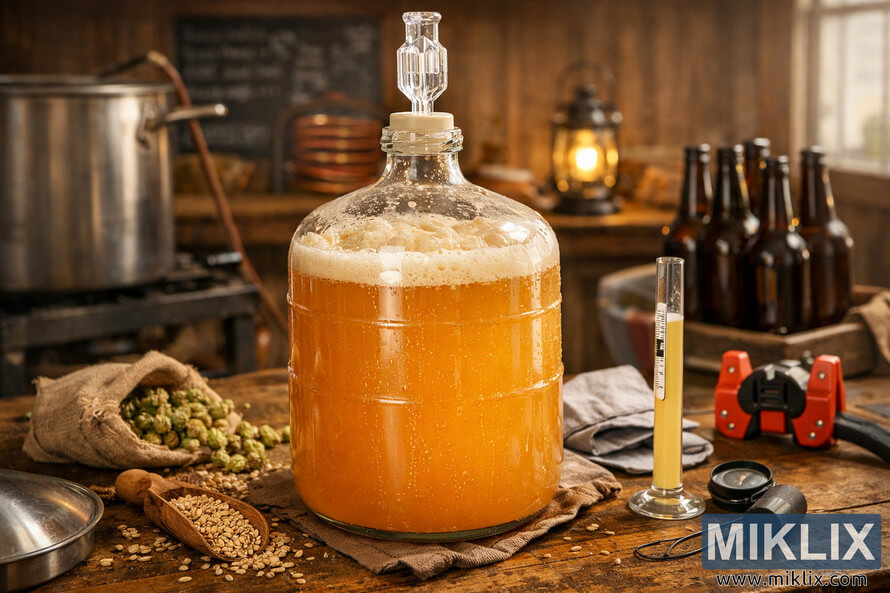
White Labs WLP067 Coastal Haze Ale Yeast Blend is designed for modern hazy-IPA brewing. It focuses on a soft mouthfeel, fruity esters, and reliable haze retention. This blend is ideal for both homebrewers and commercial brewers, offering predictable fermentation behavior.
Fermenting Beer with White Labs WLP067 Coastal Haze Ale Yeast Blend
დამატებითი ინფორმაციისა და უფრო მაღალი გარჩევადობის სანახავად დააწკაპუნეთ ან შეეხეთ სურათს.
Key Takeaways
- WLP067 performs well in hazy IPA profiles, enhancing mouthfeel and fruity esters.
- Proper pitching rate or a healthy starter improves attenuation and consistency.
- Temperature control influences ester profile—stay within the recommended window for best results.
- Coastal Haze yeast review shows strong haze retention when combined with high-protein malts and late hopping.
- Monitor gravity and oxygenation to avoid stalled fermentations and off-flavors.
Overview of White Labs WLP067 Coastal Haze Ale Yeast Blend
The WLP067 strain composition is the result of blending multiple ale strains. White Labs aimed to achieve specific sensory and turbidity goals. The blend likely includes strains known for ester production, moderate attenuation, and minimal harsh phenolics. It's designed to enhance fruit-forward character and haze stability in New England–style beers.
Brewers use this blend for a variety of hop-forward, soft-bodied styles. It's perfect for hazy IPAs, New England IPAs, juicy pale ales, and wheat-forward hop bills. The yeast's ester profile supports tropical and stone-fruit notes. Its haze retention ensures turbidity through packaging when handled correctly.
- Intended beer styles: NEIPAs, juicy pales, hop-forward wheat ales.
- Performance notes: fruity esters, moderate attenuation, haze-friendly flocculation.
White Labs yeast packaging is available in various formats for different production scales. Brewers can choose from liquid vials or lab packs for direct pitching. Larger 5L, 10L, or 19L fermenter-ready packs are suitable for commercial batches. There are also slants and small refrigerated options for propagation. It's crucial to store refrigerated and use fresh for best viability.
Practical viability tips: if a pack is older, make a starter to boost cell count. Fresh lab packs often allow direct pitch, while larger fermenter-ready formats reduce handling for pro brewers. Paying attention to White Labs yeast packaging and storage ensures cell health and consistent results across batches.

დამატებითი ინფორმაციისა და უფრო მაღალი გარჩევადობის სანახავად დააწკაპუნეთ ან შეეხეთ სურათს.
Why Choose White Labs WLP067 Coastal Haze Ale Yeast Blend for Hazy IPAs
White Labs WLP067 Coastal Haze Ale Yeast Blend is a go-to for brewers aiming to craft juicy, fruit-forward hazy IPAs. It offers a predictable platform for these beers, with ester-driven aromas that complement late hop additions. The soft mouthfeel from oats and wheat is also enhanced by this yeast. Below, we explore how the yeast influences flavor, handles high-protein grists and heavy hopping, and compares to other popular hazy strains.
Flavor profile contributions
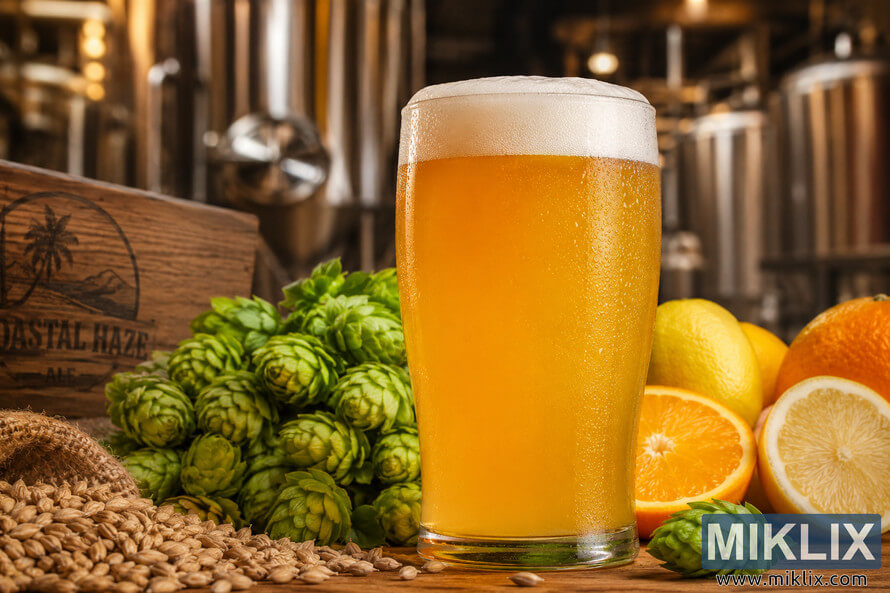
The WLP067 flavor profile is characterized by bright tropical and stone fruit esters. Expect mango, citrus, and soft peach notes, with minimal spicy phenols for a clean taste. The esters amplify late hop character, making citrus and tropical notes seem juicier and fuller. The mouthfeel is soft and rounded, contributing to a perceived body without excessive residual sweetness.
Performance with high-protein, high-hop beers
WLP067 excels in grists rich in oats and wheat. It moderates attenuation to preserve body and enhance mouthfeel. Low-to-moderate flocculation ensures haze retention, maintaining turbidity during conditioning. The yeast is tolerant of hop-derived antimicrobial compounds, allowing steady fermentation even with high hop loads. Higher FAN and protein content in these grists support healthy yeast metabolism, leading to a plush finish.
Comparison to other hazy-focused yeasts
Brewers often compare Coastal Haze to other yeasts like Wyeast 1318 London Ale III, Conan-style strains, and Omega blends. WLP067 offers a fruitier ester intensity and softer finish than many American ale yeasts. It retains haze as reliably as London Ale III and shows more predictable attenuation than some wild blends. For brewers seeking to balance ester character, haze stability, and consistent attenuation, this hazy IPA yeast blend is a top choice.
დამატებითი ინფორმაციისა და უფრო მაღალი გარჩევადობის სანახავად დააწკაპუნეთ ან შეეხეთ სურათს.
Key Fermentation Characteristics to Expect
Expecting a set of fermentation traits when brewing with White Labs Coastal Haze blend is key for hazy IPAs. These traits impact mouthfeel, haze stability, and drinkability. Before diving into temperature control and pitching, consider these points.
Attenuation range and final gravity expectations
Attenuation for this blend falls in a moderate-to-high range, around 68–76%. WLP067 attenuation varies based on wort composition, mash profile, and adjuncts like oats or wheat.
Grists for hazy IPAs include dextrins from flaked oats and wheat, leading to a slightly higher finish. Aim for a final gravity WLP067 between 1.012 and 1.018 for balanced haze and mouthfeel.
Alcohol tolerance and temperature window
White Labs ale blends generally tolerate high alcohol levels, up to 10–12% ABV. Staying within these limits ensures yeast remains active and predictable.
Primary fermentation within the yeast’s optimal temperature range promotes clean attenuation. Fermenting too cool can stall or slow down. Fermenting too warm can increase ester production and risk off-flavors. Thus, temperature control is crucial for achieving your flavor goals.
Flocculation and haze retention behavior
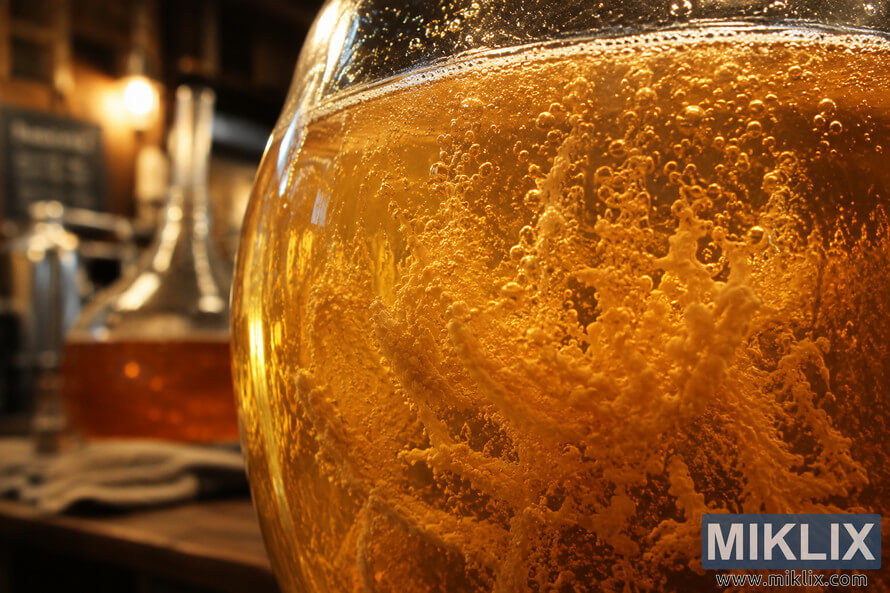
This blend exhibits low-to-moderate flocculation, aiding in maintaining beer turbidity. Yeast cells and protein-polyphenol complexes contribute to lasting haze.
Yeast flocculation haze is beneficial for haze-forward styles but can lead to more sediment in maturation and packaging. Be cautious when racking and conditioning to prevent excessive sediment in cans or bottles.
დამატებითი ინფორმაციისა და უფრო მაღალი გარჩევადობის სანახავად დააწკაპუნეთ ან შეეხეთ სურათს.
Preparing a Healthy Starter or Yeast Pitch
Starting fermentation strong reduces the risk of stalled batches and off-flavors. Fresh White Labs packs are best, check their dates, and plan yeast propagation. This ensures cell counts match wort gravity and batch size. Below are practical guidelines for homebrewers and pro brewers working with WLP067.
When to make a starter versus direct pitch
For a typical 5-gallon (19 L) pale hazy IPA at around 1.055 OG, direct pitch from a fresh White Labs single pack can be acceptable. Use a starter when packs are older, the beer is high-gravity, or you brew larger volumes.
Professional batches, high-gravity worts, or any recipe with lots of adjuncts benefit from higher initial cell counts. Pitching adequate cells prevents yeast stress. This cuts the chance of solvent-like esters and sluggish fermentations.
Starter size recommendations for different batch volumes
Target cell counts at pitching of roughly 0.75–1.5 billion cells per mL for a standard hazy IPA near 1.055 OG. Translate that to practical starter sizes for planning:
- Single fresh 100 mL White Labs vials are often too small for one 5-gallon batch at 1.055 OG.
- For most homebrewers using one pack, prepare a 500 mL–1 L starter to reach needed cell counts.
- Two fresh packs can be used for direct pitch in 5-gallon batches when a starter is not possible.
- For 10+ gallon systems or high-gravity beers, scale starters up or use 2–3 packs, or propagate to larger starters.
Oxygenation and yeast handling best practices
Oxygenation before pitching sets yeast up for rapid growth. Use pure oxygen with a stone for high-gravity worts, or do vigorous aeration with sanitized equipment for standard strengths.
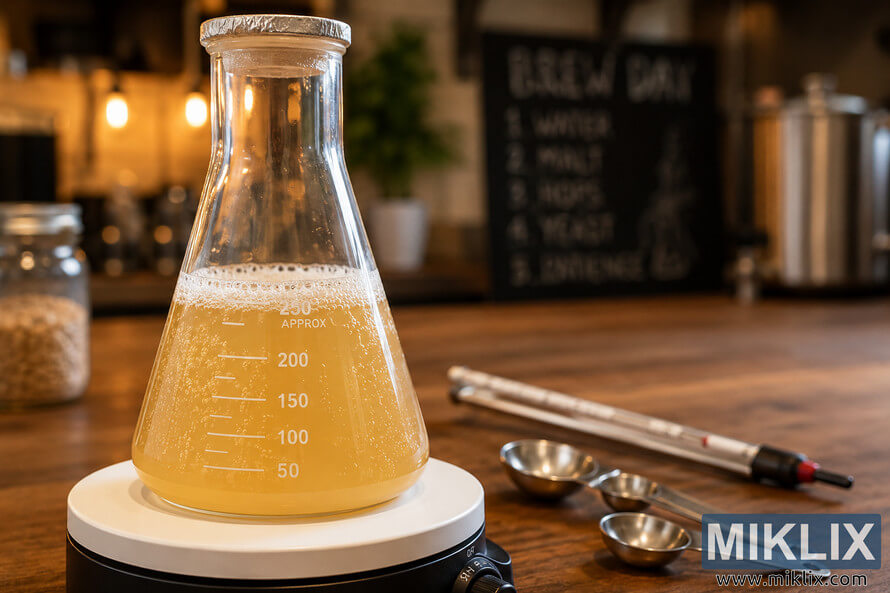
Keep sanitation strict when handling starters and yeast. Run starters on a stir plate or shake them regularly to build biomass. Handle yeast gently to avoid shear stress during transfer.
Consider yeast nutrient for very high-gravity worts. If comparing to dry yeast, rehydrate following manufacturer guidance to maximize viability. Good yeast pitch rates and yeast oxygenation best practices together produce cleaner fermentations and predictable attenuation.
დამატებითი ინფორმაციისა და უფრო მაღალი გარჩევადობის სანახავად დააწკაპუნეთ ან შეეხეთ სურათს.
Optimizing Fermentation Temperature for Best Flavor
Getting the fermentation temperature just right is key to a hazy IPA's aroma, mouthfeel, and clarity. Using White Labs WLP067, a controlled temperature range keeps esters lively but avoids solvent notes. Small adjustments allow brewers to fine-tune the character while ensuring proper attenuation and yeast health.
Recommended temperature ranges for primary fermentation
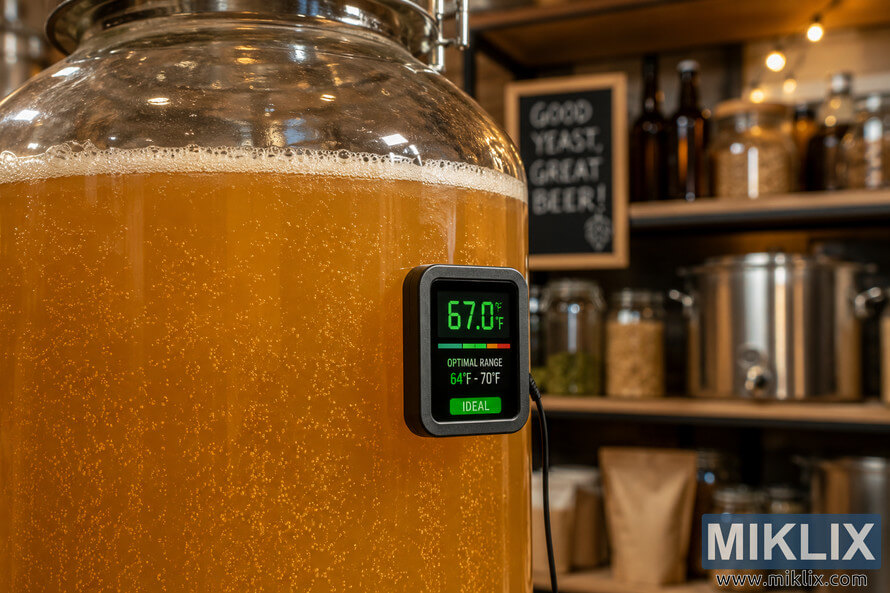
For most batches, aim for a primary fermentation temperature of 64–70°F (18–21°C). For a cleaner profile, keep it near 64–66°F. For fruitier esters and juicier hop synergy, aim for 68–70°F. It's crucial to maintain steady temperatures during active fermentation to avoid stressing the yeast.
Effects of temperature on ester and phenol production
Warmer fermentation temperatures bring out tropical and stone-fruit esters, enhancing the New England–style hop flavors. However, temperatures above the recommended range can lead to harsher solvent notes. WLP067 fermentation temp responds well to controlled warmth, producing expressive esters without overpowering phenolics when managed properly.
Temperature ramping and diacetyl rest guidance
Near the end of fermentation, perform a gentle temperature ramp of 2–4°F (1–2°C) for 24–48 hours. This helps yeast reabsorb diacetyl, resulting in a cleaner finish. Most brewers find the diacetyl rest WLP067 is rarely critical with healthy pitching rates. Yet, the brief rise adds insurance against buttery off-flavors.
- Keep ambient swings small to avoid stress.
- Use a temperature controller for precise hazy IPA fermentation temperature control.
- After the diacetyl rest, drop to cold-conditioning to settle yeast and stabilize haze.
დამატებითი ინფორმაციისა და უფრო მაღალი გარჩევადობის სანახავად დააწკაპუნეთ ან შეეხეთ სურათს.
Recipe Guidelines for Brewing with WLP067
Creating a WLP067 recipe requires a delicate balance. You need to achieve haze, mouthfeel, and a bright hop character. Begin with a light, clean base malt. Then, add adjuncts that enhance body and protein without overloading the beer.
For the grain bill, focus on pale ale malt or pilsner, making up 85–90% of the base. Incorporate flaked oats at 6–12% for silkiness and body. Flaked wheat at 5–8% boosts head retention and adds to the protein haze. A small amount (3–5%) of dextrin malt or Carapils improves foam and mouthfeel without affecting color.
Mash at lower temperatures, 148–152°F (64–67°C), to retain dextrins. This increases the beer's perceived fullness. These choices complement WLP067’s ester profile, maintaining turbidity and a soft palate.
- Use minimal crystal malt to avoid sweetness and haze loss.
- Consider small amounts of raw wheat for traditional NEIPA texture when desired.
Hop schedules should favor late additions and whirlpool charges. Aim for low early bittering to keep the beer soft. Add the bulk of hops in the last 10 minutes, in the whirlpool at 170–180°F, and heavily during dry hop.
Choose hops that complement the yeast’s fruity esters. Mosaic, Citra, Galaxy, Nelson Sauvin, Azacca, and Riwaka are good options. Develop a multi-layered hop plan: late additions for flavor, whirlpool for oil extraction, and two-stage dry hops for aroma and biotransformation.
- Low IBUs (20–35) from early additions to balance malt body.
- Large whirlpool charge to extract volatile oils without harshness.
- Split dry hops (day 3–5 post-fermentation and day 7–10) to preserve and evolve aroma.
Water adjustments are crucial for a great hazy IPA. Aim for a water profile NEIPA that favors chloride over sulfate. Target a Cl/SO4 ratio between 1.5:1 and 3:1 to emphasize roundness and fruitiness.
Start with soft water or use reverse osmosis water if available. Add calcium chloride (CaCl2) to raise chloride and a small amount of magnesium sulfate (Epsom) if yeast nutrition needs a boost. Keep total sulfate low to avoid a drying hop bite.
- Calcium: 50–100 ppm for mash stability and yeast health.
- Chloride-to-sulfate ratio: 1.5–3:1 for mouthfeel, with sulfate
- Adjust alkalinity with brewing salts or acids to hit mash pH ~5.2–5.4.
When crafting a WLP067 recipe, balance the grain bill, hops timing and selection, and water profile adjustments. This approach highlights WLP067’s fruit-forward esters while preserving turbidity and a pillowy mouthfeel.
Managing Haze and Appearance During Fermentation
Creating a soft, living haze in fermentation requires careful decisions from mash to packaging. Brewers aiming to preserve haze with WLP067 must plan their grain bill, mash schedule, whirlpool technique, and packaging timing. This ensures proteins and hop complexes stay suspended, enhancing flavor without compromising haze.
Techniques to preserve turbidity and protein stability
Mashing at 150–154°F (65–68°C) helps retain more dextrins and body, crucial for haze suspension. Incorporating flaked oats or wheat at 10–25% boosts mouthfeel and haze formation. A gentle kettle whirlpool and minimal hot break removal are key to preserving the desired turbidity.
When haze retention is crucial, avoid an overly long cold break. Short cooling and measured transfers to the fermenter help maintain active protein–polyphenol complexes. Allowing White Labs WLP067 to work without excessive clarification ensures yeast and proteins contribute to the final haze.
Filtration and fining considerations when using WLP067
To preserve haze, skip gelatin, isinglass, and PVPP during active conditioning. These finings remove proteins and polyphenols that create haze in hazy IPAs. If clarity is desired, apply finings only after flavor development is complete and after a short conditioning period.
- Use finings sparingly; test on a small batch before treating an entire run.
- Filter pads improve clarity but strip hop aromatics and reduce perceived juiciness.
- Crossflow or gentle depth filters remove yeast and haze differently; choose based on the product goal.
Packaging timing to lock in haze
Package when fermentation is stable and dry hop aroma is optimal. Many brewers bottle or can shortly after dry hopping and a brief conditioning period. This locks in volatile hop aromatics and yeast/protein haze complexes. Measure final gravity and confirm stability to reduce refermentation risk.
Allow a short maturation window for yeast-driven flavors to settle. Avoid extended cold storage to maintain a bright, hazy presentation. Thoughtful packaging timing balances aroma, stability, and visual soft turbidity, defining a protein stability hazy IPA.
Flavor Development and Troubleshooting Off-Flavors
Flavor in a hazy IPA is shaped by yeast metabolism, malt bill, hops, and fermentation conditions. Controlling fermentation gently and troubleshooting fermentation issues helps keep unwanted flavors low. This preserves the juicy esters. Below, we discuss common off-flavors, signs of yeast stress, and practical fixes to recover a batch without losing its character.
- Diacetyl (buttery) — prevent by allowing a proper diacetyl rest and pitching adequate healthy yeast.
- Acetaldehyde (green apple) — avoid by maintaining steady fermentation temperatures and proper yeast pitching rates.
- Fusel alcohols (solvent, harsh boozy) — control by keeping peak temperatures within the yeast’s recommended range and avoiding high gravity without oxygenation.
- Phenolic (spicy, clove, medicinal) — limit oxygen and wild contamination with strict sanitation and suitable pitching practices when using clean blends.
- Autolysis (meaty, soy) — prevent by minimizing extended warm conditioning on yeast cake and rousing when necessary.
Identifying yeast stress and corrective actions
- Watch for stalled final gravity, very solvent aromas, or unusually sluggish activity. These are classic signs of yeast stress in a yeast stress hazy IPA.
- If fermentation stalls early, raise temperature a few degrees to reactivate yeast helpfully, not abruptly.
- Do not oxygenate once active fermentation is underway. For very slow ferments, pitching a healthy starter or fresh liquid yeast can restart the process.
- Use yeast nutrients during high-gravity brews to avoid nutrient depletion. Rouse the yeast gently by swirling the fermenter to resuspend trub-bound cells.
When to accept yeast-driven character versus a flaw
- Desirable esters: Fruity, juicy notes that match the recipe and hop profile are a positive part of the beer’s identity.
- Accept mild, transient diacetyl only if it drops with conditioning. Persistent buttery or solvent notes signal a process issue and require fermentation troubleshooting.
- Phenolic or medicinal notes that mask hop and malt flavors should be treated as faults. Review sanitation, pitching, and temperature control for future batches.
Keep tasting through primary and conditioning. Small adjustments early prevent major problems later and protect the bright, hazy character that WLP067 is chosen for.
Dry Hopping Strategies with Coastal Haze Yeast
Dry hopping with WLP067 can transform aroma and flavor when timed and handled carefully. Choose a strategy that balances fresh hop aroma with the yeast’s ability to modify hop compounds. Small changes in timing and hop choice will shift the beer’s thiol and ester character.
Use the following approaches to plan additions and limit risks like refermentation or lost aromatics. Each option has tradeoffs for hop biotransformation and volatile retention.
- During late active fermentation — Add hops when gravity is about 2–4 points from final gravity. This timing promotes hop biotransformation because yeast enzymes remain active and can convert bound thiols and other precursors into aromatic compounds. Expect enhanced tropical and fruity notes, but accept some loss of the most delicate volatiles due to CO2 scrubbing.
- Post-primary dry hop — Add hops after fermentation completes to preserve volatile aromatics. This preserves top-note citrus and pine, but yields less biotransformation than a late-fermentation addition. Use this when maximum fresh hop aroma is the priority.
- Dual-stage dry hopping — Start with a modest dose during the fermentation tail, then add a larger finishing dry hop after activity stops. This layers transformed thiol character under a fresher aromatic top, tapping both biotransformation and volatile preservation.
Choose hop varieties that echo WLP067’s ester profile. Citra, Mosaic, Galaxy, Nelson Sauvin, and Idaho 7 pair well with the yeast’s fruity esters. Blend citrus-forward hops with tropical or vinous varieties to build complexity.
- Blending strategy — Use a small finishing dose of a bright, citrus hop such as Citra for top aromatics, then a larger secondary dose of Mosaic or Galaxy to reinforce tropical and stone fruit notes.
- Single-hop focus — Try Nelson Sauvin for a sauvignon-like lift when you want white wine character that complements esters.
Hop creep can pose a real threat to stability and carbonation control. Hop creep happens when hop enzymes convert dextrins into fermentable sugars, triggering renewed fermentation after dry hopping. Plan for hop creep prevention before packaging.
- Temperature control — Keep dry hops cool to reduce enzymatic activity. Cold contact slows conversion and limits new attenuation.
- Gravity monitoring — Track gravity for several days after dry hopping. Wait for a stable reading before packaging to avoid overcarbonation and gushing.
- Conditioning time — Allow extra maturation if gravity edges downward after hopping. Extended conditioning gives yeast time to finish extra sugars safely.
- Chemical stabilizers — Use potassium sorbate with caution; it prevents yeast growth but does not stop enzymatic sugar release and can alter mouthfeel. Test on small batches before broad use.
- Physical options — Cold pasteurization or sterile filtration are reliable but require proper equipment and care to protect haze and mouthfeel when using WLP067.
Balance aroma goals with stability needs. Thoughtful WLP067 dry hop timing, careful hop selection, and proactive hop creep prevention will help produce a hazy IPA that showcases both yeast-driven character and fresh hop complexity.
Conditioning and Packaging Considerations
WLP067 conditioning and packaging significantly impact haze retention, aroma, and mouthfeel. Cold handling, short maturation, and gentle transfer practices are key to preserving the soft, juicy character of New England–style IPAs. Below are practical timelines and steps for bottling, kegging, or canning hazy beers fermented with WLP067.
Cold crash and maturation timelines for haze stability
Short cold crashes of 24–72 hours at 35–40°F (2–4°C) help drop out large particulates for clarity. Extended cold conditioning tightens the haze, reducing suspended proteins and hop particles. For haze retention, a minimal cold crash or a gentle temperature reduction over several days is preferred.
Maturation for hazy IPAs should be brief to preserve hop freshness. One to three weeks after reaching final gravity is typical. Confirm a stable FG before packaging to lower refermentation risk during transport and storage.
Bottle, keg, and canning best practices with this yeast
Kegging and canning are the best choices for preserving aroma and limiting oxygen pickup. Sanitize lines, seals, and cans thoroughly. Purge headspace with CO2 at transfer to minimize oxidation.
- For bottling, verify final gravity and calculate priming sugar precisely. Overpriming can cause excessive carbonation and haze disturbance.
- Canning gives strong protection from light and oxygen. Use anti-oxidation practices like oxygen scavengers or low-oxygen fills when possible.
- Kegging allows for quick chill, gentle dispensing, and easy force-carbonation control for consistent presentation.
Carbonation targets for mouthfeel and presentation
Set carbonation volumes for NEIPA and other hazy IPAs between 2.0 and 2.6 volumes of CO2. Aim lower, around 2.0–2.3, for a fuller, pillowy mouthfeel. Use 2.4–2.6 volumes for a brighter, livelier pour with more effervescence.
Moderate carbonation supports perceived juiciness and balances malt sweetness. For bottle-conditioned beers with WLP067 conditioning, monitor residual sugars and temperature to avoid overcarbonation. For force-carbonation, adjust pressure and temperature charts to hit your target volumes precisely.
Lab Testing and Measuring Fermentation Success
Accurate lab checks give brewers confidence when fermenting hazy IPAs with WLP067. Track gravity, monitor pH, and confirm yeast health to avoid surprises during conditioning and packaging.
Gravity tracking and expected fermentation curves are the first stop. Measure original gravity (OG) before pitching. Check gravity every 12–24 hours during active fermentation. Expect a sharp drop in the first 48–72 hours, then a slower taper as the beer approaches terminal gravity.
Watch for red flags: no change for 48–72 hours, an unexpected stall near mid-fermentation, or rapid reversion upward. These signs can indicate stuck fermentation, infection, or nutrient deficiency. If a stall occurs, verify temperature, oxygen history, and recent gravity readings before intervening.
pH monitoring affects yeast performance and flavor stability. Typical wort pH sits around 5.2–5.6. Finished hazy IPA pH normally falls in the 4.0–4.6 range. Low pH can add stress and slow fermentation. High pH raises risk of off-flavors and microbial instability.
Adjust mash chemistry or water treatment to target appropriate buffering. Test pH at mash, kettle, and post-fermentation stages. Small changes in pH can shift ester formation and hop perception in the finished beer.
Yeast viability checks matter when reusing slurry or pitching older packs. Perform viability checks before building large starters or repitching across multiple generations. Simple staining methods, like methylene blue, give a quick live/dead ratio. Propidium iodide works well in labs with fluorescence capability.
- For homebrewers: do a methylene blue viability check when reusing yeast older than two weeks.
- For pros: use a hemocytometer or automated cell counter to calculate pitch rates and cell concentration precisely.
- When results show low viability, increase starter size or source fresh WLP067 to meet target pitch rates.
Combine consistent WLP067 gravity tracking with routine pH logs and timely yeast viability checks. This trio reduces risk, preserves haze and aroma, and helps deliver repeatable fermentation curve hazy IPA profiles for both hobbyists and professional brewers.
Comparisons: WLP067 vs. Other Popular Hazy Yeast Blends
White Labs WLP067 Coastal Haze is a top choice for New England–style IPAs. This comparison highlights haze, flavor, and attenuation to help you select the perfect yeast for your brew. It's all about achieving your desired recipe and flavor profile.
Here's how WLP067 compares in haze, flavor, and attenuation:
- Haze retention: WLP067 exhibits low-to-moderate flocculation. This characteristic helps maintain turbidity when combined with oats and wheat. It's a strong contender in the haze competition.
- Flavor profile: Expect a fruit-forward ester profile that's soft and juicy, rather than sharp or phenolic. The ester intensity is milder, allowing hop aromatics to take center stage.
- Attenuation: Fermentation finishes in a moderate range. This results in a fuller mouthfeel typical of juicy NEIPAs, with final gravities slightly higher than those of very high-attenuating single strains.
- Comparison notes: Compared to strains like London Ale III or Conan, WLP067 offers a rounder, less aggressive ester profile. It retains more body at similar mash bills.
Pros and cons versus single-strain ale yeasts:
- Pros: Blended performance is predictable across varied worts. WLP067's pros include reliable haze retention, balanced esters, and robustness with adjuncts like oats and flaked wheat.
- Cons: The blend nature reduces genetic transparency for advanced brewers seeking specific single-strain characteristics. Pack-to-pack variation can occur if manufacturers adjust blend ratios. Some single strains will offer drier attenuation than WLP067.
When to choose WLP067 over alternatives:
- Opt for WLP067 for a softer, juicier NEIPA mouthfeel that complements late and dry hops.
- Use this blend with high-adjunct grists—oats and wheat—that rely on yeast haze retention to maintain turbidity.
- Choose alternatives for an ultra-clean, crisp IPA or a very dry finish; single strains with high attenuation may better serve these targets.
When deciding on the best yeast for NEIPA, consider haze stability, ester character, and final gravity needs. WLP067 offers reliable haze and juicy esters, but it comes at the cost of some single-strain predictability.
Brewer Experiences and Recipe Examples Using White Labs WLP067 Coastal Haze Ale Yeast Blend
Homebrewers and professional brewers consistently achieve great results with this yeast. They emphasize the importance of choosing the right mash and hops. The yeast's ability to produce bright tropical fruit esters, maintain haze, and offer a soft mouthfeel is widely praised. These practical stories highlight successes, challenges, and the importance of a well-planned approach to brewing with WLP067 recipes.
Short case studies from homebrewers and pro brewers
- One homebrewer on a regional forum described a 5-gallon batch with pronounced mango and citrus notes and stable haze after a short conditioning period. They credited an oat-forward grist and careful temperature control.
- A small brewpub noted that cans turned out rounded and juicy when they pitched fresh White Labs packs and avoided excessive cold storage. Their tasting panel highlighted soft mouthfeel and persistent haze.
- Multiple brewers mentioned that clean, healthy yeast pitches and a 64–68°F fermentation window reduced sulfur and solvent-like esters while enhancing tropical character.
Sample hazy IPA recipe with step-by-step fermentation notes (5-gallon / 19 L)
- Grain bill: 10 lb (4.5 kg) pale malt, 1 lb (0.45 kg) flaked oats (10%), 0.6 lb (0.27 kg) wheat (6%), 0.25 lb (0.11 kg) Carapils.
- Target original gravity: ~1.060. Mash at 152°F (67°C) for 60 minutes for balanced body and fermentability.
- Water: start with RO water. Add calcium chloride to raise chloride for softness and mouthfeel. Aim for a chloride-to-sulfate ratio that favors fullness.
- Yeast pitch: 1–2 White Labs WLP067 packs or a 1 L starter for best headcount. Rehydrate or use a starter when packs are older.
- Fermentation schedule: hold primary at 64–68°F (18–20°C). If fermentation slows late, raise by 2°F (1°C) for 24–48 hours to finish cleanly.
- Dry hop plan: add a small biotransformation charge on day 2–3 after active fermentation begins. Add finishing dry hops 3–5 days after reaching final gravity.
- Packaging: condition 5–10 days after final dry hop to let hop particulates settle. Carbonate to about 2.2 volumes CO2 for a soft, pillowy mouthfeel.
Troubleshooting notes from real batches
- Slow starts: often from underpitching or pitching into cold wort. Fix by repitching a healthy slurry or gently raising fermentation temperature to the recommended range.
- Increased astringency: sometimes linked to very late whirlpool additions with high-polyphenol hops or aggressive dry-hop contact time. Reduce late hop mass or shorten contact time.
- Haze fading after long cold storage: extended cold conditioning can drop some haze. If turbidity is a priority, limit long cold ages and package sooner, or avoid aggressive filtration.
- Stuck fermentation: repitch active yeast or oxygenate gently if early. Monitor gravity and temperature before intervening.
These practical notes reflect common themes in WLP067 recipes and Coastal Haze brewer experiences. Following a clear yeast pitch plan, managing mash and water, and timing dry hops for biotransformation will improve outcomes when using this strain in hazy IPA recipe WLP067 trials.
Conclusion
White Labs WLP067 Coastal Haze Ale Yeast Blend is designed for New England–style hazy IPAs. It offers a soft mouthfeel, bright ester character, and reliable haze retention. When used correctly, it provides fruity esters without excessive attenuation. This makes it a solid base for hop-forward, full-bodied beers.
Best practices for WLP067 include proper pitch rate and temperature control. Ensure adequate pitching or use a starter. Ferment between 64–70°F. Incorporate oats or wheat for body and turbidity. Late kettle and dry-hop additions are key. Stagger dry hops carefully and follow a measured conditioning plan to preserve aroma and haze.
Fermenting WLP067 requires monitoring gravity and pH. Check yeast health when scaling. Be ready to adjust mash and hop schedules. WLP067 is highly rated for brewers aiming at juicy, hazy IPAs. Trial batches and notes will help perfect your haze and finish. Experiment with starter size and dry-hop timing, documenting results to refine future recipes.
FAQ
What is White Labs WLP067 Coastal Haze Ale Yeast Blend and why is it used for hazy IPAs?
White Labs WLP067 Coastal Haze is a special blend of ale strains. It's designed to create a soft mouthfeel and bright tropical flavors. This yeast blend also has low-to-moderate flocculation, which helps keep the beer hazy.
Brewers choose WLP067 for its fruity esters and ability to retain haze. It's perfect for New England–style IPAs and other hop-forward beers.
What fermentation temperature range produces the best balance of esters and clean attenuation with WLP067?
For WLP067, the ideal fermentation temperature is between 64–70°F (18–21°C). Lower temperatures result in a cleaner finish and less fruity esters. Higher temperatures bring out fruitier flavors.
To achieve a juicier character, aim for the upper end of this range. A gentle 2–4°F ramp near the end of fermentation aids in cleanup and diacetyl reabsorption.
How much yeast should I pitch for a 5-gallon hazy IPA at ~1.055 OG?
For a 5-gallon hazy IPA with an OG of ~1.055, aim for 0.75–1.5 billion viable cells per mL of wort. This translates to using two fresh White Labs packs or creating a 500 mL–1 L starter from one pack.
If the packs are older or you're brewing a higher gravity beer, increase the starter size or cell counts. This helps avoid stress and sluggish fermentation.
Should I make a starter or direct-pitch WLP067 liquid yeast?
Direct pitching fresh White Labs packs can work well for most 5-gallon batches. However, make a starter when the packs are older or for high-gravity beers. Starters rebuild viable cell count, reduce lag, and lower stress-induced off-flavors.
For professional or multi-barrel batches, propagate to appropriate cell counts. This avoids relying solely on single packs.
How does WLP067 perform with high-protein grists that include oats and wheat?
WLP067 handles high-protein grists well. It has moderate attenuation, preserving body while low-to-moderate flocculation keeps yeast and protein complexes suspended. This enhances haze and silkiness.
Use mash temperatures around 150–154°F (65–68°C) and include flaked oats (6–12%) and flaked wheat (5–8%) to maximize mouthfeel and turbidity.
What hops and hopping schedule best complement WLP067’s ester profile?
Late kettle/whirlpool hops and heavy dry-hopping showcase WLP067’s fruity esters best. Hops like Citra, Mosaic, Galaxy, Nelson Sauvin, Idaho 7, and Azacca work well. Use minimal early bittering, strong whirlpool additions for flavor, and staged dry hops for layered aroma and thiol character.
When is the best time to dry hop to encourage biotransformation without losing volatile aromatics?
To capture biotransformation benefits, add a portion of dry hops when fermentation is tailing off—about 2–4 gravity points from final gravity. This encourages yeast–hop interactions. Follow with a secondary dry hop after active fermentation to preserve volatile aromatics.
Balance the timing to avoid excessive hop loss and to control polyphenol extraction.
How should I manage hop creep and the risk of refermentation after dry hopping?
Hop creep stems from hop enzymes converting dextrins into fermentable sugars, which can restart fermentation. Mitigation steps include monitoring gravity after dry hopping, keeping dry-hop contact cool, and allowing extra conditioning time to ensure fermentation is complete.
Avoid aggressive enzymatic hop products if packaging early. If packaging with residual sugars, confirm stable FG to prevent overcarbonation.
What cold conditioning and packaging strategy preserves haze and hop aroma with WLP067?
For haze retention, avoid long, aggressive cold crashes. A short cold crash (24–72 hours at ~35–40°F / 2–4°C) can drop large particulates but extended cold storage will reduce turbidity. Many brewers package after a short conditioning period (1–3 weeks total for hazy IPAs) to lock in hop aromatics.
Kegging or canning with careful oxygen control preserves freshness and minimizes oxidative loss.
What are typical attenuation and final gravity expectations brewing with WLP067?
WLP067 generally shows moderate-to-high apparent attenuation in the 68–76% range. However, final gravity for hazy beers often finishes higher due to adjunct dextrins from oats and wheat. Expect FG commonly around 1.012–1.018 for balanced haze and mouthfeel, depending on mash profile and adjunct percentage.
How resilient is WLP067 to high hop loads and alcohol levels?
WLP067 is robust in hop-forward worts and tolerates elevated hop compound stress better than many delicate strains. Alcohol tolerance typically sits in the 10–12% ABV range, with best activity under that level. For very high-ABV brews, boost pitching rates and nutrition to avoid stressed fermentations and off-flavors.
What common off-flavors should brewers watch for and how can they be prevented?
Watch for diacetyl, acetaldehyde, fusel alcohols, and phenolic notes. Prevention includes adequate pitching rates or starters, proper oxygenation prior to pitch, controlled fermentation temperatures, and good sanitation. For sluggish or stalled fermentation, raise temp slightly, consider adding nutrients, or pitch healthy yeast rather than making abrupt process changes.
How should I adjust water chemistry for a soft, juicy hazy IPA with WLP067?
Aim for a chloride-forward profile to emphasize body and fruitiness. Use a Cl/SO4 ratio of roughly 1.5–3:1 with moderate chloride additions (CaCl2) and keep sulfate lower to avoid excessive dryness. Start from a softened or reverse-osmosis base if needed and add minerals to taste, keeping total alkalinity low for hop-forward beers.
Should I use finings or filtration if I want to keep haze?
If haze is desired, avoid finings like gelatin, isinglass, or aggressive filtration, as they remove protein/polyphenol complexes and yeast that contribute turbidity. If clarity and shelf stability are goals, apply finings or filtration after flavor maturity, understanding you will reduce haze and potentially some hop aromatics.
How do I track fermentation progress and know when to package?
Track gravity regularly—daily or every 12–24 hours early in fermentation—watching for a rapid drop in the first 48–72 hours followed by a taper. Confirm a stable final gravity over several days before packaging. Also check pH trends and sensory cues; ensure attenuation and flavor maturity, and consider a short conditioning period after dry hopping before sealing.
When should I perform cell counts and viability checks for WLP067?
Perform viability checks when using repitched yeast, slurry from previous batches, or older liquid packs. Homebrewers can use simple methylene blue staining and a hemocytometer; professional brewers should use hemocytometer or automated counters to calculate pitch rates. Do checks before scaling starters or repitching to ensure adequate viable cell counts.
How does WLP067 compare to London Ale III (Wyeast 1318) or other hazy strains?
WLP067 tends to produce slightly fruitier esters and a softer finish with reliable haze retention compared with London Ale III, which is also haze-friendly but can be cleaner or drier depending on handling. Versus single-strain American ales, WLP067’s blended profile offers predictable haziness and more pronounced stone-fruit/tropical esters. Choice depends on desired dryness, ester intensity, and transparency needs.
What practical starter and oxygenation practices are recommended for best fermentation health?
Use a properly sized starter or multiple fresh packs to reach target cell counts. Aerate wort vigorously or use pure oxygen before pitching to build sterols and membrane strength. Avoid introducing oxygen after active fermentation starts. For high-gravity worts, add yeast nutrient and consider a stepped oxygenation plan early in fermentation.
Are there real-world recipe examples and brewer reports for WLP067 to reference?
Yes. Homebrewers and pro brewers report consistent outcomes: bright tropical esters, good haze, and pleasant mouthfeel when mashed with oats/wheat and dry-hopped aggressively. A common 5-gallon recipe example uses a pale base malt, 10% flaked oats, 6% wheat, target OG ~1.060, 1–2 packs or a 1 L starter of WLP067, fermentation at 64–68°F, biotransformation dry hop early and a finishing dry hop, and carbonation ~2.2 vols.
What troubleshooting steps help a stuck or sluggish fermentation with WLP067?
First verify temperature and gravity readings. If underpitched, warm the fermenter a few degrees to encourage activity and consider adding a healthy active starter or fresh yeast. Check oxygenation practices and nutrient levels. Gently rouse yeast to resuspend trub if they’ve compacted. Avoid overoxygenating late in fermentation and document changes to prevent repeat issues.
How long should I condition a hazy IPA fermented with WLP067 before consumption or sale?
Hazy IPAs with WLP067 are often best consumed fresh. Typical conditioning is short: 1–3 weeks total post-fermentation including brief conditioning after dry hop. For commercial packaging, ensure stable FG and flavor maturity; package promptly to preserve hop aromatics. Longer aging risks haze loss and diminished volatile hop character.
დამატებითი საკითხავი
თუ ეს პოსტი მოგეწონათ, შეიძლება ეს რჩევებიც მოგეწონოთ:
- ლუდის დუღილი CellarScience-ის ინგლისური საფუარით
- ლუდის დუღილი Lallemand LalBrew Wit-ით საფუარით
- დუღილის ლუდი White Labs WLP008 East Coast Ale-ს საფუარით