
surati Raised Garden Bed with Swiss Chard Demonstrating Improved Drainage
გამოქვეყნებულია:
ბოლო განახლება: 16 აპრილი, 2026, 19:41:56 UTC
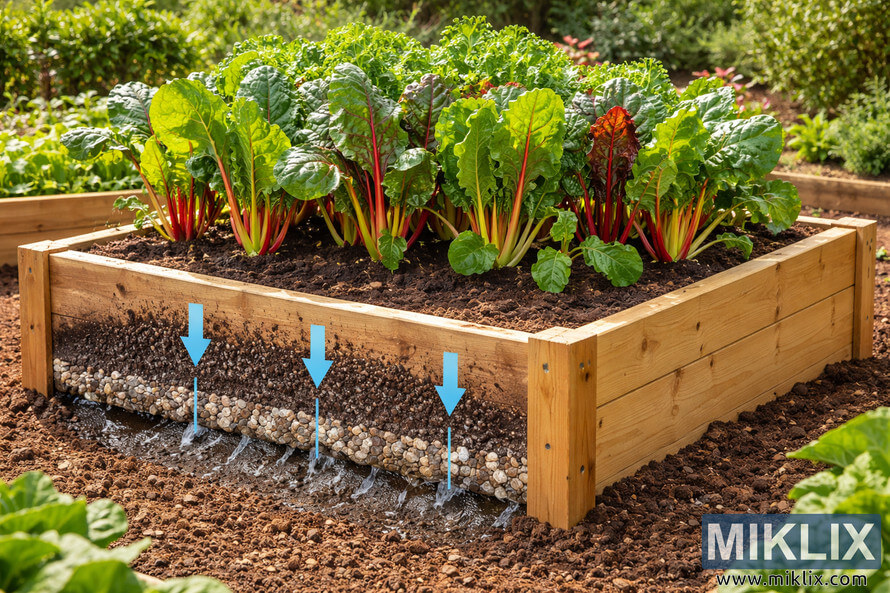
High-resolution image of a raised wooden garden bed growing Swiss chard with a visible layered soil and gravel system that improves drainage and prevents waterlogging.
Raised Garden Bed with Swiss Chard Demonstrating Improved Drainage
ამ სურათის ხელმისაწვდომი ვერსიები
ქვემოთ ჩამოსატვირთად ხელმისაწვდომი სურათების ფაილები ნაკლებად შეკუმშული და უფრო მაღალი გარჩევადობისაა - და შესაბამისად, უფრო მაღალი ხარისხის - ვიდრე ამ ვებსაიტზე განთავსებულ სტატიებსა და გვერდებში ჩასმული სურათები, რომლებიც უფრო ოპტიმიზირებულია ფაილის ზომის მიხედვით, რათა შემცირდეს გამტარუნარიანობის მოხმარება.
ჩვეულებრივი ზომა (1,536 x 1,024)
დიდი ზომა (3,072 x 2,048)
ძალიან დიდი ზომა (4,608 x 3,072)
ძალიან დიდი ზომა (6,144 x 4,096)
კომიკურად დიდი ზომის (1,048,576 x 699,051)
- ჯერ კიდევ მიმდინარეობს ატვირთვა... ;-)
სურათის აღწერა
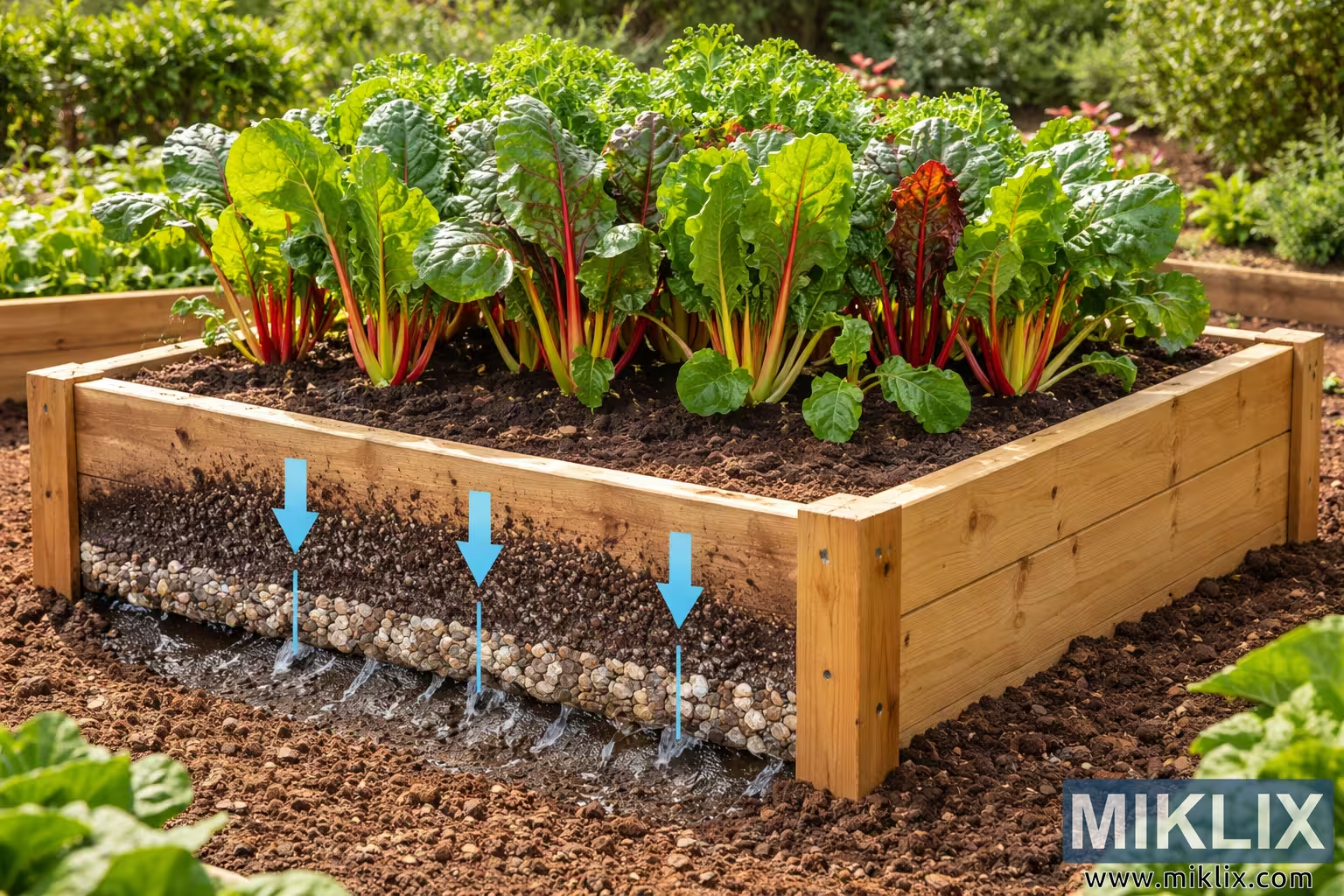
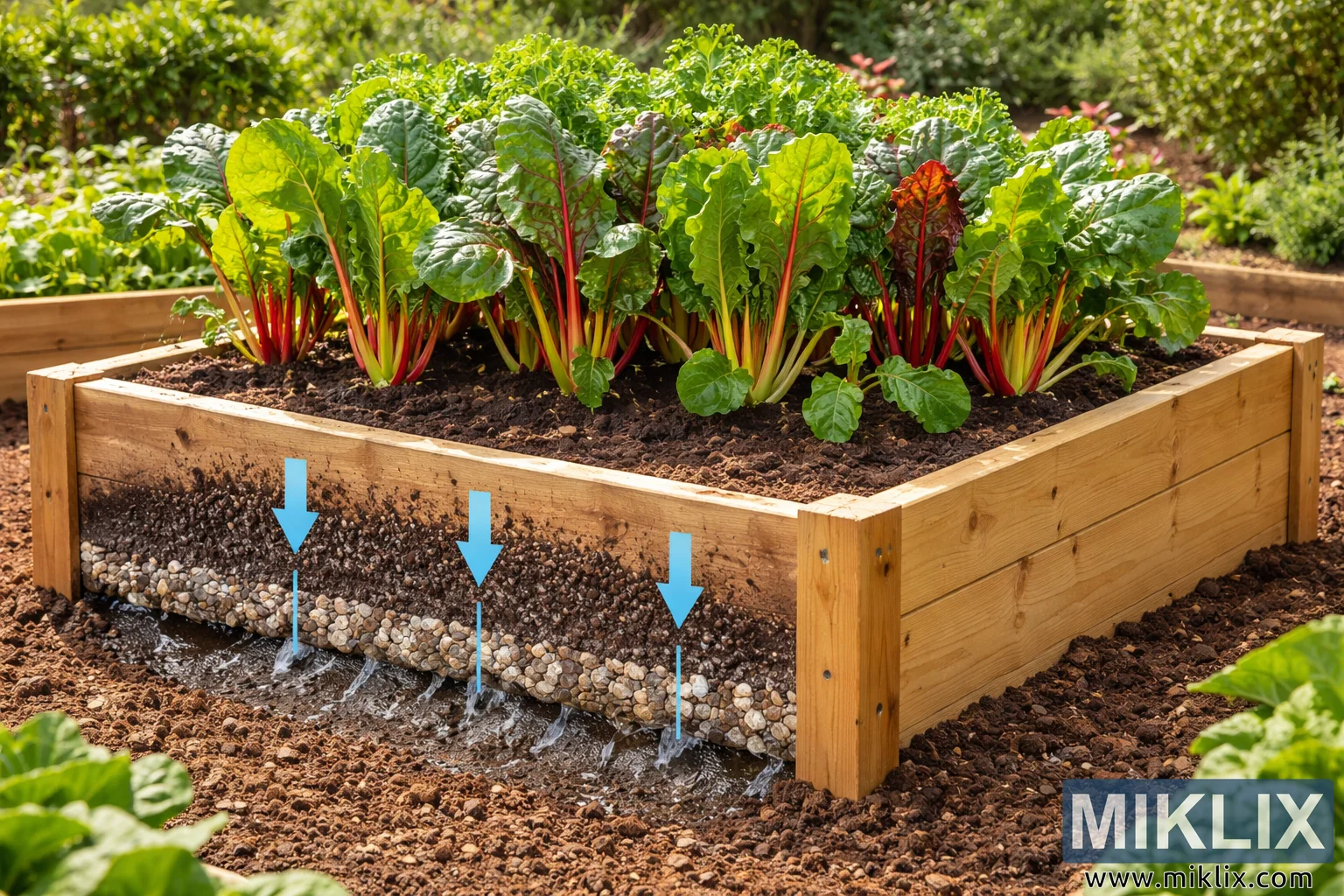
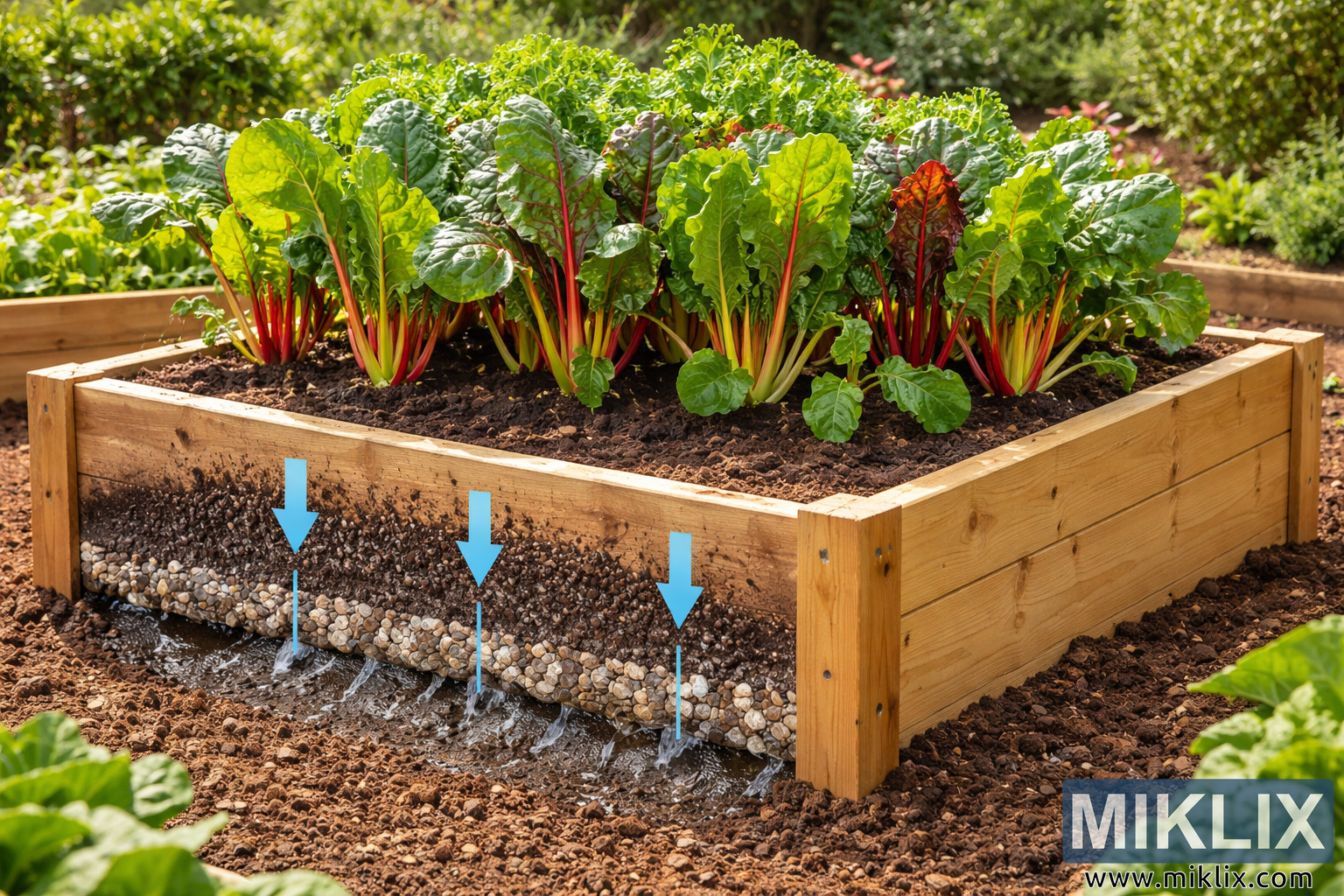
This high-resolution landscape photograph shows a well-constructed raised garden bed designed to demonstrate an improved drainage system for healthy vegetable growth. The rectangular bed is built from light-colored wooden boards, likely cedar or another weather-resistant wood, and is reinforced at the corners with sturdy metal brackets and screws. The structure sits slightly elevated above the surrounding soil in a tidy garden setting with other greenery visible softly out of focus in the background. Bright natural daylight illuminates the scene, highlighting the texture of the wood, the dark soil, and the vibrant leaves of the plants.
Inside the bed, a dense row of Swiss chard plants grows vigorously. The leaves are broad, glossy, and deep green with slightly crinkled edges. Their thick stems display vivid colors—mainly bright red and yellow—creating a striking contrast against the dark, nutrient-rich soil. The plants appear healthy, upright, and evenly spaced, suggesting good growing conditions and effective moisture management.
The front side of the raised bed is presented as a cutaway view that reveals the layered construction beneath the surface. The upper layer consists of rich garden soil where the Swiss chard roots are growing. Beneath this layer lies a visible band of small rounded gravel or stones. A thin sheet of landscape fabric separates the soil from the drainage layer, preventing fine soil particles from clogging the stones while still allowing water to pass through freely.
Below the gravel layer, water can be seen draining out of the bed through small openings near the base. Several illustrated blue arrows point downward through the soil and gravel layers, visually indicating the direction of water movement. Small streams of water emerge from the bottom edge of the bed and flow into the surrounding ground, clearly demonstrating how excess moisture is carried away from the root zone.
The soil surrounding the raised bed appears slightly damp and loose, suggesting recent watering or rainfall. The garden environment around the bed includes blurred greenery and additional planting beds, reinforcing the impression of a productive vegetable garden. Overall, the image clearly communicates the concept of improved drainage in raised beds by combining a realistic garden scene with a cross-section view that illustrates the internal structure and water flow.
სურათი დაკავშირებულია: How to Grow Swiss Chard: A Complete Beginner's Guide