
ಚಿತ್ರ: Proper Hop Storage in Vacuum-Sealed Freezer Bags
ಪ್ರಕಟಣೆ:
ಕೊನೆಯದಾಗಿ ನವೀಕರಿಸಲಾಗಿದೆ: ಸೆಪ್ಟೆಂಬರ್ 15, 2026 ರಂದು 05:17:59 ಅಪರಾಹ್ನ UTC ಸಮಯಕ್ಕೆ
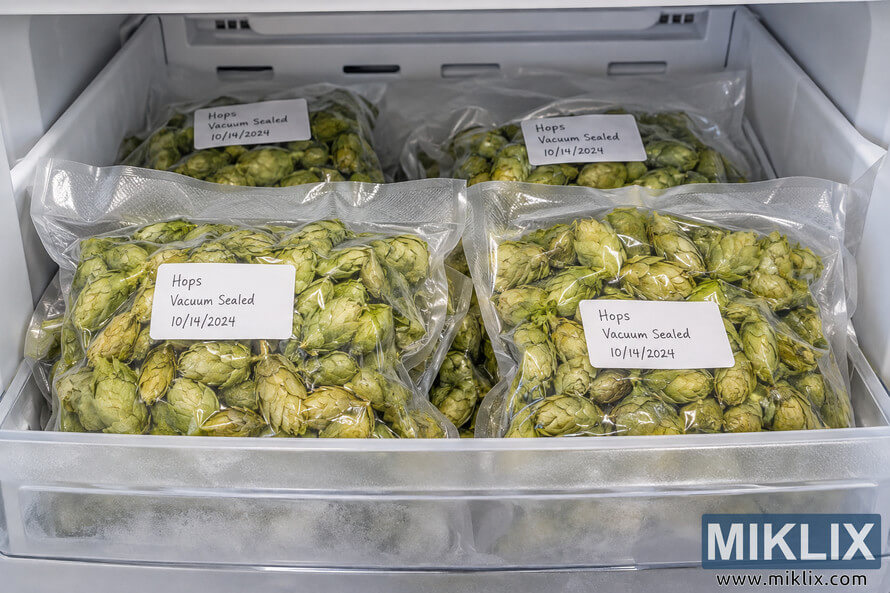
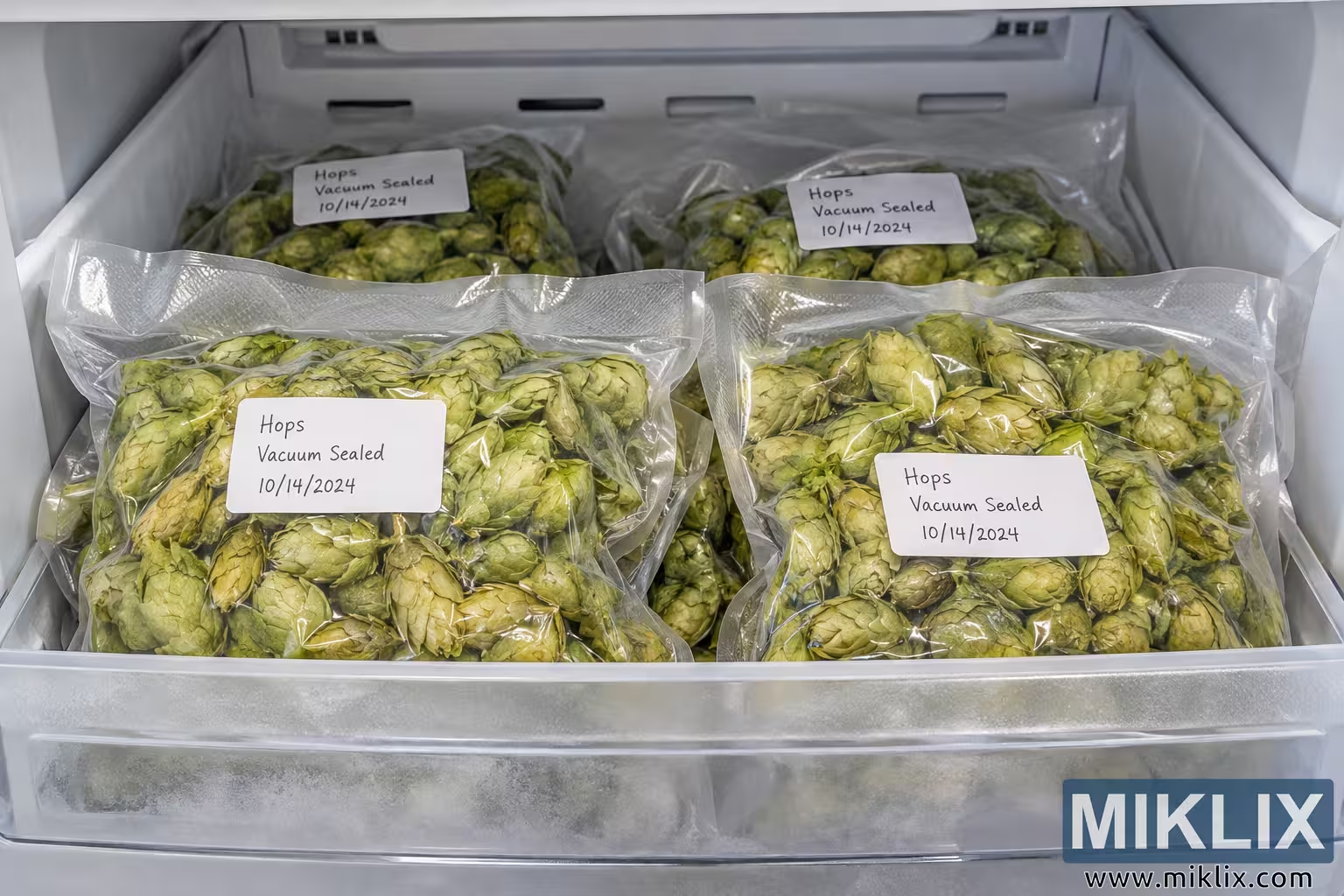
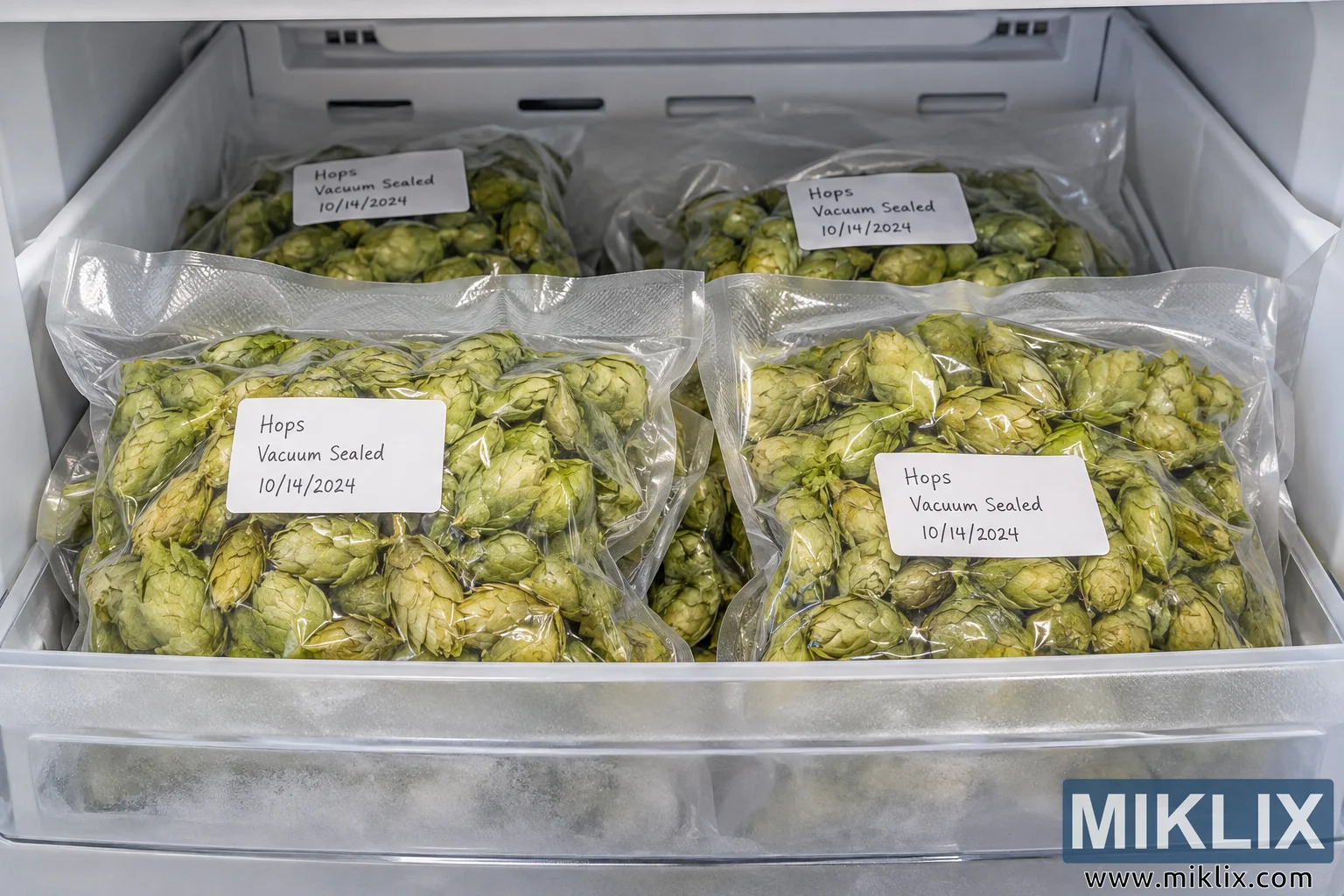
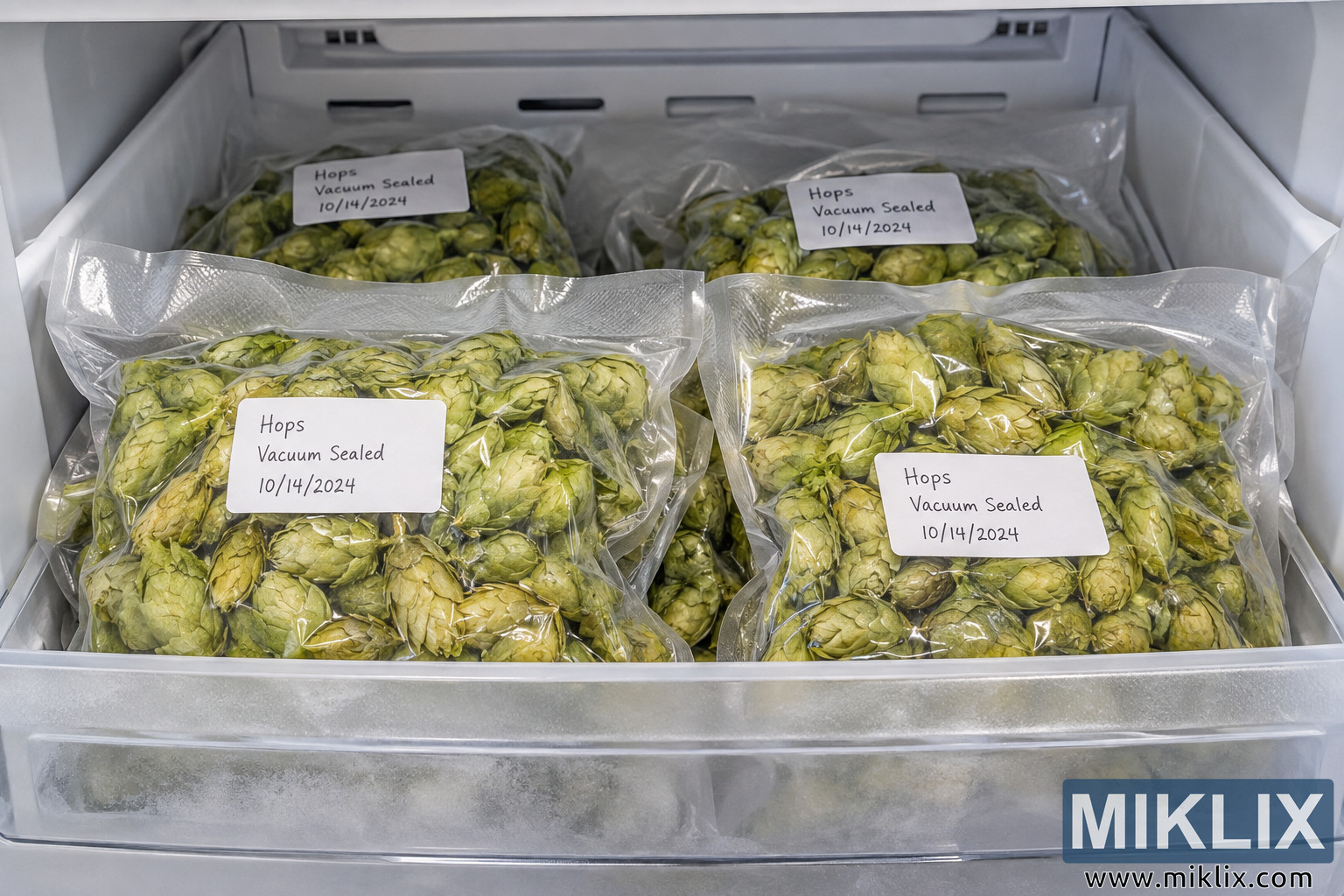
A realistic view of properly stored hops in labeled, vacuum-sealed bags arranged inside a freezer to illustrate organized long-term cold storage.
Proper Hop Storage in Vacuum-Sealed Freezer Bags
ಈ ಚಿತ್ರದ ಲಭ್ಯವಿರುವ ಆವೃತ್ತಿಗಳು
ಕೆಳಗೆ ಡೌನ್ಲೋಡ್ ಮಾಡಲು ಲಭ್ಯವಿರುವ ಇಮೇಜ್ ಫೈಲ್ಗಳು ಕಡಿಮೆ ಸಂಕುಚಿತ ಮತ್ತು ಹೆಚ್ಚಿನ ರೆಸಲ್ಯೂಶನ್ ಹೊಂದಿವೆ - ಮತ್ತು ಅದರ ಪರಿಣಾಮವಾಗಿ, ಈ ವೆಬ್ಸೈಟ್ನಲ್ಲಿನ ಲೇಖನಗಳು ಮತ್ತು ಪುಟಗಳಲ್ಲಿ ಎಂಬೆಡ್ ಮಾಡಲಾದ ಚಿತ್ರಗಳಿಗಿಂತ ಉತ್ತಮ ಗುಣಮಟ್ಟದ್ದಾಗಿದೆ, ಇವು ಬ್ಯಾಂಡ್ವಿಡ್ತ್ ಬಳಕೆಯನ್ನು ಕಡಿಮೆ ಮಾಡಲು ಫೈಲ್ ಗಾತ್ರಕ್ಕೆ ಹೆಚ್ಚು ಆಪ್ಟಿಮೈಸ್ ಮಾಡಲ್ಪಟ್ಟಿವೆ.
ನಿಯಮಿತ ಗಾತ್ರ (1,536 x 1,024)
ದೊಡ್ಡ ಗಾತ್ರ (3,072 x 2,048)
ತುಂಬಾ ದೊಡ್ಡ ಗಾತ್ರ (4,608 x 3,072)
ಅತಿ ದೊಡ್ಡ ಗಾತ್ರ (6,144 x 4,096)
ಹಾಸ್ಯಮಯವಾಗಿ ದೊಡ್ಡ ಗಾತ್ರ (1,048,576 x 699,051)
- ಇನ್ನೂ ಅಪ್ಲೋಡ್ ಆಗುತ್ತಿದೆ... ;-)
ಚಿತ್ರದ ವಿವರಣೆ
The image presents a wide, landscape-oriented close-up view into the open drawer of a clean household freezer, illustrating a practical method for storing hops for long-term preservation. The composition is centered on several transparent vacuum-sealed plastic bags filled with whole hop cones. The bags have been arranged neatly inside the freezer drawer, creating an immediately recognizable visual example of hops being protected from air and kept at a low temperature. The overall appearance is clean, organized, realistic, and instructional, with no visible commercial branding or identifiable manufacturer logos.
In the foreground, two large vacuum-sealed bags dominate the composition. One occupies most of the lower-left and center-left portion of the image, while the other fills much of the lower-right side. Both bags contain numerous whole hop cones in natural shades ranging from pale yellow-green to muted olive green. Individual cones are clearly visible through the transparent plastic. Their layered, overlapping bracts create a distinctive textured appearance, and subtle variations in color make the contents look natural rather than uniform. Some cones appear slightly more golden or dry than others, while others retain a stronger green tone. This variation reinforces the realistic agricultural character of the hops.
The vacuum packaging is particularly prominent. The transparent plastic closely follows the contours of the hop cones and contains numerous folds, creases, wrinkles, and reflective highlights. These details communicate that air has been removed from the bags rather than the hops simply being placed inside ordinary loose storage bags. Broad sealed borders are visible around portions of the packaging, further emphasizing the vacuum-sealed storage method. Light reflecting from the glossy plastic creates bright streaks and small specular highlights across the surfaces without obscuring the hops underneath.
Each of the two large foreground bags has a simple rectangular white label attached to its front surface. The labels contain dark handwritten-style text identifying the contents as hops and indicating that they are vacuum sealed. A storage or packing date is also written beneath the descriptive text. The labels are plain and generic, with no logos, trademarks, company names, product branding, decorative graphics, or other commercial identifiers. Their simple appearance contributes to the impression of careful home storage and makes the scene feel practical and approachable.
Behind the two foreground packages are additional bags of hops, extending the storage arrangement toward the rear of the freezer. Two bags are especially visible in the upper-left and upper-right areas. These rear packages are partially obscured by the larger bags in front but remain clearly recognizable as vacuum-sealed hops. They also carry simple white handwritten labels. Additional green hop material and packaging can be seen between the foreground and background bags, giving the impression that the freezer drawer contains a substantial supply that has been divided into manageable portions for storage.
The freezer itself provides a bright, neutral environment around the hops. White and light gray interior surfaces frame the bags on the left, right, and rear. At the top of the image, the back wall of the freezer includes understated ventilation openings and molded structural details. These features make the cold-storage setting immediately identifiable while remaining visually secondary to the hop packages. The interior is uncluttered and free of unrelated food products, allowing the storage technique to remain the sole subject of the photograph.
Across the bottom of the frame is the front edge of the freezer drawer. It has a translucent or lightly frosted appearance, with a broad horizontal shape spanning nearly the entire width of the photograph. Subtle condensation or frost-like texture is visible across portions of this surface, visually reinforcing the cold environment. Through the translucent drawer front, indistinct green shapes can be seen, suggesting that more packaged hops may be positioned deeper or lower within the compartment. The drawer edge also creates a strong horizontal boundary that helps organize the composition.
The lighting is bright, cool, and evenly distributed, resembling the illumination found inside a modern freezer combined with clear photographic lighting. The white freezer walls reflect light onto the packages, while the glossy vacuum bags produce crisp highlights. Shadows are relatively soft, so details remain visible throughout the image. The hop cones have enough texture and tonal variation to stand apart from the neutral surroundings, making their green and yellow-green coloring the main visual accent in an otherwise white and gray scene.
The camera is positioned directly in front of the open freezer drawer at approximately the height of its contents. This viewpoint creates the impression that the viewer has just opened the freezer and is looking straight at the stored hops. The landscape framing accommodates the width of the drawer and allows multiple packages to be displayed simultaneously. The two large foreground bags establish visual emphasis, while the smaller and partially hidden packages toward the rear create depth. The arrangement appears orderly without being unnaturally symmetrical, giving the image the character of a genuine storage setup rather than a highly stylized product display.
Conceptually, the photograph communicates proper hop storage through several visual cues working together: the hops are divided into sealed packages, air has visibly been removed from the packaging, the bags are clearly labeled, and the entire supply is stored inside a freezer. The image therefore conveys protection from oxygen and warm storage conditions without requiring explanatory diagrams or branded equipment. The absence of commercial packaging keeps the emphasis on the storage method itself. Overall, the scene is a realistic, detailed depiction of whole hops preserved in transparent vacuum-sealed bags and organized inside a freezer for longer-term storage.
ಈ ಚಿತ್ರವು ಇದಕ್ಕೆ ಸಂಬಂಧಿಸಿದೆ: Hops in Beer Brewing: Belma