
이미지: Belgian-Style Golden Amber Ale with Bramling Cross Hops
게시됨:
마지막으로 업데이트되었습니다: 2026년 9월 18일 오후 4시 8분 33초 UTC
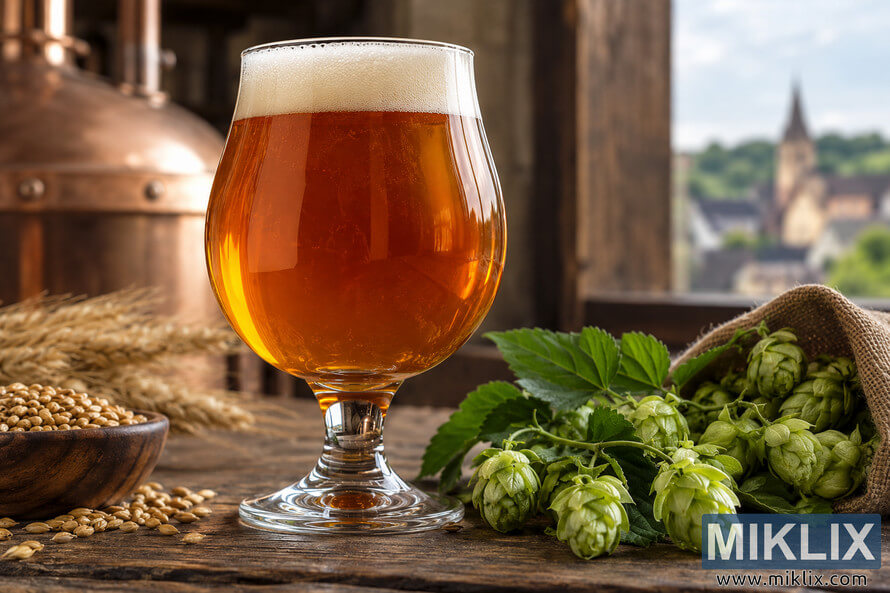
Belgian-style golden-amber ale presented with fresh Bramling Cross hops, malted grains and copper brewing equipment in a warm, rustic brewery setting.
Belgian-Style Golden Amber Ale with Bramling Cross Hops
이 이미지의 사용 가능한 버전
아래에서 다운로드할 수 있는 이미지 파일은 이 웹사이트의 기사 및 페이지에 삽입된 이미지보다 압축률이 낮고 해상도가 높으며, 대역폭 소비를 줄이기 위해 파일 크기에 더 최적화되어 있어 품질이 더 높습니다.
일반 사이즈 (1,536 x 1,024)
대형 사이즈 (3,072 x 2,048)
매우 큰 크기 (4,608 x 3,072)
초대형 사이즈 (6,144 x 4,096)
코믹하게 큰 사이즈 (1,048,576 x 699,051)
- 아직 업로드 중... ;-)
이미지 설명
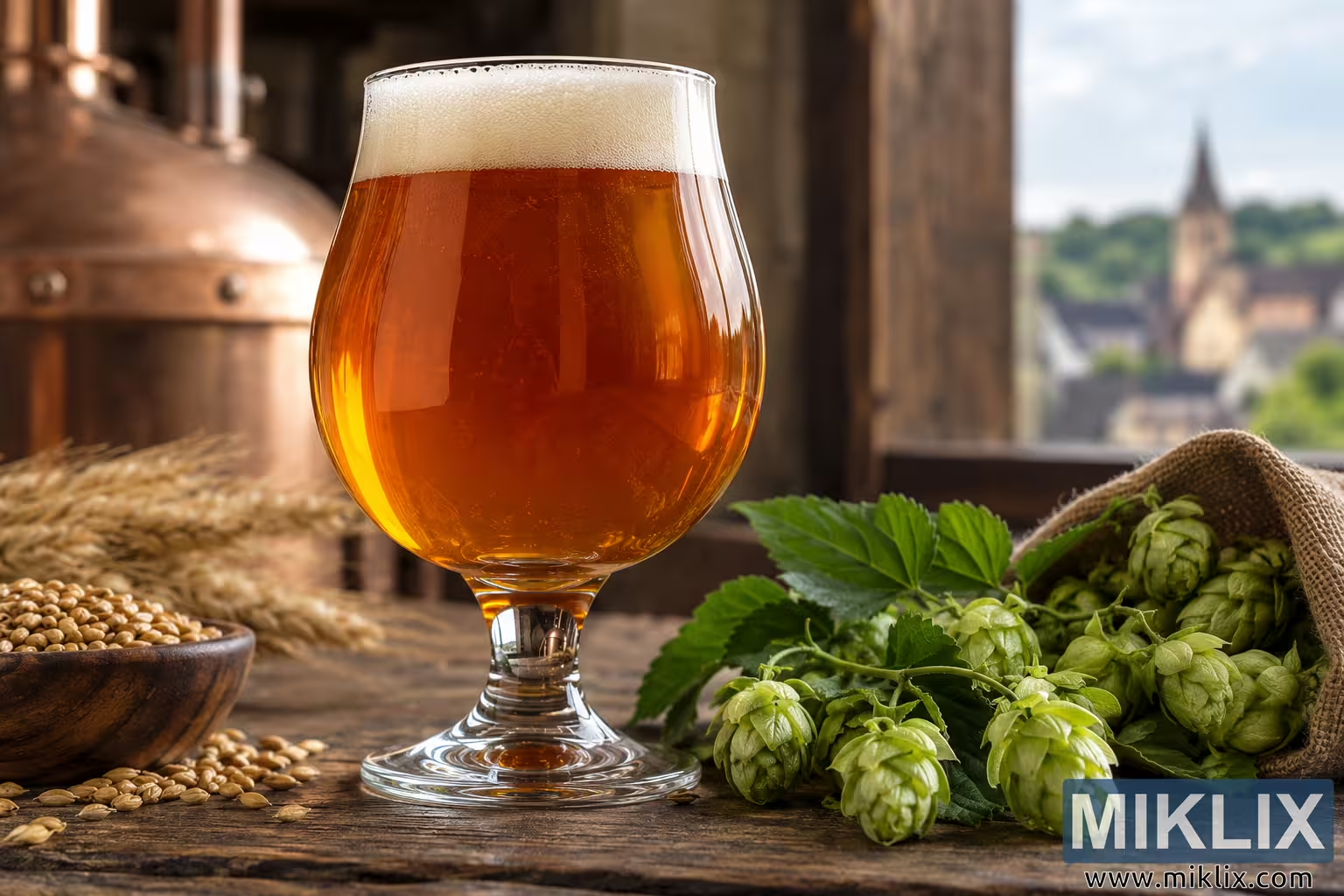
The image is a high-resolution landscape-oriented still-life photograph depicting a Belgian-style ale in a warm, rustic brewing environment. The central subject is a clear tulip-shaped beer glass positioned prominently in the foreground, slightly to the left of the center of the composition. The glass has a rounded, generous bowl, a short elegant stem, and a broad circular foot resting on a heavily textured wooden tabletop. It is filled with a clear ale displaying a striking golden-amber to copper-orange color. The lower and left portions of the beer glow with luminous honey-gold and orange tones as warm light passes through the liquid, while the central and upper areas appear deeper amber and reddish copper. These variations in color give the beer visual depth and emphasize its clarity, warmth, and characteristic appearance. A thick, creamy off-white foam head rests above the beer. The head is dense and finely bubbled, with an uneven natural texture along its upper surface and numerous tiny bubbles visible close to the glass. A clearly defined boundary separates the pale foam from the rich amber liquid beneath it. Very fine points of carbonation are visible within the beer, contributing to the impression of a fresh, lively pour. Bright highlights and subtle reflections follow the curved contours of the glass, particularly around the rim, bowl, stem, and base. The transparency of the glass and the luminous beer make the drink the strongest visual focal point in the photograph. To the right of the glass is a large arrangement of fresh green hop cones representing the Bramling Cross hop component of the scene. The hops are presented naturally without labels, commercial packaging, trademarks, or branding. Several plump hop cones rest directly on the wooden tabletop, while a larger quantity spills from a loosely opened burlap sack positioned toward the right edge of the frame. The hop cones display detailed overlapping bracts, with colors ranging from pale yellow-green to richer medium green. Their layered surfaces catch the directional light, producing small highlights and shadows that reveal their distinctive structure. Green leaves and stems are interspersed among the hop cones, making the arrangement look freshly harvested and reinforcing the agricultural character of the brewing ingredient. The hops occupy much of the lower-right portion of the composition and provide a vivid complementary contrast to the warm orange and amber tones of the beer. The burlap sack has a visibly coarse woven texture, with rough fibers and folds that contribute to the handcrafted, traditional atmosphere. On the left side of the foreground, malted grains provide another visual reference to the brewing process. A small dark wooden bowl contains a quantity of pale tan grain kernels, and additional kernels are scattered casually across the tabletop around the bowl and toward the base of the beer glass. Behind this foreground grain are several dried golden cereal stalks and seed heads. Their pale straw and beige tones harmonize with the foam, wood, and copper elements elsewhere in the image. Together, the malted grain and hops visually frame the finished ale and connect the beverage to its raw brewing ingredients. The wooden tabletop is aged and rustic, with pronounced grain patterns, scratches, grooves, dark seams, irregular edges, and signs of long use. Its rough surface contrasts with the smooth polished glass and creates an artisanal setting appropriate for a traditional brewery. In the background on the far left, a large copper brewing vessel is partially visible. The vessel has a rounded metallic body and vertical copper pipes or fittings extending upward. Its surface reflects warm light and displays soft copper, bronze, and rose-gold tones. The brewing equipment is deliberately less sharply focused than the foreground glass and ingredients, but it remains recognizable enough to establish the setting as a brewery or brewing-inspired environment. Behind the glass, dark wooden architectural elements form much of the interior background. A substantial vertical timber beam appears toward the center-right, while shadowed brown wooden surfaces create a dark backdrop around the illuminated ale. This darker background increases the visual impact of the glowing beer and helps define the transparent edges of the glass. To the right, an open window or large opening provides a view toward a softly blurred European-looking village landscape. Pale buildings, green vegetation, and a tall church-like spire can be distinguished in the distance, although they are intentionally rendered out of focus. The distant architecture and countryside suggest a traditional European setting without depicting any specific identifiable commercial location. A pale blue sky with soft white clouds appears above the village. The shallow depth of field keeps the beer, hops, grain, and nearby tabletop in strong visual prominence while turning the distant scenery into a gentle atmospheric background. Natural-looking daylight enters from the right and combines with warmer interior illumination to produce an inviting, carefully controlled photographic effect. The light passing through the beer is particularly important to the composition, transforming the liquid into a glowing spectrum of honey, gold, amber, burnt orange, and copper. Highlights on the fresh hops reveal the shape of individual bracts, while shadows between the cones add depth to the pile. The copper brewing equipment catches broad, soft highlights, and the scattered grains receive smaller points of illumination. The overall palette is dominated by amber, copper, golden yellow, natural green, dark brown, tan, cream, and restrained pale blue. The composition is balanced through the placement of brewing ingredients on either side of the glass: malt and grain occupy the left foreground, while fresh hops dominate the right. The central glass connects these elements as the finished product of the brewing process. The copper vessel in the background provides contextual information, and the distant village adds visual depth and a subtle European character. No actual brands are visible anywhere in the image. There are no logos, brand names, bottle labels, branded glass markings, commercial packages, advertisements, signs, or trademarks. The presentation is entirely generic and focuses on the appearance of the ale and its ingredients rather than on a specific producer. The photograph conveys craftsmanship, traditional brewing, freshness, natural ingredients, and an artisanal Belgian-style beer aesthetic. Its strongest visual feature is the characteristic rich golden-amber color of the ale, enhanced by transmitted light and contrasted against fresh green hops. The result is a detailed, realistic beverage photograph that presents a Belgian-style ale with Bramling Cross hops in a welcoming rustic brewery setting while emphasizing color, clarity, texture, brewing ingredients, and traditional craftsmanship.
이 이미지는 다음과 관련이 있습니다: Hops in Beer Brewing: Bramling Cross