
이미지: Homebrewer Calculating IBU Contributions with Bramling Cross Hops
게시됨:
마지막으로 업데이트되었습니다: 2026년 9월 18일 오후 4시 8분 33초 UTC
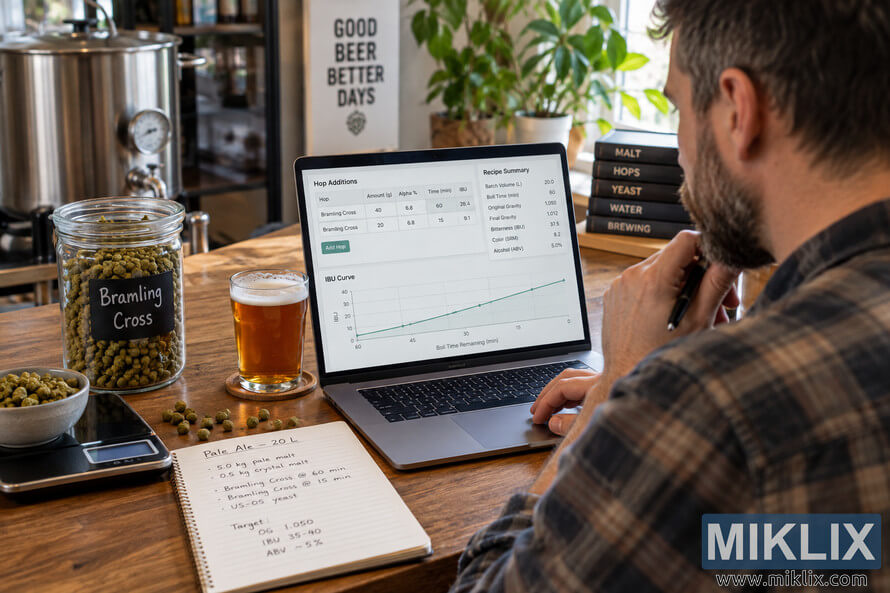
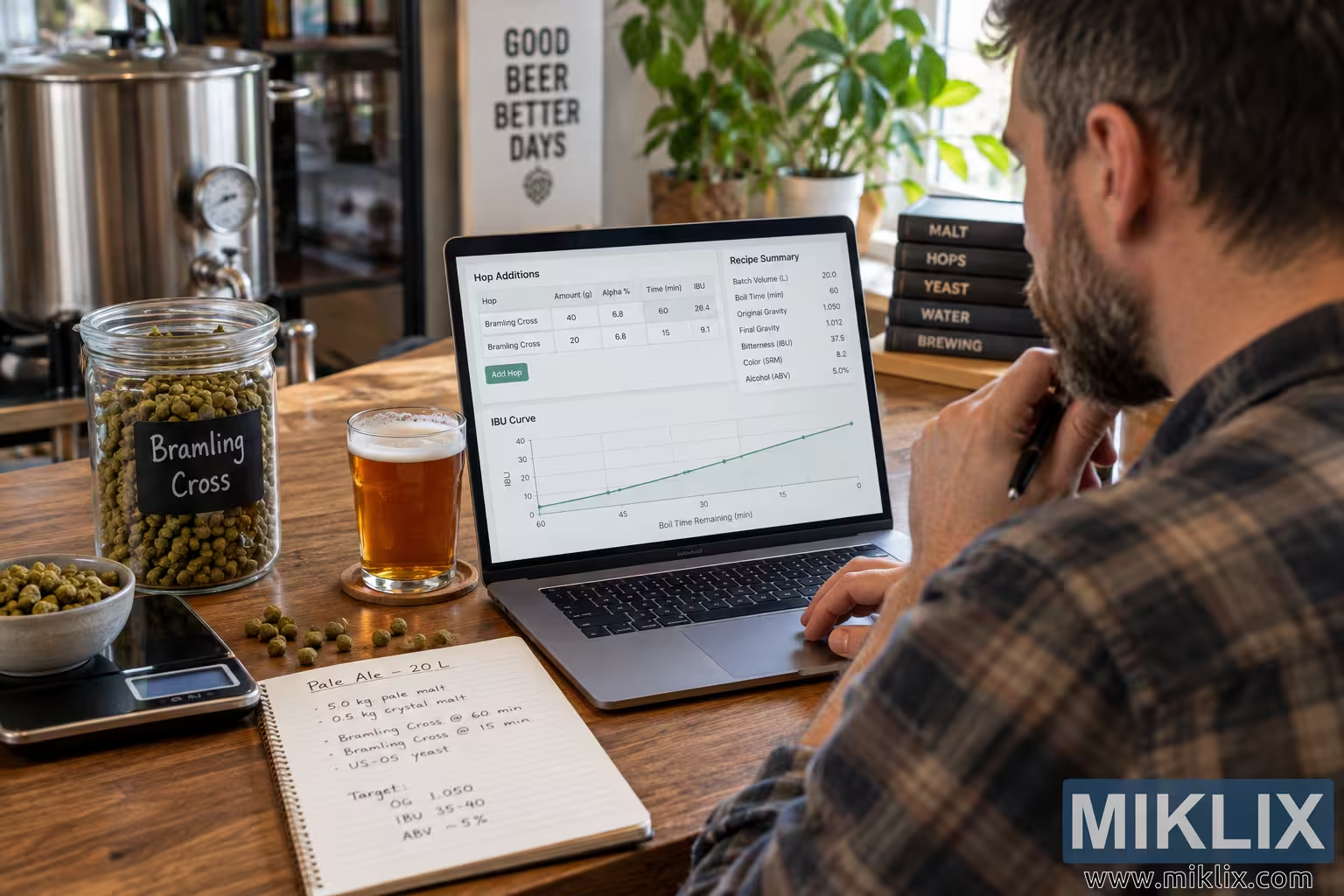
A homebrewer calculates IBU contributions from Bramling Cross hops using brewing software, recipe notes, hop pellets, a digital scale, and homebrew equipment.
Homebrewer Calculating IBU Contributions with Bramling Cross Hops
이 이미지의 사용 가능한 버전
아래에서 다운로드할 수 있는 이미지 파일은 이 웹사이트의 기사 및 페이지에 삽입된 이미지보다 압축률이 낮고 해상도가 높으며, 대역폭 소비를 줄이기 위해 파일 크기에 더 최적화되어 있어 품질이 더 높습니다.
일반 사이즈 (1,536 x 1,024)
대형 사이즈 (3,072 x 2,048)
매우 큰 크기 (4,608 x 3,072)
초대형 사이즈 (6,144 x 4,096)
코믹하게 큰 사이즈 (1,048,576 x 699,051)
- 아직 업로드 중... ;-)
이미지 설명
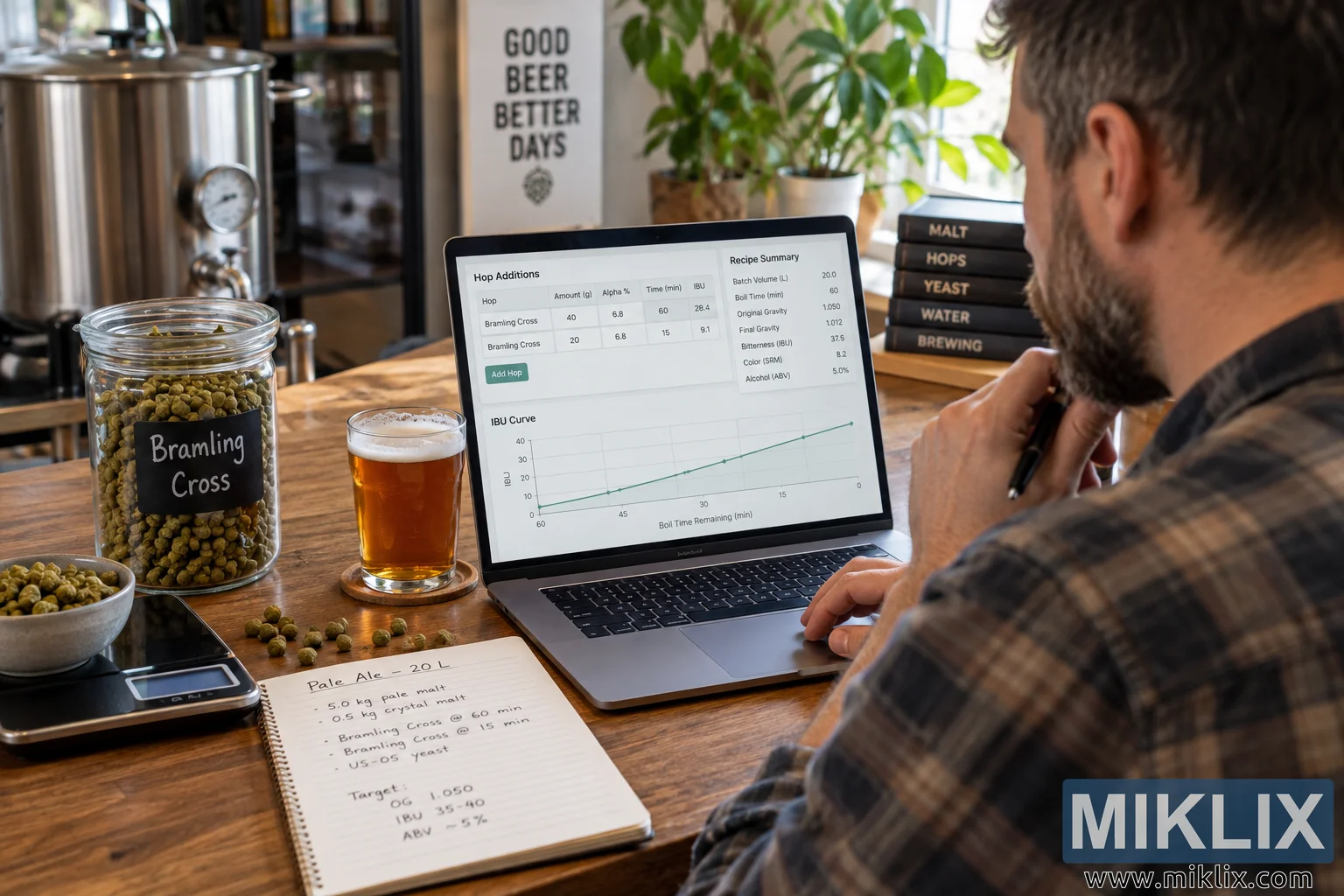
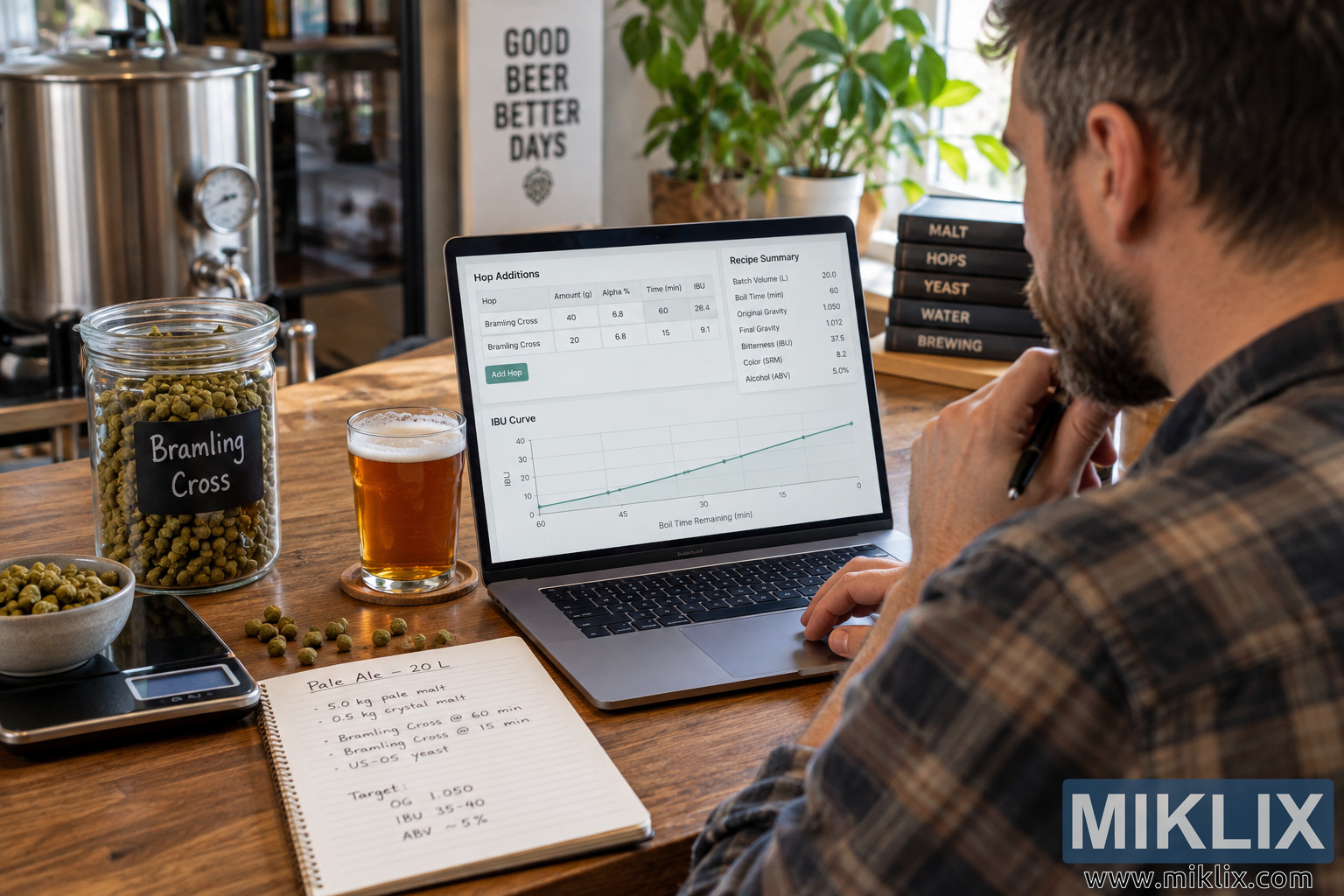
A realistic landscape-oriented photograph depicts a homebrewer seated at a wooden worktable in a bright, comfortable home brewing space, carefully calculating the bitterness contribution of Bramling Cross hops with the assistance of brewing software. The scene is viewed from slightly behind and to the left of the brewer, placing the viewer close to the activity while providing a clear view of the laptop screen, brewing ingredients, handwritten recipe notes, and equipment surrounding him. The brewer is an adult man with short brown hair and a neatly trimmed beard. He wears a dark brown and charcoal plaid shirt and sits facing an open laptop. His posture communicates concentration: one hand rests near the laptop's trackpad while the other holds a black pen close to his chin, as though he is reviewing the numbers before making a decision about the hop schedule.
The laptop is the visual center of the composition. Its screen displays a clean, generic brewing-software interface without recognizable commercial branding. A section titled "Hop Additions" contains a table listing Bramling Cross hops, their amounts, alpha-acid percentage, boil times, and calculated IBU contributions. Two additions are visible, illustrating how different quantities and boil durations contribute different amounts of bitterness to the finished beer. Alongside this table is a recipe summary showing brewing parameters such as batch volume, boil time, original gravity, final gravity, bitterness in IBU, color, and alcohol by volume. Beneath the data is an IBU curve presented as a simple line graph, visually reinforcing the idea that the brewer is analyzing bitterness development and hop utilization rather than merely browsing a recipe.
Immediately to the left of the laptop is a clear glass jar filled with greenish hop pellets. A black handwritten-style label on the jar reads "Bramling Cross," making the hop variety prominent in the scene. More hop pellets are visible in a small bowl beside a compact digital kitchen scale, while a few loose pellets have been scattered naturally across the wooden tabletop. These details give the image a tactile, practical quality and suggest that the brewer is actively weighing ingredients while simultaneously entering or checking values in the brewing software. The scale is generic and contains no visible brand identity.
In front of the laptop lies an open spiral-bound notebook containing handwritten brewing notes for a pale ale recipe. The page includes a 20-liter batch size, malt quantities, Bramling Cross hop additions at different times during the boil, yeast information, and target values such as original gravity, bitterness, and alcohol percentage. The handwritten notes complement the digital calculations on the laptop and create the impression of a brewer cross-checking a traditional recipe notebook against software-generated estimates. Between the notebook and the laptop sits a clear pint glass containing amber-colored beer with a thin off-white foam head. The warm copper and golden tones of the beer echo the rich color of the wooden table and contribute to the inviting homebrew atmosphere.
The background expands the brewing context. On the left stands a large stainless-steel brewing vessel fitted with a round analog gauge and metal fittings. Its polished surface and substantial size suggest a serious homebrew setup while still fitting naturally into a domestic environment. Behind the laptop is a small stack of dark brewing reference books with generic category labels related to malt, hops, yeast, water, and brewing. No real publishers, breweries, software companies, equipment manufacturers, or other commercial brands are shown. A simple decorative sign in the background reads "GOOD BEER BETTER DAYS" and includes a small hop-inspired graphic, reinforcing the relaxed brewing theme without representing an actual brand.
Several leafy green houseplants sit near a large window behind the workspace. Daylight pours through the window, creating soft highlights on the brewer, laptop, glassware, stainless-steel equipment, and tabletop. The natural illumination is supplemented by warm interior tones, resulting in a cozy, believable photographic look. The depth of field is moderately shallow: the brewer and central work area are crisp and detailed, while portions of the background are gently softened. This keeps attention on the calculations and ingredients while preserving enough environmental detail to establish the location as a dedicated home brewing area.
The overall composition tells a clear story of analytical homebrewing. Rather than showing only brewing equipment or a finished beer, the photograph focuses on the planning and calculation stage of recipe development. Bramling Cross hops are represented both physically as pellets and digitally in the software interface, linking the ingredient to the bitterness calculations taking place on screen. The visible IBU values, hop-addition schedule, handwritten recipe, digital scale, and IBU graph communicate that the brewer is estimating how much bitterness each hop addition will contribute to the batch. His thoughtful pose strengthens this interpretation, suggesting that he is comparing quantities, alpha-acid levels, boil durations, and target bitterness before finalizing the recipe. The result is an educational yet natural-looking brewing scene that combines traditional hands-on homebrewing with modern recipe-calculation software, presented as a high-detail lifestyle photograph with no actual commercial brands.
이 이미지는 다음과 관련이 있습니다: Hops in Beer Brewing: Bramling Cross