
Fermenting Beer with Wyeast 1318 London Ale III Yeast
게시됨:
마지막으로 업데이트되었습니다: 2026년 5월 24일 오후 3시 40분 13초 UTC
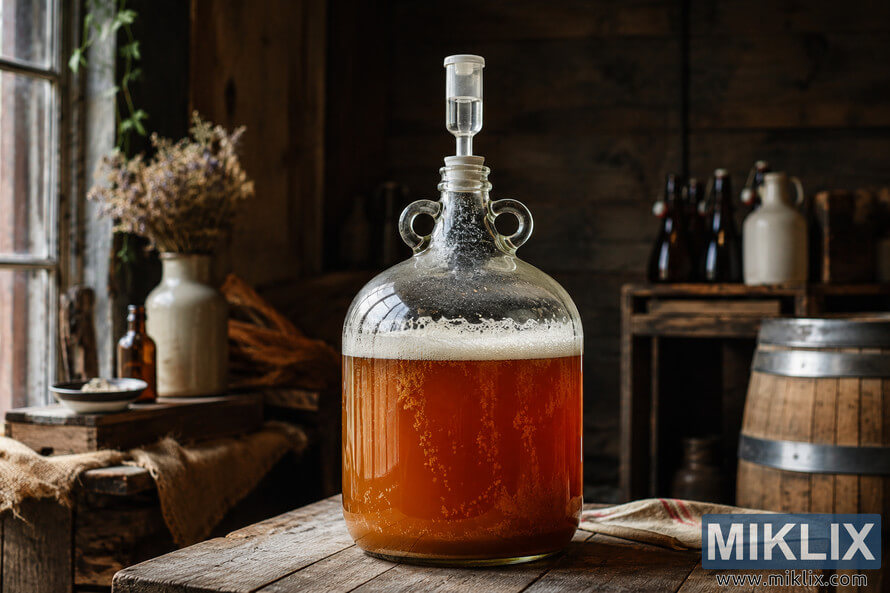
Wyeast 1318 London Ale III is a cornerstone in English brewing traditions. It's celebrated for its balanced, malt-forward profile, suitable for a wide range of ale styles. This strain harmonizes fruity esters with subtle phenolics, appealing to both classic and contemporary brewing approaches.
Fermenting Beer with Wyeast 1318 London Ale III Yeast
이미지를 클릭하거나 탭하면 자세한 정보와 더 높은 해상도를 볼 수 있습니다.
Key Takeaways
- Wyeast 1318 London Ale III yeast offers versatile English ale character for many styles.
- This Wyeast review focuses on practical fermenting beer tips for consistent performance.
- Control of temperature and pitching rates is key to realize London Ale III’s flavor.
- Starter technique and oxygenation impact attenuation and mouthfeel.
- Pair malt and hop selections to let the strain’s ester profile shine.
Overview of Wyeast 1318 London Ale III Yeast
Strain background and lineage
Wyeast Laboratories offers Wyeast 1318 London Ale III, a proprietary strain with roots in the London Ale lineage. It descends from traditional London and English strains, influencing many pub ales. This heritage explains its characteristic soft fruit notes and distinct British flair, cherished by brewers.
Typical beer styles and historical use
Wyeast 1318 is particularly suited for English-style ales, bitters, and brown ales. It's also used in malt-driven porters and some American pale ales for an English twist. Historically, London breweries favored strains like this for their fuller body and approachable esters.
Why brewers choose this strain
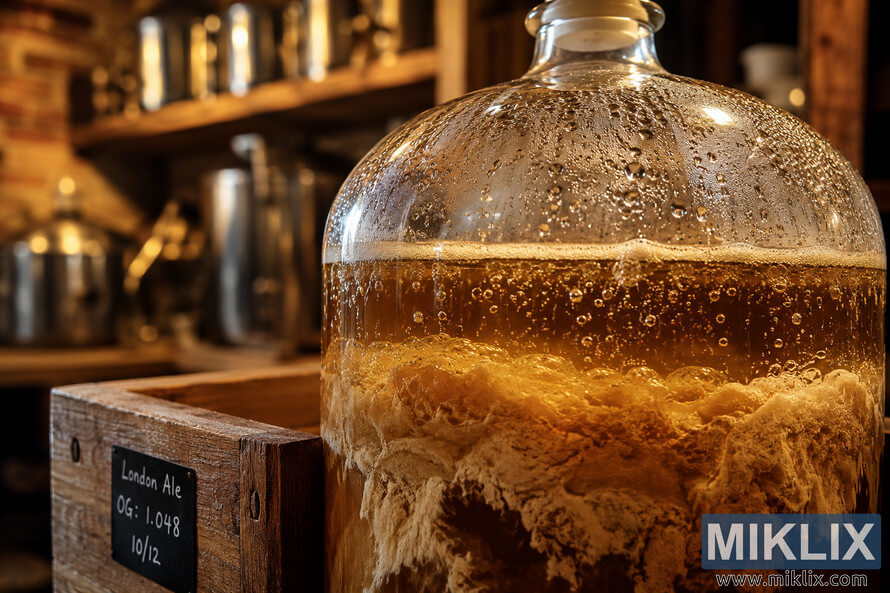
Brewers opt for Wyeast 1318 for its balanced ester profile and moderate attenuation. This preserves the beer's body, perfect for showcasing malt. Its strong flocculation ensures clarity and predictable conditioning times. Its versatility allows it to work well with various malt and hop combinations, making it ideal for blending or co-fermentation. These attributes make it a favorite among brewers seeking English character without extreme phenolics.
이미지를 클릭하거나 탭하면 자세한 정보와 더 높은 해상도를 볼 수 있습니다.
Flavor profile and attenuation characteristics
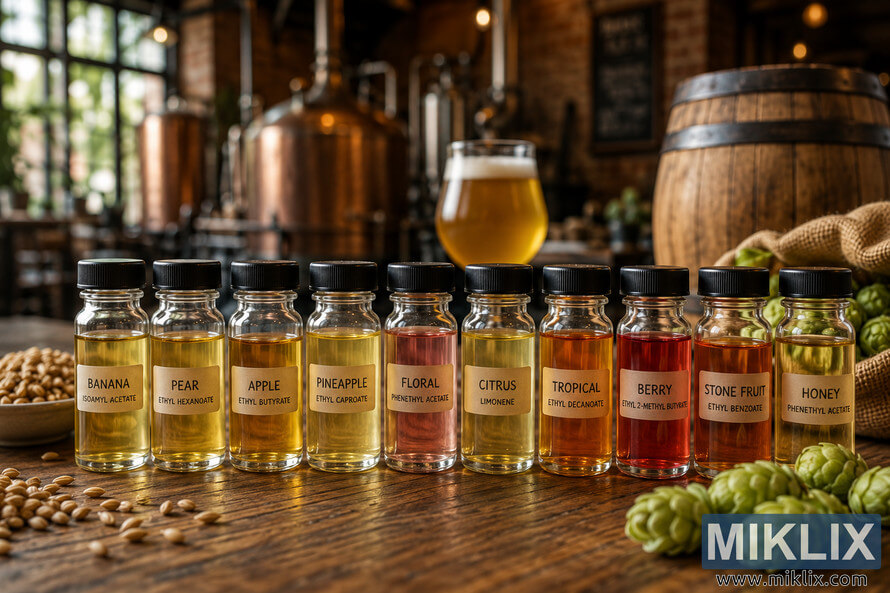
The yeast introduces a unique flavor profile that brewers use to craft beer character. Expect soft fruity esters, a gentle London-style roundness, and a touch of phenolic or sulfuric background when stressed. These traits blend with malt and hops, creating layered sensory experiences.
Aromatic and flavor notes to expect
- Soft fruit esters reminiscent of apple and pear, with occasional stone fruit hints.
- Mild phenolic or sulfur impressions when fermentation is pushed or poorly aerated.
- Subtle diacetyl can appear in warmer ferments, giving a buttery edge if not rested.
- A rounded London-style malt sweetness that supports complex malty recipes.
Attenuation range and body impact
- Typical attenuation range falls roughly between 68–75%, though wort gravity and temperature shift results.
- This level of attenuation produces a medium-full mouthfeel and a noticeable residual malt sweetness.
- Ale body impact is more substantial than with highly attenuative American yeast strains, leaving more weight on the palate.
How the yeast influences malt and hop perception
- Moderate attenuation and ester production amplify malt complexity, making caramel and biscuit notes more prominent.
- Ester notes can add perceived fruitiness that pairs well with citrus and floral hops, enhancing hop perception in some recipes.
- When esters are strong, delicate hop aromatics risk being masked, so balance is key for hop-forward styles.
이미지를 클릭하거나 탭하면 자세한 정보와 더 높은 해상도를 볼 수 있습니다.
Fermentation temperature and schedule recommendations
Mastering fermentation temperature is crucial for beer's flavor and consistency. A clear primary fermentation schedule and effective temperature control are key. This ensures yeast works optimally without stress.
Optimal temperature ranges for primary fermentation
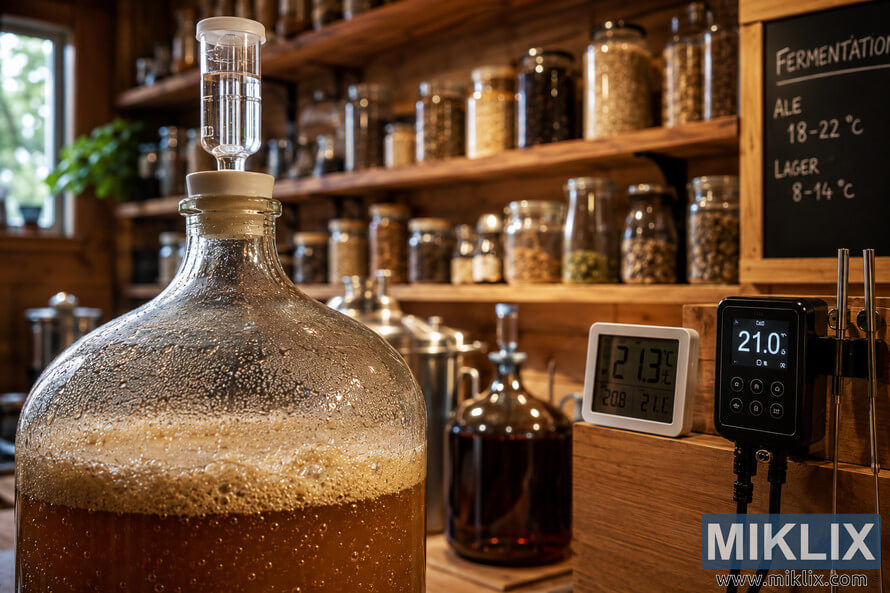
Target 64–70°F (18–21°C) for primary fermentation. Lower temperatures, around 64°F, result in cleaner flavors with fewer fruity esters. Higher temperatures, up to 70°F, speed up fermentation and enhance fruity notes.
Temperature control methods for homebrewers
Homebrewers have various options for maintaining fermentation temperature. A swamp cooler with a digital thermometer is a popular choice for many.
- Refrigerator or chest freezer with an Inkbird or STC controller offers reliable temperature control.
- For advanced setups, a glycol chiller provides precise temperature management for multiple fermenters.
- Insulated buckets, fermenter jackets, or a water bath with an aquarium heater are useful for warmer conditions.
Effects of temperature swings and how to avoid them
Temperature swings can stress yeast, leading to off-flavors like fusels and harsh esters. They also increase the risk of stalled fermentation and uneven attenuation.
To prevent temperature swings, insulate the fermenter and monitor with a thermometer or probe. Use a PID or STC controller when available. If temperature changes are necessary, do so gradually over 24–48 hours to protect yeast health.
이미지를 클릭하거나 탭하면 자세한 정보와 더 높은 해상도를 볼 수 있습니다.
Pitching rates and yeast management
Accurate pitching rates are crucial for maintaining consistent fermentation. For a 5-gallon all-grain batch with an original gravity of 1.045 to 1.060, aim for 100–200 billion viable yeast cells. Utilize a reliable yeast calculator, such as Mr. Malty, to convert cell targets into practical units. Higher gravity worts necessitate a higher pitching rate to prevent prolonged lag times and stressed yeast.
Choosing between a yeast starter and direct pitching significantly impacts flavor and performance. A yeast starter boosts cell count and vitality, reducing lag and stabilizing ester production. Create a starter when the OG exceeds 1.055, when reusing old slurry, or when a liquid pack is near its expiry. Direct pitching can suffice for lower gravity beers if the Wyeast pack is fresh and well handled.
- How much yeast to pitch for different batch sizes: for 5 gallons at 1.050, one large liquid pack may be borderline; match cell counts to gravity and batch size.
- When to build a yeast starter: for high-gravity beers, lagers, or repitches, plan a starter sized to reach the target cell count.
Oxygenation is fundamental in yeast management. Aim for about 8–10 ppm dissolved oxygen for ale fermentations. Employ pure oxygen with a diffusion stone or perform vigorous shaking for smaller batches. Adequate oxygenation enhances yeast performance from the initial cell division.
Yeast nutrients are essential for worts with high sugar content or low free amino nitrogen. Add nutrients like Fermaid K or diammonium phosphate in stressed ferments, big adjunct bills, or very high gravities. Staged nutrient additions during high-gravity fermentations support healthy attenuation and reduce off-flavor risk.
- Check cell counts with a calculator and adjust pitching rate for gravity.
- Use a yeast starter when greater cell mass or vitality is needed.
- Provide proper oxygenation at pitching and add yeast nutrients for stressed worts.
Effective yeast management involves accurate pitching rates, thoughtful use of yeast starters, measured oxygenation, and targeted yeast nutrients. These practices ensure Wyeast 1318 London Ale III performs predictably in various recipes.
이미지를 클릭하거나 탭하면 자세한 정보와 더 높은 해상도를 볼 수 있습니다.
Starter techniques for Wyeast 1318 London Ale III Yeast
A healthy starter is crucial for a clean, vigorous fermentation with Wyeast 1318 London Ale III. Follow precise steps for volume, timing, and cleanliness to activate the yeast before pitching. Utilize a starter calculator to determine the right starter size for various gravities and batch sizes.
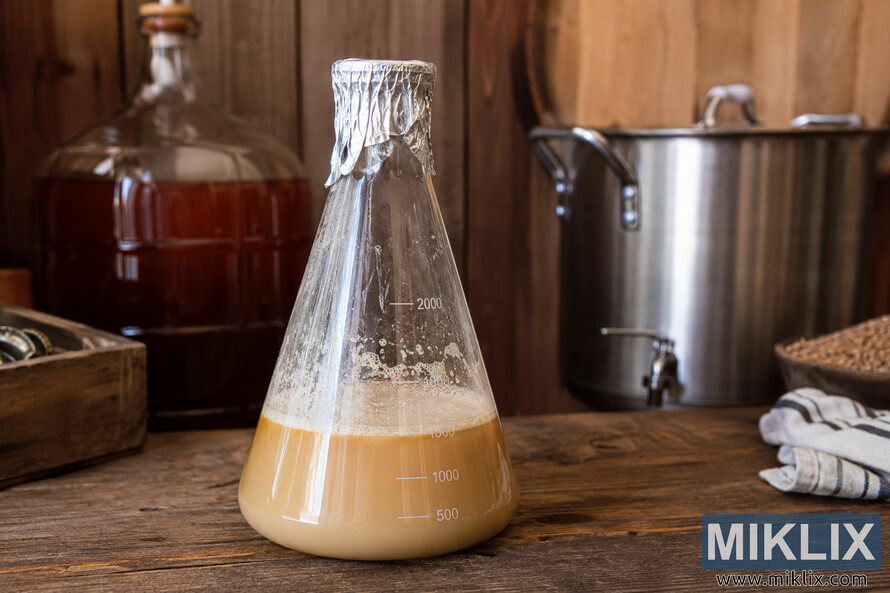
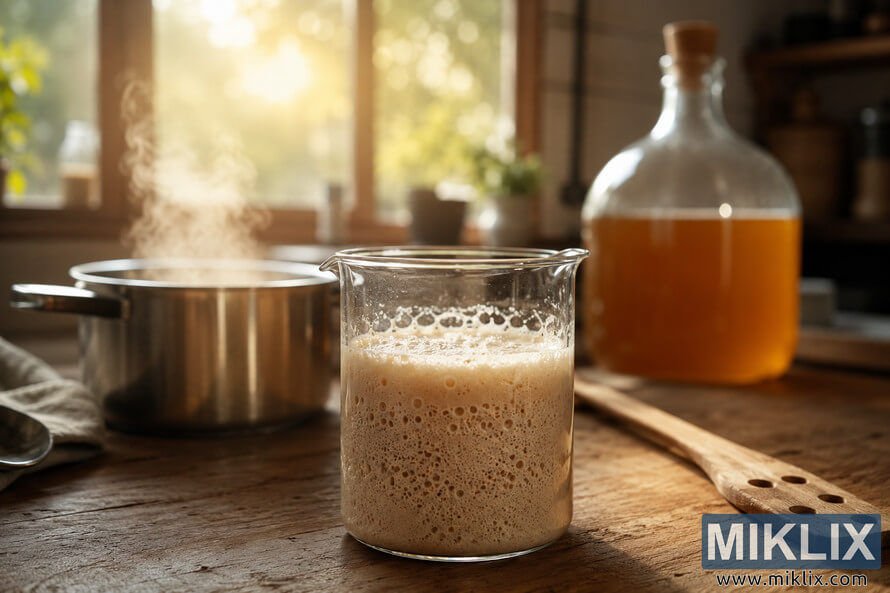
Creating a starter step-by-step is straightforward with a consistent routine. Sanitize a 1–3 liter flask or pot and measure dry malt extract to achieve 1.030–1.040 original gravity for the starter. Boil the wort for 10–15 minutes, then cool it quickly to yeast-friendly temperatures. Pour the cooled wort into the sanitized vessel.
Pitch the yeast after cooling, swirl or shake to oxygenate, and seal with sanitized foil or a foam stopper. Stir daily by hand or use a stir plate for robust cell growth. Expect activity within 12–48 hours, depending on starter size and temperature. A healthy krausen is essential before pitching to your wort.
Use a starter calculator from BeerSmith or Mr. Malty to determine the right starter size for your brew. For a typical 5-gallon batch at 1.050 OG, a 1L starter or a single smack pack is often sufficient. For beers at 1.060 OG or higher, plan a 2L–3L starter or use two packs. For very high gravity beers, a multi-step starter is necessary to increase cell count safely.
Examples are helpful: a 1L starter works well for repitching from a harvested slurry into a similar-strength wort. A 2L starter provides extra insurance for 5-gallon ales above 1.060. If using a starter calculator, enter pitch rate goals, wort gravity, and desired cells to get precise volumes.
Strict yeast sanitation is key to prevent contamination and protect yeast health. Sanitize all starter equipment, including flasks, stoppers, and utensils. Avoid exposing cooled starter wort to open air for longer than necessary. If you detect off-smells or pellicles, discard and start anew.
Storing yeast requires careful handling. Chill active starters to let yeast settle, then decant spent wort and store the slurry in sanitized, oxygen-free containers in the refrigerator for short-term use. You can keep yeast for a few weeks this way.
For longer storage, build a dense slurry, remove most beer, and store under sanitizer or with minimal headspace at cold temperatures. Label jars with strain, date, and generation. Good yeast sanitation during harvest and storing yeast preserves vitality for future batches.
- Sanitize flask, pot, and stopper before any contact with wort.
- Target 1.030–1.040 OG for starter wort made from DME.
- Use a starter calculator to match pitch rates to batch gravity.
- Stir daily or use a stir plate for robust cell growth.
- Chill and decant before storing yeast; keep storage cold and low-oxygen.
이미지를 클릭하거나 탭하면 자세한 정보와 더 높은 해상도를 볼 수 있습니다.
Co-fermentation and blending with other yeasts
Wyeast 1318 London Ale III serves as a solid foundation for co-fermentation strategies. These methods enhance complexity without diminishing malt character. Brewers employ mixed cultures to introduce funk, tartness, or dryness, while preserving the strain's warm, rounded essence.
Pairing Wyeast 1318 with Saccharomyces cerevisiae strains like Wyeast 1968 can create a classic English depth. Brettanomyces adds a farmhouse funk and contributes to long-term evolution. Lactobacillus or Pediococcus can introduce controlled souring when introduced with care. Wyeast 1318's attenuation and flavor stability make it a cautious yet effective partner in these pairings.
- Pair with English ale strains to reinforce malt and esters without overpowering character.
- Introduce Brettanomyces for leather, clove, and earthy complexities over months.
- Add Lactobacillus or Pediococcus for bright or rounded acidity depending on strain and timing.
Decide between sequential fermentation and simultaneous pitching based on control needs. Sequential fermentation involves pitching Wyeast 1318 first to finish primary sugars, then adding Brett or bacteria after visible settling. This method limits early competition and ensures predictable attenuation.
Simultaneous fermentation with a mixed culture can yield more integrated flavors in less time. However, expect less predictability and a wider range of byproducts. Use this method when you want active interplay between strains from day one.
- Sequential fermentation timeline example: primary with Wyeast 1318 for 5–7 days, rest for a week, then introduce Brett or bacteria and condition for months.
- Simultaneous fermentation example: pitch both cultures at brew day and monitor gravity and pH closely.
- Sanitation note: dedicate lines and tanks for sour organisms to prevent cross-contamination.
Flavor layering from yeast blending can produce dryness, tartness, or restrained funk while preserving the strain’s malt emphasis. Test small batches before scaling to a full brew. Expect longer conditioning times with mixed culture beers and plan packaging accordingly.
Risk management is crucial. Maintain strict sanitation, use separate equipment for sour strains when possible, and document timelines and temperatures. Small trials reveal how co-fermentation and yeast blending affect aroma and mouthfeel without risking a main production run.
Hop and malt pairings that complement the strain
Wyeast 1318 London Ale III excels when malt and hops enhance its fruity esters and smooth mouthfeel. It's crucial to keep malt bills simple to let the yeast's voice be heard. Hopping should elevate the strain's natural traits, not overshadow them.
Malt bills that showcase the yeast character
Begin with Maris Otter or British pale malt as the foundation to emphasize bread and biscuit flavors. Incorporate light to medium crystal malts for a subtle caramel sweetness that complements yeast esters.
For a richer profile, add small amounts of Munich or Vienna malts to introduce a toasty, bready element. Avoid using adjuncts like corn or rice to ensure the London Ale yeast's distinctiveness.
In brewing porters or brown ales, darker malts should provide roast and chocolate flavors. Meanwhile, the yeast should soften harshness and add a velvety finish.
Hop varieties that pair well with Wyeast 1318 London Ale III Yeast
Traditional English hops, such as East Kent Goldings and Fuggles, align with the strain's classic character. They add earthy and floral notes that resonate with the yeast's subtle spice.
American hops like Centennial, Citra, and Amarillo are suitable for a brighter, fruit-forward beer. However, use them judiciously to avoid overpowering the yeast's delicate contributions.
Strive for a balance between bitterness and aroma. This ensures that hop varieties enhance the esters without overshadowing the malt and yeast complexities.
Recipe ideas and style suggestions
- English Bitter — OG 1.040–1.048, FG 1.010–1.013, IBU 20–35. Use Maris Otter as the base, with 5–10% medium crystal. Add East Kent Goldings for bittering and aroma. Aim for a sessionable strength with clear London Ale yeast pairings.
- Modern British Pale Ale — OG 1.048–1.055, FG 1.011–1.014, IBU 30–45. Maris Otter and 8% medium crystal are the base. Late boil and whirlpool additions of Amarillo or Citra enhance citrus-fruit synergy.
- Brown Ale / Robust Porter — OG 1.050–1.065, FG 1.012–1.016, IBU 20–30. Maris Otter, Munich, and 10–15% darker crystal or light roast malts are used. Fuggles or light American aroma hops complement malt sweetness and round out the mouthfeel.
These recipe ideas allow the strain to shine while offering brewers a clear path to explore malt pairing and hop varieties. Adjust OG, FG, and IBU to taste, ensuring a balance between malt sweetness and hop presence.
Fermentation problems and troubleshooting
Brewers often encounter fermentation issues that slow down batches or alter flavors. Quick checks of gravity, temperature, and yeast health can reveal common causes. These steps help diagnose problems and select the right remedy, all while avoiding contamination risks.
Common off-flavors and their causes
- Diacetyl: buttery or butterscotch notes often come from incomplete fermentation or high temperatures late in fermentation. Let the yeast finish and allow a diacetyl rest when needed.
- Estery or solvent notes: high pitch temperatures or low oxygen and underpitching can yield fruity or solvent aromas. Tight temperature control and correct pitching rates reduce these risks.
- Sulfur: rotten-egg or sulfurous smells can appear when yeast are stressed or beer sat cold with immature yeast. Gentle warming and time usually clear these compounds.
- Phenolic or spicy notes: stress, wild organisms, or phenolic strains create clove-like or medicinal tones. Maintain sanitation and avoid exposing wort to wild microbes.
Fixes for stuck or slow fermentations
- Warm the fermenter to the yeast’s optimal range to revive activity. Small, steady increases work best.
- Gently rouse yeast by swirling the fermenter or sloshing the wort to resuspend flocculated cells.
- Aerate carefully if fermentation barely started; oxygen late in fermentation risks oxidation but can help restart yeast early in the process.
- Add yeast nutrient to address deficiencies in nitrogen or minerals that slow attenuation.
- Introduce fresh, active yeast from a starter or a neutral Saccharomyces cerevisiae strain when other measures fail to correct a stuck fermentation.
When to repitch or pitch a new strain
- Repitch when the original yeast is clearly unhealthy: old slurry, strong acetone aromas, or a visible pellicle that suggests contamination.
- Choose a new strain if the current culture cannot deliver the desired profile, such as needing a cleaner finish for a particular style.
- Prepare a healthy starter before repitching yeast to ensure viability and adequate cell count.
- Confirm sanitation of all equipment prior to adding new yeast to prevent repeating fermentation problems or introducing off-flavors.
Conditioning, aging, and maturation tips
Proper conditioning beer practices transform active fermentation into a balanced, drinkable product. Begin with a clear timeline after primary activity slows. Plan for handling, packaging, and any extra time the recipe needs to reach its best state.
Primary fermentation typically needs 7–14 days, depending on original gravity and visible activity. For many ales, a 3–7 day warm diacetyl rest at about 68–72°F is recommended before lowering temps for cold conditioning. If clarity is a goal, use a short secondary phase or rack to a bright tank for 1–4 weeks.
Secondary fermentation aids in flavor integration and clarity. It's useful when you want yeast to polish off diacetyl or when adding adjuncts like fruit or oak. Keep the secondary vessel sealed and monitor gravity before packaging to avoid overcarbonation risks during bottle conditioning.
Conditioning improves mouthfeel and reduces off-notes as yeast reabsorbs certain compounds. Cold conditioning or fining agents such as gelatin and isinglass speed up clarification. Be aware that extended conditioning may soften hop aroma while letting malt and yeast-derived flavors meld.
Aging beer recommendations vary by style. Pale ales and IPAs benefit from shorter conditioning to preserve hop brightness; aim for 2–4 weeks from the end of primary fermentation to packaging. Porters, stouts, and strong ales usually need longer maturation, often 1–3 months, to round harsh alcohol and unify flavors.
Blended and Brettanomyces-driven beers demand patience. Expect months to years of aging for complexity to develop and for Brett character to stabilize. Track clarity and flavor at regular intervals so you can decide when the beer matches your target profile.
- Timeline tip: Primary 7–14 days, diacetyl rest 3–7 days, secondary 1–4 weeks as needed.
- Clarity tools: cold crash, finings, gentle filtration for bright packaging.
- Maturation guide: 2–4 weeks for hoppy ales, 1–3 months for dark and strong beers.
Carbonation and packaging considerations
Ensuring proper carbonation and clean packaging is crucial for preserving aroma, mouthfeel, and shelf life. For bottle conditioning, use precise priming sugar calculations. When transferring beer to kegs, follow detailed steps. Always prioritize packaging sanitation to prevent infections and off-flavors.
Priming sugar calculations are key for bottle conditioning. For a five-gallon batch, about 4.5–5 oz of corn sugar yields 2.4–2.7 volumes CO2, suitable for most ales. Boil the sugar in a small amount of water for a few minutes, then chill it. Add the solution to a sanitized bottling bucket.
When siphoning beer onto the priming solution, do so gently to avoid aeration. Fill and cap the bottles, then store them at room temperature until carbonation is complete. Check a test bottle after a week. Once the desired carbonation is achieved, store the bottles in a cooler.
Kegging provides speed and control, especially if you prefer it over bottles. Transfer the beer to a sanitized keg, purge oxygen with CO2, and set the regulator according to a carbonation chart. This chart will guide you to the right pressure for your target volumes and temperature.
- For natural carbonation in a keg, set the pressure and let it sit for several days.
- For quick force carbonation, use higher pressure and gently rock or roll the keg to speed CO2 absorption.
- Monitor pressure and pour a sample to avoid overcarbonation and poor head retention.
Packaging sanitation is essential for bottles, kegs, caps, and lines. Use an oxygen-free rinse and a suitable brewery sanitizer like Star San. Ensure thorough rinsing when necessary and avoid cross-contamination between batches.
Shelf stability depends on cleanliness and storage conditions. Beers fermented with Wyeast 1318 are generally stable if packaged correctly. Store them away from light and heat. Hop-forward beers should be consumed quickly to preserve their aroma. Malt-forward recipes, however, age more gracefully.
Comparing Wyeast 1318 London Ale III Yeast to other strains
Choosing a yeast strain is crucial for shaping the aroma, body, and fermentation character of your beer. This comparison aims to highlight where Wyeast 1318 stands among common options. It helps brewers align yeast behavior with their recipe goals.
Wyeast 1318 imparts a fuller body and fruit-forward esters, setting it apart from neutral American strains. When compared to clean American ale yeasts like Wyeast 1056 or White Labs WLP001/US-05, it offers more malt roundness. It also brings gentle stone-fruit or pear notes. In contrast, American strains tend to produce a drier finish, allowing hop character to shine.
When matched against traditional English strains, such as Wyeast 1968 or White Labs WLP002, 1318 shares an English-style fruitiness. However, it may differ in attenuation and flocculation. Expect similar estery signatures, but Wyeast 1318 might leave a touch more residual sweetness. It also offers a softer mouthfeel compared to some high-flocculating English ale yeast strains.
Here's a quick list to help weigh yeast strengths and weaknesses against common alternatives.
- Strengths: Enhances malt-forward recipes, contributes approachable fruit esters, versatile in blends.
- Weaknesses: Can mask subtle hop aromatics, moderate attenuation may not suit very dry styles, ester levels rise with warm fermentation.
When deciding on a yeast strain, consider your recipe needs. Choose Wyeast 1318 for rounded malt character and gentle fruit esters. Opt for a cleaner American ale yeast for hop-forward IPAs or very dry pale ales. For specific dryness or spicy phenolics, go for highly attenuative English or Belgian strains.
Before scaling up, conduct small-scale trials to validate your choices. A short side-by-side yeast comparison will show how each strain impacts your beer's aroma, body, and attenuation. This is especially important when considering your exact malt and hop bill.
Case studies and brewer reviews using the strain
Here, we gather practical examples, expert insights, and tasting feedback for Wyeast 1318 London Ale III. These case studies and brewer reviews focus on measurable outcomes like final gravity and fermentation time. They also record flavor and mouthfeel, aiding brewers in comparing homebrew results with commercial use Wyeast 1318 experiences.
Homebrew recipe examples with results
- Example 1: A 5-gallon English pale ale, OG 1.048, made with Maris Otter and East Kent Goldings. Fermentation finished in 5 days with FG ~1.012. Tasting notes include pronounced malt sweetness and mild pear esters, with moderate carbonation enhancing malt perception.
- Example 2: A 5-gallon brown ale, OG 1.056. Primary fermentation completed in 7 days, FG ~1.014. The mouthfeel was creamy and round, with a malt-forward balance and low perceived bitterness.
- Measurement focus: track OG, FG, and total fermentation time for repeatable homebrew results. Use a hydrometer or digital refractometer corrected for alcohol.
Pro brewer notes and commercial uses
- Craft breweries choose London-style strains for seasonal ales and core English-leaning beers. They value consistent attenuation and dependable flocculation for cellar planning.
- Commercial use Wyeast 1318 often appears in blends to add English character while retaining fermentation reliability. Blending supports complexity without risking single-strain faults.
- On production scales, monitoring pitch rate and oxygenation ensures batch-to-batch consistency that professional brewers expect from reliable strains.
User-submitted tasting notes and ratings
- Forum and review summaries praise malt enhancement and a rounded profile in malt-forward styles. Many brewer reviews note strong performance when pitched at recommended rates.
- Some users report mixed results in heavily hopped or very high-IBU recipes; hop-forward beers can mask the yeast character or feel out of balance.
- Common feedback highlights reliable flocculation and predictable fermentation when proper sanitation and oxygenation are observed. Readers are encouraged to consult HomebrewTalk and the American Homebrewers Association for expanded community homebrew results.
Buying, storing, and handling Wyeast 1318 London Ale III Yeast
Wyeast 1318 is a favorite among brewers for its distinct London-style character. It's crucial to know where to purchase Wyeast 1318 and how to store yeast properly. This ensures consistent batches. Proper handling extends yeast shelf life, making it easier to revive yeast for future brews.
Where to purchase in the United States
- Northern Brewer offers liquid cultures and dry alternatives for homebrewers.
- MoreBeer provides Wyeast strains and chilled packs for shipping.
- Midwest Supplies stocks Wyeast and offers advice on pitching rates.
- Adventures in Homebrewing lists Wyeast products and starter supplies.
- Local homebrew shops carry fresh Wyeast packs and offer storage advice.
Cold chain and shelf life considerations
Liquid yeast, like Wyeast, requires steady refrigeration to extend shelf life. Store packs at 35–40°F (2–4°C) and use them before the expiration date. When ordering online, choose vendors that offer cold-pack shipping to prevent warm transit.
Upon receipt, check the pack for bloating or damage. If it shows signs of heat stress, contact the retailer before use. Proper cold chain handling ensures viability and minimizes the need for yeast revival.
How to revive and verify yeast health
If a pack is near expiration or has been in transit, create a starter to revive the yeast. Use a small, well-oxygenated starter wort and observe for activity like foaming and sedimentation.
To check yeast health, use a microscope or methylene blue stain when available. Look for contamination by smelling the starter and inspecting for unusual pellicles or films. If unsure, perform a small test fermentation before pitching into a full batch.
Effective yeast storage and careful handling reduce risks and save time. Knowing where to buy Wyeast 1318, maintaining the cold chain, and using straightforward revival checks ensure consistent fermentations. This approach minimizes wasted ingredients.
Safety, sanitation, and legal considerations for homebrewers
Adopting good practices is crucial for maintaining beer quality and ensuring the safety of those who consume it. It involves meticulous cleaning, proper yeast handling, and adherence to legal standards when sharing or selling your brew. The following points are designed to help you maintain consistency and stay within legal boundaries.
Sanitation is the cornerstone of successful fermentation. Begin by cleaning all equipment with a detergent, followed by a no-rinse sanitizer like Star San or Iodophor. This step is essential to prevent contamination. It's also important to separate equipment used for sour beers from that used for neutral ales to avoid cross-contamination.
Personal hygiene is equally important. Ensure hands are washed, hair is tied back, and surfaces are clean. Sanitize any item that comes into contact with wort or yeast, including spoons, airlocks, and reused yeast equipment. Maintaining a controlled fermentation temperature and managing dissolved oxygen levels are also critical for yeast health and consistent fermentation.
Adopting these simple routines can significantly reduce risks:
- Clean immediately after use to prevent residue buildup.
- Sanitize racking lines and bottles before filling.
- Label containers with date and strain when storing yeast.
In the United States, homebrewing for personal use is federally legal. However, state laws vary regarding production limits, distribution, and on-site sales. If you plan to sell beer commercially, you must comply with TTB regulations and state laws for permits, taxes, and packaging.
Here are the basic steps for legal compliance:
- Confirm state and local ordinances before selling or serving off-premise.
- Register with the Alcohol and Tobacco Tax and Trade Bureau when required for commercial production.
- Keep production and sales records to support taxation and inspections.
Clear labeling is essential for consumer protection. When sharing or selling beer, include alcohol content, net volume, and ingredient notes as required. Disclosing allergens and ingredients builds trust and reduces liability, especially when beers contain wheat, lactose, nuts, or fruit additions.
Here are some practical labeling tips:
- Note malted barley or wheat to flag gluten risk.
- List lactose or milk-derived ingredients for those with dairy sensitivities.
- Identify any nut or fruit inclusions that may trigger reactions.
Keeping detailed recipe records and batch logs is crucial. They help trace allergens and ingredients, support product recall, answer customer inquiries, and demonstrate compliance with brewing regulations.
Conclusion
Wyeast 1318 London Ale III offers a consistent London-style character. It has moderate attenuation, steady flocculation, and a fuller mouthfeel. This makes it perfect for malt-forward ales and blended fermentations. The strain excels in producing classic English esters without overpowering the hop presence.
For the best results, follow these best practices for London Ale III. Pitch the right cell counts and use a starter for high-gravity washes. Ferment between 64–70°F to control ester development. Adequate oxygenation, monitoring of nutrients, and good temperature control are crucial to avoid off-flavors.
For those new to this strain, start with a small test batch. Use yeast calculators and read community reviews to refine your approach. Track OG/FG, fermentation temperature, and tasting notes to build a reliable process. In short, Wyeast 1318 is a dependable choice for brewers aiming for a classic London ale profile. It also allows for creative blending and recipe tuning.
FAQ
What is the purpose of this article on Wyeast 1318 London Ale III?
This article is a detailed review for U.S. homebrewers and small commercial brewers. It examines Wyeast 1318 London Ale III yeast across various aspects. These include performance, flavor, handling, and practical tips for consistent results. It covers background, fermentation logistics, pairing, troubleshooting, conditioning, packaging, comparisons, buying/storage, and safety/legal considerations.
What flavor profile and attenuation should I expect from Wyeast 1318?
Expect soft fruity esters like apple, pear, and occasional stone fruit. Mild phenolic notes may appear if stressed. The yeast produces a rounded London-style character. Attenuation is moderate, around 68–75%, depending on wort gravity and temperature. This results in a medium-full body that preserves malt sweetness.
What fermentation temperatures work best for this strain?
Ferment between 64–70°F (18–21°C) for a balanced profile. Lower temperatures yield a cleaner character. Higher temperatures increase fruity esters and shorten fermentation time. Maintain stable temperature to avoid off-flavors from swings.
How should I control fermentation temperature at home?
Practical options include a swamp cooler with a digital thermometer, a fridge/freezer with an Inkbird or STC controller, insulated fermenters, and water baths. Advanced users may use glycol chillers. For warmer control, an aquarium heater in a water bath or a temperature-controlled chamber works. Always monitor with a probe or stick-on thermometer.
How much yeast should I pitch for a 5-gallon batch?
For a 5-gallon (19 L) all-grain batch in the 1.045–1.060 OG range, aim for roughly 100–200 billion cells. A single Wyeast smack pack may be borderline for higher gravities. Use a yeast calculator (Mr. Malty, BeerSmith) to determine exact cell counts and scale pitching for higher OGs.
Should I make a starter or can I direct-pitch Wyeast 1318?
Use a starter to increase cell count and vitality for worts above ~1.055 OG, for repitches, or when packs are older. Direct pitch can work for lower-gravity beers if the pack is fresh and well within shelf life. Starters reduce lag and help predictable ester development.
How much oxygen or nutrients does this yeast need?
Aim for about 8–10 ppm dissolved oxygen for ale pitching. Use pure O2 or vigorous aeration/shaking. For high-gravity, adjunct-heavy, or stressed worts, provide yeast nutrients such as Fermaid K or diammonium phosphate to support healthy fermentation and reduce off-flavors.
What are recommended starter practices for Wyeast 1318?
Sanitize equipment, prepare a 1.030–1.040 OG wort from DME, boil and cool, pitch yeast, swirl or oxygenate, and cover with sanitized foil or a foam stopper. Stir daily or use a stir plate. Use calculators for sizing: a 1L starter for repitching or a 2–3L starter for higher gravities or multiple packs.
How should I store and revive liquid Wyeast packs?
Keep packs refrigerated at 35–40°F (2–4°C) and use before expiration. For revival, build a starter to grow cell count and check for active krausen. Inspect visually for bloating or pellicles as contamination signs. If available, use a microscope or methylene blue stain to check viability.
Can Wyeast 1318 be co-fermented or blended with other strains?
Yes. It pairs well with other Saccharomyces strains (e.g., Wyeast 1968), and can be used sequentially with Brettanomyces or with controlled lactobacillus/pediococcus souring. Pitch 1318 first for primary attenuation, then add Brett/bacteria later for controlled complexity. Test small batches first and maintain strict sanitation to prevent cross-contamination.
Which malts and hops complement Wyeast 1318?
Malt-forward bills work best: Maris Otter or British pale malts, light–medium crystal, Vienna or Munich for added breadiness. English hops like East Kent Goldings and Fuggles suit traditional profiles; American varieties such as Citra, Amarillo, or Centennial pair well when you want fruity synergy. Avoid overpowering hops that mask yeast character in subtle recipes.
What common off-flavors might arise and why?
Diacetyl can appear from warm or incomplete fermentation or when yeast is stressed. Solvent-like or heavy esters arise from high temperatures or inadequate oxygen/pitch rates. Sulfur notes can result from stressed yeast or cold storage. Phenolic/spicy notes may occur with stress or wild organisms present.
How do I fix a stuck or slow fermentation?
Warm the fermenter to the yeast’s optimal range, gently rouse the yeast by swirling the fermenter, aerate carefully if necessary, add yeast nutrients, or pitch fresh active yeast (a washed slurry or neutral S. cerevisiae) to restart attenuation. Use gravity readings to track progress and avoid excessive oxygen exposure late in fermentation.
When should I repitch or switch strains?
Repitch when the original yeast is unhealthy (old slurry, contamination, pellicle) or when you need a different flavor outcome—e.g., a cleaner finish. Always prepare a healthy starter when repitching and verify sanitation to prevent contamination.
What conditioning and aging schedule is recommended?
Primary fermentation typically runs 7–14 days. Perform a diacetyl rest of 3–7 days at 68–72°F before lowering temps. Secondary conditioning can range 1–4 weeks for clarity or flavor integration. Shorter conditioning (2–4 weeks) preserves hop character in pale ales/IPAs; porters, stouts, and strong ales benefit from 1–3 months or longer.
What are best practices for packaging and carbonation?
For bottle conditioning, use a priming-sugar calculator; a common rate is about 4.5–5 oz corn sugar for 5 gallons to reach ~2.4–2.7 volumes CO2. Boil and cool priming solution, mix in a sanitized bottling bucket, siphon onto the solution, and cap. For kegging, purge oxygen, set CO2 pressure per temperature and desired volumes, and force carbonate slowly or use quick-force methods cautiously.
How long will beers fermented with Wyeast 1318 stay fresh?
Malt-forward beers fermented with 1318 are typically shelf-stable when properly packaged and stored away from heat and light. Hop-forward beers lose aroma more quickly, so drink fresh. Proper sanitation, oxygen minimization, and cold storage extend shelf life.
How does Wyeast 1318 compare to Wyeast 1056 or US-05?
Compared with neutral American strains like Wyeast 1056 or White Labs WLP001, 1318 produces more esters and yields a fuller body due to moderate attenuation. 1056/US-05 are cleaner and more attenuative. Choose 1318 for rounded malt character; choose 1056/US-05 when a dry, clean canvas is needed for hop-forward beers.
What strengths and limitations should I expect?
Strengths: balanced ester profile, reliable flocculation, versatility for malt-forward styles, and good blending potential. Limitations: can mask delicate hop aromatics, moderate attenuation may not suit very dry styles, and warmer fermentations can increase esters if a cleaner profile is desired.
Where can I buy Wyeast 1318 in the U.S. and what about cold-chain concerns?
Buy from retailers such as Northern Brewer, MoreBeer, Midwest Supplies, Adventures in Homebrewing, and local homebrew shops. Liquid yeast requires an intact cold chain; refrigerate at 35–40°F (2–4°C) and use before the printed expiration. Inspect packs for bloating or signs of temperature abuse upon arrival.
What sanitation and legal issues should homebrewers be aware of?
Sanitize with no-rinse sanitizers like Star San or Iodophor, avoid cross-contamination between sour and clean beers, and sanitize reused yeast gear. Homebrewing for personal use is federally legal in the U.S., but state laws vary for production and sale. If selling, follow TTB and state rules for labeling, taxation, and permits.
Are there allergen disclosure tips for sharing or selling beer?
Clearly disclose common allergens such as malted barley (gluten), wheat, lactose, and any additions like nuts or fruit. Keep detailed recipe records to support traceability and label products accurately when selling to comply with local regulations and to protect consumers.
Where can I find community feedback and case studies on this strain?
Consult HomebrewTalk, the American Homebrewers Association forums, and manufacturer notes for user-submitted tasting notes, recipe examples, and pro brewer commentary. Common community feedback praises malt enhancement and rounded profile, with mixed opinions in high-hop applications. Running small test batches is recommended before large-scale use.
What are the final practical recommendations for using Wyeast 1318?
Pitch appropriate cell counts (use starters for higher gravities), ferment in the 64–70°F window for desired ester balance, control temperature to manage flavor, pair with complementary malts and hops, and follow strict sanitation and storage best practices. Track OG/FG and tasting notes to refine technique over successive brews.
추가 자료
이 글이 마음에 드셨다면 다음 제안도 마음에 드실 겁니다.
- 셀러사이언스 세종 효모로 맥주 발효하기
- 화이트랩스 WLP545 벨기에 스트롱 에일 효모를 이용한 맥주 발효
- Mangrove Jack's M44 US West Coast Yeast를 사용한 맥주 발효