
Vaizdas: Fresh Golden-Green Hop Cones with Detailed Lupulin Glands
Paskelbta:
Paskutinį kartą atnaujinta: 2026 m. rugsėjo 19 d. 10:21:59 UTC
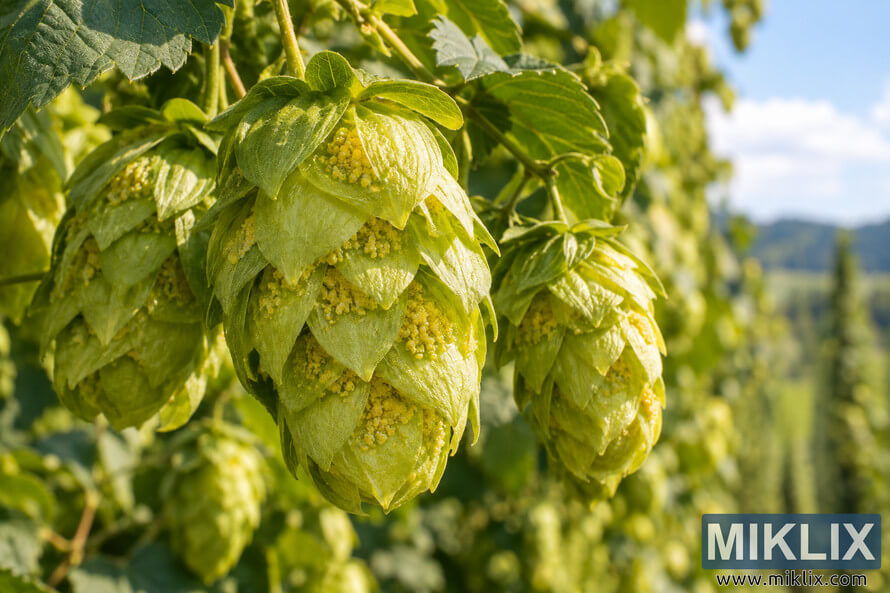
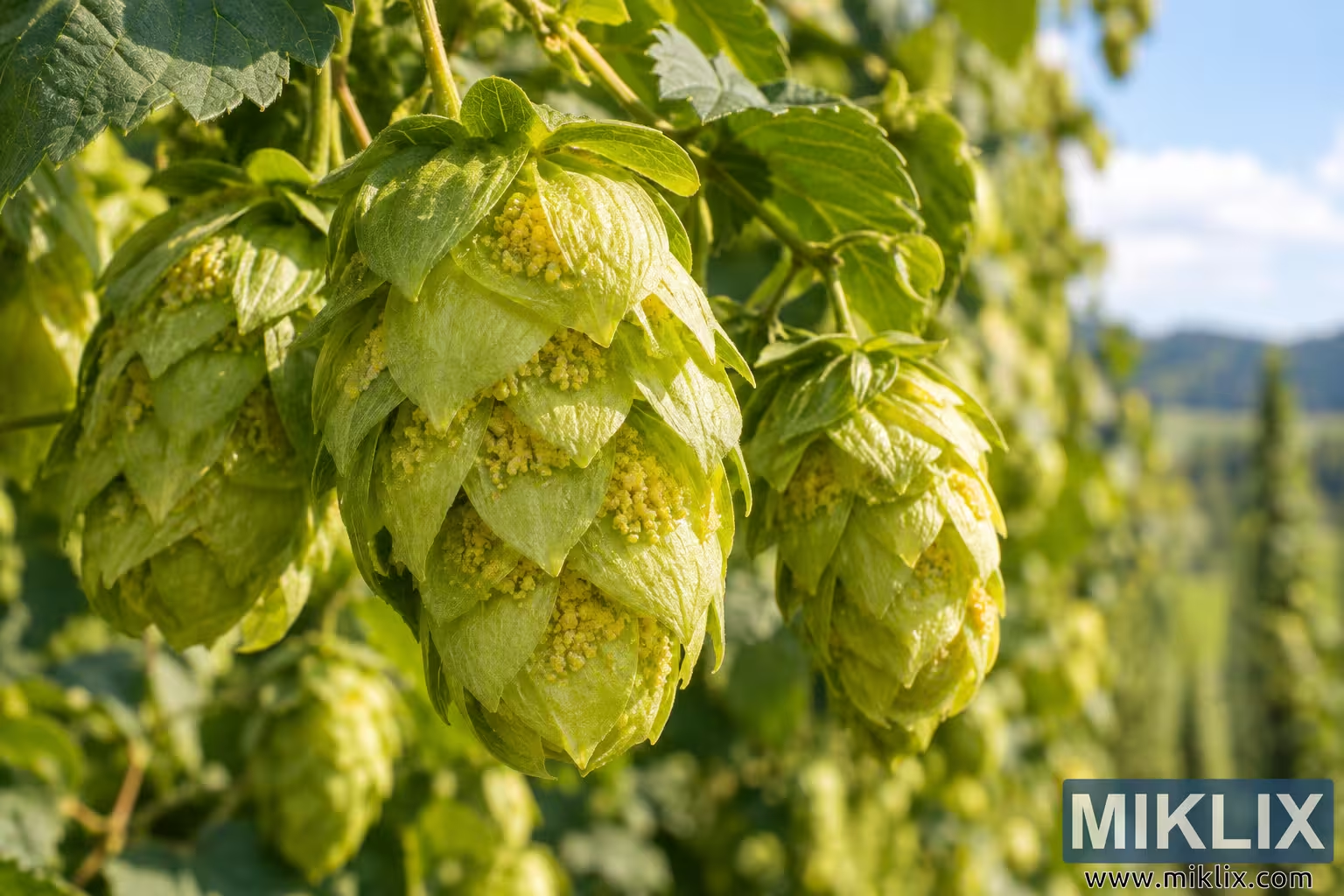
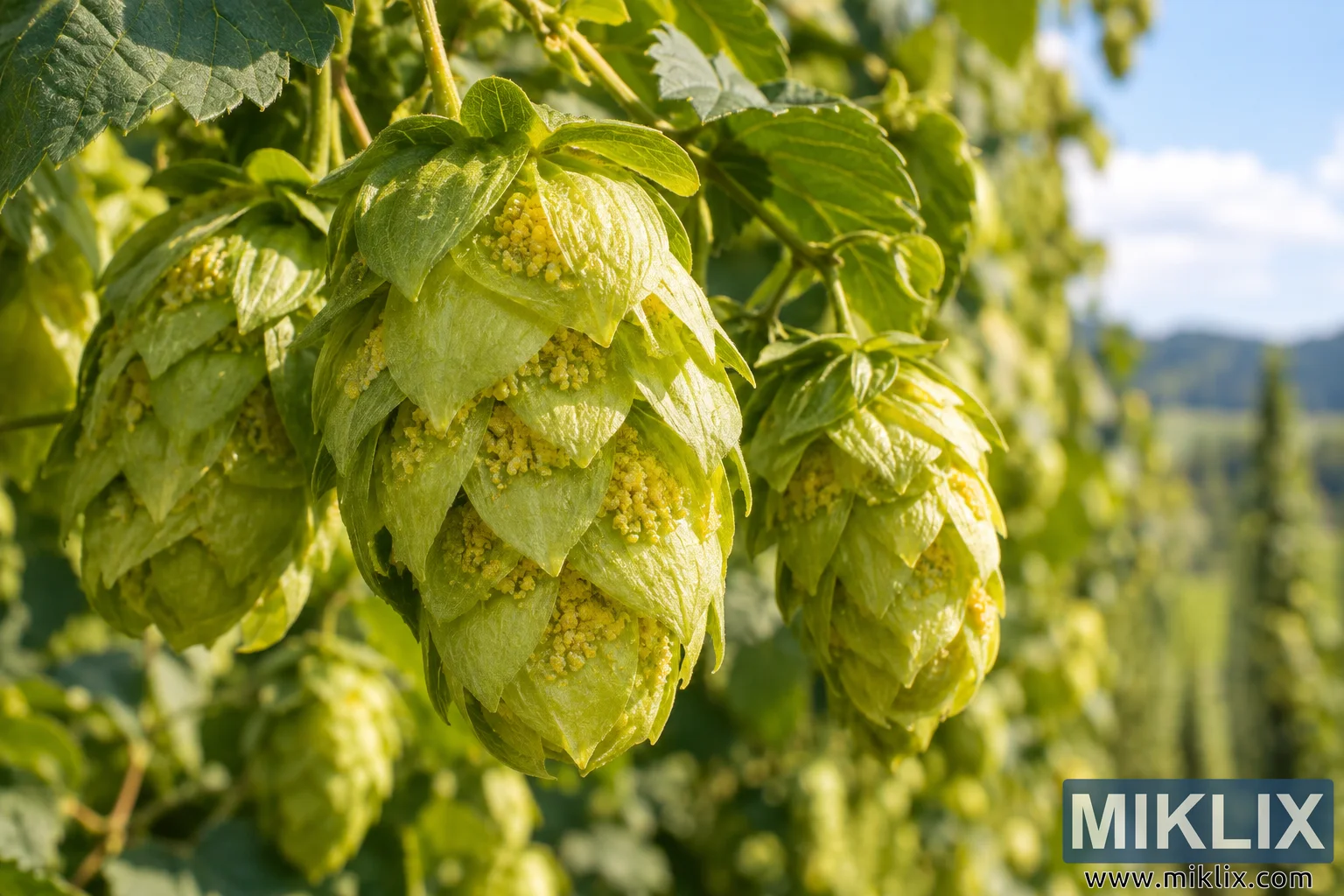
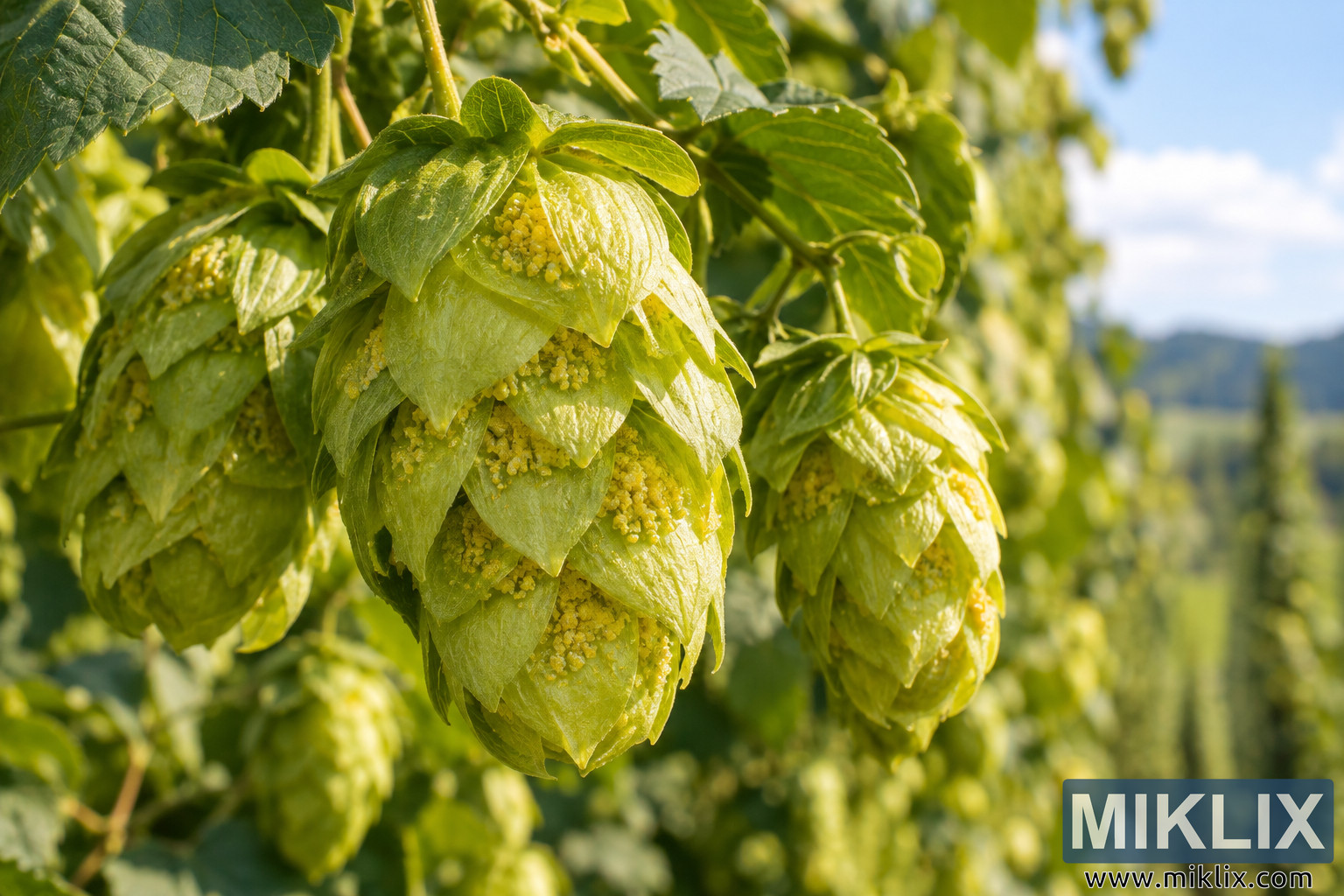
Detailed macro photograph of fresh golden-green hop cones on the vine, showing visible yellow lupulin glands, textured bracts, lush leaves, and a sunlit hop field.
Fresh Golden-Green Hop Cones with Detailed Lupulin Glands
Galimos šio paveikslėlio versijos
Toliau pateiktos parsisiunčiamų vaizdų rinkmenos yra mažiau suspaustos, didesnės raiškos ir dėl to kokybiškesnės nei šios svetainės straipsniuose ir puslapiuose įterpti vaizdai, kurių dydis optimizuotas siekiant sumažinti duomenų srauto pralaidumą.
Įprastas dydis (1,536 x 1,024)
Didelis dydis (3,072 x 2,048)
Labai didelis dydis (4,608 x 3,072)
Ypač didelis dydis (6,144 x 4,096)
Komiškai didelis dydis (1,048,576 x 699,051)
- Vis dar įkelia... ;-)
Vaizdo aprašymas
A highly detailed, photorealistic landscape-format macro photograph presents a cluster of fresh hop cones growing naturally on vigorous green vines in a sunlit hop field. The composition is dominated by one large, mature hop cone positioned slightly left of center, with several additional cones surrounding it at different depths. The central cone hangs vertically from its stem and displays the characteristic layered structure of overlapping hop bracts. Each individual bract is clearly defined, creating an intricate pattern of pointed, scale-like forms that gradually narrow toward the bottom of the cone. The hop has a fresh golden-green coloration, ranging from luminous yellow-green where direct sunlight reaches the surface to richer olive and deep green tones in the shaded folds between the bracts. This natural variation in color gives the cone a convincing sense of volume, freshness, and botanical complexity.
One of the most prominent visual features is the abundance of golden lupulin visible among and across the hop bracts. Fine yellow-gold lupulin glands appear as small granular deposits concentrated in the protected areas where the bracts overlap. In the strongest areas of detail, these glands resemble tiny resinous grains or delicate golden particles scattered across the inner surfaces of the cone. Their warm yellow color contrasts clearly with the surrounding green plant tissue and emphasizes the aromatic, resin-rich character associated with mature hops. The macro perspective allows these minute structures to become an important part of the image rather than remaining invisible botanical details. Sunlight catches portions of the lupulin, producing subtle highlights and making some of the glands appear especially vivid and almost luminous against the green bracts.
The surface texture of the main hop cone is rendered with exceptional clarity. Fine veins and subtle wrinkles can be seen running through the thin bracts, while slight differences in translucency become visible where strong sunlight passes through the plant material. The bracts appear delicate but firm, with naturally curved edges and occasional irregularities that reinforce the impression of a freshly growing agricultural crop rather than a perfectly uniform artificial object. Highlights along the edges of the bracts help separate the overlapping layers, while soft shadows within the cone reveal its depth and dense internal structure. The combination of sharp macro detail, natural imperfections, and warm directional light creates a tactile quality that makes the hop cone appear almost touchable.
Behind and beside the central cone are several additional hop cones. A large cone on the left is partially obscured by foliage and falls slightly outside the primary plane of focus, while another prominent cone hangs to the right of the main subject. These secondary cones share the same healthy golden-green appearance and visible layered bracts, but their softer detail keeps visual attention concentrated on the foreground specimen. Smaller hop cones can also be seen deeper in the vegetation toward the lower and central background. Their progressively softer appearance creates a convincing transition from the extremely detailed foreground into the distant hop field.
Large green hop leaves and climbing stems surround the cones and frame the scene naturally. The leaves have serrated edges, pronounced veins, and broad surfaces that range from bright yellow-green in direct sunlight to dark forest green in shadow. Some leaves occupy the upper edge and corners of the composition, forming a leafy canopy around the hanging cones. Slender stems descend through the foliage, their vertical and diagonal lines subtly guiding the eye toward the main cluster. The vegetation looks vigorous and healthy, suggesting a productive hop garden or commercial hop field near harvest maturity.
Warm sunlight enters the scene from the right and upper portions of the frame, producing a bright late-summer or early-autumn agricultural atmosphere. The illumination is strong enough to reveal microscopic surface details without making the scene appear artificially lit. Sun-facing portions of the hop cones glow with fresh yellow and golden-green hues, while shaded areas retain deeper greens. This interplay between warm highlights and cool natural shadows gives the image substantial dimensionality. The lighting also reinforces the appearance of the lupulin glands, whose golden coloration harmonizes with the sunlit areas of the plant.
The background is intentionally rendered with a shallow depth of field. Rows or masses of additional hop plants dissolve into soft green shapes and circular highlights, producing a natural bokeh effect that separates the foreground cones from their environment while still clearly communicating the agricultural setting. Toward the right side of the image, the blurred landscape opens slightly to reveal distant green terrain and low hills beneath a pale blue sky. Soft white clouds are visible in the upper-right background. These distant elements provide geographical depth and a sense of open countryside without distracting from the botanical subject.
The landscape orientation gives the composition room to balance the dense foreground vegetation on the left with the softer, more open background on the right. The primary hop cone remains the unmistakable focal point because of its size, sharpness, contrast, and prominent golden lupulin. Surrounding cones, leaves, stems, distant plants, hills, sky, and sunlight create context while supporting rather than competing with the main subject. There are no people, buildings, labels, logos, packages, text, or recognizable commercial branding anywhere in the scene. The photograph therefore reads as a pure botanical and agricultural study of fresh hops.
Overall, the image conveys freshness, maturity, natural abundance, and close botanical observation. Its combination of photorealistic macro detail and softly rendered countryside gives it both scientific and aesthetic appeal. The clearly visible golden lupulin glands are especially important, highlighting the resinous interior of the hop cones and creating a striking contrast with their vibrant green bracts. The result is a crisp, inviting depiction of freshly growing hops at a stage when their cones appear full, aromatic, and rich in lupulin, captured in warm natural sunlight within a flourishing hop field.
Vaizdas susijęs su: Hops in Beer Brewing: Cekin