
Vaizdas: Precision Brewing: The Art of Belgian Ale Fermentation
Paskelbta:
Paskutinį kartą atnaujinta: 2026 m. liepos 15 d. 14:24:34 UTC
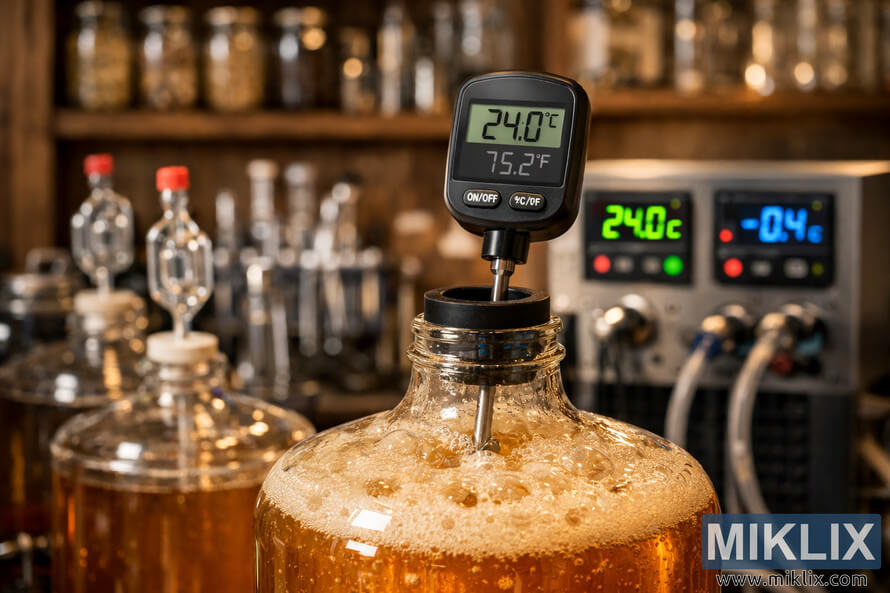
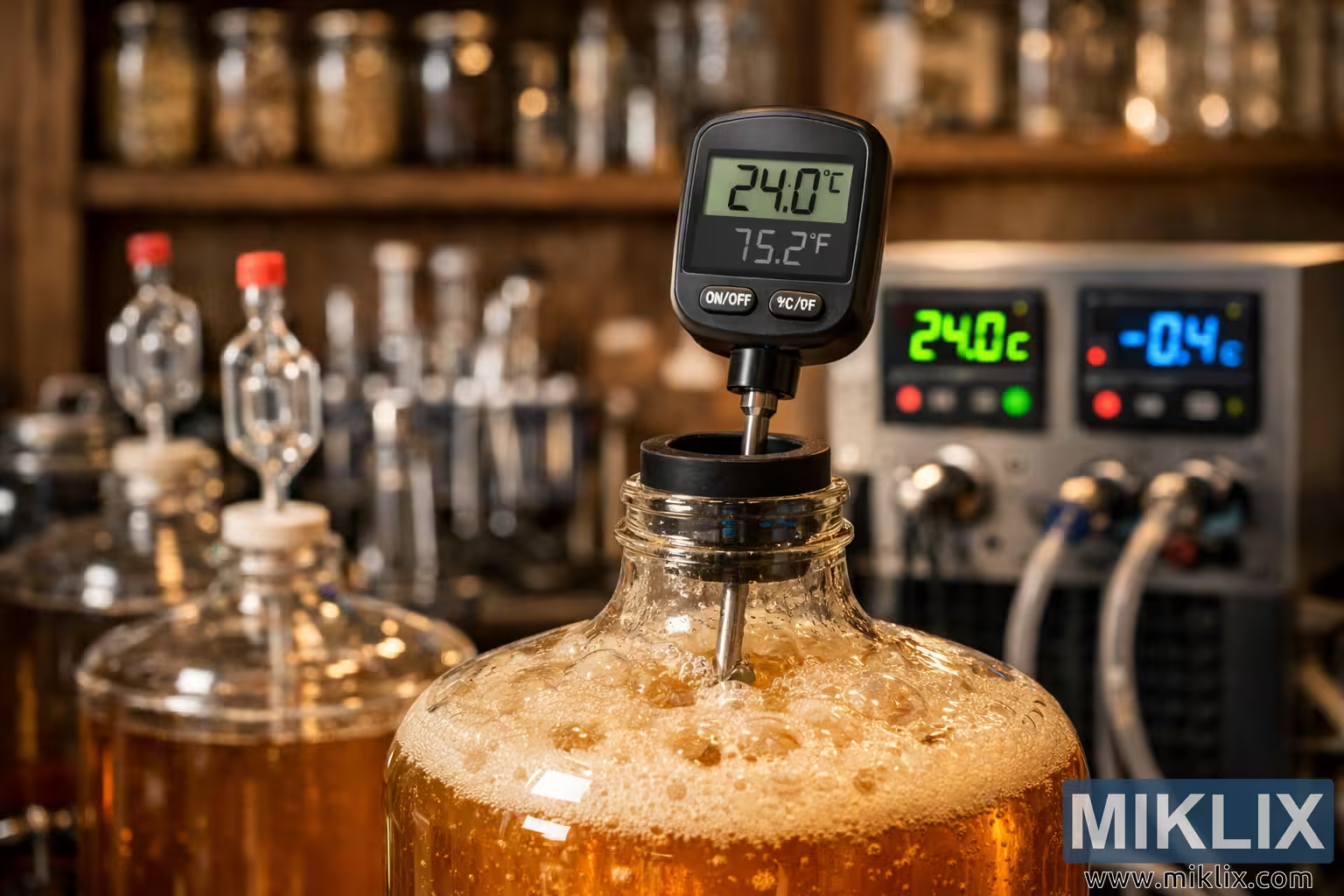
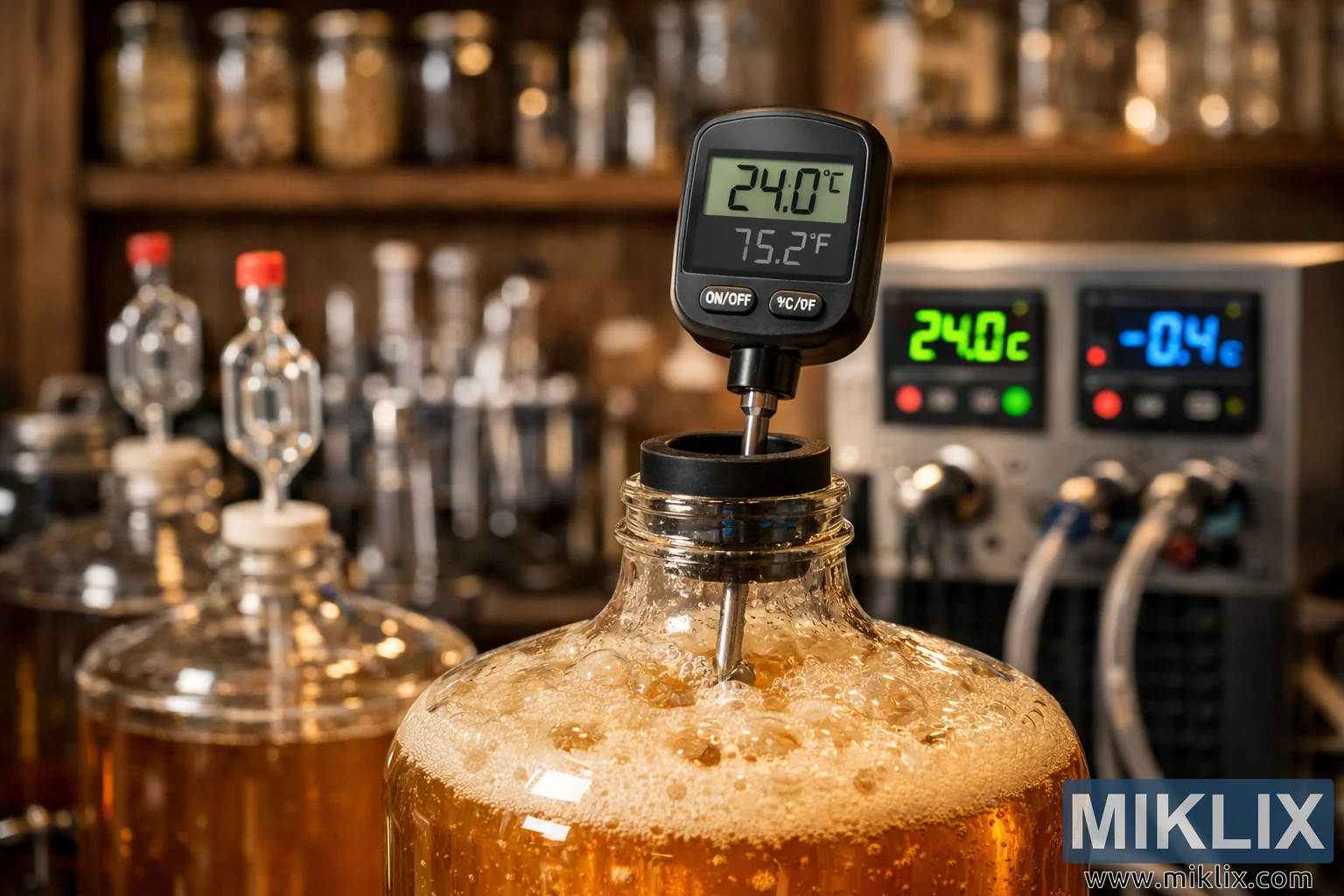
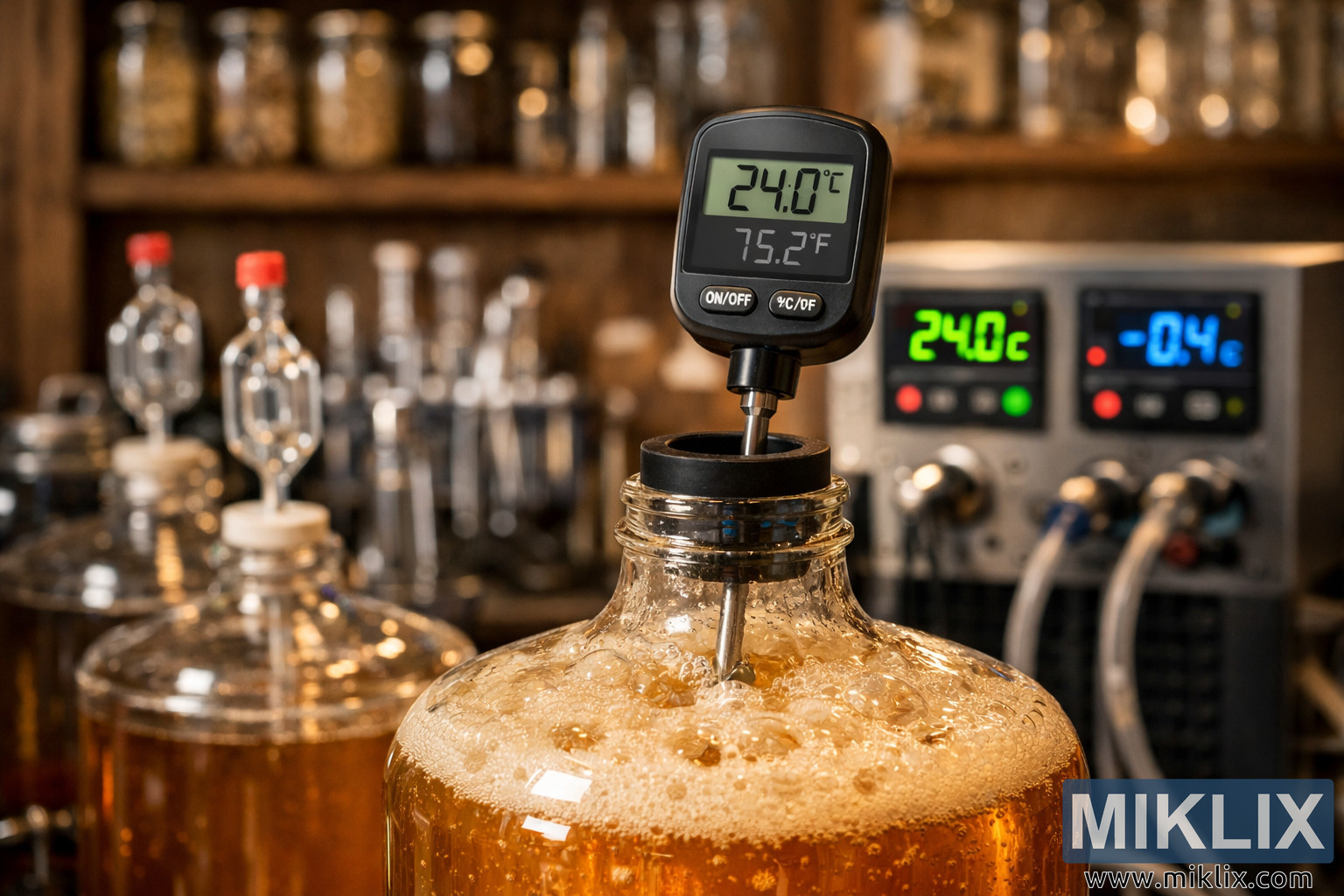
An inviting brewery scene showcasing the precision of Belgian-style ale fermentation. A thermometer measures the temperature of a bubbling golden ale, surrounded by professional brewing equipment and warm rustic lighting.
Precision Brewing: The Art of Belgian Ale Fermentation
Galimos šio paveikslėlio versijos
Toliau pateiktos parsisiunčiamų vaizdų rinkmenos yra mažiau suspaustos, didesnės raiškos ir dėl to kokybiškesnės nei šios svetainės straipsniuose ir puslapiuose įterpti vaizdai, kurių dydis optimizuotas siekiant sumažinti duomenų srauto pralaidumą.
Įprastas dydis (1,536 x 1,024)
Didelis dydis (3,072 x 2,048)
Labai didelis dydis (4,608 x 3,072)
Ypač didelis dydis (6,144 x 4,096)
Komiškai didelis dydis (1,048,576 x 699,051)
- Vis dar įkelia... ;-)
Vaizdo aprašymas
The image captures a meticulously arranged brewery environment that embodies both scientific precision and artisanal warmth. In the foreground, a large glass fermentation vessel brims with golden Belgian-style ale, its surface alive with bubbles that hint at the vigorous activity of yeast transforming sugars into alcohol and carbon dioxide. A sleek digital thermometer stands proudly at the center, its stainless steel probe inserted through a black rubber stopper into the liquid below. The display reads '24.0°C' and '75.2°F', indicating the optimal fermentation temperature for this particular ale style. The thermometer’s crisp digital readout contrasts beautifully with the organic textures of the frothy ale, symbolizing the harmony between science and craft that defines modern brewing.
Beside the thermometer, a transparent airlock filled with water releases gentle streams of carbon dioxide, its red cap catching the warm ambient light. The airlock’s rhythmic bubbling adds a sense of motion and life to the composition, reminding viewers that fermentation is a living process guided by careful observation and control.
In the middle ground, the workspace expands into a neatly organized array of brewing instruments. Several glass carboys stand in a row, each equipped with airlocks and filled with varying shades of amber and gold liquid. A metal rack holds pipettes, measuring cylinders, and other laboratory tools, all arranged with deliberate precision. To the right, a temperature control unit glows softly, its digital displays showing '24.0' in green and '-0.4' in blue. Tubes extend from the unit, connecting to cooling systems that maintain the delicate balance required for consistent fermentation. The interplay of light between the glowing displays and the reflective surfaces of the equipment adds depth and realism to the scene.
The background transitions smoothly into a cozy, rustic setting. Wooden shelves line the wall, stocked with glass jars containing malted barley, hops, and other brewing ingredients. The jars vary in size and color, their contents illuminated by soft, golden light that filters through the room. Scattered among them are beakers, flasks, and measuring cups—tools of both science and tradition. The shelves themselves, crafted from aged wood, evoke the timeless charm of old-world breweries while complementing the modern precision of the foreground instruments.
The lighting throughout the image is warm and inviting, casting a gentle glow that enhances the amber tones of the ale and the natural hues of the wood. The shallow depth of field ensures that the thermometer and fermentation vessel remain the focal points, their crisp details standing out against the softly blurred background. This visual technique draws the viewer’s attention to the central act of measurement—the moment where craftsmanship meets data, and intuition meets technology.
Every element in the composition contributes to a narrative of dedication and expertise. The bubbling ale represents vitality and transformation; the thermometer symbolizes control and precision; the surrounding equipment reflects preparation and professionalism. Together, they form a tableau that celebrates the art and science of brewing Belgian-style ale. The image conveys not only the technical aspects of fermentation temperature management but also the emotional resonance of the craft—the satisfaction of achieving balance, the anticipation of flavor development, and the quiet pride of a brewer at work.
Overall, this scene encapsulates the essence of modern brewing: a seamless blend of tradition and innovation, where rustic charm meets laboratory accuracy. The viewer is invited to appreciate the beauty of process—the careful calibration, the sensory awareness, and the respect for ingredients that transform simple grains and water into a beverage of complexity and character. The photograph stands as a tribute to the brewer’s pursuit of perfection, capturing a moment of harmony between human ingenuity and natural fermentation.
Vaizdas susijęs su: Fermenting Beer with White Labs WLP575 Belgian Style Ale Yeast Blend