
Vaizdas: Homebrewer Pouring Liquid Yeast into Fermenter
Paskelbta:
Paskutinį kartą atnaujinta: 2026 m. gegužės 21 d. 16:00:49 UTC
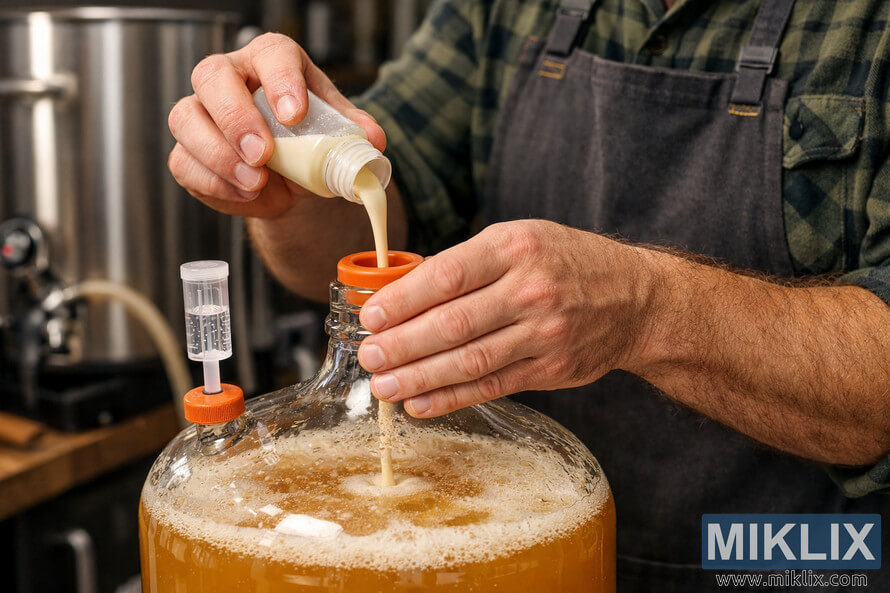
A detailed depiction of a homebrewer adding liquid yeast to a fermenter filled with pilsner wort, showcasing the craft and precision of home brewing in a cozy, well-equipped environment.
Homebrewer Pouring Liquid Yeast into Fermenter
Galimos šio paveikslėlio versijos
Toliau pateiktos parsisiunčiamų vaizdų rinkmenos yra mažiau suspaustos, didesnės raiškos ir dėl to kokybiškesnės nei šios svetainės straipsniuose ir puslapiuose įterpti vaizdai, kurių dydis optimizuotas siekiant sumažinti duomenų srauto pralaidumą.
Įprastas dydis (1,536 x 1,024)
Didelis dydis (3,072 x 2,048)
Labai didelis dydis (4,608 x 3,072)
Ypač didelis dydis (6,144 x 4,096)
Komiškai didelis dydis (1,048,576 x 699,051)
- Vis dar įkelia... ;-)
Vaizdo aprašymas
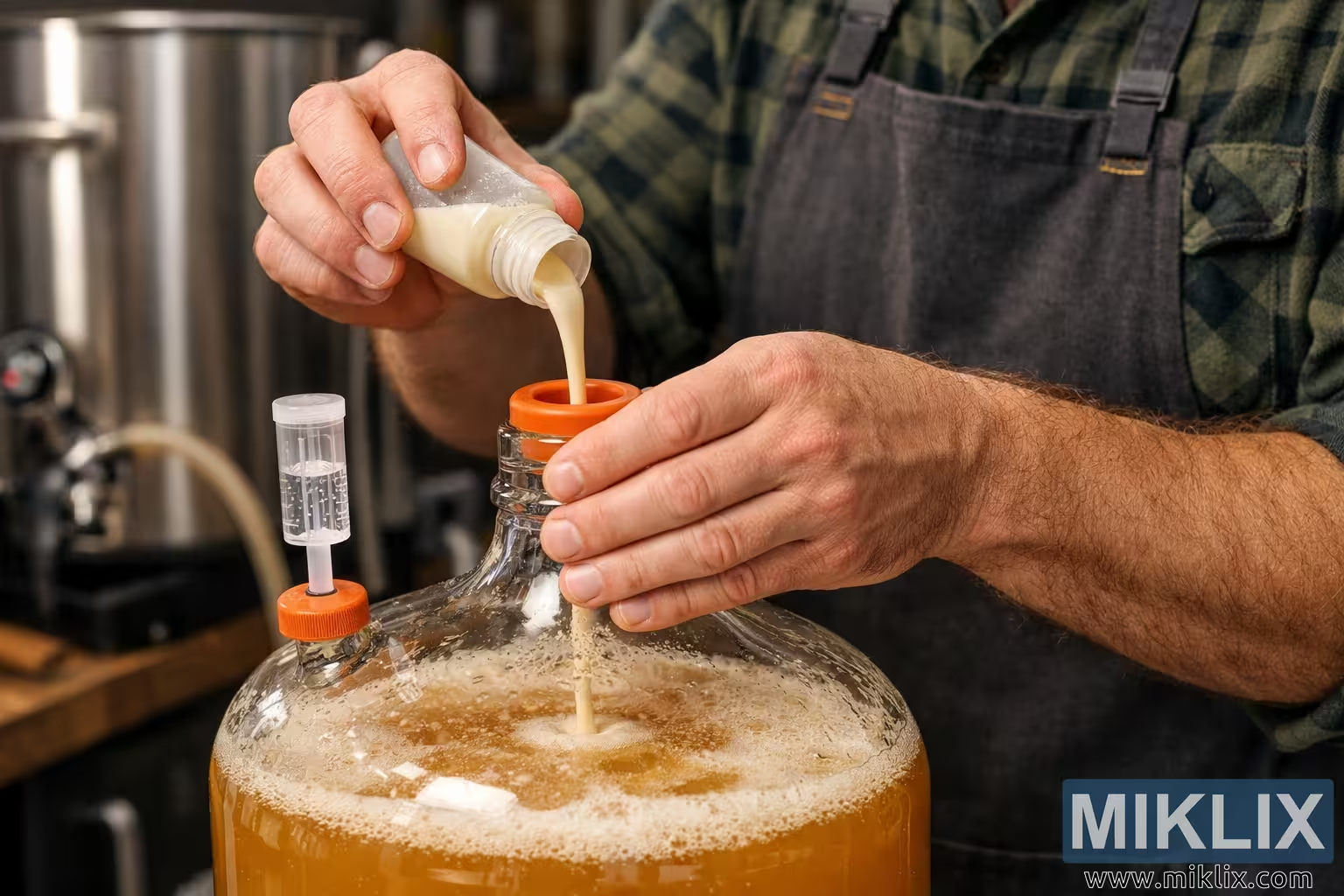
The image captures a moment of meticulous craftsmanship in the world of home brewing. At its center stands a homebrewer, a Caucasian man with hairy forearms, wearing a green and black plaid shirt and a dark grey apron. His posture conveys both confidence and care as he performs a critical step in the brewing process: pitching yeast into a fermenter. The fermenter itself is a large, transparent glass carboy, its rounded shoulders glistening under warm ambient light. Inside, the golden pilsner wort shimmers with a rich hue, its surface crowned by a thin layer of frothy foam that hints at the fermentation soon to begin.
In his left hand, the brewer grips the neck of the carboy firmly, steadying it as he pours. His right hand holds a small, squeezable, translucent plastic vial filled with creamy, off-white liquid yeast. The yeast flows in a smooth, continuous stream from the vial’s narrow opening into the carboy’s mouth, which is sealed by an orange rubber stopper fitted with a white plastic airlock. The airlock, a simple yet essential piece of brewing equipment, stands upright like a sentinel, ready to release carbon dioxide once fermentation begins.
The lighting in the scene is warm and inviting, casting gentle highlights on the brewer’s hands and the glass carboy. The glow accentuates the golden tones of the wort and the creamy texture of the yeast, creating a sense of depth and realism. The background is softly blurred, drawing attention to the brewer’s precise movements. To the left, a stainless steel brewing kettle gleams under the light, its spigot connected to a hose and a digital thermometer clipped to its rim. To the right, shelves lined with bottles, jars, and brewing supplies fade into a pleasant blur, suggesting a well-used workspace filled with the tools of the trade.
The composition of the photograph emphasizes the intimacy of the brewing process. The viewer’s eye is drawn to the intersection of the brewer’s hands and the carboy, where the yeast meets the wort—a symbolic moment of transformation. The creamy stream of yeast is captured mid-pour, suspended in motion, embodying the delicate balance between science and artistry that defines home brewing. The brewer’s expression, though partially obscured, conveys focus and satisfaction, as if he knows that this simple act will soon yield a crisp, refreshing pilsner.
Every detail in the image contributes to the authenticity of the scene. The texture of the brewer’s apron shows faint traces of flour and grain dust, evidence of prior batches. The carboy’s glass surface reflects the warm light, creating subtle distortions that enhance the sense of depth. The stainless steel kettle in the background adds a touch of industrial precision, contrasting with the organic warmth of the wooden shelves and the golden liquid. Even the airlock, small and utilitarian, becomes a visual anchor—a reminder that brewing is both an art and a controlled chemical process.
The overall atmosphere is one of calm concentration and satisfaction. The warm tones evoke the comfort of a home workshop, while the careful composition highlights the ritualistic nature of brewing. The image tells a story not just of beer, but of dedication, patience, and the joy of creation. It celebrates the moment when raw ingredients—water, malt, hops, and yeast—come together to begin their transformation into something greater. The homebrewer’s hands, steady and deliberate, symbolize the human touch that turns a simple recipe into a craft.
This photograph stands as a tribute to the timeless tradition of brewing, capturing the intersection of technique and passion. It invites the viewer to appreciate the beauty of the process, the tactile pleasure of working with natural ingredients, and the anticipation of tasting the final product. The scene is both educational and evocative, offering a glimpse into the quiet artistry that defines home brewing. In its warmth, detail, and composition, the image embodies the spirit of craftsmanship—an ode to those who find joy in creating something with their own hands.
Vaizdas susijęs su: Fermenting Beer with White Labs WLP800 Pilsner Lager Yeast