
Vaizdas: Colorful Ester Profiles from Fermented Beer in a Rustic Brewery Setting
Paskelbta:
Paskutinį kartą atnaujinta: 2026 m. gegužės 24 d. 15:40:13 UTC
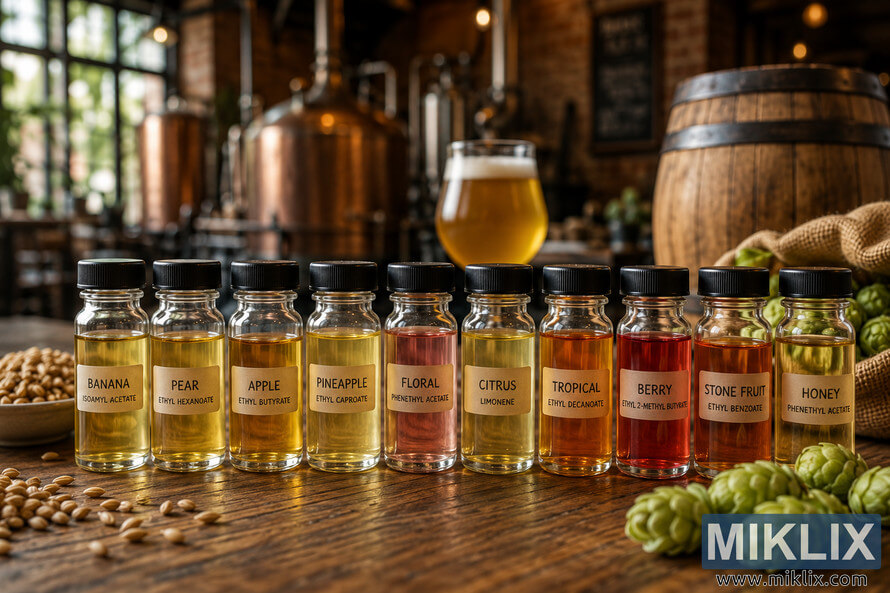
A richly detailed close-up scene featuring colorful ester note samples from fermented beer displayed in glass vials on a rustic wooden table inside a cozy brewery environment with hops, barrels, and brewing equipment illuminated by warm ambient lighting.
Colorful Ester Profiles from Fermented Beer in a Rustic Brewery Setting
Galimos šio paveikslėlio versijos
Toliau pateiktos parsisiunčiamų vaizdų rinkmenos yra mažiau suspaustos, didesnės raiškos ir dėl to kokybiškesnės nei šios svetainės straipsniuose ir puslapiuose įterpti vaizdai, kurių dydis optimizuotas siekiant sumažinti duomenų srauto pralaidumą.
Įprastas dydis (1,536 x 1,024)
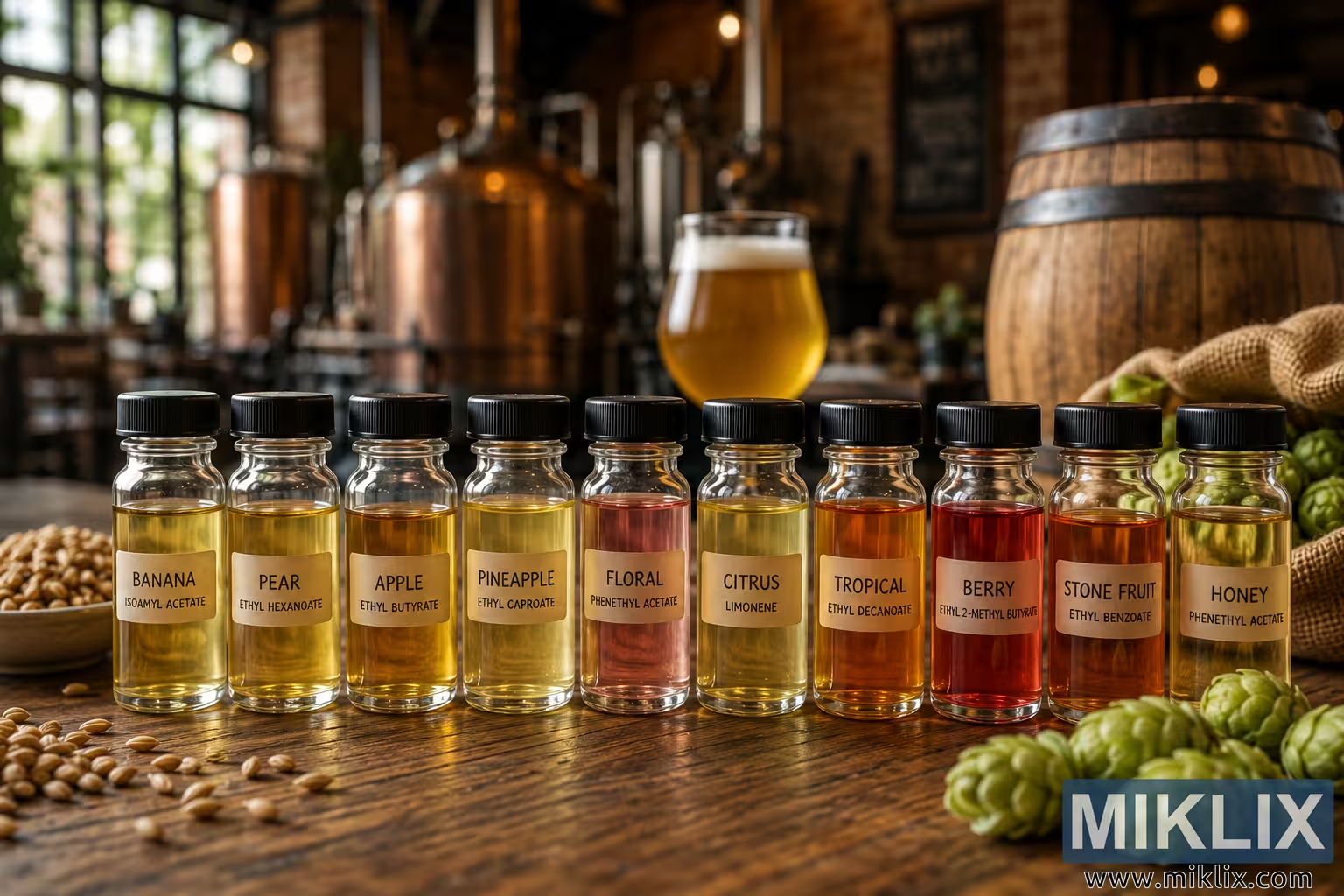
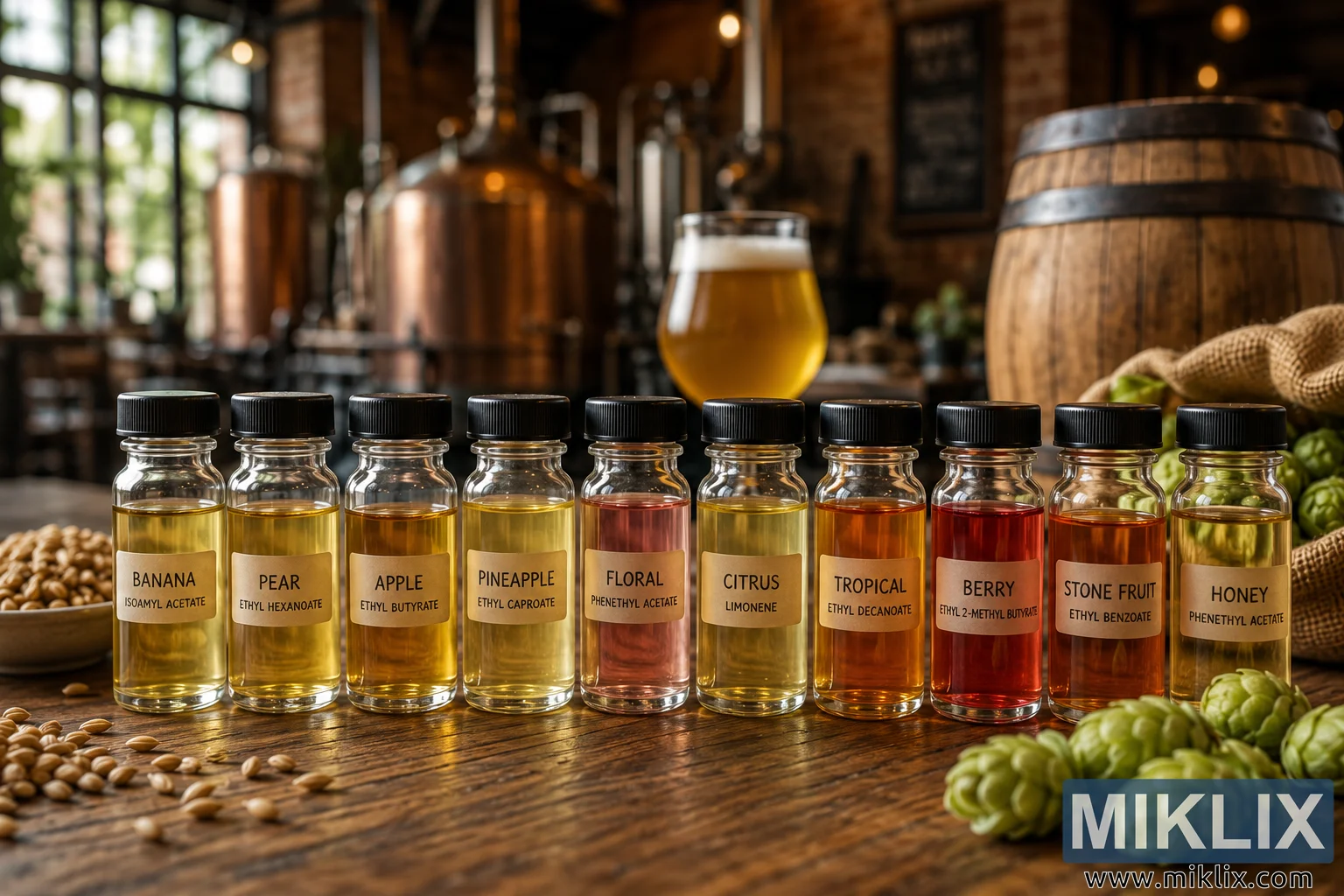
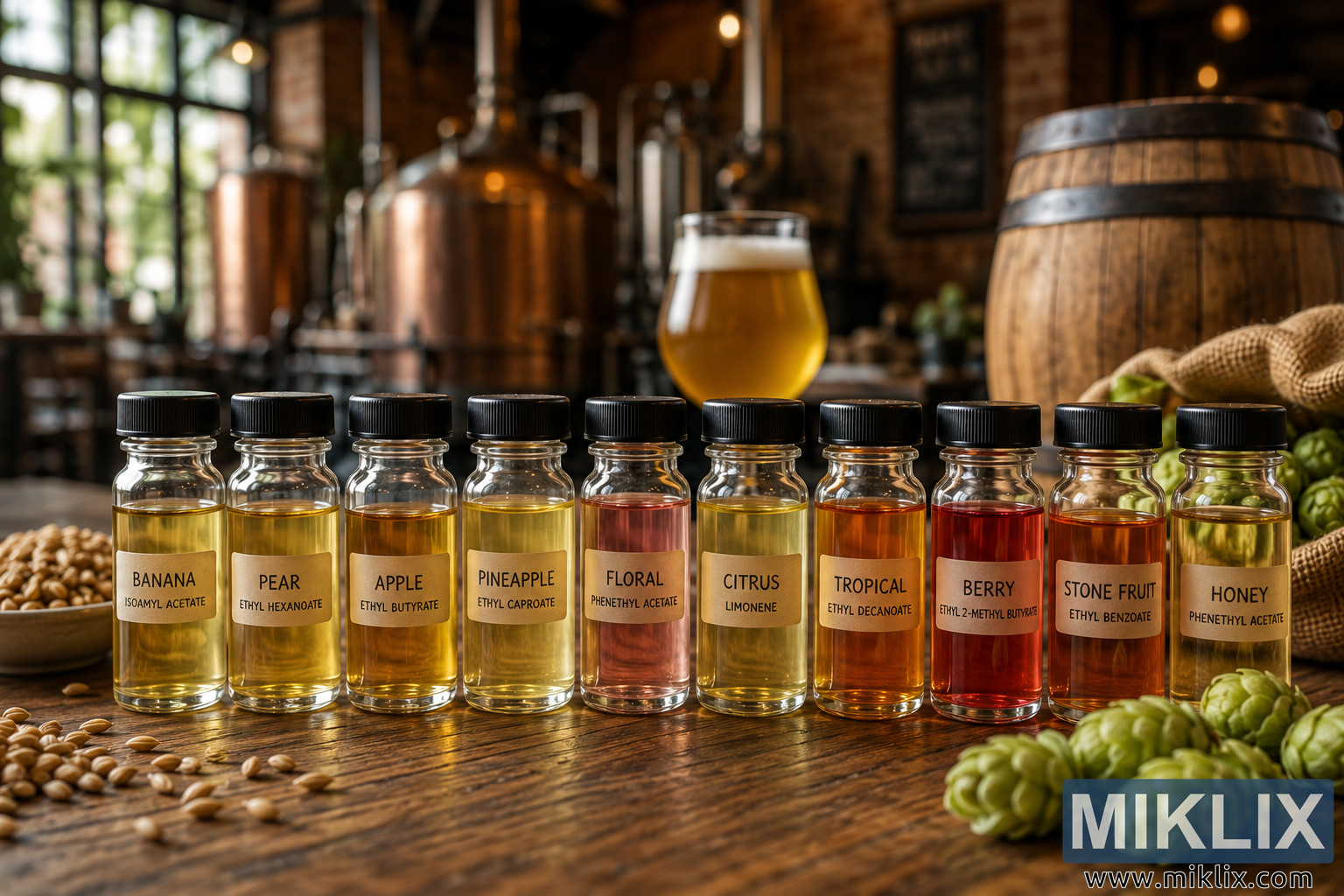
Didelis dydis (3,072 x 2,048)
Labai didelis dydis (4,608 x 3,072)
Ypač didelis dydis (6,144 x 4,096)
Komiškai didelis dydis (1,048,576 x 699,051)
- Vis dar įkelia... ;-)
Vaizdo aprašymas
A highly detailed close-up composition captures an artistic arrangement of ester note samples inspired by fermented beer, carefully displayed across a rustic wooden table inside a warmly illuminated brewery environment. The image is presented in a cinematic landscape orientation, emphasizing the depth, texture, and layered complexity of the brewing scene. In the foreground, a series of translucent glass vials are aligned in an elegant row, each containing vividly colored liquid samples symbolizing different ester aroma profiles commonly associated with fermentation in beer production. The liquids range from pale golden yellows and warm amber hues to rich ruby reds and delicate pink tones, creating a visually dynamic spectrum of color that immediately draws the viewer’s attention.
Each vial appears handcrafted and laboratory-inspired, with soft reflections visible on the smooth glass surfaces due to the warm ambient lighting. Minimal paper labels identify aroma associations such as banana, pear, floral, citrus, tropical fruit, berry, stone fruit, and honey-like notes, subtly referencing the complexity of fermentation-derived esters in brewing science. The liquids themselves glow gently beneath the warm light, enhancing the impression that each sample contains a distinct sensory identity. The interplay of transparency, refraction, and shadow on the tabletop adds realism and richness to the image.
The wooden table beneath the vials shows pronounced grain textures, natural imperfections, and weathered craftsmanship, reinforcing the artisanal atmosphere of the brewery setting. Scattered across the table are fresh green hops, loose brewing grains, and burlap fabric accents that provide additional tactile detail and contextual depth. The hops appear vibrant and textured, with layered petals and organic forms that contrast beautifully against the smooth cylindrical glass containers. Nearby grains contribute subtle earthy tones that complement the warmer colors throughout the composition.
In the middle ground, the scene transitions into a softly blurred brewery environment. Large copper brewing tanks rise in the background with polished metallic surfaces that catch highlights from hanging ambient lights. The gentle blur creates a shallow depth-of-field effect, ensuring that the ester vials remain the focal point while still communicating the surrounding brewing context. A rustic wooden barrel positioned to one side reinforces the theme of fermentation and traditional craftsmanship. The barrel’s curved wood panels and dark metal bands introduce additional visual texture and a sense of age and authenticity.
A softly glowing beer glass filled with golden beer and topped with a creamy foam head appears in the mid-background, subtly reinforcing the connection between the ester samples and the finished beverage they help characterize. The glass catches warm reflections from the environment, adding another layer of visual warmth to the composition.
The background itself features faint outlines of a rustic brewery interior with exposed brick walls, industrial brewing fixtures, and softly diffused lighting that creates a cozy and inviting atmosphere. Warm bokeh light effects from overhead fixtures contribute to the cinematic mood while enhancing the sense of depth throughout the scene. The lighting design balances golden highlights with soft shadows, creating a harmonious visual tone that feels both scientific and artisanal.
Overall, the composition emphasizes the sensory complexity and artistry of beer fermentation through a careful balance of color, texture, lighting, and brewing symbolism. The image evokes themes of craftsmanship, flavor exploration, aromatic chemistry, and traditional brewing culture while maintaining a polished and visually immersive aesthetic suitable for editorial, educational, or commercial use related to craft beer, fermentation science, or brewing innovation.
Vaizdas susijęs su: Fermenting Beer with Wyeast 1318 London Ale III Yeast