
Vaizdas: Champion Quince Variety with Large Pear-Shaped Fruit
Paskelbta:
Paskutinį kartą atnaujinta: 2026 m. kovo 5 d. 21:48:04 UTC
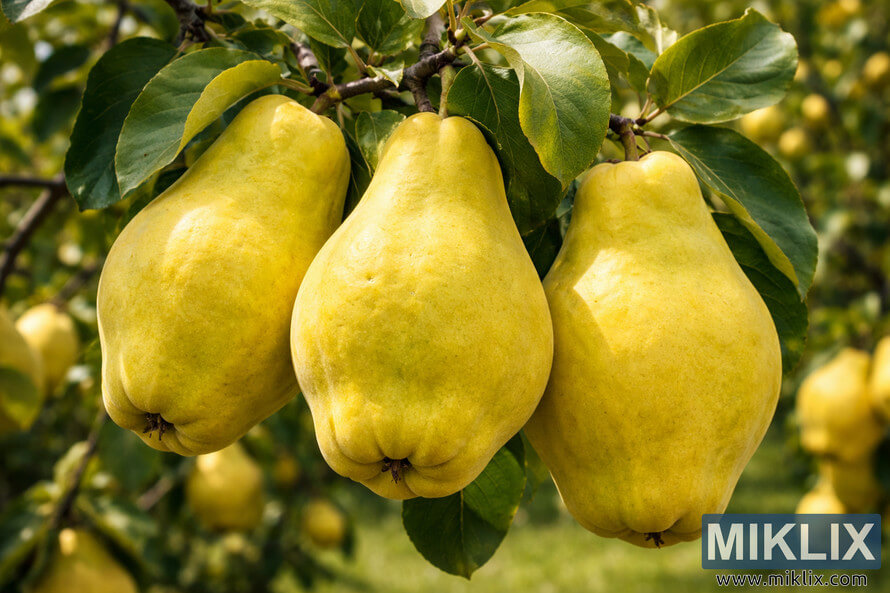
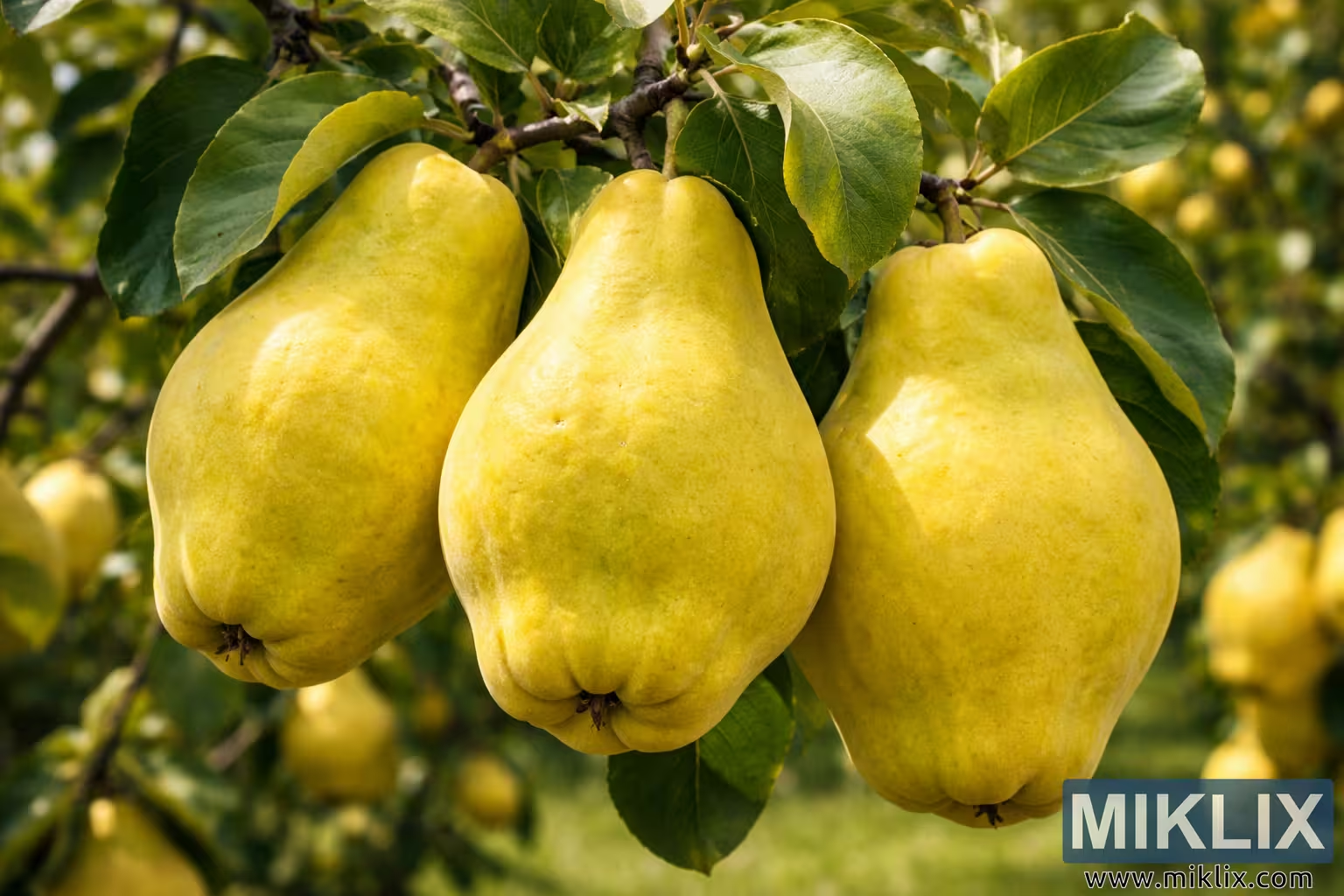
Landscape photograph of mature Champion quince fruits showing their large pear-shaped form, golden-yellow color, and healthy orchard foliage in soft natural light.
Champion Quince Variety with Large Pear-Shaped Fruit
Galimos šio paveikslėlio versijos
Toliau pateiktos parsisiunčiamų vaizdų rinkmenos yra mažiau suspaustos, didesnės raiškos ir dėl to kokybiškesnės nei šios svetainės straipsniuose ir puslapiuose įterpti vaizdai, kurių dydis optimizuotas siekiant sumažinti duomenų srauto pralaidumą.
Įprastas dydis (1,536 x 1,024)
Didelis dydis (3,072 x 2,048)
Labai didelis dydis (4,608 x 3,072)
Ypač didelis dydis (6,144 x 4,096)
Komiškai didelis dydis (1,048,576 x 699,051)
- Vis dar įkelia... ;-)
Vaizdo aprašymas
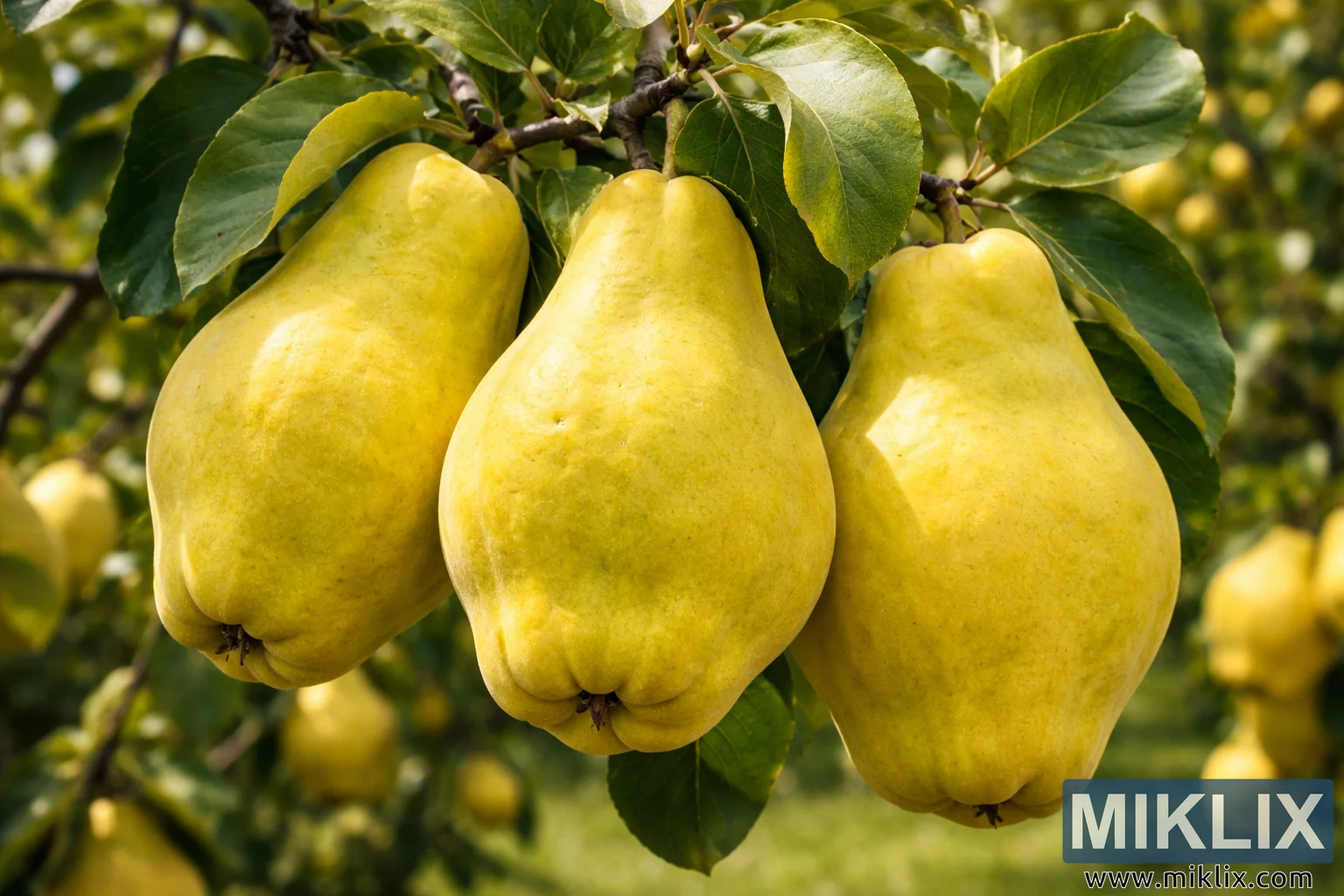
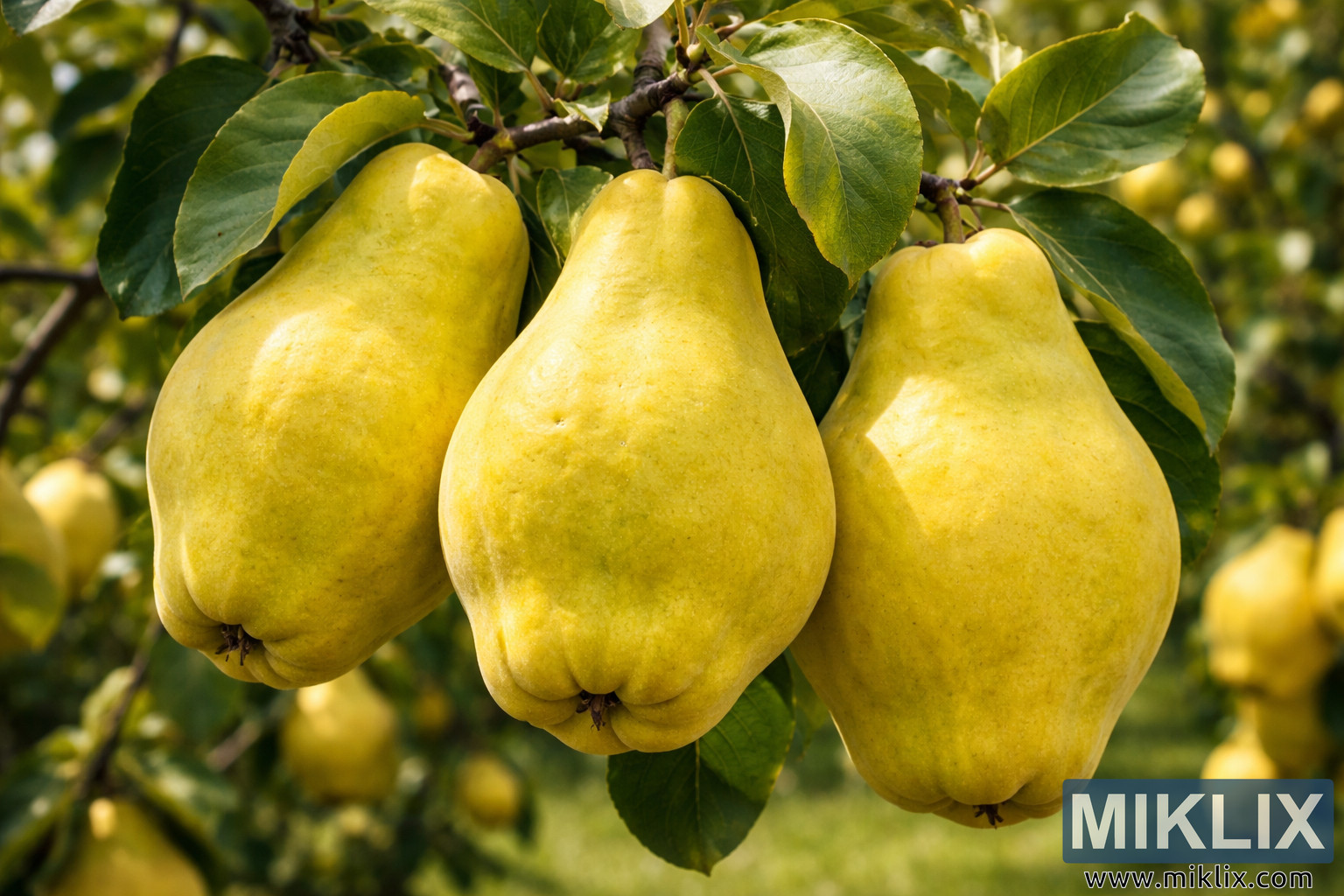
This high-resolution landscape photograph presents a close-up view of three mature Champion quince fruits hanging prominently from a sturdy tree branch. Each fruit displays the characteristic large, pear-shaped form that defines the Champion variety, with broad shoulders tapering gently toward a rounded base. Their skins are a rich golden-yellow with subtle green undertones, suggesting peak ripeness. A faint natural bloom and soft matte texture are visible on the surface, adding depth and authenticity to the scene. The fruits appear heavy and well-developed, clustered closely together, emphasizing their substantial size and uniformity.
The branch from which they hang extends diagonally across the upper portion of the frame, providing a natural compositional anchor. It is textured and slightly rugged, contrasting with the smooth curvature of the fruit. Surrounding the quinces are healthy, ovate leaves in varying shades of deep green. The leaves have clearly defined veins and slightly serrated edges, and some catch the warm sunlight, revealing lighter green highlights along their edges and midribs. The interplay of light and shadow across the foliage creates a sense of depth and dimension, while also drawing attention to the fruits as the central subjects.
Soft, warm daylight illuminates the scene, likely captured during late afternoon or early morning when the light is gentle and directional. This lighting enhances the golden hue of the quinces, making them appear vibrant and inviting. Subtle shadows fall beneath the fruits and along the contours of their curved surfaces, accentuating their three-dimensional form. The background is softly blurred with a shallow depth of field, featuring hints of additional foliage and orchard greenery rendered in smooth bokeh. This selective focus isolates the three quinces sharply against the diffused backdrop, ensuring the viewer’s attention remains on their impressive size and distinctive pear-like silhouette.
The overall composition conveys abundance, freshness, and horticultural quality. The fruits appear free from blemishes, evenly colored, and well-proportioned, highlighting the desirable traits of the Champion quince variety. The landscape orientation allows the trio to be displayed side by side in a balanced arrangement, filling the frame horizontally while still allowing breathing room around the edges. The image captures not only the physical characteristics of the fruit but also the atmosphere of a productive orchard environment, celebrating the natural beauty and robust form of this notable quince cultivar.
Vaizdas susijęs su: Complete Guide to Growing Your Own Quince Trees