
Vaizdas: Gardener Harvesting Fresh Burdock Roots in a Garden Bed
Paskelbta:
Paskutinį kartą atnaujinta: 2026 m. kovo 12 d. 15:15:50 UTC
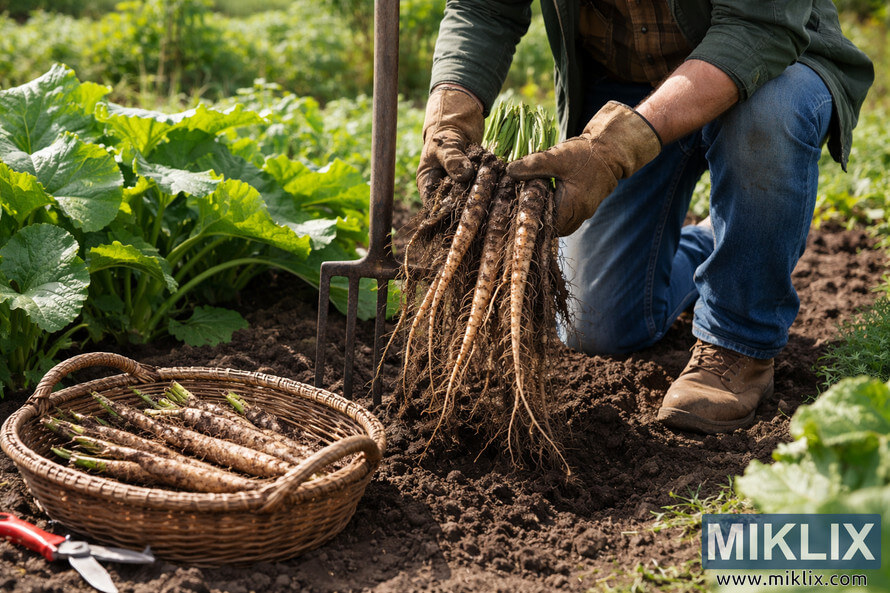
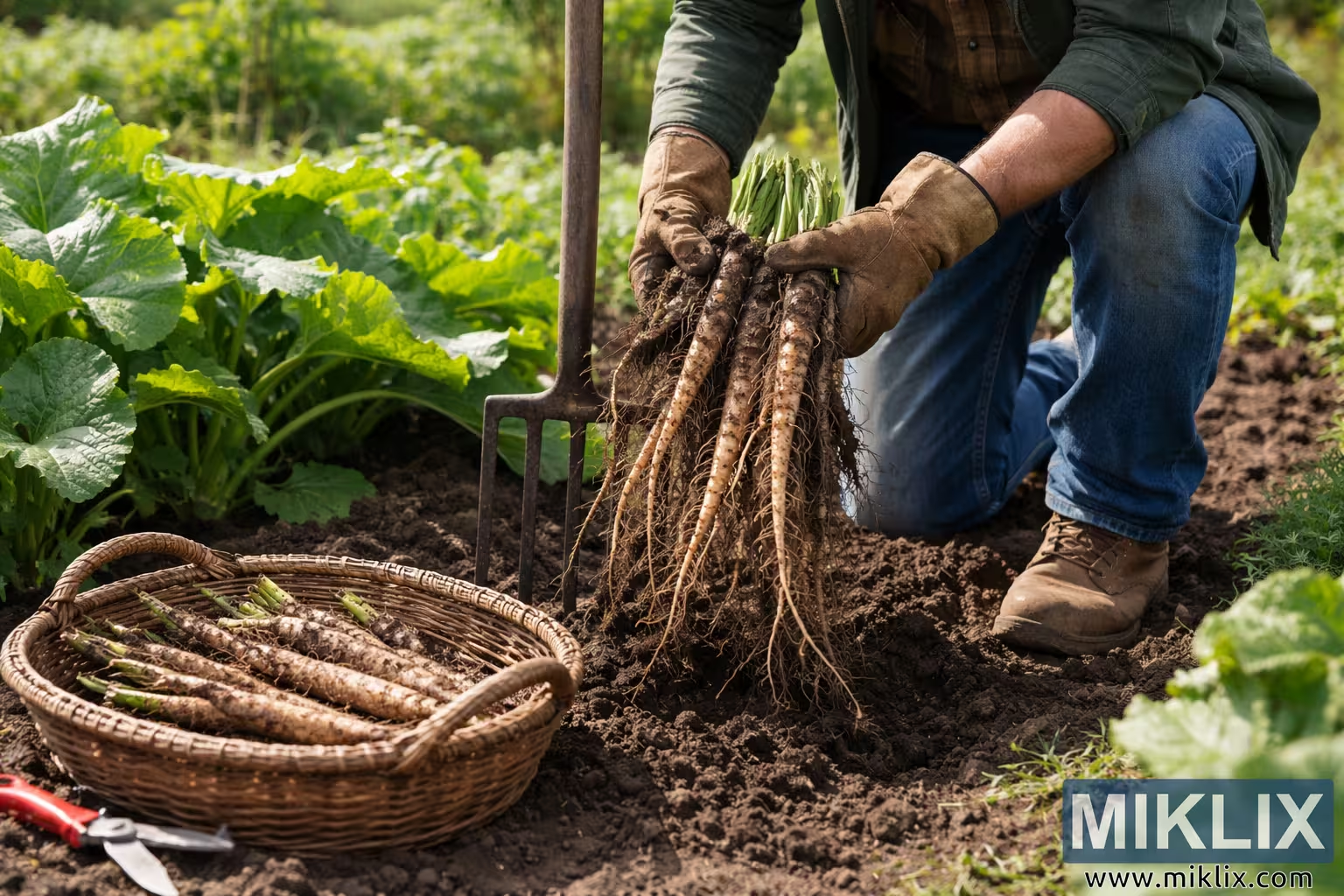
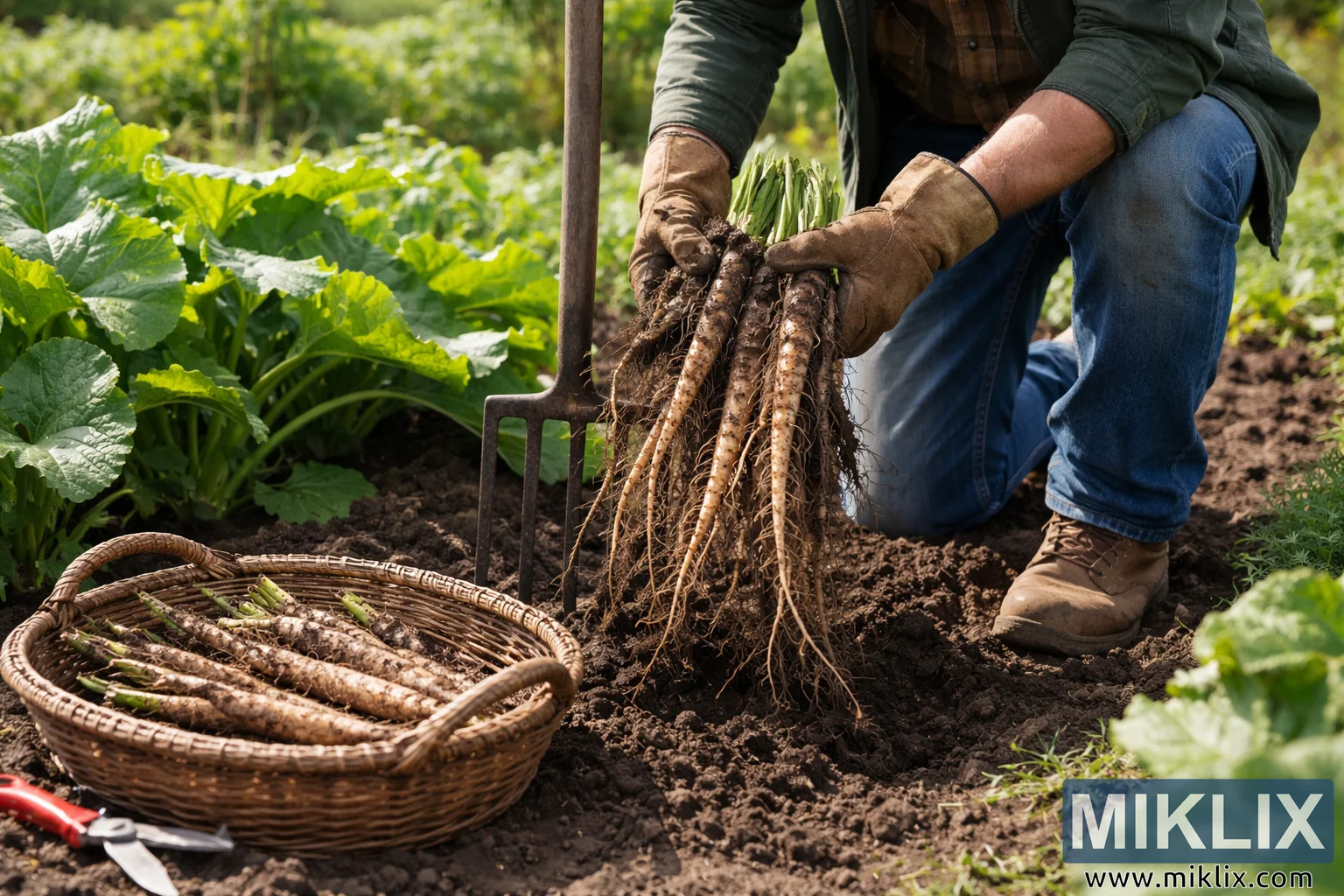
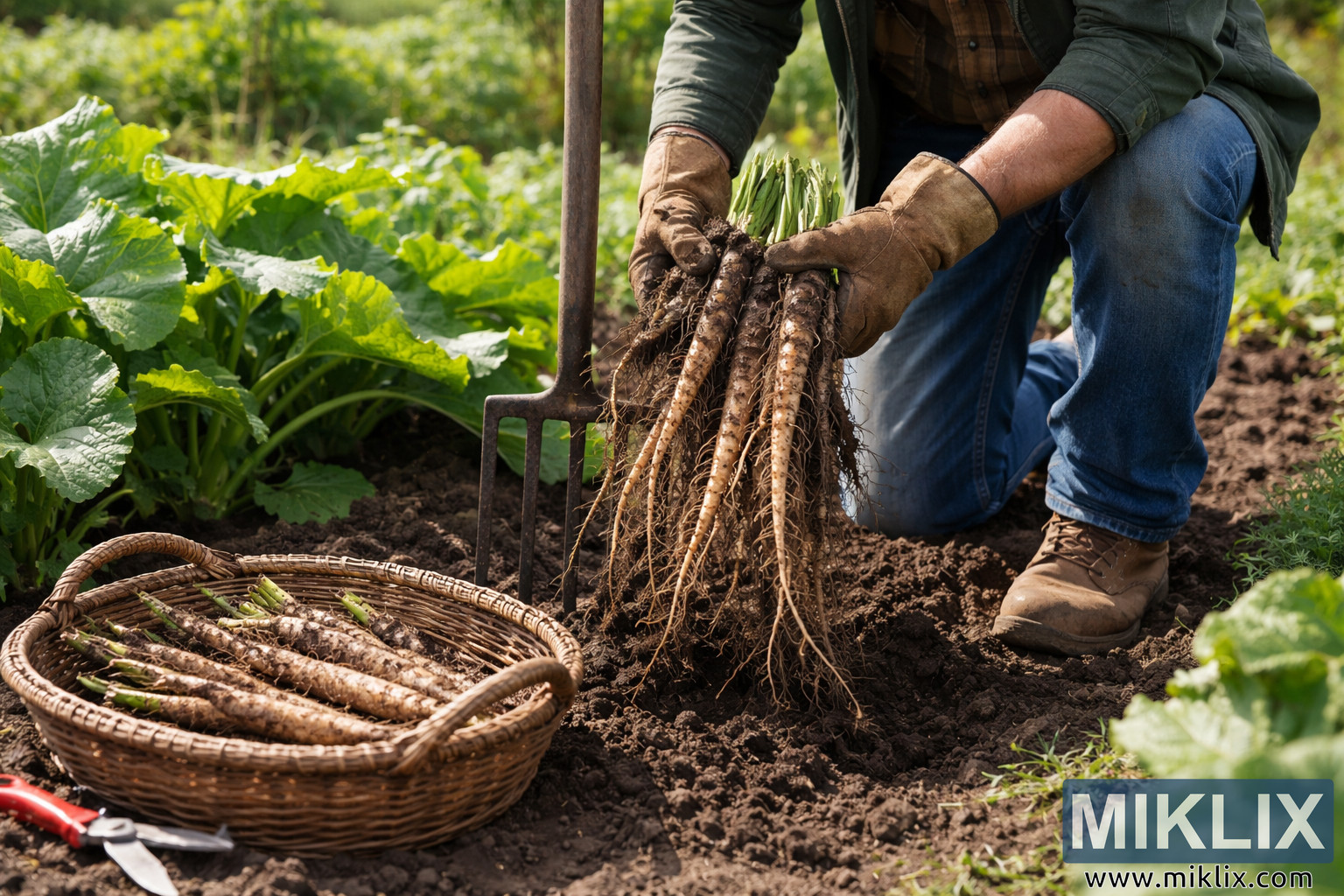
A gardener harvests burdock roots from dark garden soil using a garden fork, lifting long roots while a wicker basket nearby holds freshly gathered harvest.
Gardener Harvesting Fresh Burdock Roots in a Garden Bed
Galimos šio paveikslėlio versijos
Toliau pateiktos parsisiunčiamų vaizdų rinkmenos yra mažiau suspaustos, didesnės raiškos ir dėl to kokybiškesnės nei šios svetainės straipsniuose ir puslapiuose įterpti vaizdai, kurių dydis optimizuotas siekiant sumažinti duomenų srauto pralaidumą.
Įprastas dydis (1,536 x 1,024)
Didelis dydis (3,072 x 2,048)
Labai didelis dydis (4,608 x 3,072)
Ypač didelis dydis (6,144 x 4,096)
Komiškai didelis dydis (1,048,576 x 699,051)
- Vis dar įkelia... ;-)
Vaizdo aprašymas
A close-up, landscape-oriented scene captures a gardener harvesting burdock roots from a cultivated garden bed on a bright day. The gardener kneels on the soil while wearing sturdy brown leather work boots, blue denim jeans, and a practical green jacket layered over a plaid shirt. Protective brown gardening gloves cover the gardener’s hands as they carefully lift a cluster of long, freshly unearthed burdock roots from the ground. The roots are thick, pale brown, and coated with moist, dark soil that clings to their textured surfaces, revealing their impressive length and the delicate network of fine root hairs trailing beneath them.
A strong, four-pronged metal garden fork stands upright beside the gardener, partially embedded in the loose earth where the soil has been recently turned. The fork suggests the effort required to loosen the deep ground where burdock grows, as these roots extend far below the surface. The soil around the harvest area appears rich, crumbly, and dark, indicating healthy organic matter and careful cultivation. Small clumps of soil crumble away from the lifted roots as the gardener raises them, emphasizing the freshness of the harvest.
In the foreground, a woven wicker basket rests on the garden bed, already containing several cleaned and trimmed burdock roots arranged neatly inside. The basket’s warm brown tones contrast with the dark soil and green foliage surrounding the harvest site. Nearby, a pair of red-handled pruning shears lies on the ground, suggesting the gardener has been trimming stems or preparing the roots for storage and transport.
The background features lush green leaves from mature burdock plants growing in organized rows across the garden. The broad, slightly wrinkled leaves catch the sunlight, creating soft highlights and shadows that add depth to the scene. The surrounding greenery suggests a productive vegetable or herb garden where root crops thrive in well-maintained soil.
The lighting is natural and warm, likely from mid-morning or afternoon sunlight, illuminating the gardener’s hands, the soil, and the roots with gentle contrast. The image conveys a moment of practical, hands-on harvesting, highlighting traditional gardening tools, the earthy texture of freshly dug soil, and the satisfaction of gathering nutritious root vegetables directly from the garden. Overall, the scene reflects sustainable gardening practices, seasonal harvest work, and the quiet rhythm of tending a productive garden.
Vaizdas susijęs su: Growing Burdock: Your Complete Guide from Seed to Harvest