
Vaizdas: Honey Select Sweet Corn with Tri-Color Kernels on the Cob
Paskelbta:
Paskutinį kartą atnaujinta: 2026 m. kovo 13 d. 20:38:28 UTC
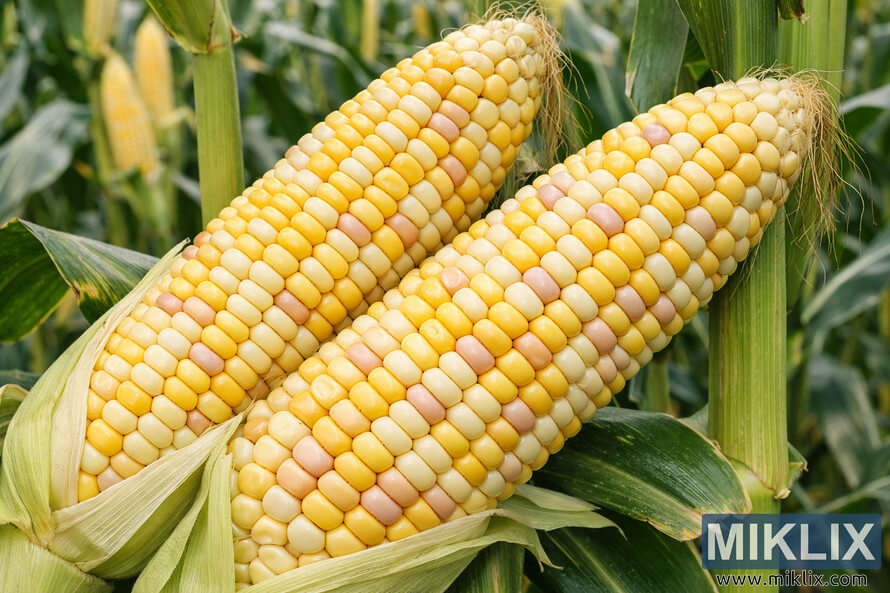
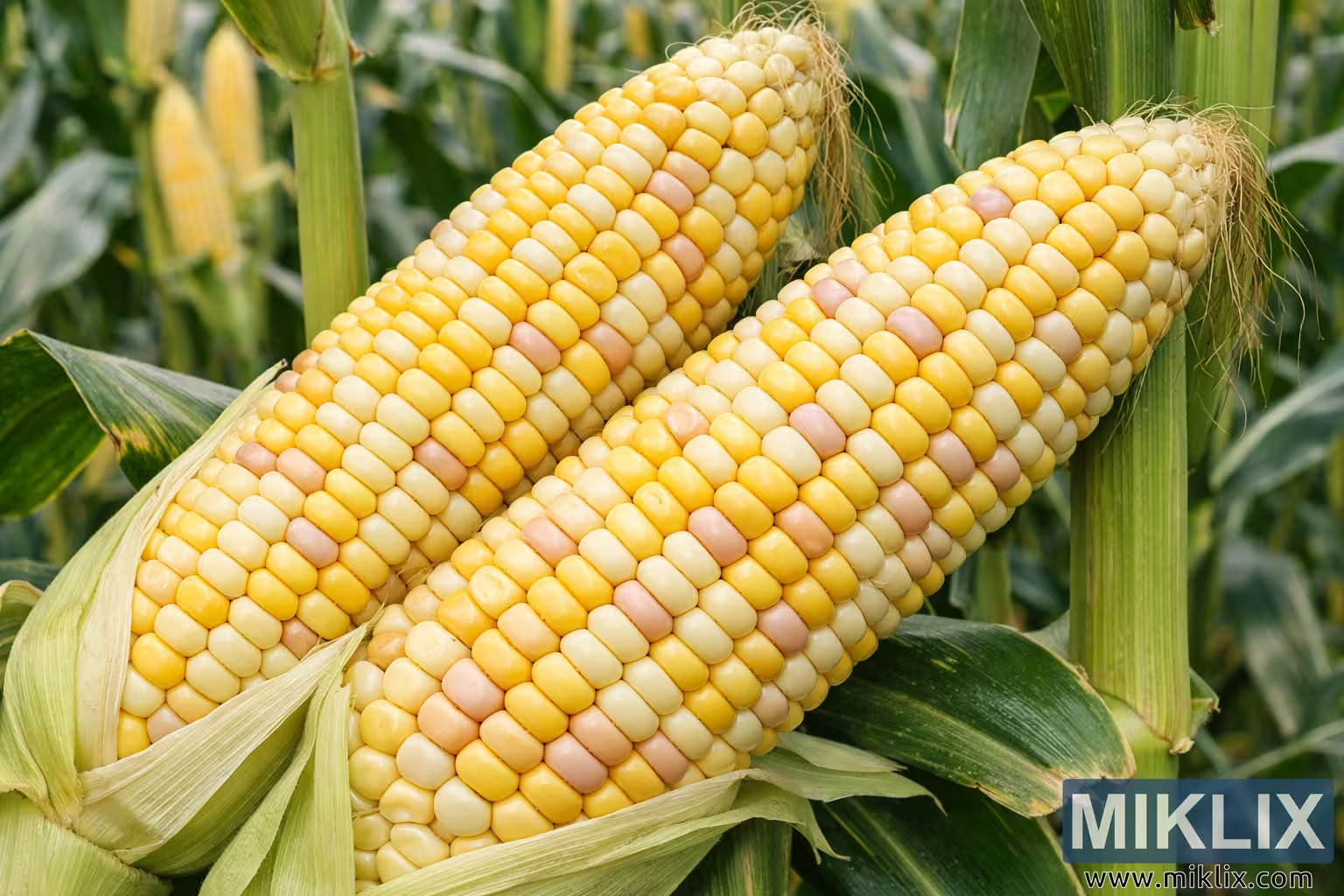
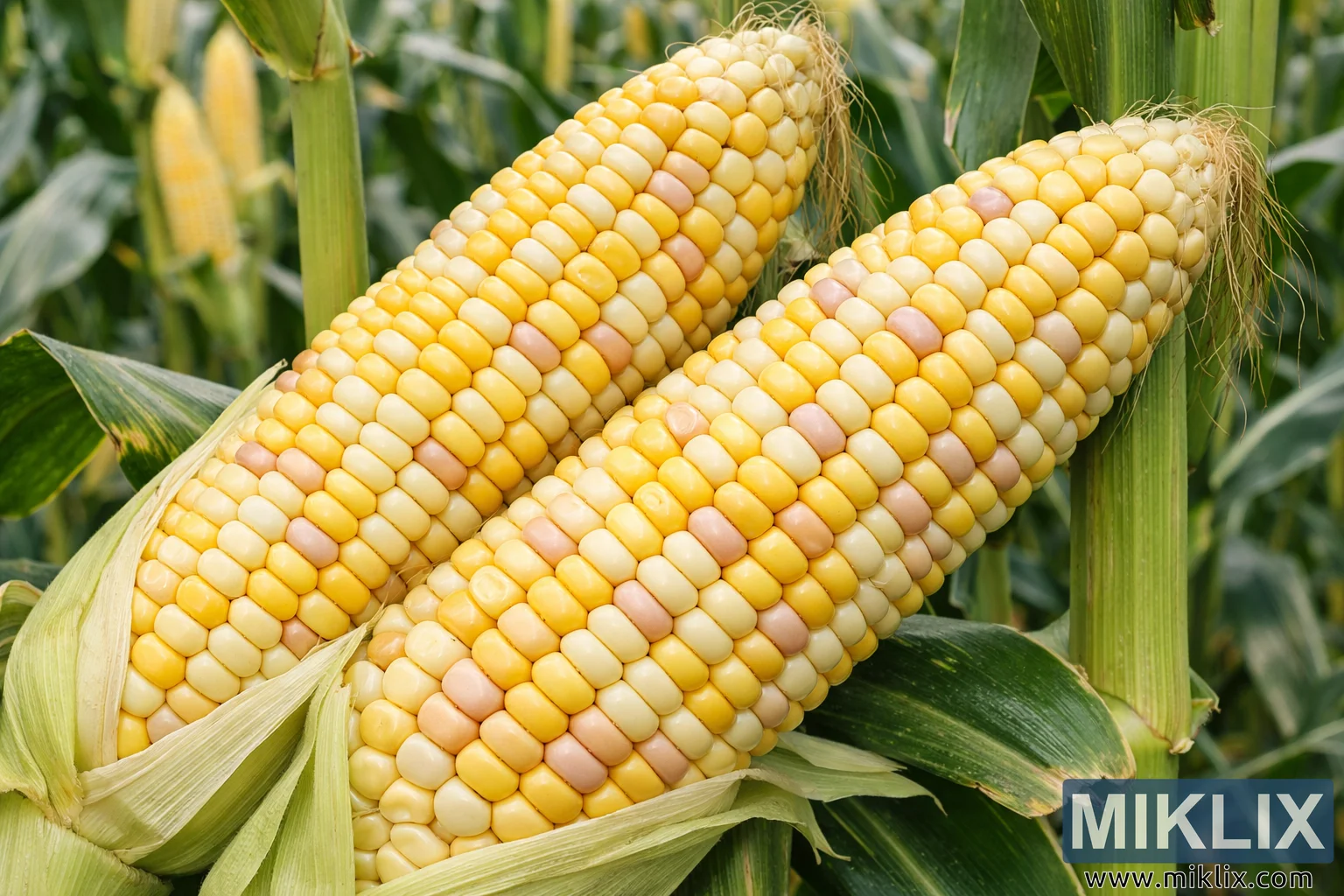
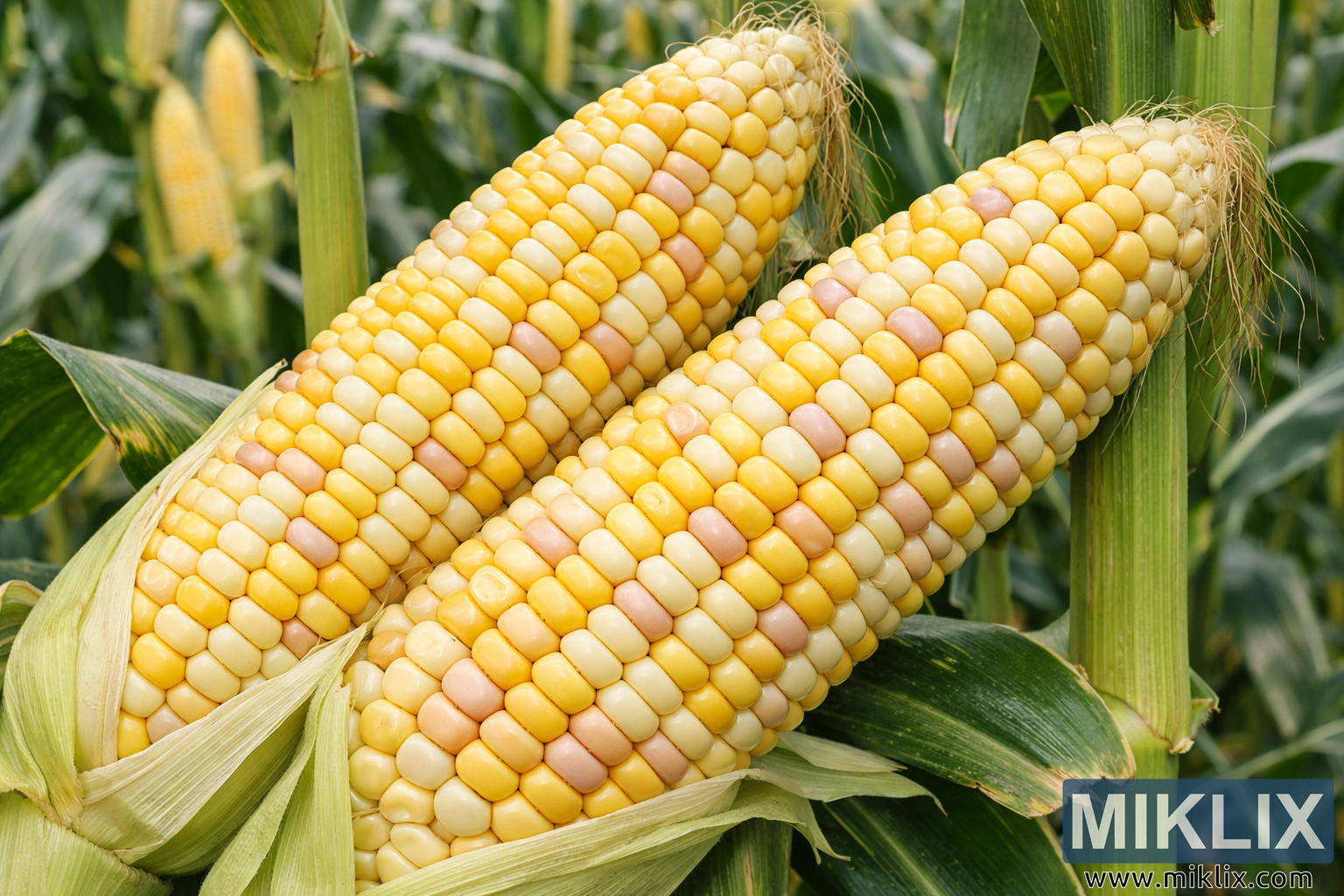
Close-up photograph of Honey Select sweet corn displaying distinctive tri-color kernels—yellow, white, and light pink—on large ears surrounded by green husks in a cornfield.
Honey Select Sweet Corn with Tri-Color Kernels on the Cob
Galimos šio paveikslėlio versijos
Toliau pateiktos parsisiunčiamų vaizdų rinkmenos yra mažiau suspaustos, didesnės raiškos ir dėl to kokybiškesnės nei šios svetainės straipsniuose ir puslapiuose įterpti vaizdai, kurių dydis optimizuotas siekiant sumažinti duomenų srauto pralaidumą.
Įprastas dydis (1,536 x 1,024)
Didelis dydis (3,072 x 2,048)
Labai didelis dydis (4,608 x 3,072)
Ypač didelis dydis (6,144 x 4,096)
Komiškai didelis dydis (1,048,576 x 699,051)
- Vis dar įkelia... ;-)
Vaizdo aprašymas
A high-resolution landscape photograph shows two large ears of Honey Select sweet corn prominently displayed in the foreground of a lush cornfield. The ears are partially peeled back, revealing rows of tightly packed kernels that display the distinctive tri-color pattern typical of the Honey Select variety. The kernels form an attractive mosaic of warm golden yellow, creamy white, and subtle light pink tones. Each kernel appears plump, smooth, and slightly glossy, reflecting natural light and emphasizing the fresh, ripe appearance of the corn. The arrangement of the kernels is orderly and consistent, forming straight vertical rows along the length of each ear.
The two ears are positioned diagonally across the frame, overlapping slightly and leaning gently against the green corn stalks that surround them. Their husks are pulled back just enough to expose most of the kernels while still framing the cobs with pale green, slightly fibrous leaves. The husk edges curl outward, adding texture and a natural framing element around the corn. Fine strands of golden corn silk remain visible near the tips of the ears, soft and slightly tangled, contributing to the sense of freshness and authenticity.
Behind the ears, the background reveals a dense stand of corn plants rendered in a soft blur. Tall green stalks and long leaves create a layered backdrop that emphasizes the agricultural setting while keeping the viewer’s focus on the sharply detailed ears in the foreground. The blurred leaves and stems produce a gentle bokeh effect, suggesting depth within the field without distracting from the central subject.
Natural daylight illuminates the scene evenly, highlighting the vibrant color variation in the kernels and the rich greens of the husks and surrounding foliage. The lighting is soft and balanced, avoiding harsh shadows while enhancing the dimensional texture of the corn. The photograph captures a moment typical of harvest-ready sweet corn in the field, presenting the produce as fresh, healthy, and visually appealing.
Overall, the image showcases the distinctive tri-color kernel pattern and full ear size characteristic of Honey Select sweet corn. The composition, color contrast, and sharp detail combine to emphasize both the aesthetic beauty and agricultural quality of the variety, making the ears appear abundant, ripe, and ready for harvest.
Vaizdas susijęs su: Growing Corn: Your Complete Guide to Sweet Success in the Garden