
Vaizdas: Corn Smut Infection on Maize Ear
Paskelbta:
Paskutinį kartą atnaujinta: 2026 m. kovo 13 d. 20:38:29 UTC
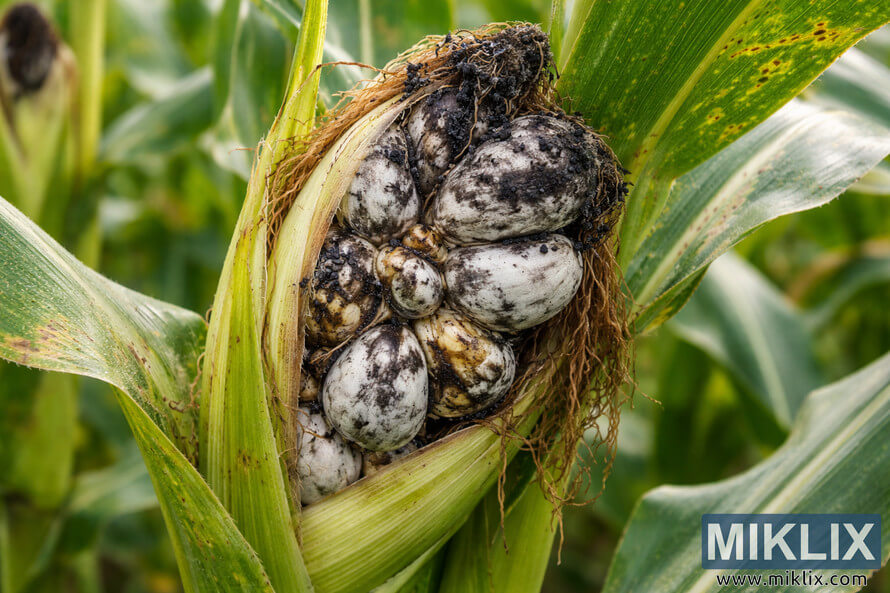
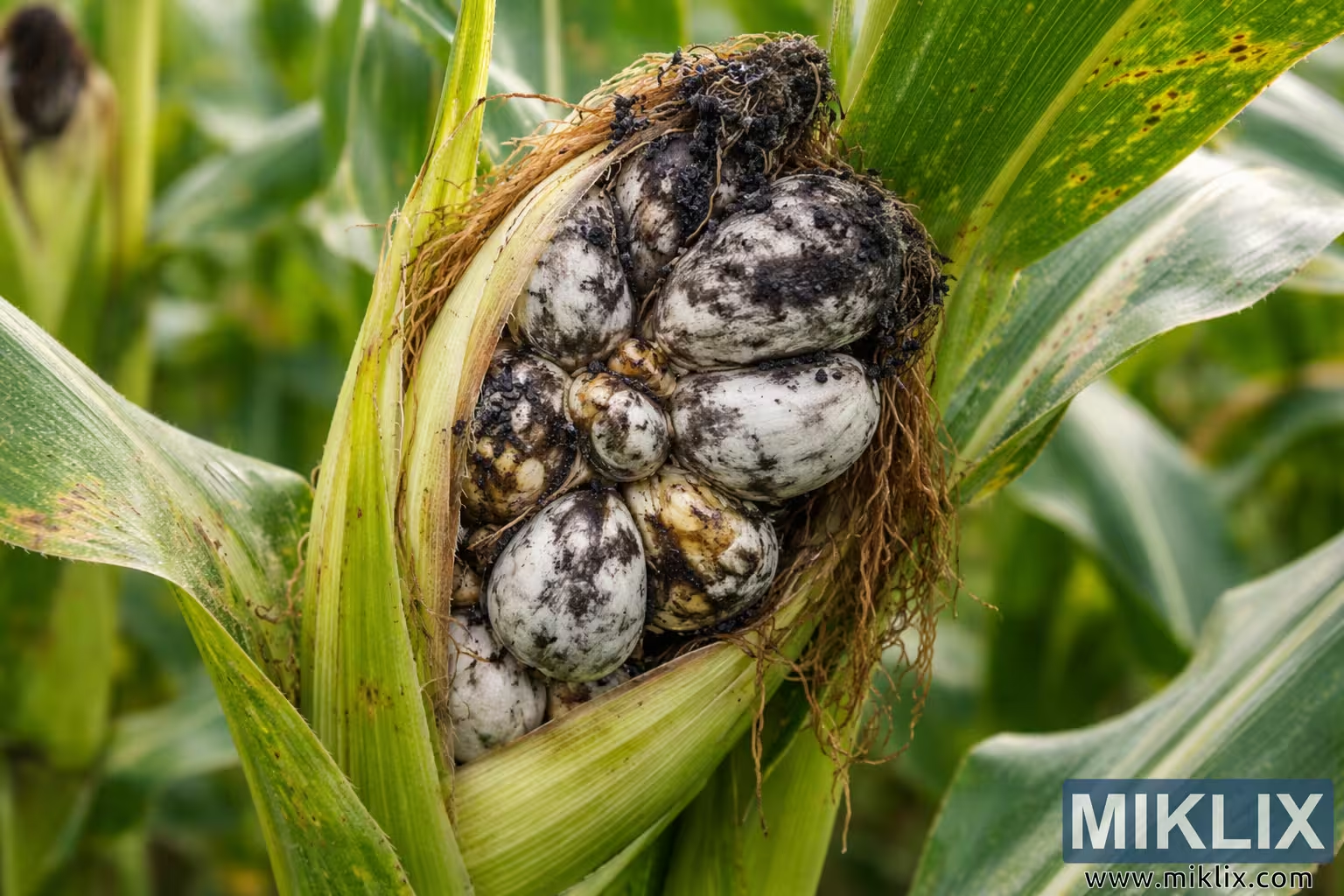
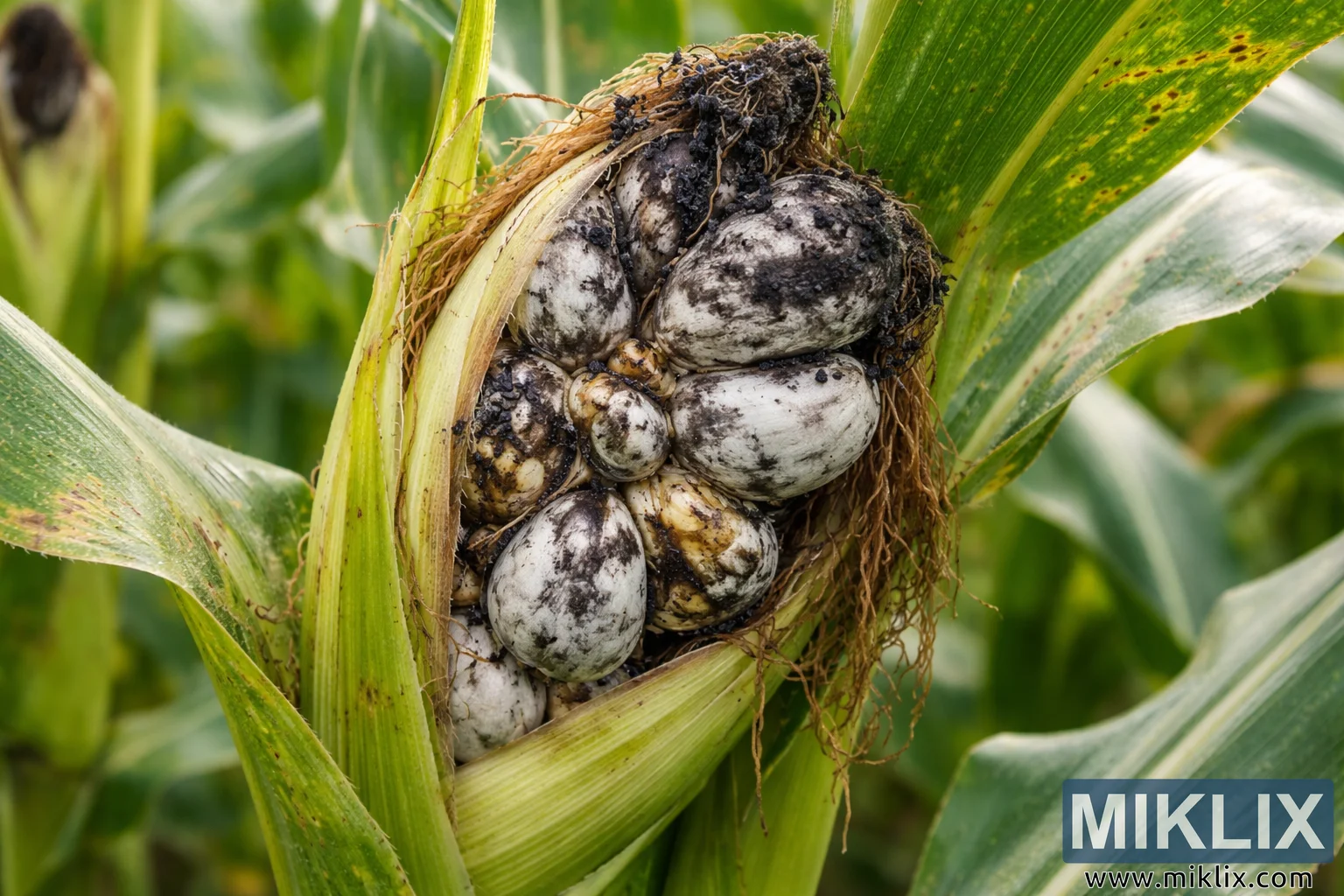
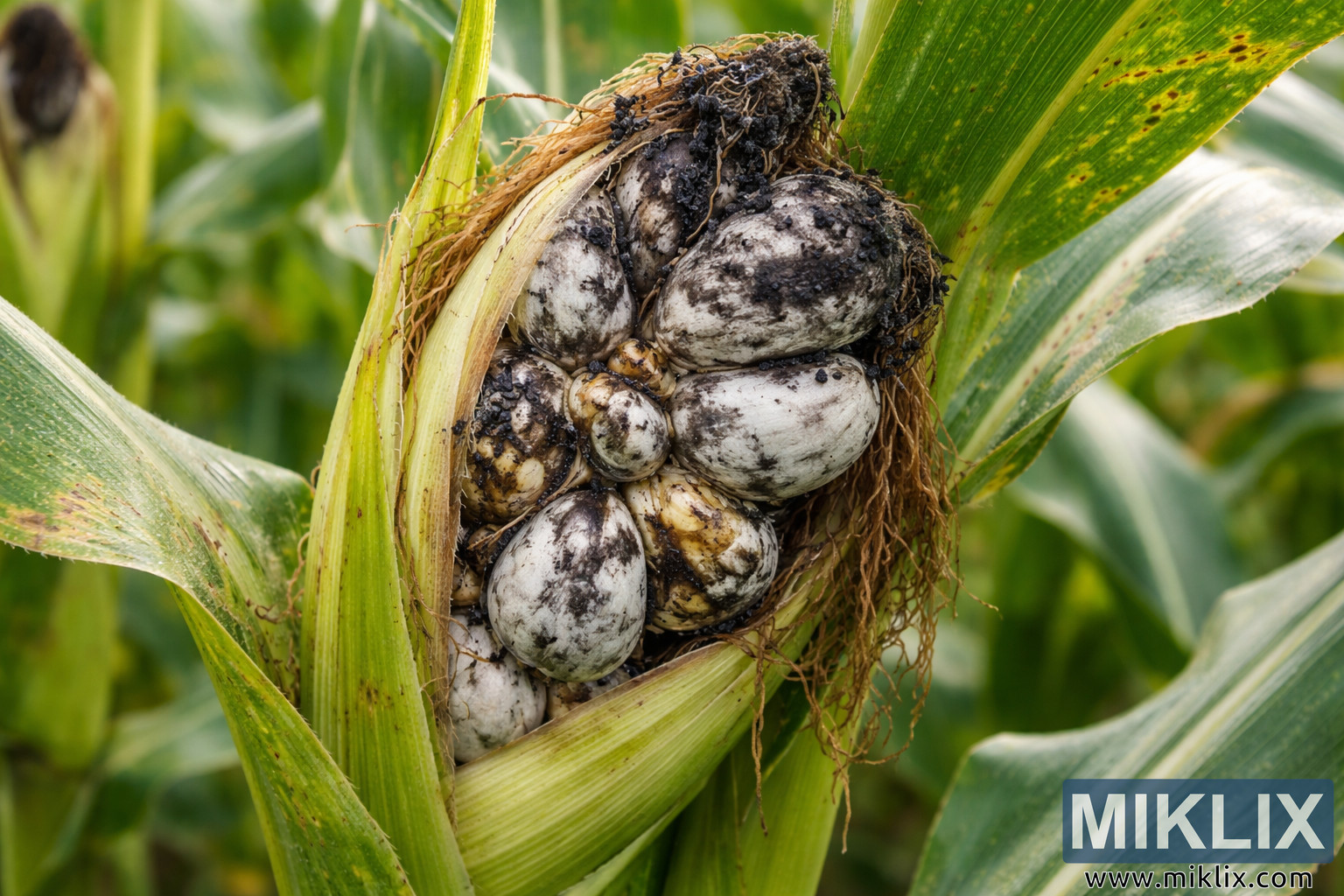
High-resolution close-up image of a corn plant infected with corn smut (Ustilago maydis), displaying swollen gray galls and black spores replacing the kernels on the maize ear.
Corn Smut Infection on Maize Ear
Galimos šio paveikslėlio versijos
Toliau pateiktos parsisiunčiamų vaizdų rinkmenos yra mažiau suspaustos, didesnės raiškos ir dėl to kokybiškesnės nei šios svetainės straipsniuose ir puslapiuose įterpti vaizdai, kurių dydis optimizuotas siekiant sumažinti duomenų srauto pralaidumą.
Įprastas dydis (1,536 x 1,024)
Didelis dydis (3,072 x 2,048)
Labai didelis dydis (4,608 x 3,072)
Ypač didelis dydis (6,144 x 4,096)
Komiškai didelis dydis (1,048,576 x 699,051)
- Vis dar įkelia... ;-)
Vaizdo aprašymas
This high-resolution landscape photograph shows a close-up view of a corn plant visibly infected with corn smut, a fungal disease caused by Ustilago maydis. The focal point of the image is a partially opened corn ear where the normal rows of yellow kernels have been replaced by swollen, irregularly shaped fungal galls. These bulbous structures appear grayish-white to pale silver in color and vary in size, forming a clustered mass that fills the interior of the husk. Several galls display dark, mottled surfaces where the outer membrane has begun to rupture, exposing the black, powdery spores characteristic of the disease.
The husk leaves surrounding the ear are pulled back slightly, revealing the infected tissue. They appear light green with subtle striations and natural curvature, framing the diseased ear and guiding the viewer's attention toward the center of the image. Fine strands of corn silk emerge from the top of the ear, tangled among the fungal growths. The silk fibers are dry and brown, suggesting a later stage of development in the corn plant as well as the progression of the infection.
Across the galls, dark speckles and patches of spore masses create a striking contrast against the lighter gray outer membranes. Some galls are smooth and intact, while others show cracking or fragmentation where spores have begun to disperse. This variation illustrates different stages of the fungal lifecycle occurring simultaneously within the same ear.
The background is softly blurred with shallow depth of field, showing green corn leaves and stalks that suggest a larger maize field environment. This natural backdrop provides contextual information while ensuring that the infected ear remains the clear subject of the photograph. The lighting appears natural and even, likely captured outdoors during daylight, allowing the textures of the plant tissue and fungal structures to be clearly visible.
Fine details such as the fibrous strands of silk, the subtle veining of the husk leaves, and the granular appearance of the black spores contribute to the scientific and documentary quality of the image. The photograph effectively highlights the dramatic morphological changes caused by corn smut infection, transforming what would normally be a uniform ear of corn into a cluster of swollen fungal growths. As a result, the image serves both as a visually striking natural scene and as an educational depiction of a well-known plant disease affecting maize crops.
Vaizdas susijęs su: Growing Corn: Your Complete Guide to Sweet Success in the Garden