
Vaizdas: Watering Fresh Scallions in a Sunlit Garden
Paskelbta:
Paskutinį kartą atnaujinta: 2026 m. balandžio 14 d. 21:15:11 UTC
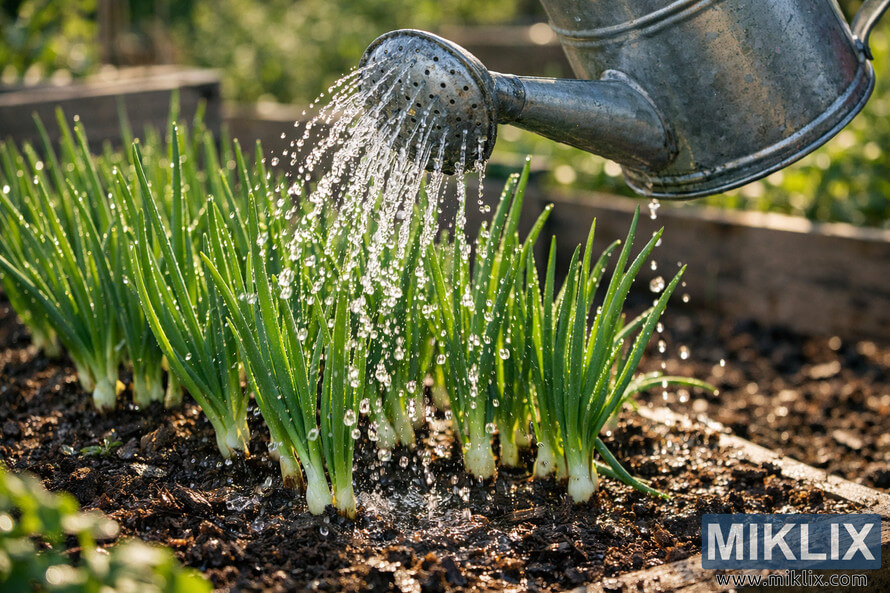
Close-up garden scene showing a watering can sprinkling water over healthy scallions growing in dark soil, illuminated by warm sunlight.
Watering Fresh Scallions in a Sunlit Garden
Galimos šio paveikslėlio versijos
Toliau pateiktos parsisiunčiamų vaizdų rinkmenos yra mažiau suspaustos, didesnės raiškos ir dėl to kokybiškesnės nei šios svetainės straipsniuose ir puslapiuose įterpti vaizdai, kurių dydis optimizuotas siekiant sumažinti duomenų srauto pralaidumą.
Įprastas dydis (1,536 x 1,024)
Didelis dydis (3,072 x 2,048)
Labai didelis dydis (4,608 x 3,072)
Ypač didelis dydis (6,144 x 4,096)
Komiškai didelis dydis (1,048,576 x 699,051)
- Vis dar įkelia... ;-)
Vaizdo aprašymas
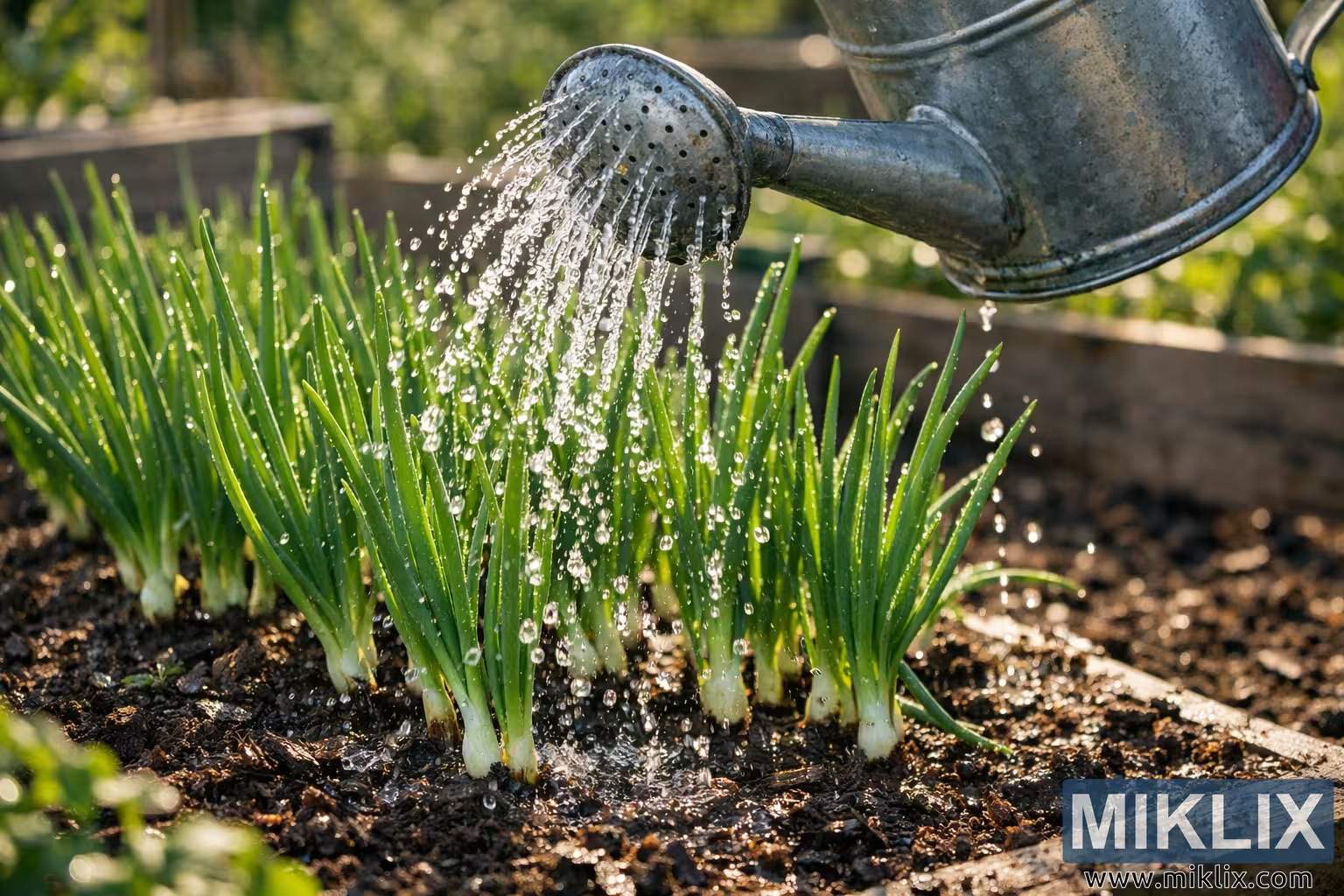
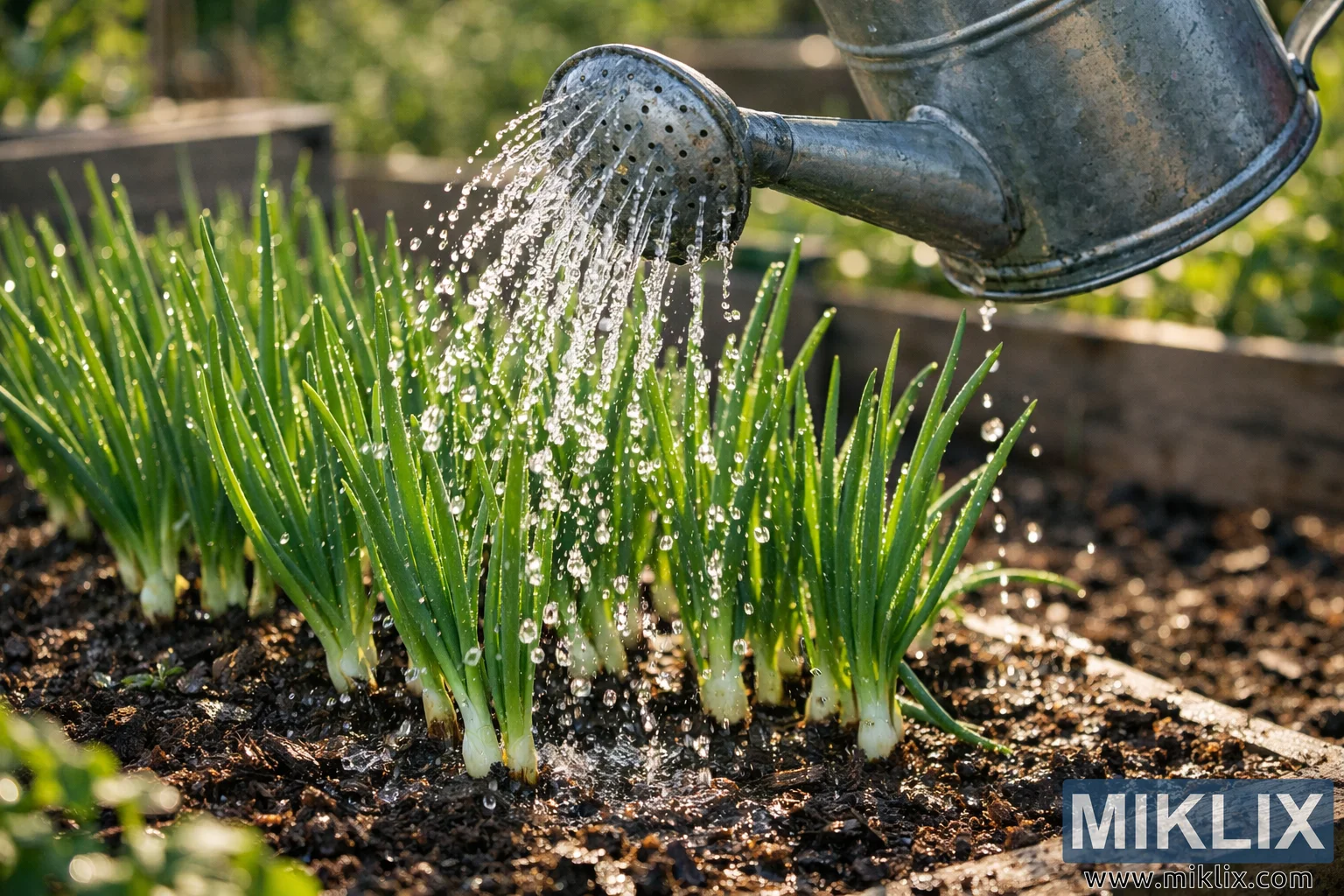
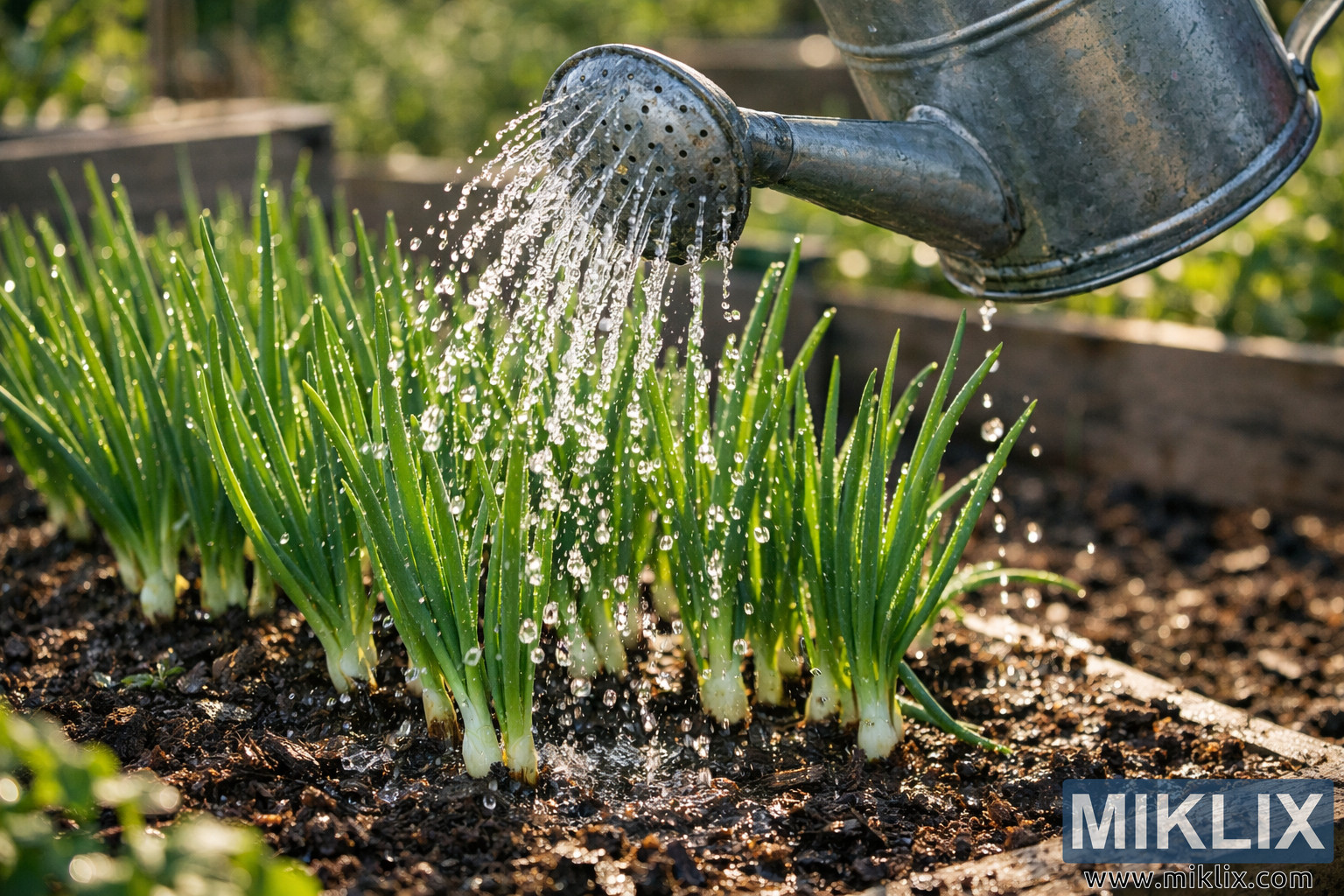
A close-up garden scene captures a weathered metal watering can tilted forward as it pours a sparkling shower of water onto a neat row of vibrant green scallions. The watering can occupies the upper right portion of the image, its round perforated spout releasing dozens of small droplets that scatter through the air like tiny beads of glass. The water arcs downward in a gentle cascade, glistening in warm sunlight before landing on the soil and the slender leaves of the plants below. Each droplet reflects the light, creating a lively, shimmering effect that suggests a calm and nurturing moment in the garden.
The scallions grow in a small raised garden bed filled with rich, dark soil that appears freshly watered and slightly textured with small clumps and organic matter. The plants stand upright in tidy clusters, their white stems emerging from the soil and transitioning into long, narrow green leaves that point upward and outward. The leaves are glossy and healthy, some catching the light along their edges while others remain shaded, adding depth and contrast to the scene. A few droplets cling to the leaves as they fall, leaving tiny reflective highlights along the blades.
The wooden border of the raised bed runs along the bottom and rear edges of the planting area, subtly framing the patch of scallions and giving the garden a cared-for, organized appearance. In the background, the rest of the garden fades into a soft blur of greens and earthy tones. Out-of-focus plants and foliage create a gentle bokeh effect, suggesting a lush environment without distracting from the main subject. The diffused background also emphasizes the crisp detail of the watering action and the scallions in the foreground.
Warm late-afternoon sunlight filters through the garden, illuminating the scene from the side and slightly behind the watering can. The light highlights the metal texture of the can, revealing subtle scratches and patina that suggest frequent use. It also creates bright reflections within the falling droplets and soft glows along the edges of the scallion leaves. The combination of natural light, fresh greenery, and flowing water evokes a peaceful, productive gardening moment.
Overall, the image conveys a sense of care, growth, and connection to nature. The act of watering symbolizes attentive gardening and the simple satisfaction of nurturing plants. With its crisp details, sparkling water, and warm sunlight, the scene captures a tranquil snapshot of everyday life in a thriving garden.
Vaizdas susijęs su: How to Grow Scallions: Complete Guide for Beginners