
Vaizdas: Heritage Swiss Chard Varieties Growing in a Traditional Garden Bed
Paskelbta:
Paskutinį kartą atnaujinta: 2026 m. balandžio 16 d. 19:41:16 UTC
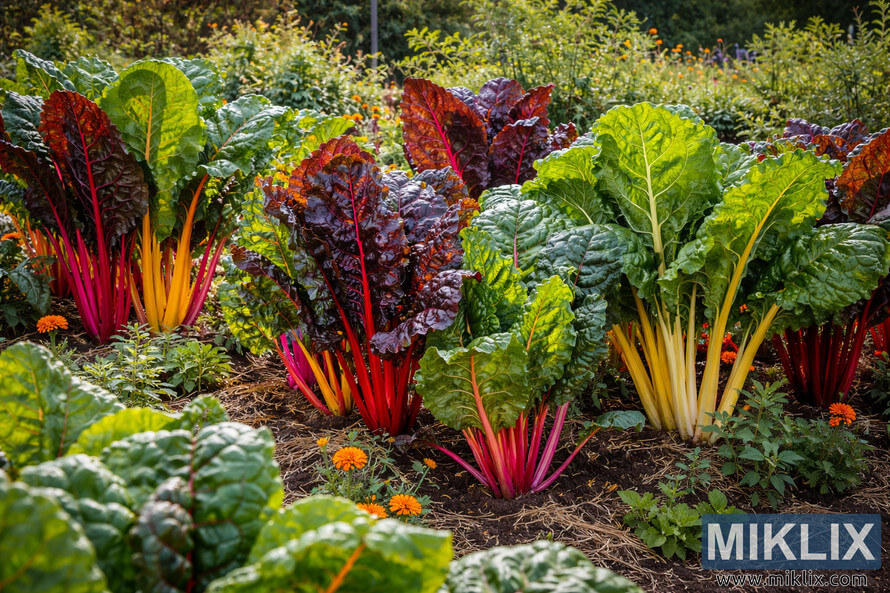
High-resolution image of heritage Swiss chard varieties growing together in a traditional garden bed, featuring vibrant stems and lush green leaves in natural sunlight.
Heritage Swiss Chard Varieties Growing in a Traditional Garden Bed
Galimos šio paveikslėlio versijos
Toliau pateiktos parsisiunčiamų vaizdų rinkmenos yra mažiau suspaustos, didesnės raiškos ir dėl to kokybiškesnės nei šios svetainės straipsniuose ir puslapiuose įterpti vaizdai, kurių dydis optimizuotas siekiant sumažinti duomenų srauto pralaidumą.
Įprastas dydis (1,536 x 1,024)
Didelis dydis (3,072 x 2,048)
Labai didelis dydis (4,608 x 3,072)
Ypač didelis dydis (6,144 x 4,096)
Komiškai didelis dydis (1,048,576 x 699,051)
- Vis dar įkelia... ;-)
Vaizdo aprašymas
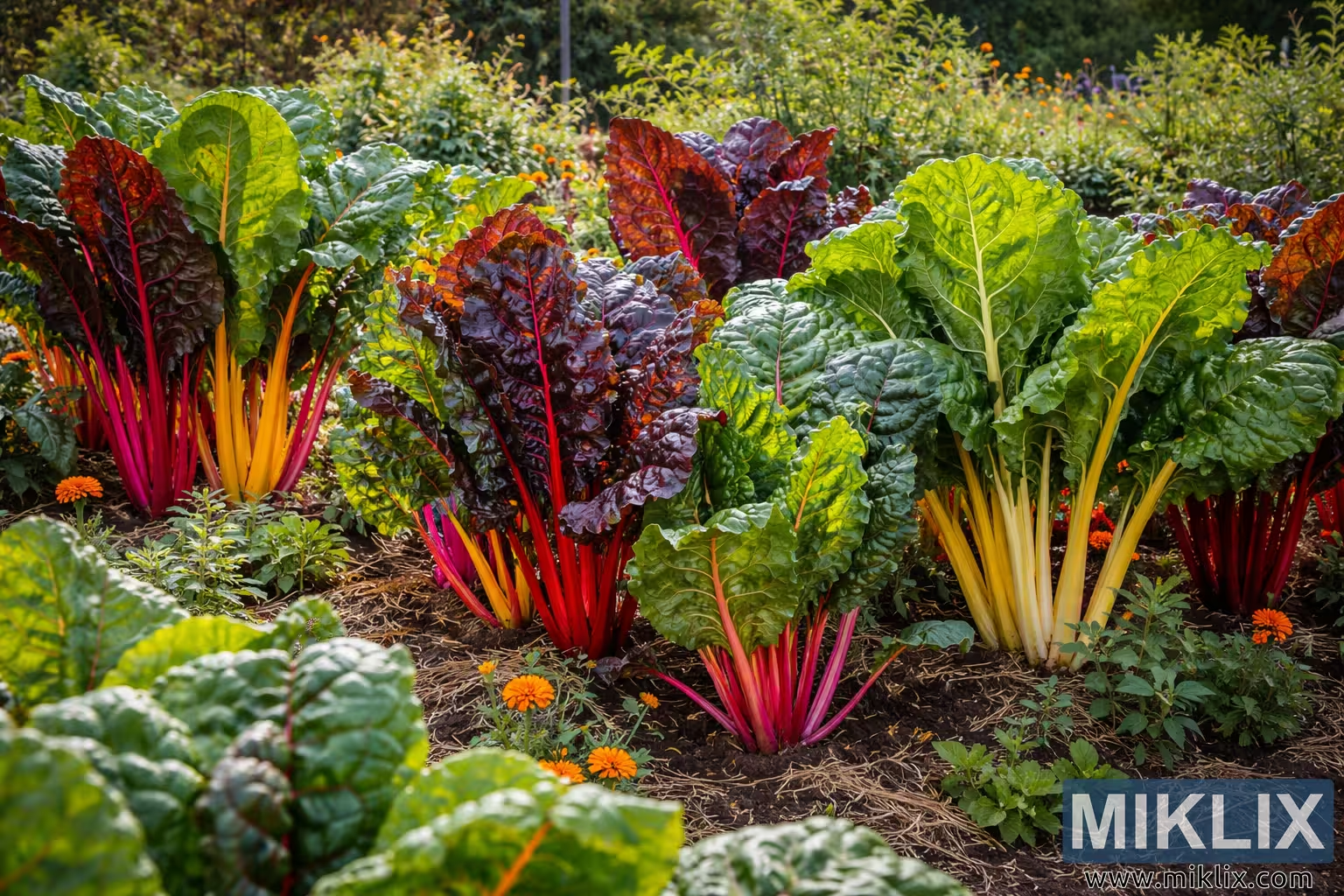
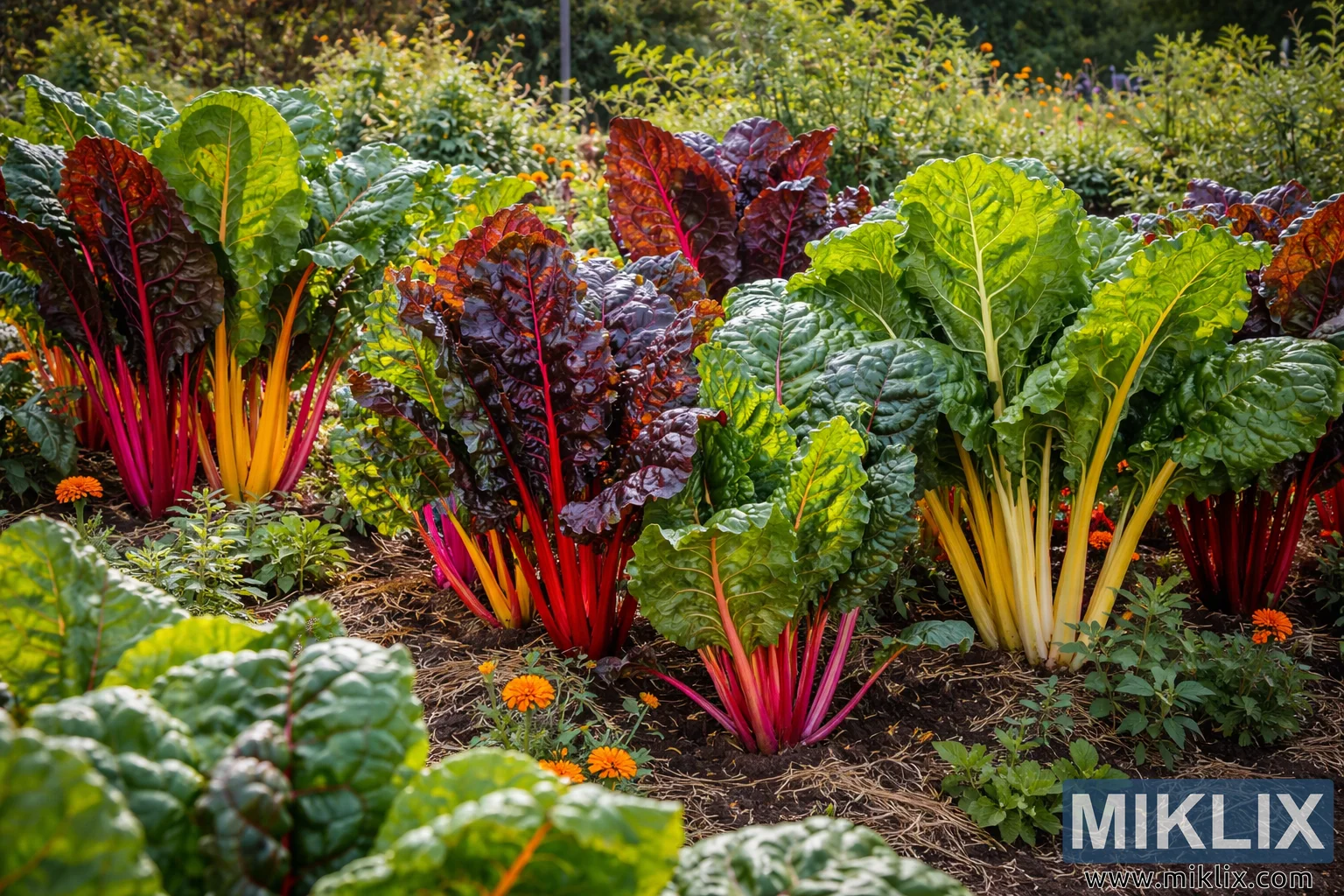
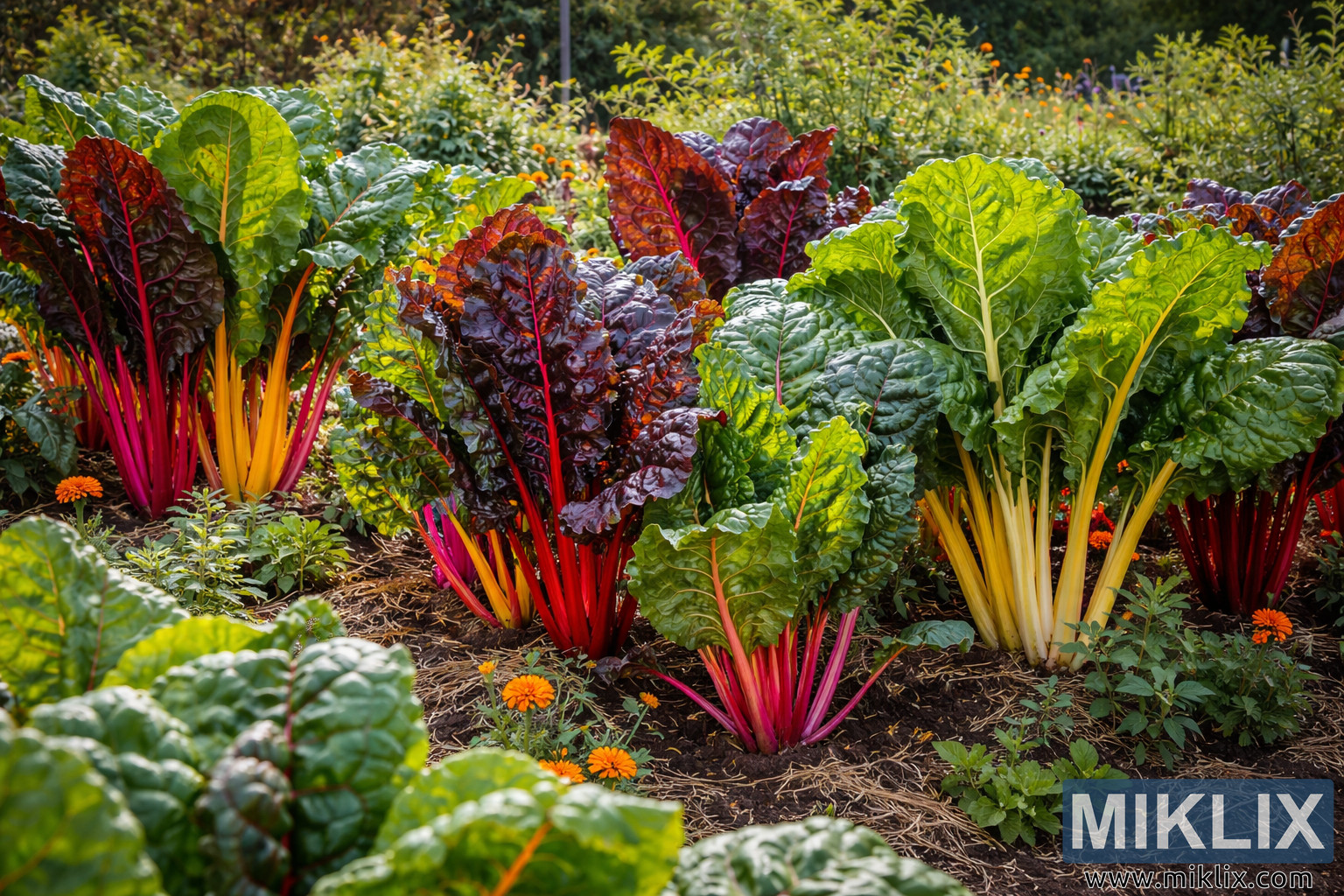
A vibrant, high-resolution landscape photograph shows a thriving traditional vegetable garden filled with heritage varieties of Swiss chard growing closely together in rich soil. The garden bed stretches horizontally across the frame, creating a colorful tapestry of leafy greens and vividly colored stems. Multiple chard plants stand upright with large, crinkled leaves that range from deep emerald to lighter shades of green, their textured surfaces catching the warm afternoon sunlight. Beneath the leaves, the thick stalks display an array of striking colors typical of heirloom chard varieties, including bright crimson red, golden yellow, soft orange, and vivid pink. These colorful stems rise from dark, freshly cultivated soil that appears moist and fertile, emphasizing the healthy growing conditions of the garden.
The plants are arranged naturally rather than in rigid rows, giving the garden a traditional, slightly rustic appearance often associated with heritage vegetable plots and small-scale kitchen gardens. Around the chard plants, small companion flowers and herbs can be seen scattered throughout the bed, adding hints of orange and green that complement the dominant colors of the chard. A few marigold blossoms peek through the foliage near the base of the plants, suggesting a gardener’s effort to encourage biodiversity and natural pest control.
The lighting in the image is soft and warm, likely taken in the late afternoon or early evening when sunlight falls at a gentle angle across the garden. This golden light enhances the glossy texture of the leaves and creates subtle highlights and shadows that emphasize the layered foliage. In the background, the garden continues with slightly blurred greenery, suggesting additional beds, flowering plants, and shrubs beyond the main focus. The shallow depth of field draws the viewer’s attention primarily to the chard in the foreground while still providing context of a lush, productive garden environment.
Overall, the image conveys the beauty and diversity of heritage vegetable varieties, celebrating the colorful stems and abundant leaves of Swiss chard grown in a well-tended traditional garden. The scene feels lively, organic, and abundant, highlighting both the aesthetic appeal and the edible value of these heirloom plants thriving together in a natural garden setting.
Vaizdas susijęs su: How to Grow Swiss Chard: A Complete Beginner's Guide