
Vaizdas: Turnips Thriving in a Large Container Garden
Paskelbta:
Paskutinį kartą atnaujinta: 2026 m. balandžio 19 d. 21:37:02 UTC
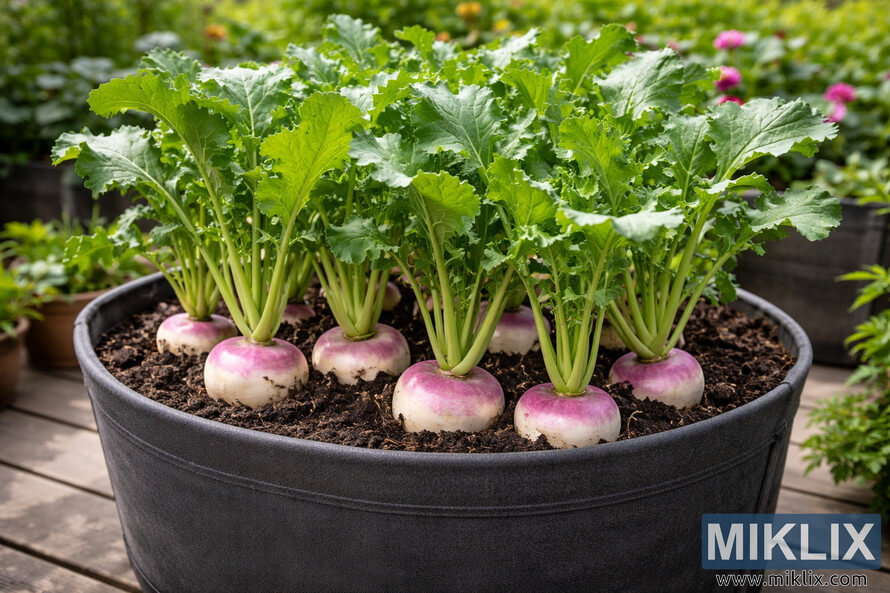
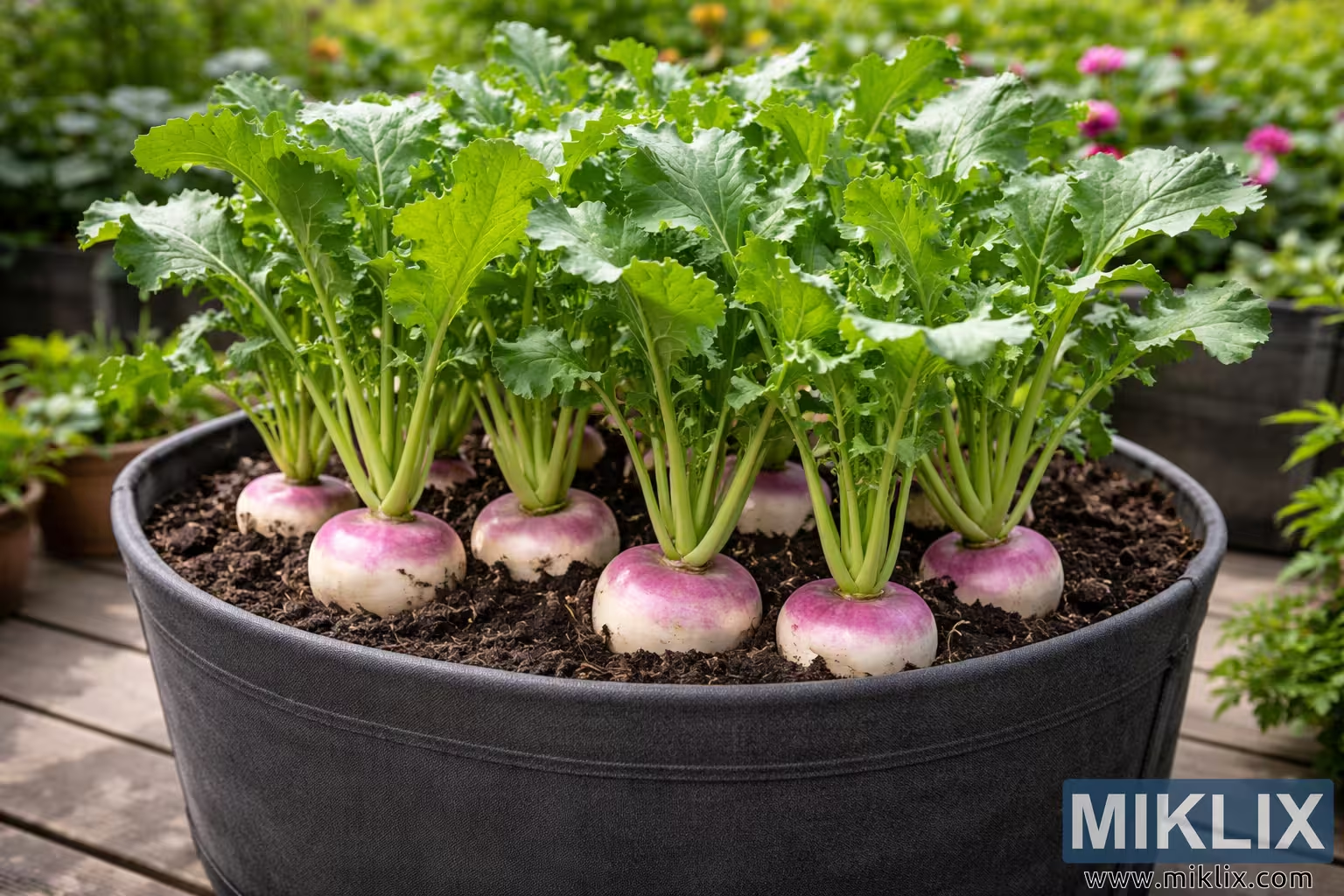
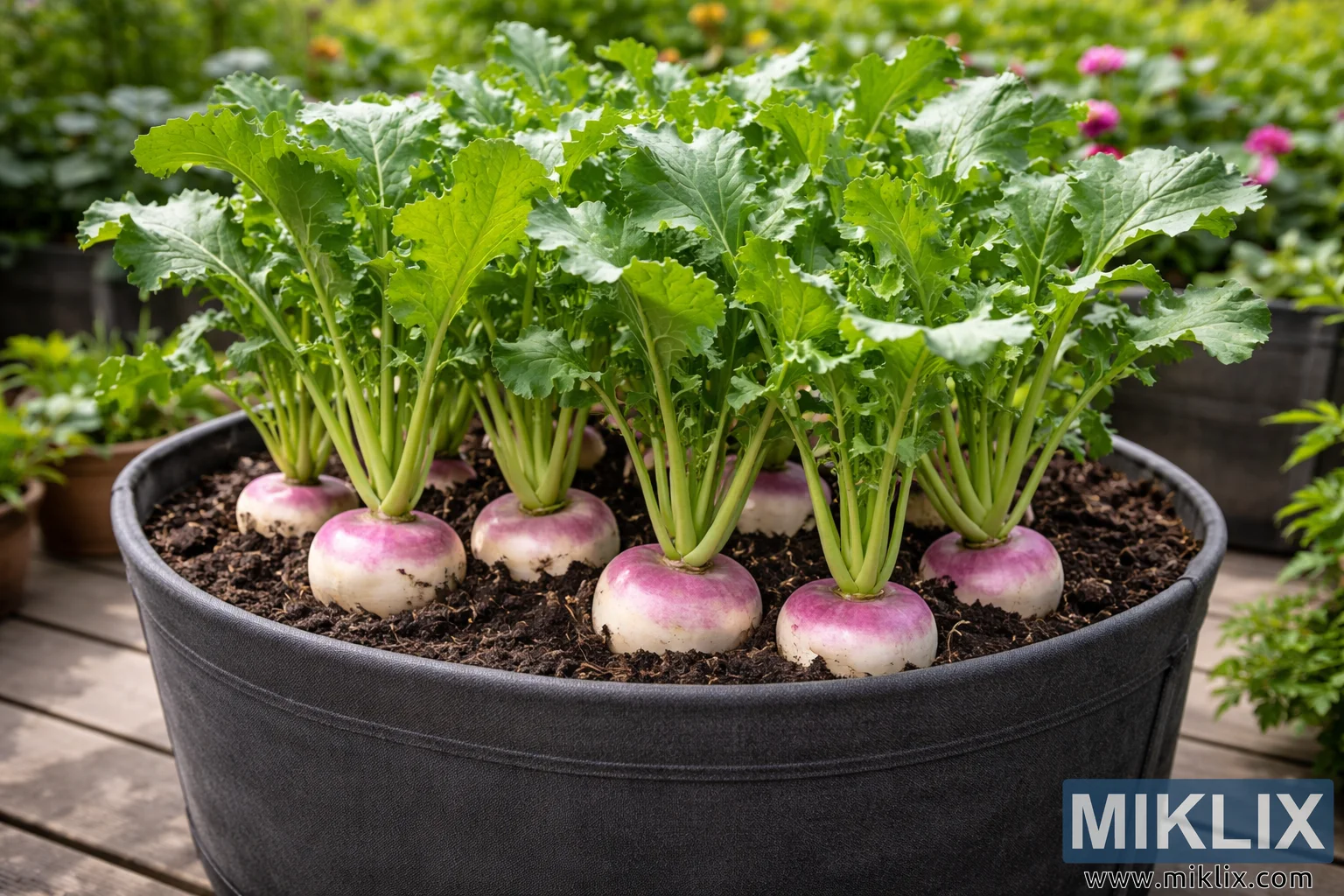
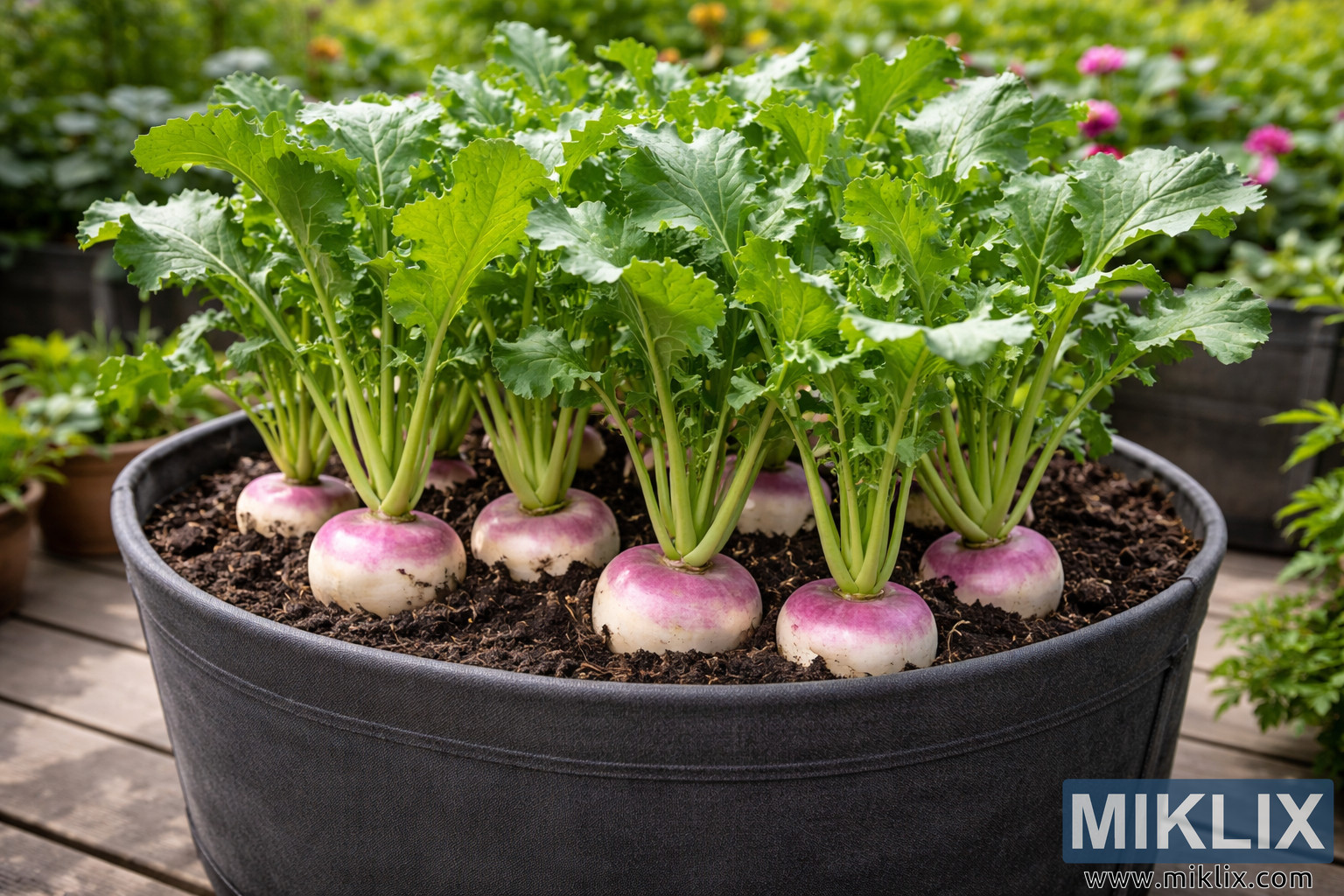
High-resolution photo of healthy turnips growing successfully in a large container pot on a wooden deck, surrounded by a vibrant garden in soft natural daylight.
Turnips Thriving in a Large Container Garden
Galimos šio paveikslėlio versijos
Toliau pateiktos parsisiunčiamų vaizdų rinkmenos yra mažiau suspaustos, didesnės raiškos ir dėl to kokybiškesnės nei šios svetainės straipsniuose ir puslapiuose įterpti vaizdai, kurių dydis optimizuotas siekiant sumažinti duomenų srauto pralaidumą.
Įprastas dydis (1,536 x 1,024)
Didelis dydis (3,072 x 2,048)
Labai didelis dydis (4,608 x 3,072)
Ypač didelis dydis (6,144 x 4,096)
Komiškai didelis dydis (1,048,576 x 699,051)
- Vis dar įkelia... ;-)
Vaizdo aprašymas
This high-resolution landscape photograph shows a thriving cluster of turnips growing successfully in a large round container pot placed on a wooden deck. The pot is dark gray to black and appears to be made from a sturdy fabric or composite material designed for container gardening. The camera angle is slightly above the rim of the container, giving a clear view of both the leafy tops of the plants and the rounded turnip bulbs emerging just above the soil surface. The composition focuses on the dense grouping of healthy turnip plants that fill the container evenly, suggesting that the crop is growing vigorously and making efficient use of the available space.
Each turnip plant displays a rosette of bright green leaves that extend upward and outward. The leaves are broad, slightly crinkled, and textured with visible veins, giving them a fresh and lively appearance. Their vibrant green color indicates healthy growth and strong photosynthesis. Beneath the leaves, the tops of the turnip bulbs are visible. The bulbs are smooth and rounded with a characteristic two-tone coloration: creamy white on the lower portion and a soft purple blush around the upper shoulders where they meet the stems. Several bulbs protrude slightly above the dark, moist soil, creating a pleasing visual pattern across the container.
The soil in the pot looks rich and well-aerated, with small organic particles visible on the surface. It appears freshly watered and loose, which would support healthy root development for container-grown vegetables. The turnips are spaced relatively close together but still have enough room for their leaves to spread and capture sunlight.
Natural daylight illuminates the scene, creating soft highlights on the leaves and subtle shadows around the bulbs and soil. The lighting enhances the texture of the foliage and the smooth surface of the turnips without appearing harsh. In the softly blurred background, hints of additional plants and garden elements can be seen, including other containers and flowering plants. The background bokeh keeps attention on the container while still suggesting a lush, productive garden setting.
Overall, the image conveys the success of growing root vegetables in containers. The healthy foliage, visible bulbs, and tidy container arrangement demonstrate how turnips can flourish even in limited spaces such as patios, decks, or small gardens. The scene feels calm, productive, and summery, highlighting both the beauty and practicality of container vegetable gardening.
Vaizdas susijęs su: How to Grow Turnips: Your Complete Growing Guide