
Vaizdas: Arp Rosemary Cold-Hardy Variety in a Frosty Garden
Paskelbta:
Paskutinį kartą atnaujinta: 2026 m. balandžio 8 d. 20:30:24 UTC
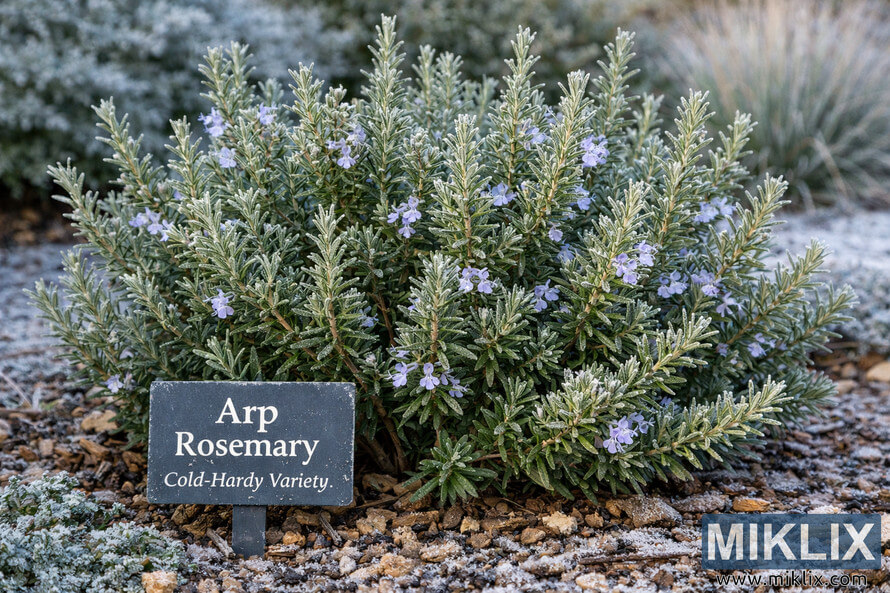
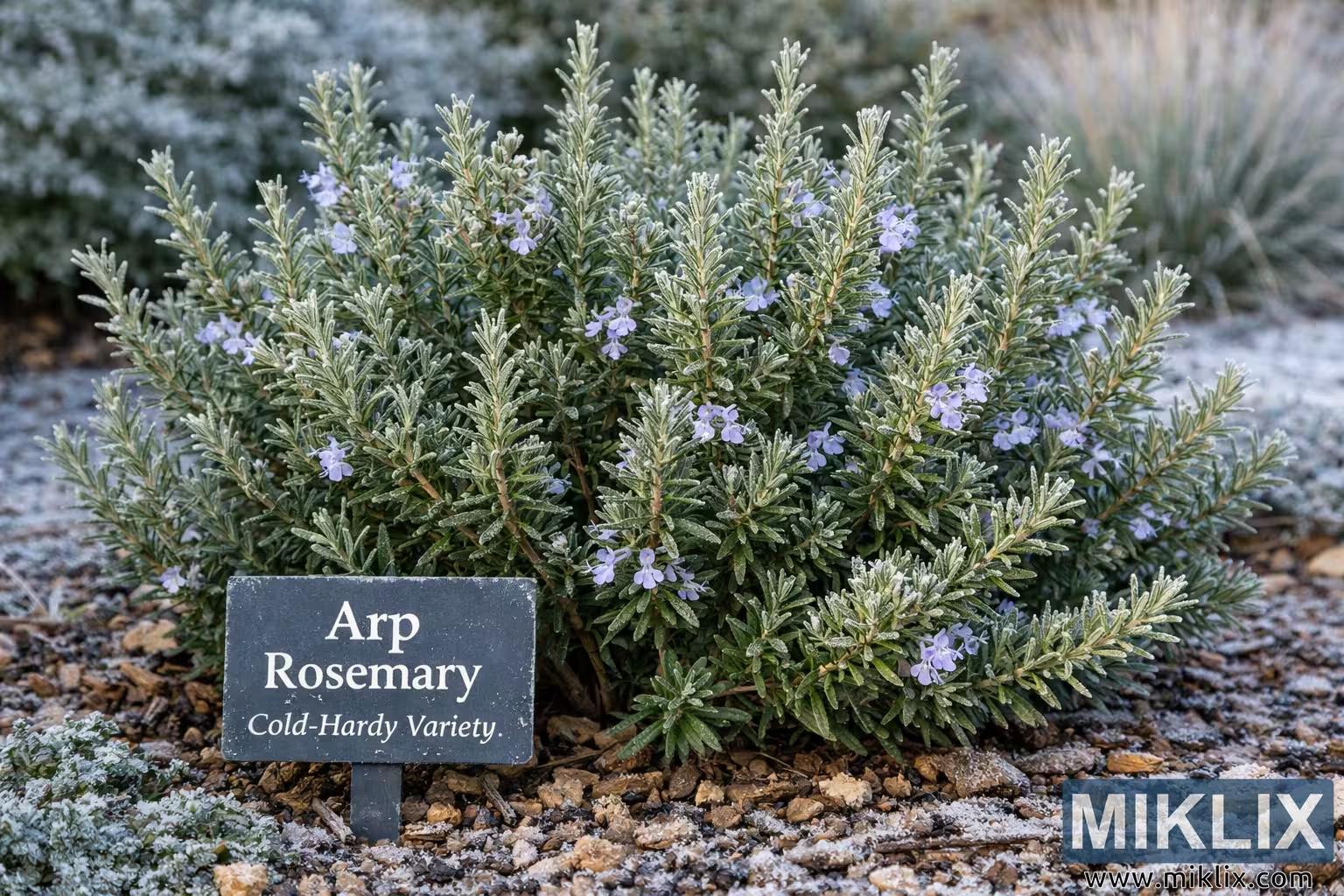
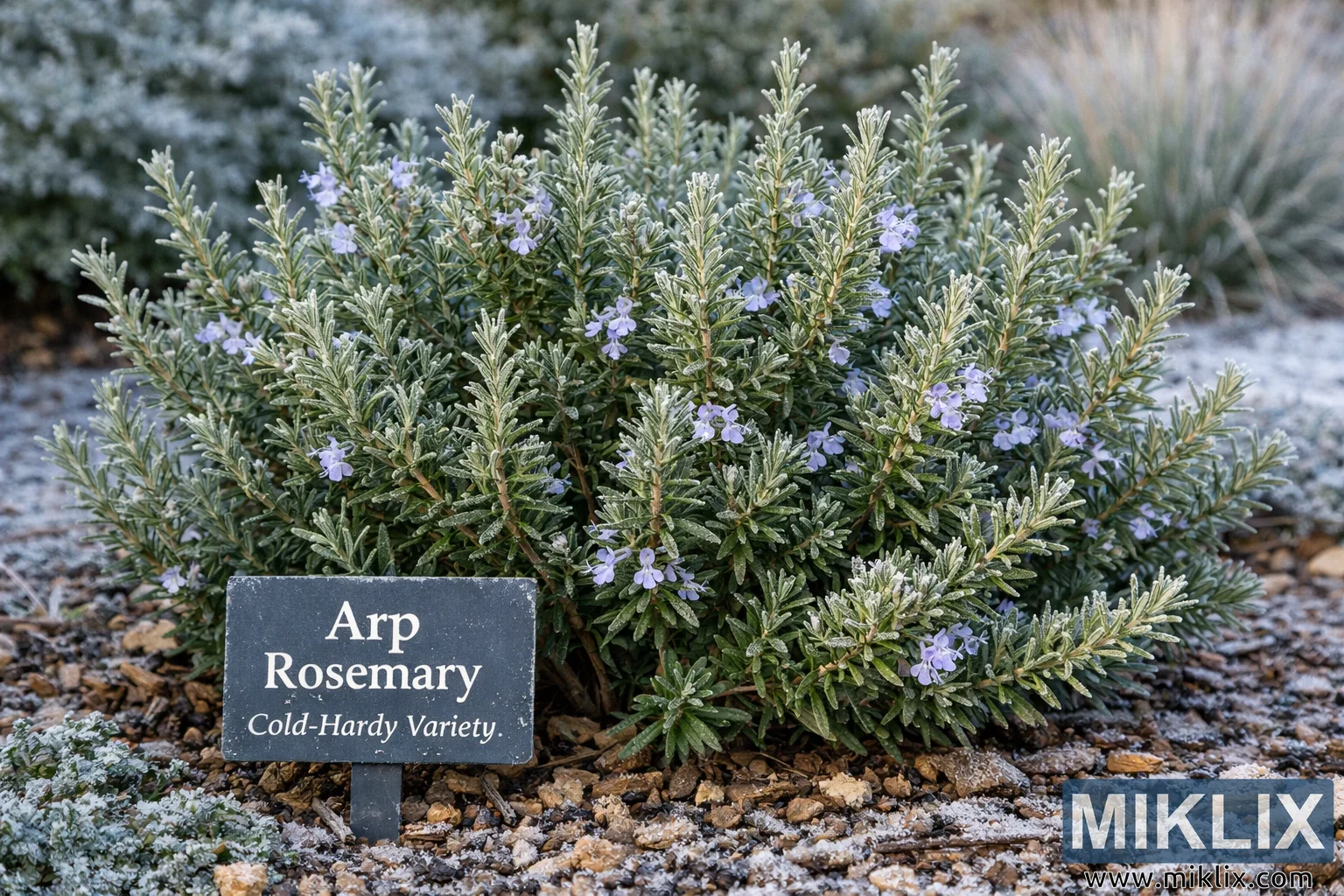
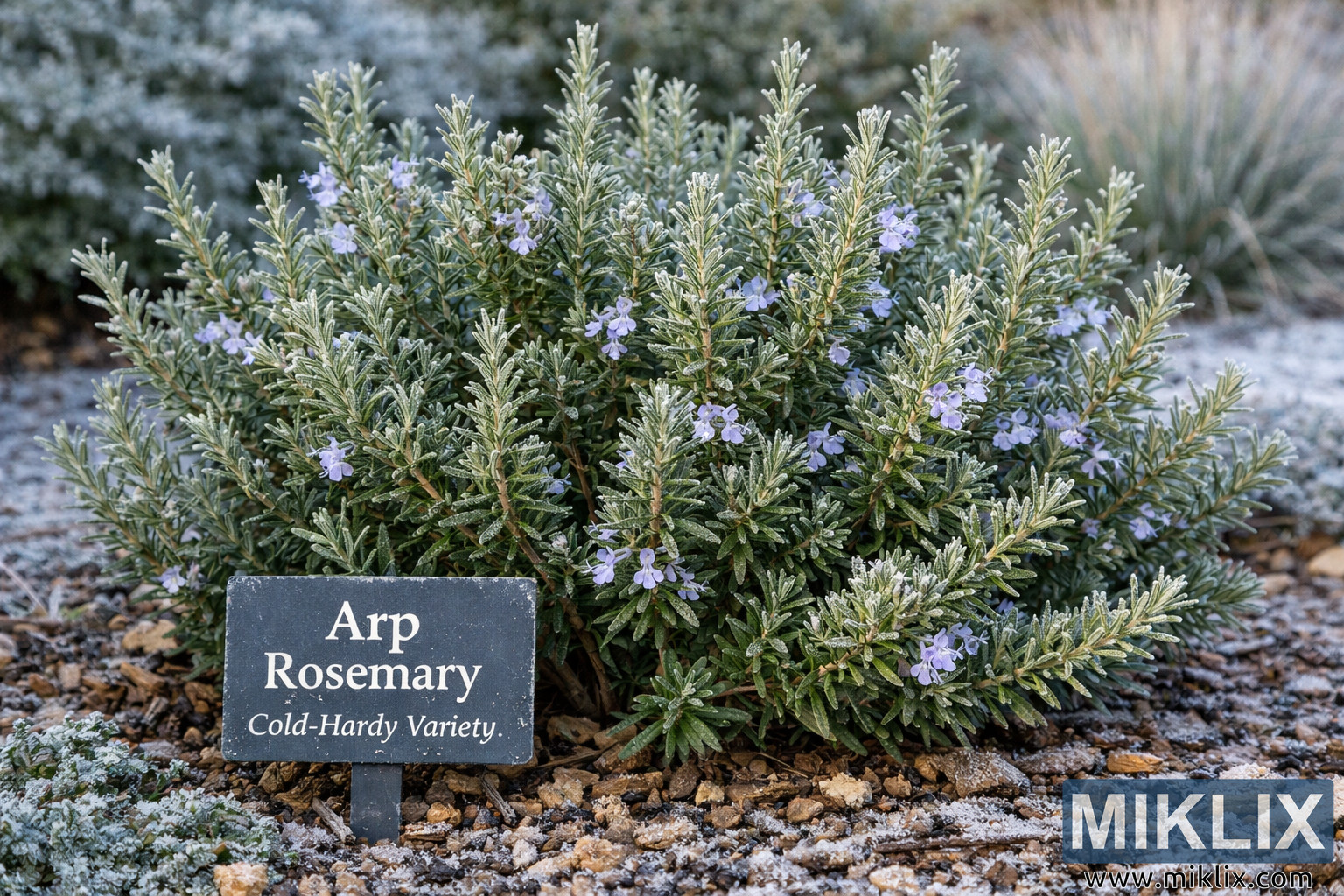
Photograph of Arp rosemary (Rosmarinus officinalis 'Arp'), a cold-hardy rosemary variety, growing in a frost-dusted garden with blue flowers and dense silvery-green foliage.
Arp Rosemary Cold-Hardy Variety in a Frosty Garden
Galimos šio paveikslėlio versijos
Toliau pateiktos parsisiunčiamų vaizdų rinkmenos yra mažiau suspaustos, didesnės raiškos ir dėl to kokybiškesnės nei šios svetainės straipsniuose ir puslapiuose įterpti vaizdai, kurių dydis optimizuotas siekiant sumažinti duomenų srauto pralaidumą.
Įprastas dydis (1,536 x 1,024)
Didelis dydis (3,072 x 2,048)
Labai didelis dydis (4,608 x 3,072)
Ypač didelis dydis (6,144 x 4,096)
Komiškai didelis dydis (1,048,576 x 699,051)
- Vis dar įkelia... ;-)
Vaizdo aprašymas
A detailed outdoor garden photograph shows a mature Arp rosemary plant (Rosmarinus officinalis 'Arp') growing in a winter garden setting. The plant forms a compact, rounded shrub with many upright woody stems that branch densely from the base. Each stem is covered with narrow, needle-like leaves that appear silvery-green due to the slightly lighter underside typical of rosemary foliage. The leaves are arranged closely along the stems, creating a textured and bushy appearance that highlights the plant's vigor and resilience. Scattered throughout the plant are small clusters of delicate pale blue to lavender flowers, adding subtle color contrast against the cool-toned foliage.
The surrounding garden environment reinforces the rosemary variety’s reputation for cold tolerance. The ground around the plant is lightly dusted with frost and small patches of frozen soil and gravel are visible between bits of garden mulch. The frost crystals catch the light softly, giving the scene a crisp winter atmosphere while still allowing the plant’s healthy green foliage to stand out. Despite the chilly conditions suggested by the frosty surface, the rosemary appears vigorous and undamaged, illustrating the hardiness that makes the Arp variety popular in cooler climates.
In the foreground, a small garden marker sign is placed in the soil directly in front of the plant. The sign has a dark slate-like surface with clean white lettering that reads “Arp Rosemary” on the top line and “Cold-Hardy Variety” beneath it. This label clearly identifies the cultivar and visually reinforces the theme of winter resilience shown in the photograph. The sign is simple and slightly weathered, fitting naturally within the garden environment.
The composition centers the rosemary plant in the frame, allowing the dense foliage and flowering stems to dominate the scene. The background is softly blurred with muted tones of winter vegetation and frost-covered ground, helping the viewer’s attention remain on the plant itself. Natural daylight illuminates the foliage evenly, highlighting the fine structure of the leaves and the small blossoms without harsh shadows. Overall, the image conveys the distinctive appearance and durability of the Arp rosemary cultivar, emphasizing its suitability for gardeners seeking a rosemary variety capable of tolerating colder temperatures while still producing attractive foliage and flowers.
Vaizdas susijęs su: How to Grow Rosemary: Your Complete Growing Guide