
Honeydew Melon: The Refreshing Fruit Packed with Nutrients
Paskelbta:
Paskutinį kartą atnaujinta: 2026 m. rugpjūčio 20 d. 14:16:44 UTC
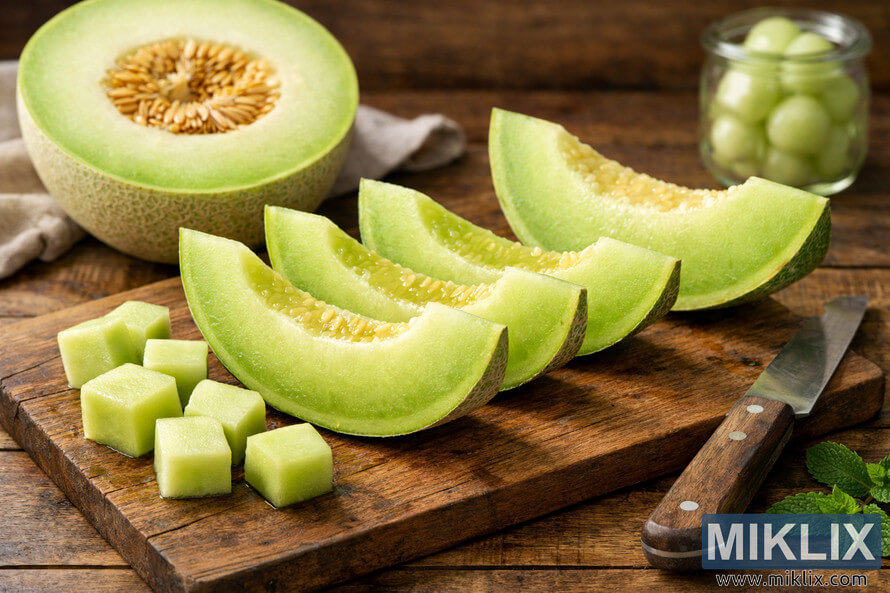
Imagine biting into a slice of perfectly ripe honeydew melon on a warm summer day. The sweet, refreshing juice flows across your tongue. Your body cools instantly. But this delicious fruit offers far more than temporary refreshment. Honeydew melon packs an impressive array of vitamins, minerals, and beneficial compounds. These nutrients work together to support your immune system, heart health, skin vitality, and overall wellness.
Honeydew Melon: The Refreshing Fruit Packed with Nutrients
Spustelėkite arba bakstelėkite paveikslėlį, kad gautumėte daugiau informacijos ir didesnę raišką.
This comprehensive guide explores everything you need to know about honeydew melon's health benefits. You'll discover its complete nutritional profile. You'll learn how it compares to other popular melons. You'll find practical tips for incorporating this nutritious fruit into your daily diet.
Whether you're seeking better hydration, improved digestion, or enhanced skin health, honeydew melon delivers remarkable benefits. The fruit contains essential nutrients that address multiple health concerns simultaneously. Research continues to reveal new advantages of this often-overlooked melon variety.
What Is Honeydew Melon?
Honeydew melon belongs to the Cucurbitaceae family. This makes it a relative of cucumbers, squash, and other melons. The fruit features smooth, pale green to yellow rind. Inside, you'll find light green, succulent flesh.
The melon originated in ancient Persia and Egypt. Today, growers cultivate honeydew melons worldwide. The fruit thrives in warm climates with full sun exposure. California, Arizona, and Texas produce most honeydews consumed in the United States.
Botanical Classification
Scientists classify honeydew as Cucumis melo var. inodorus. The species name reflects its lack of strong aroma compared to other melon varieties. Unlike cantaloupe, honeydew doesn't develop a pronounced fragrance when ripe.
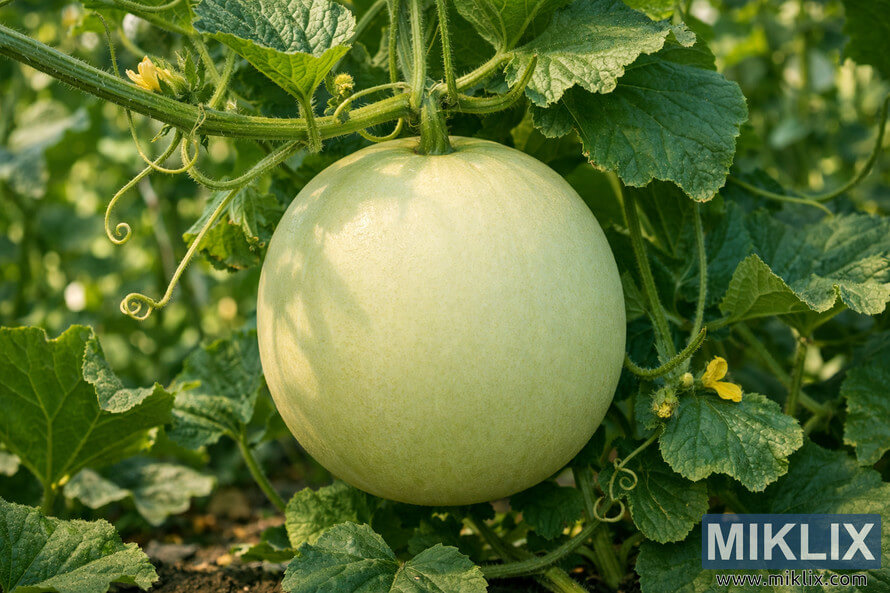
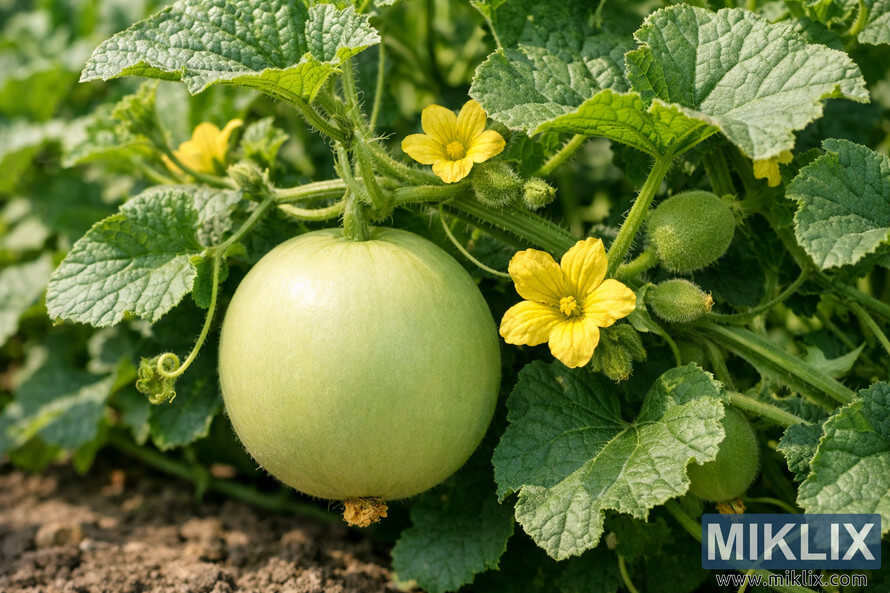
The plant grows as a trailing vine. It produces male and female flowers on the same plant. Bees and other pollinators transfer pollen between flowers. This process enables fruit development.
Growing Season and Harvest
Honeydew melons require a long growing season. Most varieties need between ninety and one hundred ten days from planting to harvest. Gardeners typically start seeds indoors several weeks before the last frost date.
The vines spread extensively across garden beds. Each plant can produce three to four fruits per season. Farmers harvest honeydews when the rind turns creamy yellow. The blossom end should yield slightly to gentle pressure.
Spustelėkite arba bakstelėkite paveikslėlį, kad gautumėte daugiau informacijos ir didesnę raišką.
Common Honeydew Varieties
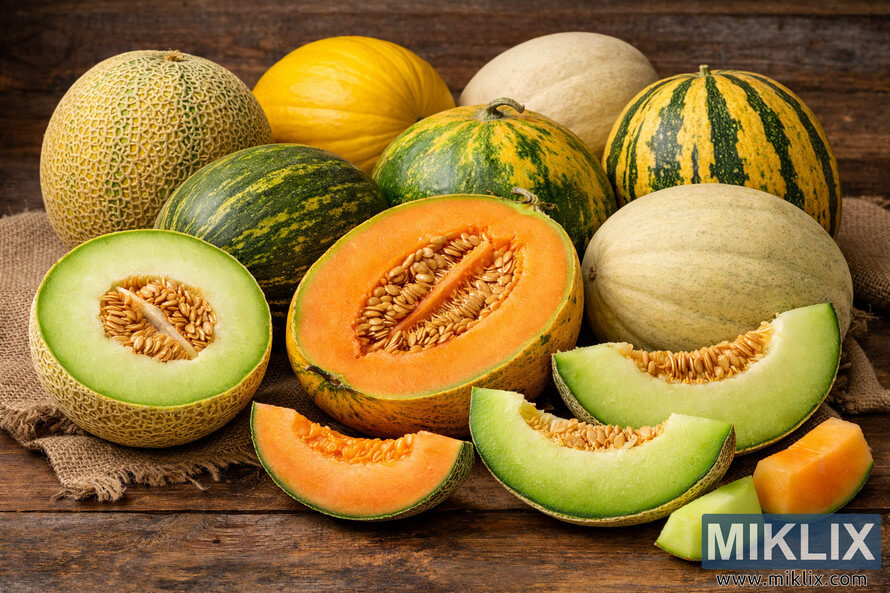
Several honeydew varieties exist beyond the standard green type. Each offers unique characteristics. Understanding these varieties helps you choose the best option for your needs.
- Green Honeydew - The most common variety with pale green flesh and mild sweetness
- Orange Honeydew - Features salmon-colored flesh with slightly higher beta-carotene content
- Golden Honeydew - Yellow flesh variety with exceptional sweetness and smooth texture
- Yellow varieties - Include several cultivars with yellow rind and green or white flesh
- Santa Claus melon - A winter melon variety that stores well for extended periods
- Temptation honeydew - Smaller fruits perfect for individual servings
Each variety delivers similar nutritional benefits. The flesh color indicates different phytonutrient concentrations. Orange varieties contain more carotenoids. Green types offer higher chlorophyll levels.
Honeydew Melon Nutritional Profile
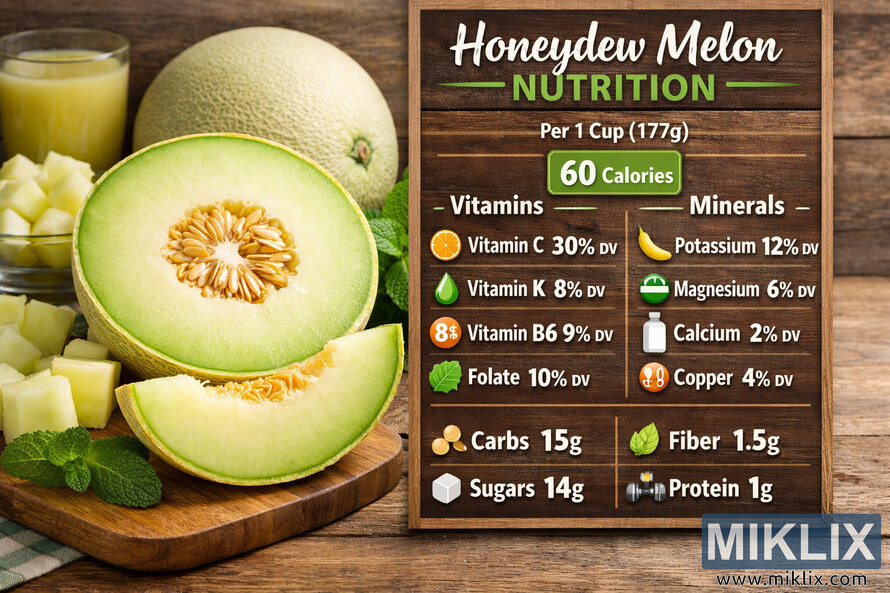
Honeydew melon delivers impressive nutrition with minimal calories. A one-cup serving of diced honeydew contains approximately sixty-four calories. This makes it an excellent choice for weight management.
The fruit consists of about ninety percent water. This high water content contributes to its hydrating properties. The remaining ten percent contains essential nutrients, natural sugars, and beneficial plant compounds.
Spustelėkite arba bakstelėkite paveikslėlį, kad gautumėte daugiau informacijos ir didesnę raišką.
Macronutrient Breakdown
| Nutrient | Amount Per Cup (177g) | % Daily Value |
| Calories | 64 | 3% |
| Carbohydrates | 16g | 5% |
| Dietary Fiber | 1.4g | 6% |
| Sugars | 14g | - |
| Protein | 1g | 2% |
| Fat | 0.3g | 0% |
The carbohydrates in honeydew come primarily from natural sugars. These include fructose, glucose, and sucrose. The fiber content, while modest, supports digestive health. The minimal protein and fat make honeydew a light, refreshing snack.
Vitamin Content
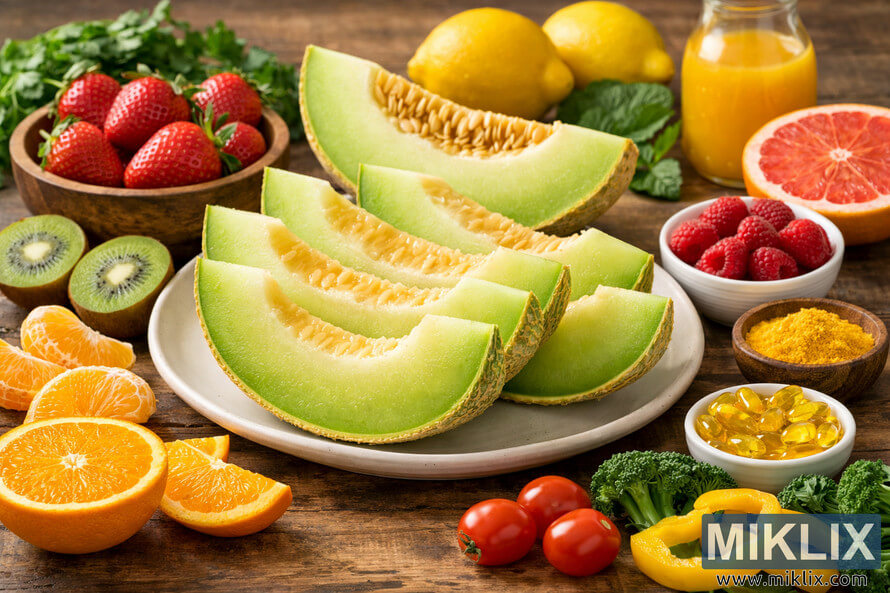
Honeydew melon stands out as an excellent source of vitamin C. One cup provides approximately thirty-two milligrams. This represents about fifty-three percent of your daily vitamin C needs.
Water-Soluble Vitamins
- Vitamin C - Powerful antioxidant supporting immune function
- Vitamin B6 - Essential for protein metabolism and brain health
- Folate - Critical for DNA synthesis and cell division
- Thiamine - Supports energy metabolism and nerve function
- Niacin - Aids in converting food to energy
- Pantothenic acid - Necessary for hormone production
Fat-Soluble Vitamins
- Vitamin K - Important for blood clotting and bone health
- Vitamin A - Supports vision and immune function (higher in orange varieties)
- Vitamin E - Antioxidant protecting cell membranes
Spustelėkite arba bakstelėkite paveikslėlį, kad gautumėte daugiau informacijos ir didesnę raišką.
Mineral Composition
Honeydew provides several essential minerals. Potassium ranks as the most abundant. One cup delivers approximately four hundred milligrams of this crucial electrolyte.
These minerals work synergistically to support multiple body systems. Potassium regulates blood pressure and fluid balance. Magnesium supports muscle and nerve function. Copper aids in iron absorption and collagen formation.
Quick Tip: Pairing honeydew with vitamin C-rich foods enhances iron absorption from plant-based sources. The fruit's natural vitamin C content also helps your body utilize its own iron more effectively.
Beneficial Plant Compounds
Beyond vitamins and minerals, honeydew contains valuable phytonutrients. These bioactive compounds provide additional health protection. They work as antioxidants, reducing cellular damage from free radicals.
- Carotenoids - Beta-carotene and lutein protect eye health
- Phenolic compounds - Combat oxidative stress throughout the body
- Flavonoids - Reduce inflammation and support heart health
- Cucurbitacins - Show potential anti-cancer properties in research
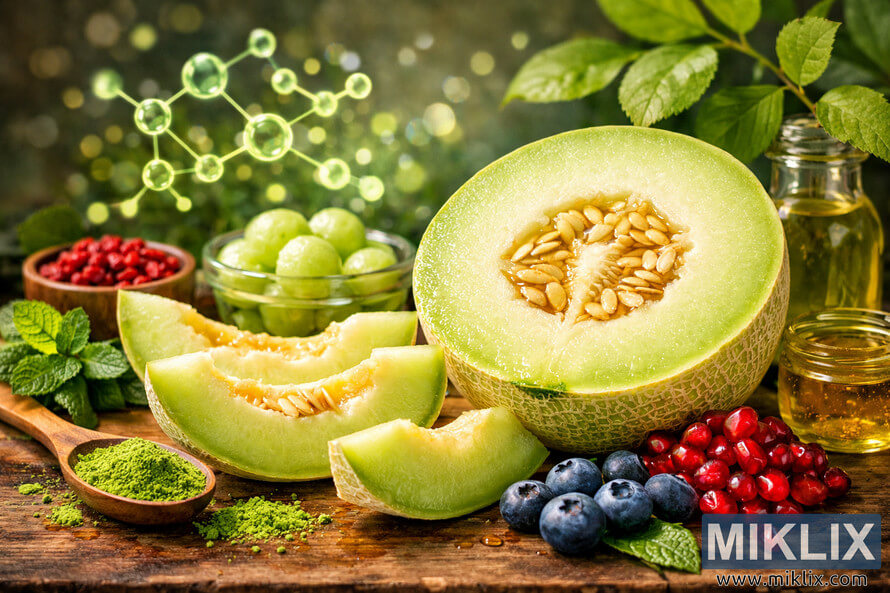
Spustelėkite arba bakstelėkite paveikslėlį, kad gautumėte daugiau informacijos ir didesnę raišką.
Superior Hydration Properties
Water comprises approximately ninety percent of honeydew melon's weight. This exceptional water content makes it one of nature's most effective hydrating foods. Your body absorbs this water along with essential electrolytes.
Many people struggle to drink enough plain water daily. Honeydew offers a delicious alternative hydration source. The fruit's natural sugars and minerals enhance water absorption in your intestines.
Electrolyte Balance
Honeydew provides natural electrolytes without added sugars or artificial ingredients. The potassium content helps maintain proper fluid distribution. This mineral works opposite to sodium, preventing water retention.
Athletic Performance Benefits
Athletes often consume honeydew for natural hydration. The fruit replenishes fluids lost through sweat. Its natural sugars provide quick energy without causing digestive distress.
The electrolyte profile supports muscle function during exercise. Potassium prevents cramping. Magnesium aids muscle relaxation after workouts. Many sports nutritionists recommend honeydew as a post-workout recovery food.
Daily Hydration Support
Regular honeydew consumption contributes to overall hydration status. The water content counts toward your daily fluid intake goals. The fruit's pleasant taste encourages consistent consumption.
People who dislike drinking plain water often find success with hydrating fruits. Honeydew provides variety in hydration strategies. Its mild flavor pairs well with other hydrating foods.
Spustelėkite arba bakstelėkite paveikslėlį, kad gautumėte daugiau informacijos ir didesnę raišką.
Skin Hydration From Within
Your skin reflects your hydration status. Adequate water intake improves skin elasticity and appearance. Honeydew hydrates skin cells from the inside out.
The vitamin C in honeydew supports collagen production. Collagen requires proper hydration to function optimally. Well-hydrated skin appears plumper and more youthful. Fine lines become less noticeable with improved cellular hydration.
Science Says: Research published in the Journal of Clinical and Aesthetic Dermatology found that increased water intake significantly improves skin hydration. Foods with high water content like honeydew contribute to this beneficial effect.
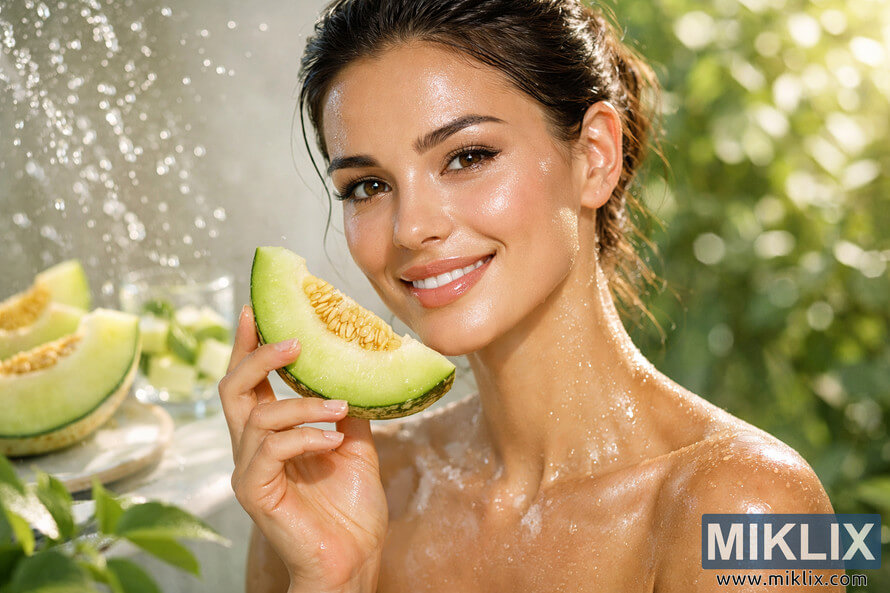
Spustelėkite arba bakstelėkite paveikslėlį, kad gautumėte daugiau informacijos ir didesnę raišką.
Immune System Enhancement
Your immune system requires specific nutrients to function optimally. Honeydew melon delivers several compounds that strengthen immune defenses. The vitamin C content alone provides powerful immune support.
A single cup of honeydew supplies over half your daily vitamin C requirement. This essential nutrient stimulates white blood cell production. These cells form your body's primary defense against pathogens.
Vitamin C and Immune Function
Vitamin C acts as a powerful antioxidant in immune cells. It protects these cells from damage during pathogen battles. The vitamin also enhances the function of phagocytes. These specialized cells engulf and destroy harmful bacteria and viruses.
Regular vitamin C intake reduces the duration of common colds. While it may not prevent colds entirely, adequate levels shorten illness periods. Honeydew provides a natural, whole-food source of this critical nutrient.
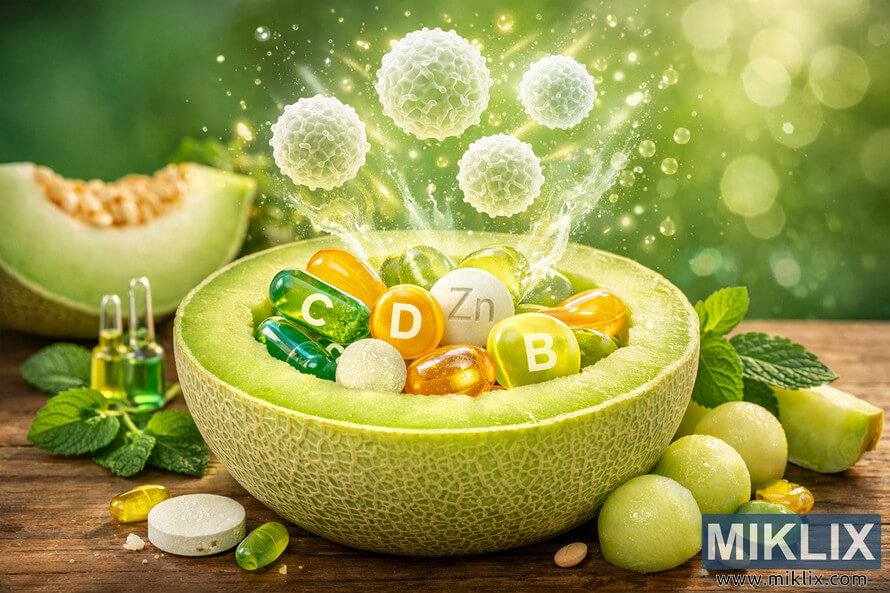
Spustelėkite arba bakstelėkite paveikslėlį, kad gautumėte daugiau informacijos ir didesnę raišką.
Additional Immune-Supporting Nutrients
Direct Immune Boosters
- Vitamin C stimulates antibody production
- Vitamin B6 supports biochemical immune reactions
- Folate enables rapid immune cell division
- Zinc aids immune cell development
- Copper assists in immune cell maturation
Indirect Immune Support
- Hydration maintains mucous membrane integrity
- Antioxidants reduce immune system oxidative stress
- Natural sugars provide energy for immune responses
- Fiber supports gut immunity through microbiome health
- Potassium maintains cellular immune function
These nutrients work synergistically to create robust immune protection. No single nutrient operates in isolation. The combination found in honeydew provides comprehensive support.
Seasonal Immune Protection
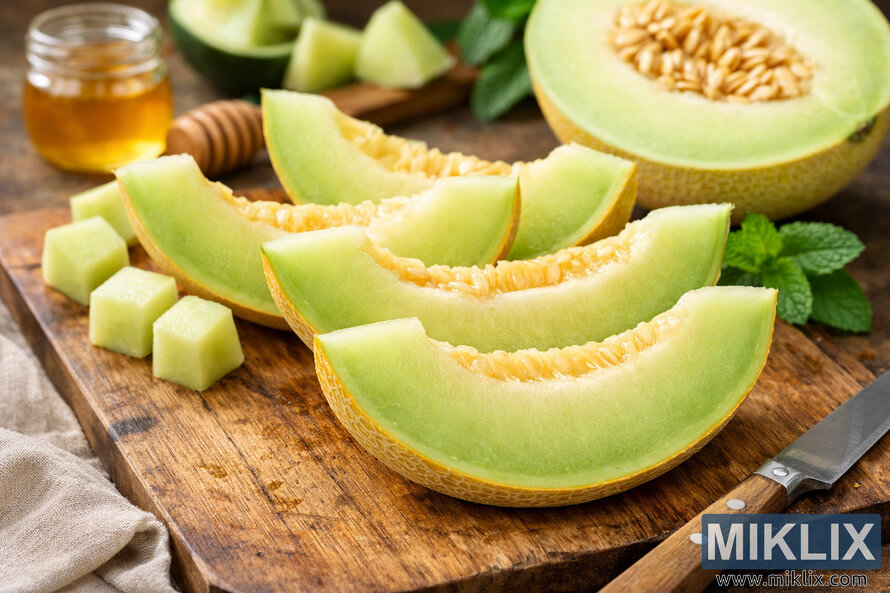
Honeydew reaches peak ripeness during late summer and fall. This timing aligns perfectly with the start of cold and flu season. Incorporating honeydew into your late-season diet provides natural immune preparation.
The fruit stores well under proper conditions. This allows continued consumption into winter months. Many winter melon varieties, including some honeydews, maintain quality for weeks after harvest.
Spustelėkite arba bakstelėkite paveikslėlį, kad gautumėte daugiau informacijos ir didesnę raišką.
Digestive Health Benefits
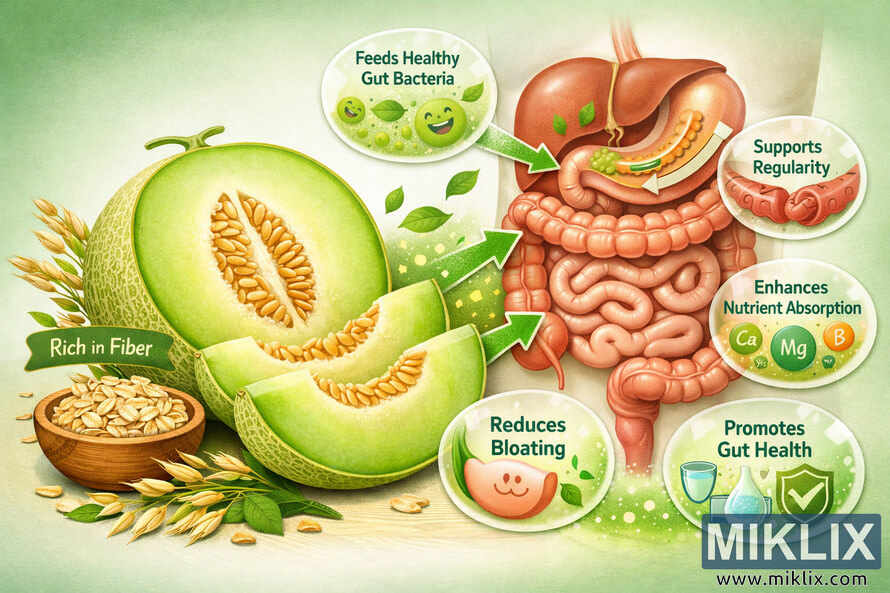
Honeydew melon supports digestive health through multiple mechanisms. The fruit provides dietary fiber, natural enzymes, and abundant water. These components work together to promote optimal digestion.
The high water content softens stool and prevents constipation. Proper hydration keeps your digestive system moving efficiently. Many people experience improved regularity after adding honeydew to their diet.
Fiber Content and Function
While honeydew contains moderate fiber compared to some fruits, the fiber present plays important roles. A one-cup serving provides approximately 1.4 grams of dietary fiber. This includes both soluble and insoluble types.
Soluble Fiber Benefits
Soluble fiber dissolves in water, forming a gel-like substance. This type slows digestion and helps regulate blood sugar levels. It also feeds beneficial gut bacteria.
These bacteria ferment soluble fiber into short-chain fatty acids. These compounds provide energy to colon cells. They also reduce inflammation throughout the digestive tract.
Insoluble Fiber Benefits
Insoluble fiber adds bulk to stool. It moves through your digestive system largely intact. This promotes regular bowel movements and prevents constipation.
The combination of fiber types in honeydew creates balanced digestive support. Neither type alone provides complete benefits. Together, they optimize gut function.
Spustelėkite arba bakstelėkite paveikslėlį, kad gautumėte daugiau informacijos ir didesnę raišką.
Natural Digestive Enzymes
Honeydew contains natural enzymes that aid digestion. These include proteases that help break down proteins. The fruit also contains enzymes that assist carbohydrate digestion.
Eating honeydew with protein-rich foods may enhance protein absorption. The enzymes begin breaking down protein molecules in your stomach. This reduces the digestive burden on your small intestine.
Gut Microbiome Support
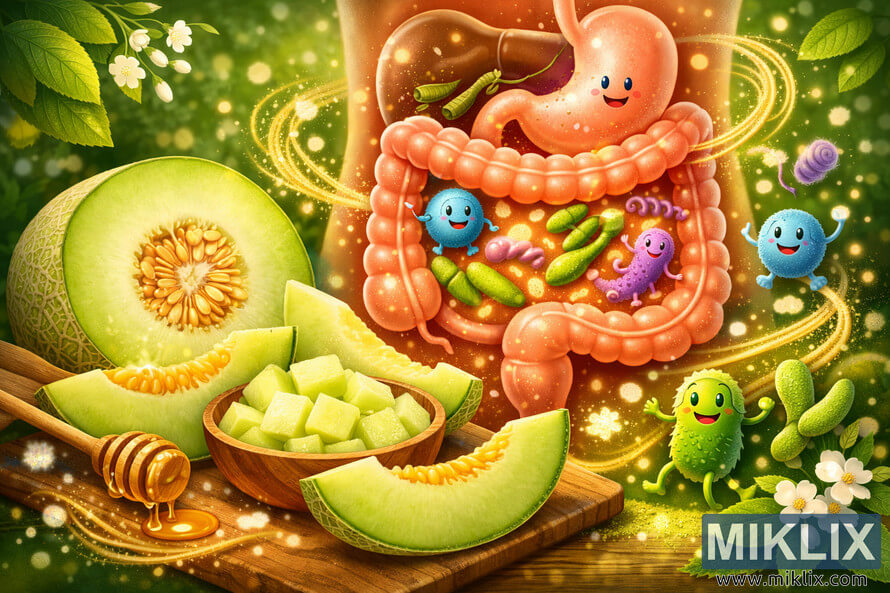
Your gut microbiome consists of trillions of beneficial bacteria. These organisms influence digestion, immunity, and overall health. Honeydew provides prebiotics that feed these beneficial bacteria.
- Natural sugars serve as quick energy for probiotic bacteria
- Fiber ferments into beneficial short-chain fatty acids
- Phytonutrients reduce harmful bacterial overgrowth
- Water supports optimal bacterial habitat conditions
- Vitamins enable bacterial metabolism and reproduction
A healthy microbiome improves nutrient absorption from all foods. It also produces certain vitamins your body needs. Regular honeydew consumption supports this beneficial ecosystem.
Important Note: Some individuals experience bloating or gas when increasing fruit intake. Start with small portions of honeydew if you have sensitive digestion. Gradually increase serving sizes as your system adapts.
Spustelėkite arba bakstelėkite paveikslėlį, kad gautumėte daugiau informacijos ir didesnę raišką.
Cardiovascular Health Benefits
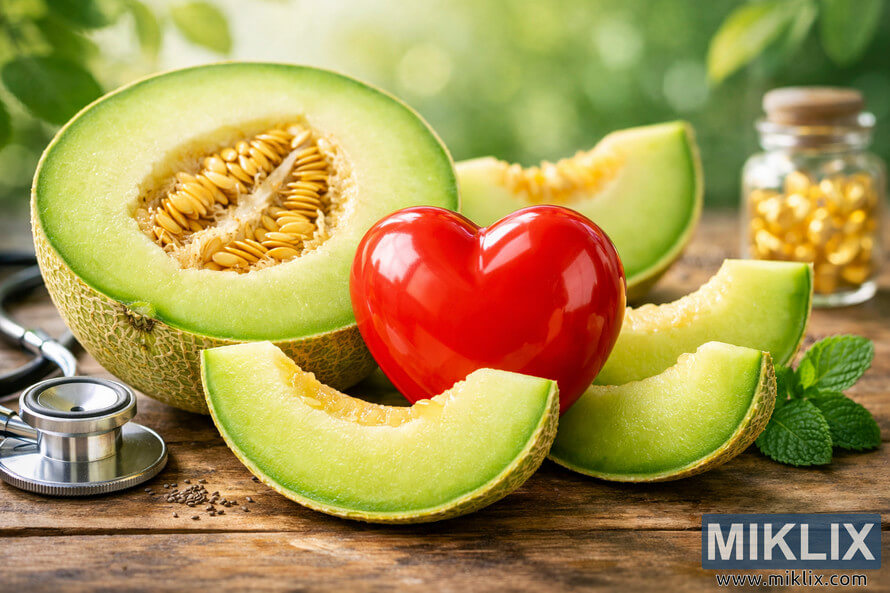
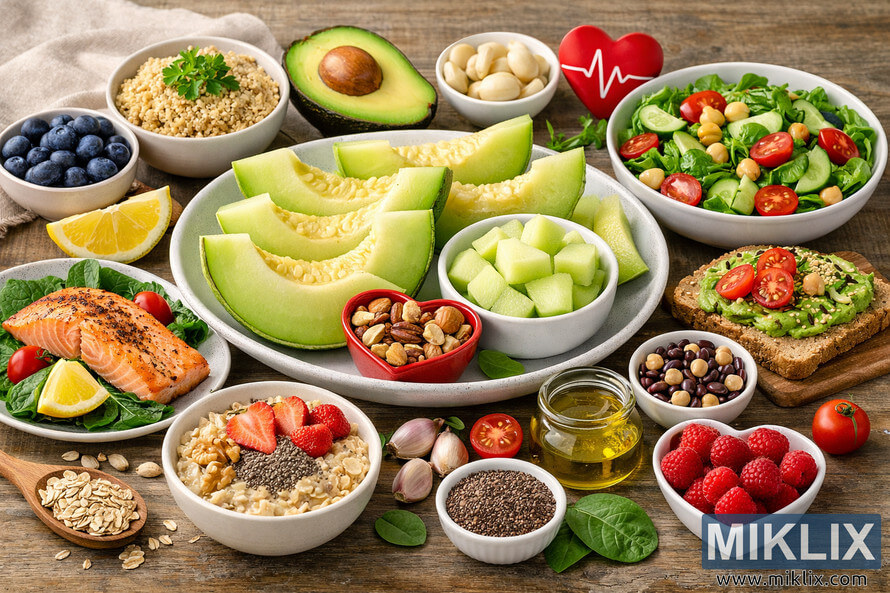
Heart disease remains the leading cause of death in the United States. Diet plays a crucial role in cardiovascular health. Honeydew melon provides several nutrients that protect your heart.
The potassium content offers particularly strong heart benefits. This mineral helps regulate blood pressure. It counteracts sodium's negative effects on the cardiovascular system.
Spustelėkite arba bakstelėkite paveikslėlį, kad gautumėte daugiau informacijos ir didesnę raišką.
Blood Pressure Regulation
Potassium acts as a natural vasodilator. It relaxes blood vessel walls, allowing easier blood flow. This reduces the pressure against arterial walls. One cup of honeydew provides approximately four hundred milligrams of potassium.
The American Heart Association recommends four thousand seven hundred milligrams of potassium daily. Most Americans consume far less. Honeydew helps bridge this gap naturally.
| Serving Size | Potassium Content | % of Daily Goal | Sodium Content |
| 1 cup diced | 404 mg | 8.6% | 32 mg |
| 1/2 medium melon | 941 mg | 20% | 75 mg |
| 1 whole medium melon | 1,882 mg | 40% | 150 mg |
Cholesterol Management
Honeydew contains zero cholesterol and minimal saturated fat. This makes it naturally heart-friendly. The fiber content helps reduce LDL cholesterol absorption in your intestines.
Soluble fiber binds to cholesterol in your digestive tract. This prevents cholesterol from entering your bloodstream. Regular consumption of fiber-rich fruits like honeydew supports healthy cholesterol levels.
Anti-Inflammatory Effects
Chronic inflammation damages blood vessel linings. This promotes plaque formation and increases heart disease risk. Honeydew's antioxidants combat this harmful inflammation.
Antioxidant Protection
Vitamin C neutralizes free radicals before they damage arterial walls. The carotenoids in honeydew provide additional antioxidant support. These compounds work together to protect cardiovascular tissues.
Studies show that people consuming high amounts of fruits and vegetables have lower heart disease rates. The antioxidant content likely contributes significantly to this protective effect.
Oxidative Stress Reduction
Oxidative stress occurs when free radicals overwhelm your antioxidant defenses. This damages cells throughout your cardiovascular system. Regular antioxidant intake from foods like honeydew prevents this damage.
The phytonutrients in honeydew demonstrate particularly strong anti-inflammatory properties. Research continues to identify new beneficial compounds in this humble melon.
Spustelėkite arba bakstelėkite paveikslėlį, kad gautumėte daugiau informacijos ir didesnę raišką.
Homocysteine Regulation
Folate in honeydew helps regulate homocysteine levels. Elevated homocysteine correlates with increased heart disease risk. This amino acid can damage blood vessel walls when levels rise too high.
Folate, vitamin B6, and vitamin B12 work together to metabolize homocysteine. Honeydew provides both folate and B6. This combination helps maintain healthy homocysteine levels naturally.
Skin Health and Beauty Benefits
Your skin reflects your internal health status. Proper nutrition shows visibly in skin appearance. Honeydew melon provides several nutrients essential for healthy, glowing skin.
The combination of vitamin C, water, and antioxidants creates powerful skin support. These components work from the inside out. They nourish skin cells at the deepest levels.
Spustelėkite arba bakstelėkite paveikslėlį, kad gautumėte daugiau informacijos ir didesnę raišką.
Collagen Production Support
Vitamin C serves as an essential cofactor in collagen synthesis. Your body cannot produce collagen without adequate vitamin C. This protein provides structure to skin, keeping it firm and elastic.
Collagen production naturally declines with age. Adequate vitamin C intake helps maintain production at optimal levels. One cup of honeydew provides over half your daily vitamin C requirement.
Beauty Tip: Consuming vitamin C-rich foods like honeydew within two hours of protein-rich meals maximizes collagen production. The amino acids from protein combine with vitamin C to create new collagen fibers.
Hydration for Skin Elasticity
Dehydrated skin appears dull and develops fine lines more easily. The high water content in honeydew hydrates skin cells from within. This plumps the skin, reducing the appearance of wrinkles.
Well-hydrated skin maintains better elasticity. It recovers more quickly from stretching and pressure. The combination of water and electrolytes in honeydew optimizes cellular hydration.
Antioxidant Protection Against Aging
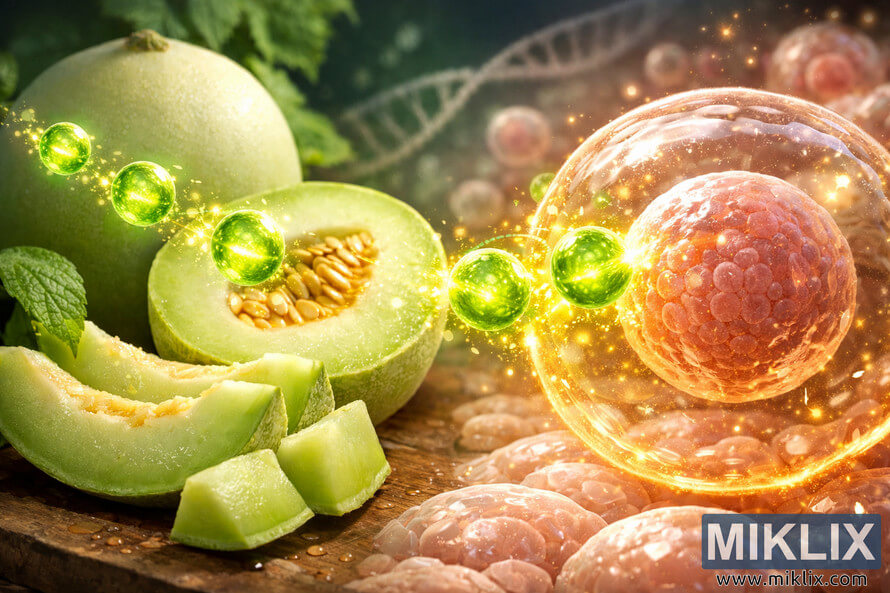
Free radicals accelerate skin aging. Sun exposure, pollution, and stress generate these harmful molecules. Antioxidants in honeydew neutralize free radicals before they damage skin cells.
Vitamin C Benefits
This powerful antioxidant protects against UV damage. It reduces hyperpigmentation and evens skin tone. Regular intake brightens overall complexion.
Carotenoid Protection
Beta-carotene and lutein shield skin from oxidative damage. These compounds accumulate in skin tissue. They provide ongoing protection against environmental stressors.
Phenolic Compounds
These plant compounds demonstrate strong anti-aging properties. They reduce inflammation that accelerates skin aging. They also support skin barrier function.
Spustelėkite arba bakstelėkite paveikslėlį, kad gautumėte daugiau informacijos ir didesnę raišką.
Natural Skin Repair
The nutrients in honeydew support skin's natural repair processes. Vitamin C aids wound healing and tissue repair. Copper assists in skin regeneration and elastin production.
The folate content supports rapid cell division in skin tissue. This accelerates the replacement of damaged cells with healthy new ones. Regular consumption supports ongoing skin renewal.
Weight Management Support
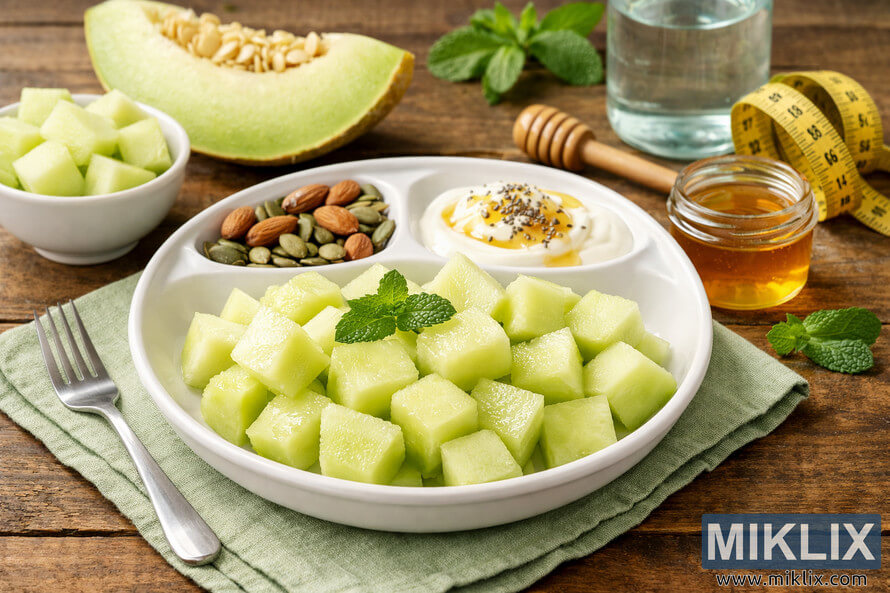
Maintaining healthy body weight requires consuming fewer calories than you burn. Honeydew melon supports this goal naturally. The fruit provides satisfying sweetness with minimal calories.
A one-cup serving contains only sixty-four calories. This allows generous portions without excessive calorie intake. The high water content creates physical fullness in your stomach.
Spustelėkite arba bakstelėkite paveikslėlį, kad gautumėte daugiau informacijos ir didesnę raišką.
Satiety and Fullness
The combination of water and fiber promotes feelings of fullness. This reduces overall calorie consumption throughout the day. People who eat water-rich fruits before meals typically consume fewer total calories.
The natural sugars in honeydew satisfy sweet cravings. This reduces desire for high-calorie desserts and snacks. Replacing processed sweets with honeydew creates significant calorie savings.
| Food Item | Serving Size | Calories | Sugar (g) |
| Honeydew Melon | 1 cup | 64 | 14 |
| Ice Cream | 1 cup | 267 | 28 |
| Cookies | 3 cookies | 160 | 10 |
| Chocolate Bar | 1.5 oz | 220 | 24 |
Blood Sugar Regulation
Despite containing natural sugars, honeydew has a relatively low glycemic index. This means it causes gradual blood sugar rises rather than sharp spikes. Stable blood sugar helps control appetite and energy levels.
The fiber content slows sugar absorption into your bloodstream. This prevents the energy crashes that trigger cravings. Many people find honeydew helps maintain steady energy between meals.
Metabolism Support
Several B vitamins in honeydew support efficient metabolism. Thiamine, niacin, and B6 help convert food into usable energy. This ensures your body efficiently processes the calories you consume.
Pre-Workout Fuel
The natural sugars in honeydew provide quick energy for exercise. The potassium prevents muscle cramping during workouts. Many athletes consume honeydew before training sessions.
The light, easily digestible nature prevents stomach discomfort during activity. Unlike heavy pre-workout meals, honeydew won't slow you down. The hydration benefits support optimal exercise performance.
Post-Workout Recovery
After exercise, your body needs carbohydrates to replenish glycogen stores. Honeydew provides these carbs along with electrolytes lost through sweat. The vitamin C supports tissue repair from exercise stress.
The anti-inflammatory compounds reduce exercise-induced inflammation. This accelerates recovery between workouts. Regular honeydew consumption may reduce post-exercise soreness.

Spustelėkite arba bakstelėkite paveikslėlį, kad gautumėte daugiau informacijos ir didesnę raišką.
Vision and Eye Health Protection
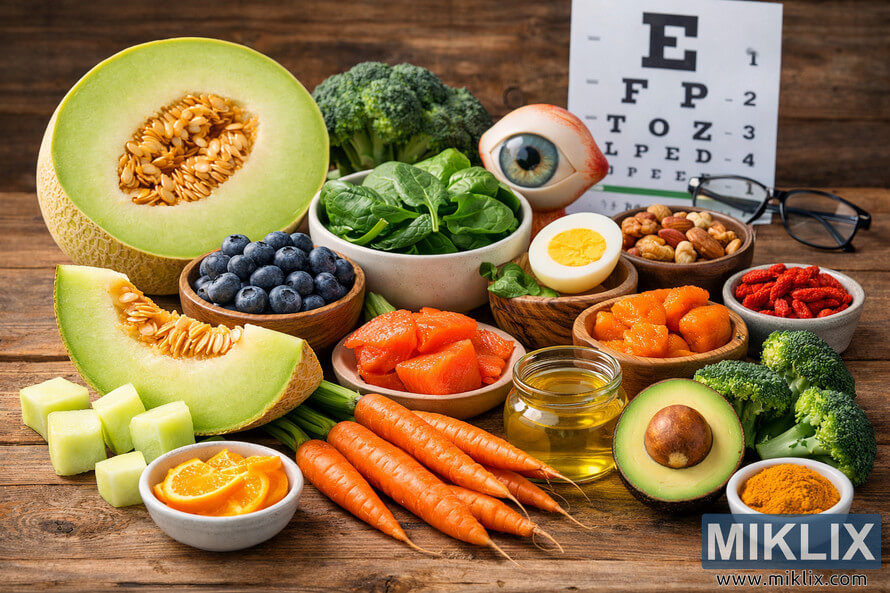
Your eyes require specific nutrients to maintain optimal function. Honeydew provides several compounds that protect vision. These include antioxidants that accumulate in eye tissues.
The carotenoids lutein and zeaxanthin offer particularly strong eye protection. These compounds filter harmful blue light. They also neutralize free radicals in the retina.
Lutein and Zeaxanthin Benefits
These carotenoids concentrate in the macula, the central part of your retina. They form macular pigment that protects underlying photoreceptor cells. Higher macular pigment density correlates with better vision and reduced age-related decline.
Regular consumption of lutein-rich foods like honeydew may reduce risk of cataracts and macular degeneration. These conditions cause significant vision loss in older adults. Preventive nutrition offers the best protection.

Spustelėkite arba bakstelėkite paveikslėlį, kad gautumėte daugiau informacijos ir didesnę raišką.
Vitamin A and Beta-Carotene
While green honeydew contains modest vitamin A, orange varieties provide higher amounts. Your body converts beta-carotene into vitamin A as needed. This vitamin is essential for proper retinal function.
Vitamin A deficiency causes night blindness and dry eyes. Adequate intake maintains the health of your cornea and conjunctiva. The vitamin also supports production of rhodopsin, a protein necessary for low-light vision.
Oxidative Stress Protection
Your eyes face constant oxidative stress from light exposure. This generates free radicals that damage delicate eye tissues. The antioxidants in honeydew combat this ongoing assault.
- Vitamin C protects the lens and prevents cataract formation
- Beta-carotene shields retinal cells from light damage
- Phenolic compounds reduce inflammation in eye tissues
- Copper supports antioxidant enzyme systems in the eye
- Zinc concentrates in the retina, protecting photoreceptors
Spustelėkite arba bakstelėkite paveikslėlį, kad gautumėte daugiau informacijos ir didesnę raišką.
Bone Health and Strength
Strong bones require more than just calcium. Several nutrients in honeydew support skeletal health. These work synergistically to build and maintain bone density.
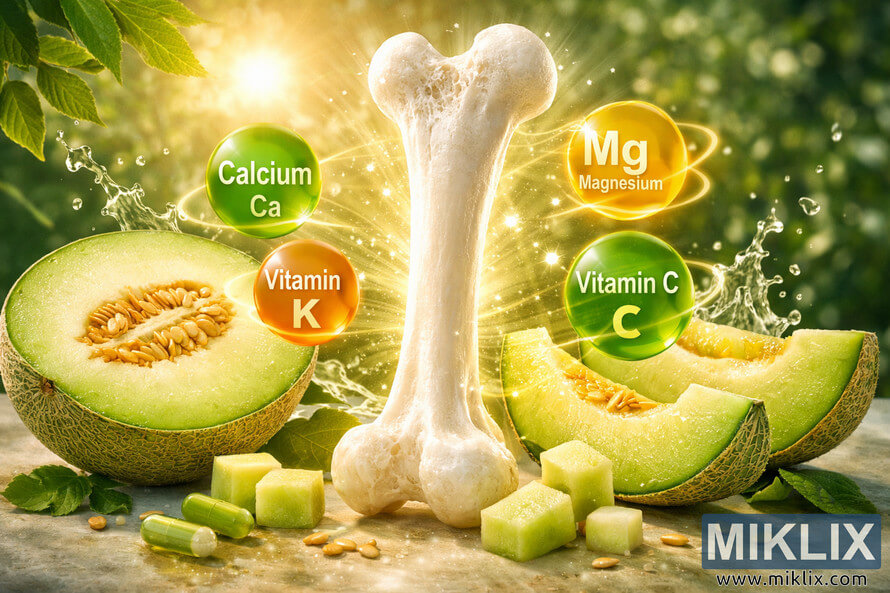
Vitamin K plays a crucial role in bone metabolism. This vitamin activates proteins necessary for bone mineralization. Honeydew provides vitamin K along with other bone-supporting nutrients.
Vitamin K and Bone Mineralization
Osteocalcin is a protein that binds calcium in bones. Vitamin K activates this protein, enabling proper calcium incorporation. Without adequate vitamin K, bones cannot effectively use available calcium.
Studies show that higher vitamin K intake correlates with increased bone density. It also reduces fracture risk in older adults. While honeydew provides moderate amounts, every contribution supports bone health.
Spustelėkite arba bakstelėkite paveikslėlį, kad gautumėte daugiau informacijos ir didesnę raišką.
Magnesium for Bone Structure
Magnesium forms part of the bone mineral matrix. About sixty percent of your body's magnesium resides in your skeleton. This mineral influences both bone-building cells and bone-resorbing cells.
Magnesium deficiency impairs bone formation and increases bone fragility. The mineral also affects parathyroid hormone and vitamin D metabolism. Both these factors critically influence calcium balance.
Potassium and Calcium Retention
Your kidneys constantly filter calcium from your blood. Potassium helps reduce calcium loss through urine. This preserves calcium for bone-building purposes.
Acid-Base Balance
Potassium helps neutralize acids in your bloodstream. When blood becomes too acidic, your body pulls calcium from bones to restore balance. Adequate potassium intake prevents this calcium loss.
Modern diets often create mild chronic acidosis. High protein and grain consumption generate acidic byproducts. Fruits like honeydew provide alkalizing minerals that counteract this effect.
Bone Density Preservation
Research shows that people consuming high amounts of potassium have greater bone density. This protective effect becomes increasingly important with age. Postmenopausal women particularly benefit from adequate potassium intake.
The combination of potassium, magnesium, and vitamin K in honeydew creates comprehensive bone support. No single nutrient alone provides complete protection.
Honeydew Versus Other Melons
Several melon varieties offer distinct nutritional profiles. Understanding these differences helps you choose the best options for your needs. Each type provides unique benefits.
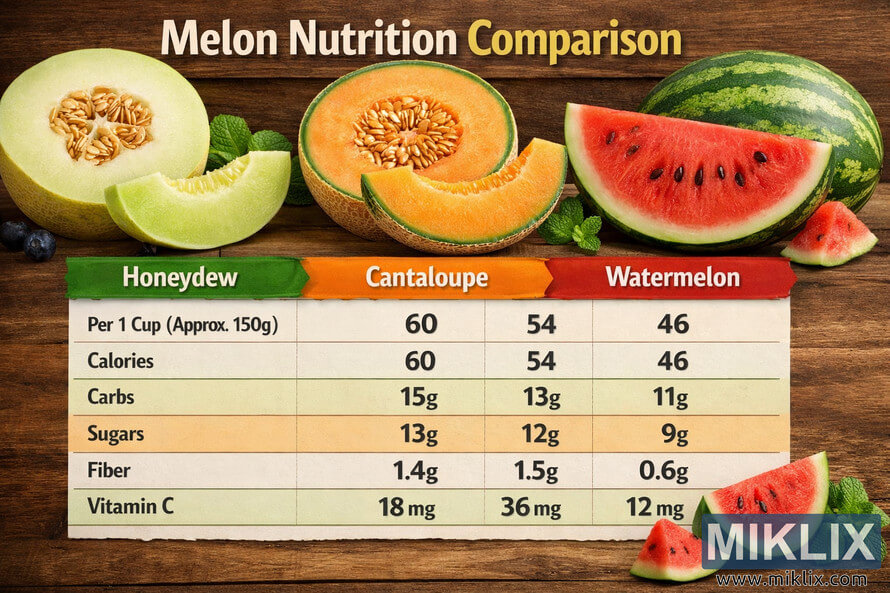
Honeydew, cantaloupe, and watermelon represent the most commonly consumed varieties. All three belong to the same plant family. However, their nutrient compositions vary significantly.
Honeydew vs Cantaloupe
Cantaloupe contains significantly more beta-carotene than honeydew. The orange flesh indicates higher vitamin A content. One cup of cantaloupe provides over one hundred percent of daily vitamin A needs.
However, honeydew offers advantages in other areas. It typically contains more vitamin C per serving. Honeydew also has a milder, less musky flavor that some people prefer.
Spustelėkite arba bakstelėkite paveikslėlį, kad gautumėte daugiau informacijos ir didesnę raišką.
| Nutrient | Honeydew (1 cup) | Cantaloupe (1 cup) | Watermelon (1 cup) |
| Calories | 64 | 54 | 46 |
| Vitamin C (mg) | 32 | 58 | 12 |
| Vitamin A (IU) | 68 | 5,411 | 865 |
| Potassium (mg) | 404 | 427 | 170 |
| Folate (mcg) | 34 | 34 | 5 |
Honeydew vs Watermelon
Watermelon contains the fewest calories per cup. Its higher water content dilutes nutrient concentrations. However, watermelon provides lycopene, a powerful antioxidant absent in honeydew.
Honeydew offers more potassium and folate than watermelon. It also contains more vitamin C. The choice between them often depends on personal taste preferences and specific nutritional goals.
Specialty Melon Varieties
Beyond the common three, several specialty melons offer unique properties. These include Crenshaw, Galia, and Santa Claus varieties. Each provides slightly different nutrient profiles.
Crenshaw Melon
This hybrid combines cantaloupe and Persian melon characteristics. It offers salmon-colored flesh with exceptional sweetness. The variety provides high vitamin C and beta-carotene levels.
Galia Melon
Galia features green flesh similar to honeydew. The exterior shows netted rind like cantaloupe. It delivers a tropical flavor with robust vitamin C content.
Santa Claus Melon
Also called Christmas melon, this winter variety stores exceptionally well. The pale green flesh resembles honeydew. It provides similar nutritional benefits with extended shelf life.
Spustelėkite arba bakstelėkite paveikslėlį, kad gautumėte daugiau informacijos ir didesnę raišką.
Choosing the Best Melon
Your optimal melon choice depends on several factors. Consider your specific nutritional needs. Evaluate flavor preferences. Think about intended uses.
- For maximum vitamin A - choose cantaloupe or orange honeydew
- For lowest calories - select watermelon
- For highest potassium - pick honeydew or cantaloupe
- For lycopene content - choose watermelon
- For mild flavor - select green honeydew
- For longer storage - choose winter melon varieties
Rotating between different melon types provides the broadest nutrient spectrum. Each variety contributes unique compounds to your diet. Diversity optimizes overall nutrition.
Selecting and Storing Honeydew Melons
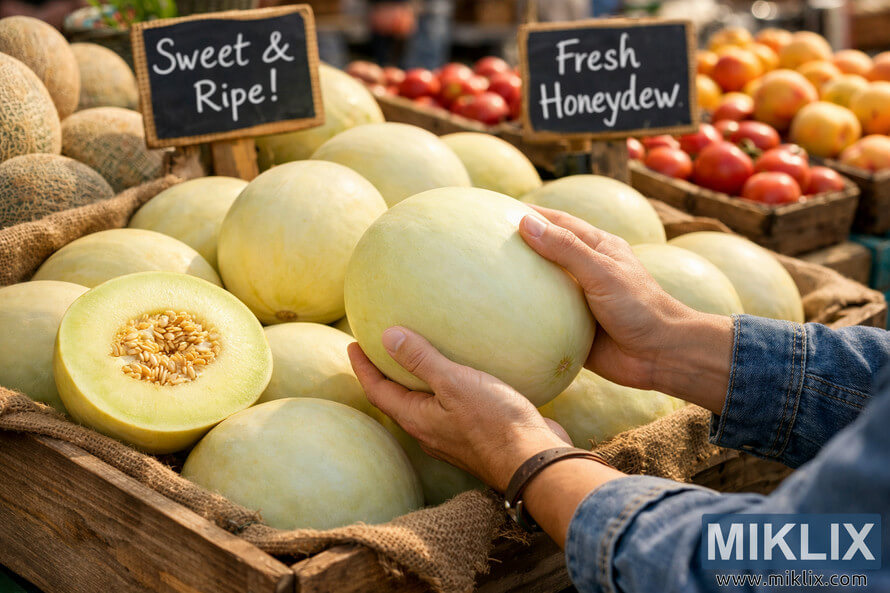
Choosing ripe honeydew requires knowing what to look for. Several indicators reveal ripeness status. Proper selection ensures optimal flavor and nutrition.
Unripe honeydews lack sweetness and beneficial compounds. Overripe melons develop off-flavors and mushy texture. The ideal melon sits right at peak ripeness.
Spustelėkite arba bakstelėkite paveikslėlį, kad gautumėte daugiau informacijos ir didesnę raišką.
Signs of Ripeness
Ripe honeydew displays several characteristic features. The rind transforms from bright green to creamy pale yellow. The surface feels slightly waxy rather than fuzzy.
Ripe Honeydew Indicators
- Creamy yellow or pale yellow rind color
- Slightly soft blossom end when pressed gently
- Sweet, subtle fragrance from blossom end
- Smooth, waxy rind texture
- Heavy weight for size indicating juiciness
- Symmetrical oval or round shape
Avoid These Characteristics
- Bright green rind color indicates under-ripeness
- Soft spots or bruising anywhere on surface
- Strong fermented or sour odor
- Sticky or slimy surface texture
- Unusually light weight for size
- Irregular shape or visible damage
The Knock Test
Tapping a honeydew produces specific sounds based on ripeness. A ripe melon produces a deep, hollow sound. Unripe melons sound more solid and higher-pitched.
This test works because ripe flesh contains more air spaces. These develop as cells mature and fill with juice. The technique requires practice but becomes reliable with experience.
Storage Guidelines
Whole uncut honeydews continue ripening at room temperature. Place them in a cool, dry location away from direct sunlight. Most melons reach optimal ripeness within two to four days.
Whole Melon Storage
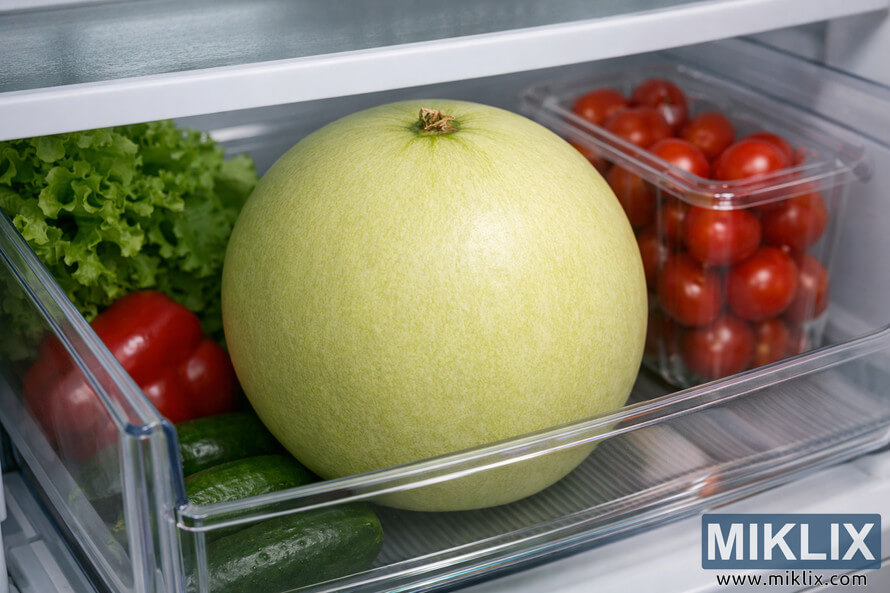
Once ripe, refrigerate whole honeydews to slow further ripening. They keep for five to seven days when chilled. The cold slows enzymatic activity that causes deterioration.
Avoid washing the melon before storage. Moisture promotes mold growth on the rind. Wash only immediately before cutting and consuming.
Spustelėkite arba bakstelėkite paveikslėlį, kad gautumėte daugiau informacijos ir didesnę raišką.
Cut Melon Storage
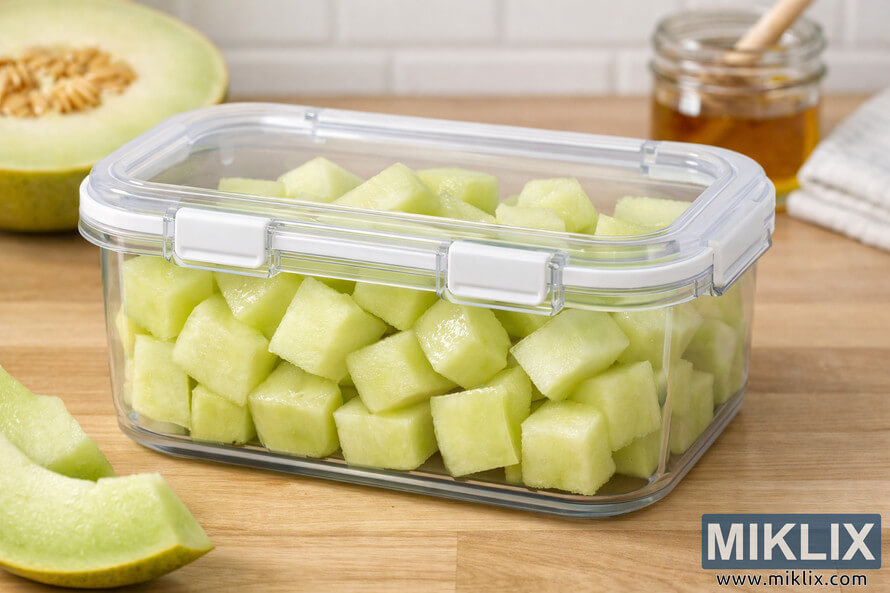
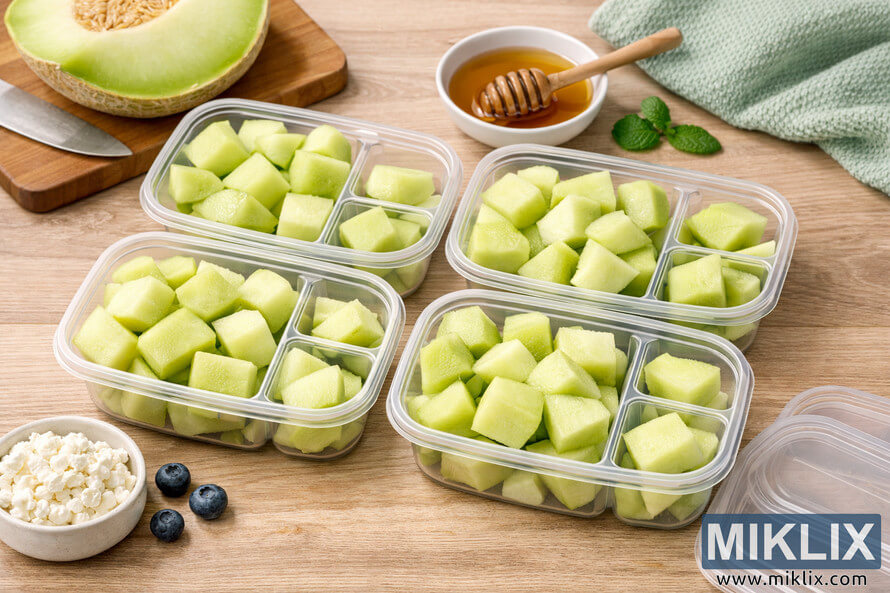
Cut honeydew requires immediate refrigeration. Wrap pieces tightly in plastic wrap or store in airtight containers. This prevents moisture loss and flavor absorption from other foods.
Consume cut melon within three to four days for best quality. The exposed flesh oxidizes and loses nutrients over time. Remove any seeds before storage to extend freshness.
Spustelėkite arba bakstelėkite paveikslėlį, kad gautumėte daugiau informacijos ir didesnę raišką.
Freezing Honeydew
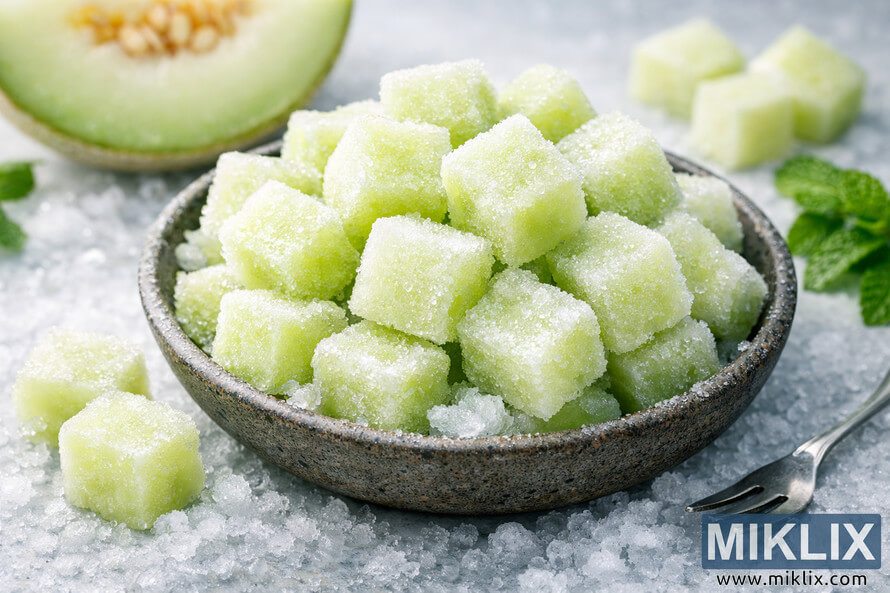
Freezing preserves honeydew for extended periods. Cut the flesh into cubes or balls. Spread pieces on a baking sheet and freeze until solid. Transfer to freezer bags for long-term storage.
Frozen honeydew maintains quality for up to twelve months. Use frozen pieces in smoothies or partially thaw for a slushy texture. The texture changes upon thawing, making frozen melon unsuitable for fresh eating.
Pro Tip: Freeze honeydew in small portions for easy smoothie preparation. Pre-measured bags eliminate the need to break apart large frozen chunks. This saves time during busy mornings.
Spustelėkite arba bakstelėkite paveikslėlį, kad gautumėte daugiau informacijos ir didesnę raišką.
Preparation and Serving Suggestions
Honeydew's versatility allows numerous preparation methods. The fruit works beautifully in both sweet and savory applications. Creative serving ideas maximize enjoyment and nutrition.
Proper preparation techniques preserve nutrients while enhancing flavor. Simple methods often produce the best results. Let the natural sweetness shine through.
Spustelėkite arba bakstelėkite paveikslėlį, kad gautumėte daugiau informacijos ir didesnę raišką.
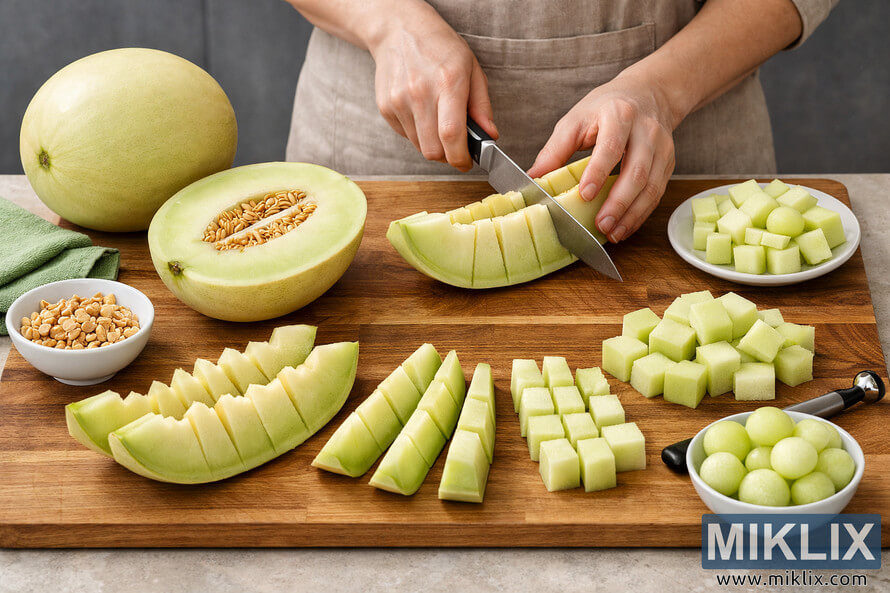
Basic Cutting Techniques
Start by washing the melon's exterior thoroughly. Even though you discard the rind, bacteria from the surface can transfer to the flesh during cutting. Use clean cutting boards and sharp knives.
- Cut the melon in half lengthwise from stem to blossom end
- Scoop out all seeds and stringy pulp from the center cavity
- Place each half cut-side down on the cutting board
- Slice into wedges of desired thickness
- Run the knife between flesh and rind to remove peel
- Cut wedges into cubes, balls, or desired shapes
- A melon baller creates attractive spheres perfect for fruit salads. Simply press the baller into the flesh and twist. This presentation elevates simple fruit service.
Simple Serving Ideas
Honeydew shines in straightforward presentations. The natural sweetness requires minimal embellishment. These ideas highlight the fruit's inherent qualities.
Fresh and Simple
- Serve chilled cubes as a refreshing snack
- Add a squeeze of lime juice for brightness
- Sprinkle with fresh mint leaves
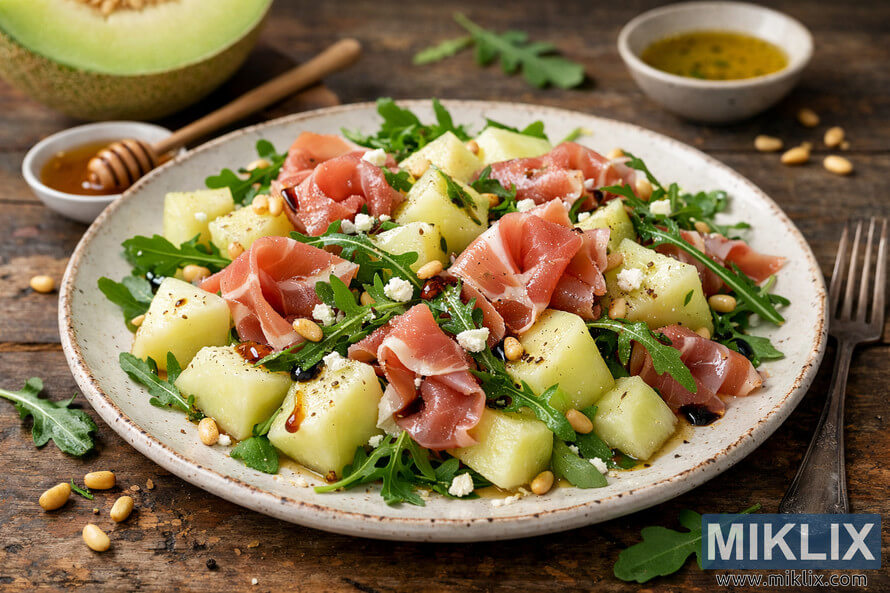
- Pair with prosciutto for sweet-salty contrast
Breakfast Options
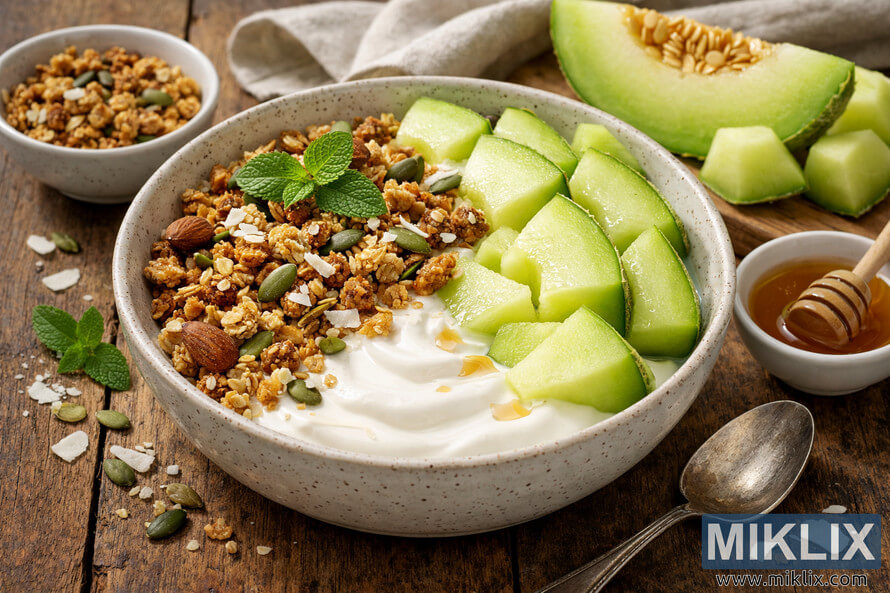
- Add to yogurt parfaits with granola
- Blend into morning smoothies
- Top whole grain pancakes or waffles
- Mix into overnight oats
Dessert Applications
- Freeze for a natural sorbet-like treat
- Blend with coconut milk for popsicles
- Layer in trifles with other fruits
- Grill briefly for caramelized flavor
Spustelėkite arba bakstelėkite paveikslėlį, kad gautumėte daugiau informacijos ir didesnę raišką.
Beverage Creations
Honeydew makes exceptional beverages. Its high water content and mild flavor blend seamlessly with other ingredients. These drinks provide hydration along with nutrition.
Smoothie Combinations
- Honeydew pairs beautifully with cucumber for ultra-hydrating smoothies. Add fresh mint and lime for a refreshing flavor profile. Frozen banana creates creamy texture without dairy.
- Combine honeydew with coconut water instead of regular water. This boosts electrolyte content. Add spinach for extra nutrients without affecting the sweet taste.
Agua Fresca
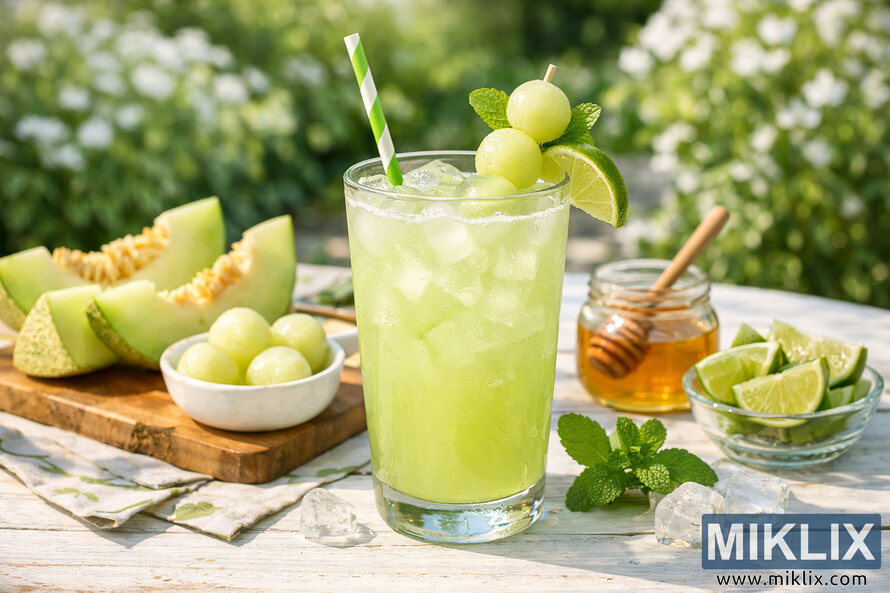
- This traditional Mexican beverage highlights honeydew's refreshing qualities. Blend melon with water, lime juice, and a touch of honey. Strain for smooth texture or leave unstrained for more fiber.
- The drink provides excellent hydration on hot days. It contains fewer calories than fruit juice. The natural sugars provide gentle energy without crashes.
Spustelėkite arba bakstelėkite paveikslėlį, kad gautumėte daugiau informacijos ir didesnę raišką.
Savory Applications
Honeydew works surprisingly well in savory dishes. The subtle sweetness balances salty and spicy flavors. These applications showcase the fruit's versatility.
- Add to summer salads with feta cheese and arugula
- Wrap with thin slices of prosciutto or serrano ham
- Include in fresh spring rolls with herbs and shrimp
- Dice into salsa with jalapeño, cilantro, and red onion
- Blend into cold soups with cucumber and avocado
- Grill and serve alongside grilled fish or chicken
Spustelėkite arba bakstelėkite paveikslėlį, kad gautumėte daugiau informacijos ir didesnę raišką.
Recommended Serving Sizes
Portion control helps maximize benefits while avoiding excessive sugar intake. Understanding appropriate serving sizes guides healthy consumption. Individual needs vary based on activity level and overall diet.
The USDA recommends adults consume one and a half to two cups of fruit daily. Honeydew can contribute significantly to this goal. One cup of diced melon counts as one cup of fruit.
Standard Serving Guidelines
A typical serving of honeydew ranges from one to two cups. This provides substantial nutrition without overwhelming sugar content. The serving delivers between sixty-four and one hundred twenty-eight calories.
| Group | Recommended Serving | Frequency | Notes |
| Adults | 1-2 cups | Daily | As part of total fruit intake |
| Children (4-8 years) | 0.5-1 cup | Daily | Adjust based on appetite |
| Athletes | 2-3 cups | Pre/post workout | Higher needs due to activity |
| Diabetics | 0.5-1 cup | With meals | Monitor blood sugar response |
Timing Considerations
When you eat honeydew affects its impact on your body. Consuming fruit with meals slows sugar absorption. Eating between meals provides quick energy without heavy digestion.
Best Times to Eat Honeydew
- Morning - Provides hydration after overnight fast
- Pre-workout - Supplies quick energy for exercise
- Post-workout - Replenishes glycogen and electrolytes
- Between meals - Satisfies sweet cravings healthfully
- With protein - Slows sugar absorption, extends satiety
Avoid eating large portions of honeydew immediately before bed. The natural sugars may interfere with sleep quality for some people. The diuretic effect could also disrupt sleep with bathroom trips.
Listen to your body's responses. Some individuals tolerate fruit better at certain times. Experiment to find your optimal timing pattern.
Spustelėkite arba bakstelėkite paveikslėlį, kad gautumėte daugiau informacijos ir didesnę raišką.
Balancing with Other Fruits
Variety ensures comprehensive nutrient intake. While honeydew offers excellent benefits, rotating fruits provides broader nutrition. Different fruits contain unique phytonutrients and antioxidants.
Create a weekly fruit rotation including honeydew and complementary options. This approach delivers maximum nutritional diversity. It also prevents flavor fatigue from eating the same foods repeatedly.
Potential Considerations and Side Effects
While honeydew offers numerous benefits, some individuals should exercise caution. Understanding potential issues prevents unpleasant reactions. Most people tolerate honeydew without problems.
Awareness of possible concerns allows informed decision-making. Consult healthcare providers if you have specific health conditions. Individual responses vary based on multiple factors.
Blood Sugar Concerns
Honeydew contains natural sugars that raise blood glucose levels. Diabetics should monitor their response to melon consumption. The glycemic load remains moderate compared to processed sweets.
Important for Diabetics: Always pair honeydew with protein or healthy fats to slow sugar absorption. Monitor blood glucose one to two hours after consumption to understand your individual response.
The fiber in honeydew helps moderate blood sugar spikes. However, portion control remains crucial for blood sugar management. Start with small servings and observe your body's reaction.
Digestive Sensitivity
Some individuals experience bloating or gas from melon consumption. This often results from rapid fermentation by gut bacteria. The issue typically resolves as your microbiome adapts.
FODMAP Considerations
Honeydew contains moderate amounts of FODMAPs. These fermentable carbohydrates trigger symptoms in some people. Those with IBS or FODMAP sensitivity should consume small portions.
The sorbitol content particularly affects sensitive individuals. This natural sugar alcohol can cause digestive discomfort. Limiting servings to one-half cup often prevents issues.
Reducing Digestive Discomfort
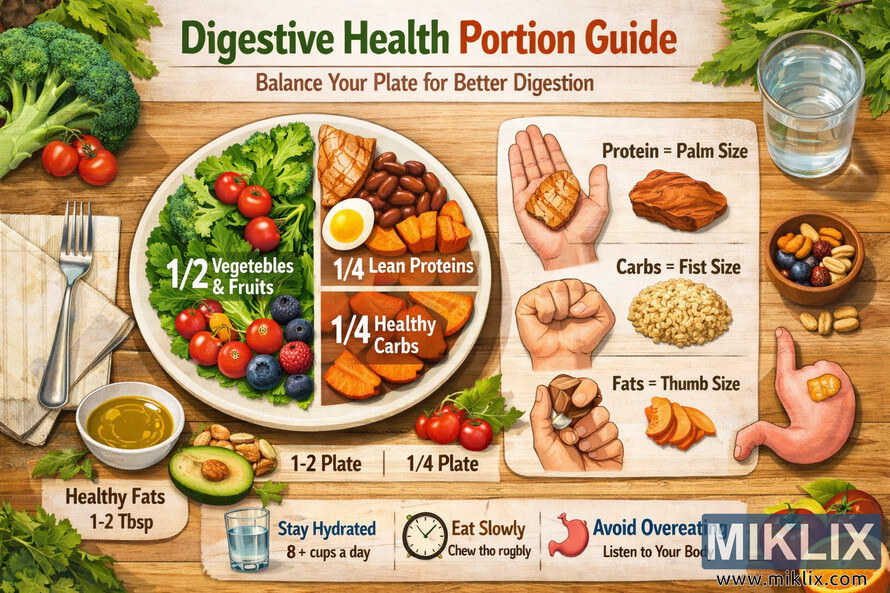
- Start with small portions to assess tolerance
- Avoid eating melon with heavy meals
- Don't consume when overly full
- Chew thoroughly to aid digestion
- Stay hydrated to support digestive processes
Spustelėkite arba bakstelėkite paveikslėlį, kad gautumėte daugiau informacijos ir didesnę raišką.
Allergic Reactions
True melon allergies remain relatively rare. However, oral allergy syndrome affects some individuals. This condition causes itching or tingling in the mouth after eating certain fruits.
People with ragweed allergies sometimes react to melons. The proteins in honeydew resemble ragweed pollen proteins. Symptoms typically remain mild but can cause discomfort.
Allergy Symptoms: Seek medical attention if you experience difficulty breathing, significant swelling, or hives after eating honeydew. These indicate more serious allergic reactions requiring immediate treatment.
Medication Interactions
Honeydew's high potassium content may interact with certain medications. ACE inhibitors and potassium-sparing diuretics can cause potassium accumulation. Excessive potassium affects heart rhythm.
People taking these medications should discuss fruit intake with their doctor. Moderate consumption usually poses no problem. However, individual circumstances vary significantly.
Pregnancy and Breastfeeding
Honeydew offers excellent nutrition during pregnancy and breastfeeding. The folate supports fetal development. The hydration benefits address increased fluid needs.
Always wash melons thoroughly before cutting during pregnancy. Listeria bacteria can contaminate melon surfaces. Proper washing eliminates this risk effectively.
Pregnancy Tip: Freeze honeydew cubes for soothing relief from pregnancy nausea. The cold temperature and mild flavor often appeal to queasy stomachs better than room-temperature foods.
Growing Your Own Honeydew Melons
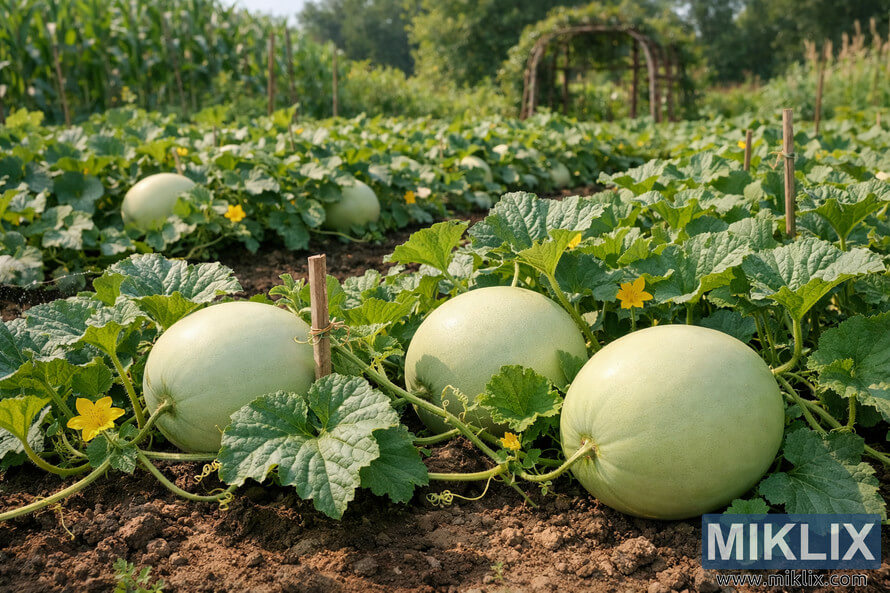
Growing honeydew at home ensures the freshest, most nutritious fruit. The plants require specific conditions but reward careful tending with abundant harvests. Understanding basic requirements helps you succeed.
Honeydews need warm soil, full sun, and consistent moisture. The vines require substantial space to sprawl. Proper planning creates ideal growing conditions.
Spustelėkite arba bakstelėkite paveikslėlį, kad gautumėte daugiau informacijos ir didesnę raišką.
Site Selection and Soil Preparation
Choose a location receiving at least eight hours of direct sunlight daily. Melons demand full sun for optimal fruit development. Insufficient light reduces sugar content and overall yield.
Prepare soil several weeks before planting. Add generous amounts of compost or aged manure. Honeydews thrive in rich, well-draining soil with pH between six and seven.
Soil Requirements
- Well-draining loamy soil prevents root rot
- Rich organic matter supports heavy nutrient needs
- Neutral to slightly acidic pH optimizes nutrient availability
- Deep soil allows extensive root development
- Raised beds improve drainage in heavy clay soils
Planting Timing
Wait until all danger of frost passes before planting. Soil temperature should reach at least seventy degrees Fahrenheit. Cold soil prevents germination and may rot seeds.
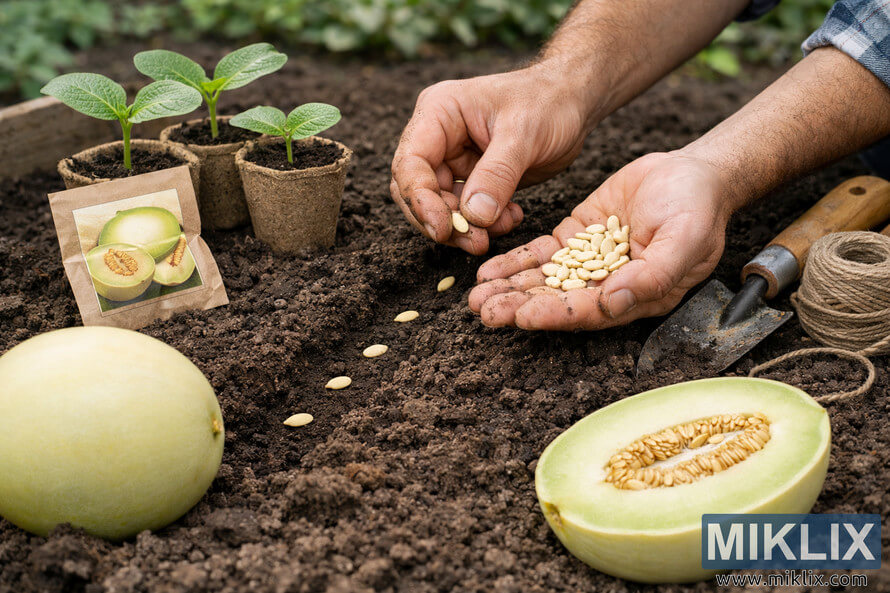
Start seeds indoors three to four weeks before the last frost date. Transplant seedlings when they develop two to three true leaves. Handle transplants carefully to avoid root damage.
Planting and Spacing
Space honeydew plants generously to accommodate sprawling vines. Allow five to six feet between plants in rows. Maintain six to eight feet between rows for easy access.
Plant seeds one inch deep in groups of three to four. Thin to the strongest seedling once plants establish. This spacing ensures adequate air circulation and reduces disease pressure.
Spustelėkite arba bakstelėkite paveikslėlį, kad gautumėte daugiau informacijos ir didesnę raišką.
Water and Fertilizer Management
Honeydews require consistent moisture throughout the growing season. Water deeply once or twice weekly depending on weather. Shallow watering encourages shallow roots and stress sensitivity.
Apply water at the base of plants rather than overhead. Wet leaves promote fungal diseases. Drip irrigation or soaker hoses provide ideal moisture delivery.
| Growth Stage | Water Needs | Fertilizer Application | Special Notes |
| Seedling | Keep soil moist | Light starter fertilizer | Avoid overwatering young plants |
| Vine Growth | 1-2 inches weekly | Balanced NPK every 2 weeks | Mulch conserves moisture |
| Flowering | Consistent moisture | Switch to low nitrogen | Water stress reduces fruit set |
| Fruit Development | Deep watering | Minimal fertilizer | Reduce water as fruit ripens |
Pest and Disease Management
Several pests and diseases affect honeydew melons. Early identification enables prompt treatment. Regular monitoring catches problems before they become severe.
Common Pests
- Aphids suck plant juices from leaves and stems
- Cucumber beetles damage vines and transmit diseases
- Squash bugs cause wilting and plant death
- Spider mites create stippled leaf damage
Disease Issues
- Powdery mildew creates white coating on leaves
- Fusarium wilt causes sudden vine collapse
- Anthracnose produces dark lesions on fruit
- Bacterial wilt spreads through cucumber beetles
Prevention Strategies
- Use row covers to exclude flying insects
- Practice crop rotation to reduce soil diseases
- Remove infected plant material promptly
- Maintain good air circulation between plants
Spustelėkite arba bakstelėkite paveikslėlį, kad gautumėte daugiau informacijos ir didesnę raišką.
Harvesting Indicators
Determining harvest readiness requires observation and experience. Several signs indicate peak ripeness. Picking at the right time maximizes flavor and nutrition.
- Rind color changes from bright green to creamy yellow or pale green
- The blossom end yields slightly to gentle thumb pressure
- A subtle sweet fragrance develops at the blossom end
- The fruit separates easily from the vine with gentle twisting
- Tendrils near the fruit stem turn brown and dry
- The skin develops a slightly waxy feel rather than fuzzy texture
- Most honeydew varieties require ninety to one hundred ten days from planting to harvest. Track planting dates to estimate harvest timing. Environmental conditions affect maturation speed significantly.
- Gardening Tip: Mark planting dates on calendar or garden stakes. Count forward based on variety specifications. This provides approximate harvest windows for planning purposes.
Delicious Honeydew Melon Recipes
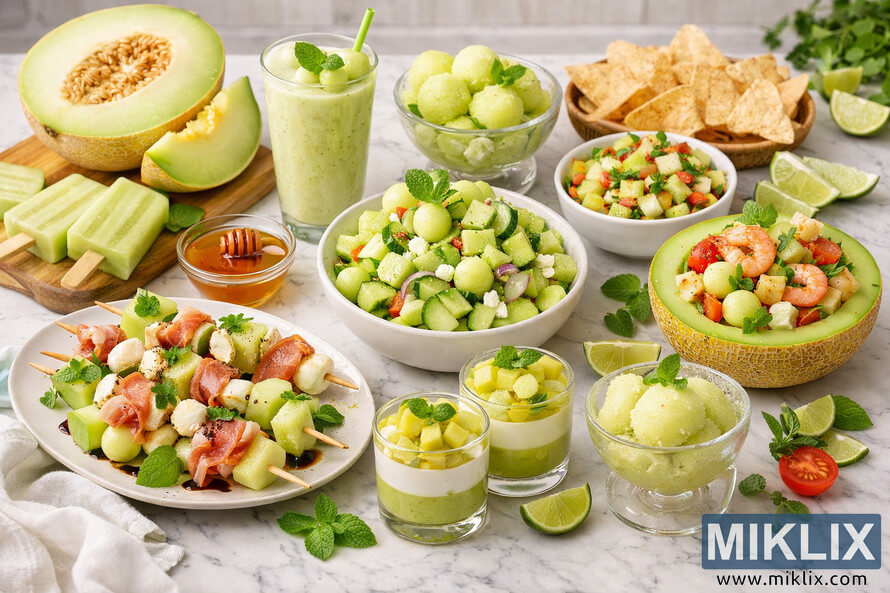
Honeydew's versatility shines in countless recipes. These ideas range from simple to sophisticated. Each preparation highlights the fruit's natural qualities while adding complementary flavors.
Experimenting with different recipes keeps your diet interesting. Variety prevents boredom and encourages consistent healthy eating. These recipes provide starting points for your own creativity.
Spustelėkite arba bakstelėkite paveikslėlį, kad gautumėte daugiau informacijos ir didesnę raišką.
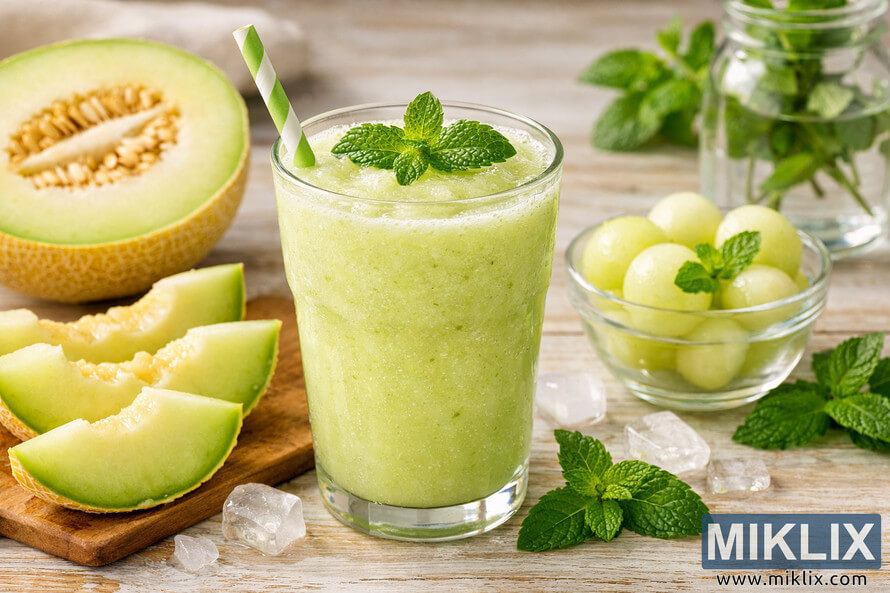
Refreshing Honeydew Smoothie
This simple smoothie delivers hydration and nutrition in a delicious package. The combination creates a refreshing breakfast or snack. Preparation takes less than five minutes.
Ingredients
- Two cups fresh honeydew melon chunks
- One cup coconut water or regular water
- One half cup plain Greek yogurt
- One tablespoon fresh lime juice
- Six fresh mint leaves
- One cup ice cubes
- Optional: One tablespoon honey for extra sweetness
Instructions
- Combine all ingredients in high-speed blender
- Blend on high until completely smooth
- Taste and adjust sweetness if needed
- Pour into glasses and serve immediately
- Garnish with fresh mint sprigs if desired
Spustelėkite arba bakstelėkite paveikslėlį, kad gautumėte daugiau informacijos ir didesnę raišką.
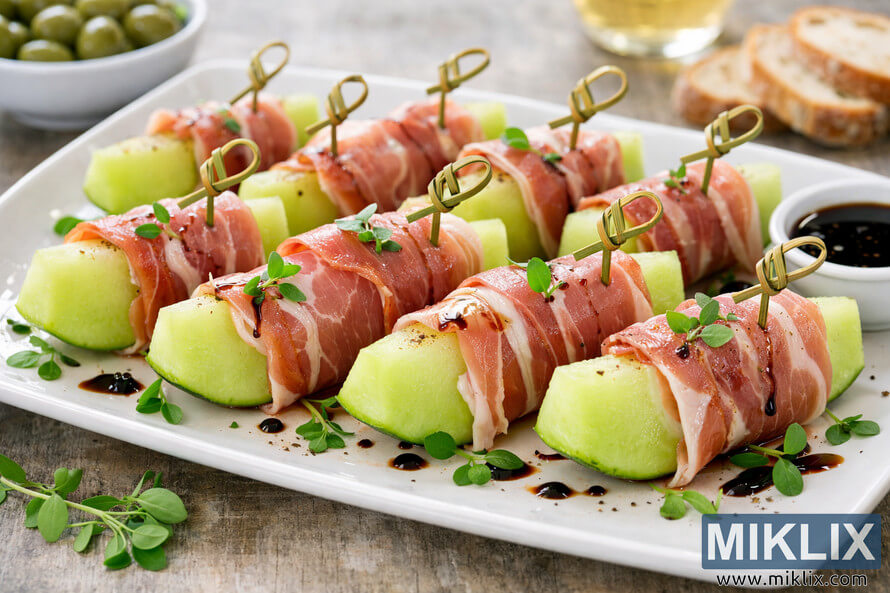
Prosciutto-Wrapped Honeydew
This elegant appetizer combines sweet and salty flavors beautifully. The classic Italian pairing requires no cooking. It impresses guests while providing excellent nutrition.
Ingredients
- One ripe honeydew melon
- Eight ounces thinly sliced prosciutto
- Fresh basil leaves
- Balsamic glaze for drizzling
- Freshly cracked black pepper
Preparation
- Cut melon into thin wedges or cubes
- Remove rind from melon pieces
- Wrap each piece with prosciutto strip
- Arrange on serving platter
- Top with basil and drizzle with balsamic
- Add pepper to taste
Serving Tips
Serve immediately after assembly for best texture contrast. The prosciutto should remain slightly crispy. Prepare components ahead but assemble just before serving. This prevents the meat from becoming soggy.
Spustelėkite arba bakstelėkite paveikslėlį, kad gautumėte daugiau informacijos ir didesnę raišką.
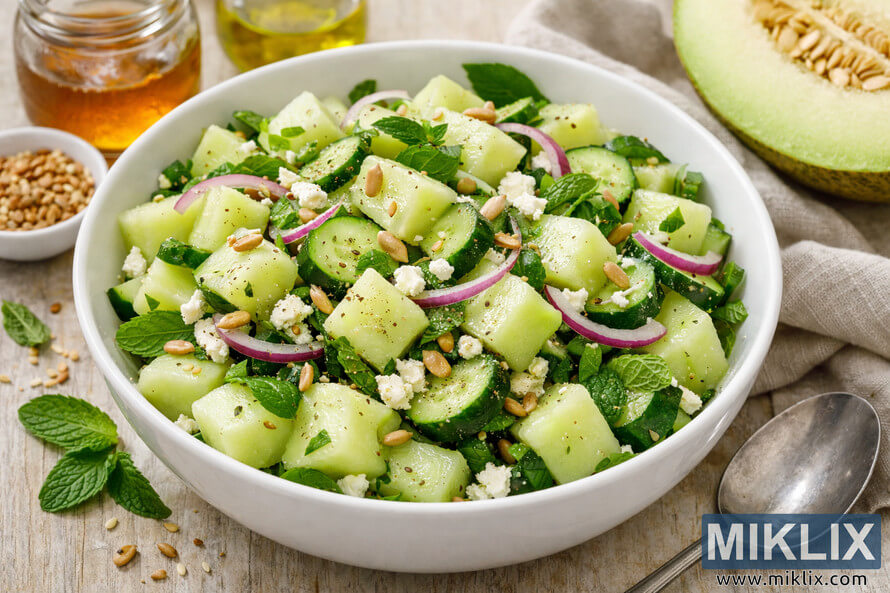
Honeydew Cucumber Salad
This light salad provides exceptional hydration. The combination tastes fresh and cooling. It works beautifully as a side dish for grilled proteins.
Salad Ingredients
- Three cups honeydew melon balls
- Two cups diced cucumber
- One quarter cup thinly sliced red onion
- One quarter cup fresh mint leaves, torn
- Two tablespoons crumbled feta cheese
Dressing Ingredients
- Two tablespoons fresh lime juice
- One tablespoon extra virgin olive oil
- One teaspoon honey
- Quarter teaspoon sea salt
- Pinch of red pepper flakes
Combine salad ingredients in large bowl. Whisk together dressing components. Pour dressing over salad and toss gently. Refrigerate for thirty minutes before serving to allow flavors to meld.
Spustelėkite arba bakstelėkite paveikslėlį, kad gautumėte daugiau informacijos ir didesnę raišką.
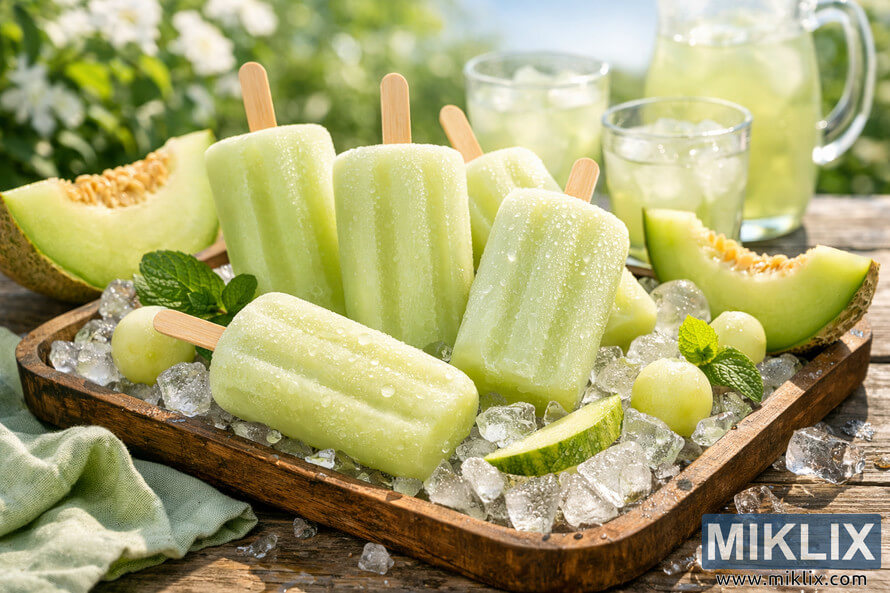
Frozen Honeydew Pops
These healthy frozen treats satisfy sweet cravings without added sugar. Children and adults both enjoy them. They provide cooling refreshment on hot days.
Let children help make these pops. They can add fruit pieces to molds and pour the blended mixture. This involvement encourages healthy eating habits.
Simply blend honeydew with a splash of coconut water and lime juice. Pour into popsicle molds. Add small fruit pieces if desired. Freeze until solid, typically four to six hours.
Spustelėkite arba bakstelėkite paveikslėlį, kad gautumėte daugiau informacijos ir didesnę raišką.
Sustainability and Environmental Impact
Food choices affect environmental sustainability. Understanding honeydew's environmental footprint helps you make informed decisions. Several factors influence the overall impact.
Locally grown melons typically have smaller carbon footprints than imported varieties. Transportation distance significantly affects environmental cost. Seasonal purchasing supports local agriculture.
Water Usage Considerations
Honeydew cultivation requires substantial water. The plants need consistent moisture throughout the growing season. This raises concerns in water-scarce regions.
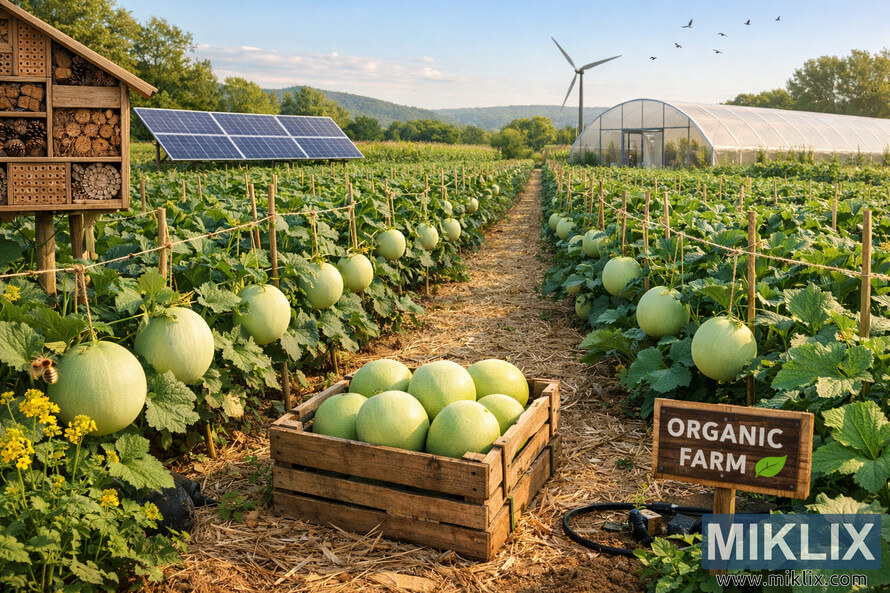
However, efficient irrigation methods reduce water waste. Drip systems and mulching conserve moisture significantly. Supporting farmers who use sustainable practices makes a difference.
Organic vs Conventional Growing
Organic honeydews avoid synthetic pesticides and fertilizers. This reduces chemical runoff into waterways. The thick rind provides some natural protection from pesticide absorption.
Organic Benefits
- No synthetic pesticide residues
- Supports soil health and biodiversity
- Reduces chemical pollution
- Often supports smaller family farms
Conventional Advantages
- Typically lower purchase price
- Wider availability in stores
- Longer shelf life in some cases
- Thick rind limits pesticide absorption
Your choice depends on personal priorities and budget. Both options provide excellent nutrition. Washing thoroughly removes surface residues from either type.
Spustelėkite arba bakstelėkite paveikslėlį, kad gautumėte daugiau informacijos ir didesnę raišką.
Reducing Food Waste
Americans waste approximately thirty to forty percent of food produced. Honeydew often contributes to this waste. Proper storage and creative use of all parts reduces waste.
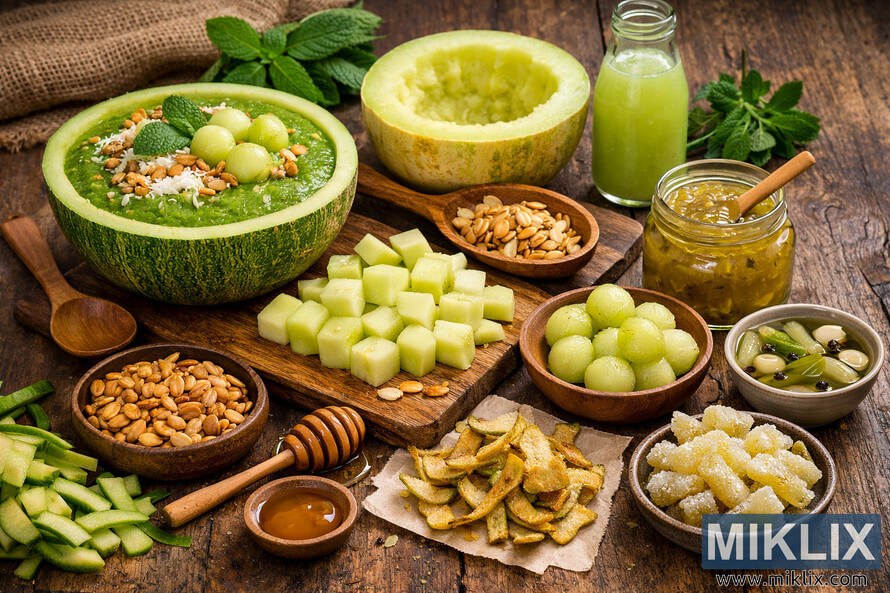
Using the Whole Melon
The rind makes excellent pickles or can be juiced with the flesh. Seeds can be roasted like pumpkin seeds for a crunchy snack. These uses eliminate waste while providing additional nutrition.
Blend overripe melon into smoothies or freeze for later use. Slightly past-prime honeydew still contains full nutritional value. Texture changes don't affect nutrient content.
Smart Storage Practices
Store cut melon properly to extend usable life. Keep it sealed to prevent moisture loss. Place in the coldest part of your refrigerator for maximum longevity.
Freeze excess melon before it spoils. This preserves nutrition and prevents waste. Frozen pieces work perfectly in smoothies and other blended applications.
Spustelėkite arba bakstelėkite paveikslėlį, kad gautumėte daugiau informacijos ir didesnę raišką.
Frequently Asked Questions About Honeydew Melon
Is honeydew melon good for weight loss?
Yes, honeydew supports weight loss efforts effectively. The fruit contains only sixty-four calories per cup while providing satisfying volume. The high water content creates physical fullness in your stomach, reducing overall calorie consumption.
The natural sweetness satisfies cravings for high-calorie desserts. This makes honeydew an excellent substitute for processed sweets. The fiber content, though modest, slows digestion and promotes satiety.
However, portion control remains important. The natural sugars still contribute calories. Include honeydew as part of a balanced, calorie-controlled diet for best weight loss results.
Can diabetics eat honeydew melon safely?
Diabetics can include honeydew in their diet with proper portion control. The fruit has a moderate glycemic index of around sixty-five. This means it causes gradual blood sugar rises rather than sharp spikes.
The key is consuming appropriate portions. Stick to one-half to one cup servings. Always pair honeydew with protein or healthy fats to slow sugar absorption further.
Monitor your individual blood glucose response. Everyone reacts differently to specific foods. Test your blood sugar one to two hours after eating honeydew to understand your personal tolerance.
How long does cut honeydew last in the refrigerator?
Cut honeydew maintains quality for three to four days when properly stored. Wrap pieces tightly in plastic wrap or store in airtight containers. This prevents moisture loss and absorption of other food odors.
The fruit gradually loses nutrients and flavor after cutting. Vitamin C content particularly declines over time due to oxidation. Consume cut melon as soon as possible for maximum nutritional benefit.
Check stored melon daily for signs of spoilage. Discard if you notice off odors, sliminess, or visible mold growth. When in doubt, throw it out to prevent foodborne illness.
Should I choose organic or conventional honeydew?
Both organic and conventional honeydews provide excellent nutrition. The thick rind protects the flesh from pesticide absorption. Honeydew consistently ranks low on the Environmental Working Group's pesticide concern list.
Organic options support sustainable farming practices and reduce environmental chemical use. However, they typically cost more. If budget allows, choose organic to support these practices.
If choosing conventional, wash the exterior thoroughly before cutting. This removes surface residues that could transfer to the flesh during cutting. Either choice delivers substantial health benefits.
Can I eat honeydew melon during pregnancy?
Honeydew offers excellent nutrition during pregnancy. The folate supports healthy fetal development, particularly neural tube formation. The vitamin C aids iron absorption, addressing pregnancy's increased iron needs.
The high water content helps meet pregnancy's elevated hydration requirements. Many pregnant women find the mild flavor appealing when experiencing nausea or food aversions.
Always wash melons thoroughly before cutting during pregnancy. This eliminates potential listeria contamination on the rind. Cut melon should be consumed promptly or refrigerated immediately.
What's the difference between honeydew and cantaloupe nutritionally?
Honeydew and cantaloupe offer different nutritional strengths. Cantaloupe contains significantly more vitamin A due to higher beta-carotene content. The orange flesh indicates this difference visually.
Honeydew typically provides more vitamin C per serving. It also has a milder, less musky flavor that some people prefer. Both melons offer similar potassium levels.
Rotating between varieties provides the broadest nutrient spectrum. Each melon contributes unique phytonutrients and antioxidants. Dietary variety optimizes overall nutrition.
Does freezing honeydew destroy its nutrients?
Freezing preserves most nutrients in honeydew effectively. Some vitamin C loss occurs during the freezing process. However, the majority of vitamins and minerals remain intact.
Flash-freezing immediately after cutting minimizes nutrient loss. Spread pieces on a baking sheet and freeze solid before transferring to bags. This prevents large ice crystal formation that damages cell structure.
The texture changes significantly upon thawing. Frozen honeydew works best in smoothies or partially thawed for a slushy consistency. It's unsuitable for fresh eating after freezing.
Can honeydew help with high blood pressure?
Honeydew supports healthy blood pressure through its potassium content. This mineral helps relax blood vessel walls, allowing easier blood flow. One cup provides approximately four hundred milligrams of potassium.
The fruit's low sodium content also benefits blood pressure management. The favorable sodium-to-potassium ratio helps regulate fluid balance. This combination makes honeydew particularly heart-healthy.
However, honeydew alone cannot treat high blood pressure. It should complement, not replace, prescribed medications. Consult your doctor about dietary approaches to blood pressure management.
How can I tell if a honeydew is ripe at the store?
Several indicators reveal honeydew ripeness. Look for creamy yellow or pale yellow rind color rather than bright green. The blossom end should yield slightly to gentle pressure.
Smell the blossom end for a subtle sweet fragrance. Ripe melons develop a pleasant aroma. The surface should feel smooth and slightly waxy rather than fuzzy.
Choose melons that feel heavy for their size. This indicates high juice content. Avoid those with soft spots, bruises, or strong fermented odors indicating over-ripeness.
Is honeydew melon safe for dogs and cats?
Honeydew is generally safe for dogs in moderation. Remove all seeds and rind before offering. The flesh provides hydration and vitamins for canine companions.
However, limit portions to prevent digestive upset. Too much can cause diarrhea due to the high water and sugar content. Offer only small pieces as occasional treats.
Cats typically show little interest in honeydew. Their physiology doesn't require fruit consumption. If your cat enjoys it, small amounts pose no harm. Always introduce new foods gradually.
Conclusion: Embracing Honeydew's Health Benefits
Honeydew melon delivers remarkable nutritional value in a refreshing, delicious package. The fruit provides essential vitamins, minerals, and beneficial plant compounds. These nutrients work synergistically to support multiple aspects of health.
From immune system enhancement to cardiovascular protection, honeydew offers comprehensive benefits. The high water content supports hydration and skin health. The potassium aids blood pressure regulation. Antioxidants protect against cellular damage and premature aging.
Incorporating honeydew into your regular diet requires minimal effort. The fruit's versatility allows countless preparation methods. Enjoy it fresh, frozen, blended, or combined with other foods. Each application preserves the nutritional benefits.
Remember that no single food creates optimal health. Honeydew works best as part of a varied, balanced diet. Combine it with other fruits, vegetables, whole grains, lean proteins, and healthy fats. This comprehensive approach maximizes overall wellness.
Start small if you're new to honeydew. Try adding one cup to your daily routine. Observe how your body responds. Notice improvements in energy, hydration, and overall vitality. These changes often motivate continued healthy eating.
The journey to better health begins with simple steps. Choosing nutrient-dense foods like honeydew represents one such step. Each positive choice compounds over time, creating lasting health improvements.
Spustelėkite arba bakstelėkite paveikslėlį, kad gautumėte daugiau informacijos ir didesnę raišką.
Papildoma literatūra
Jei jums patiko šis įrašas, jums taip pat gali patikti šie pasiūlymai:
- Nepamirškite pastarnokų: štai kodėl jie tokie naudingi
- Auksiniai tryniai, auksinė nauda: Kiaušinių valgymo privalumai sveikatai
- Nuo odos iki sąnarių: kaip kasdienis kolagenas suteikia postūmį visam jūsų kūnui