
Vaizdas: Comprehensive Lemongrass Safety Guidelines with Measuring Tools
Paskelbta:
Paskutinį kartą atnaujinta: 2026 m. rugpjūčio 26 d. 15:35:34 UTC
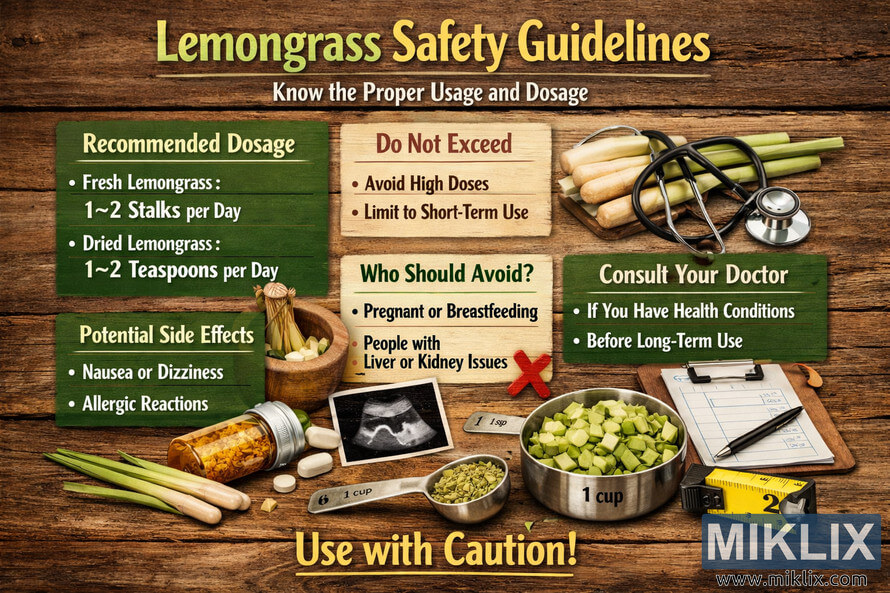
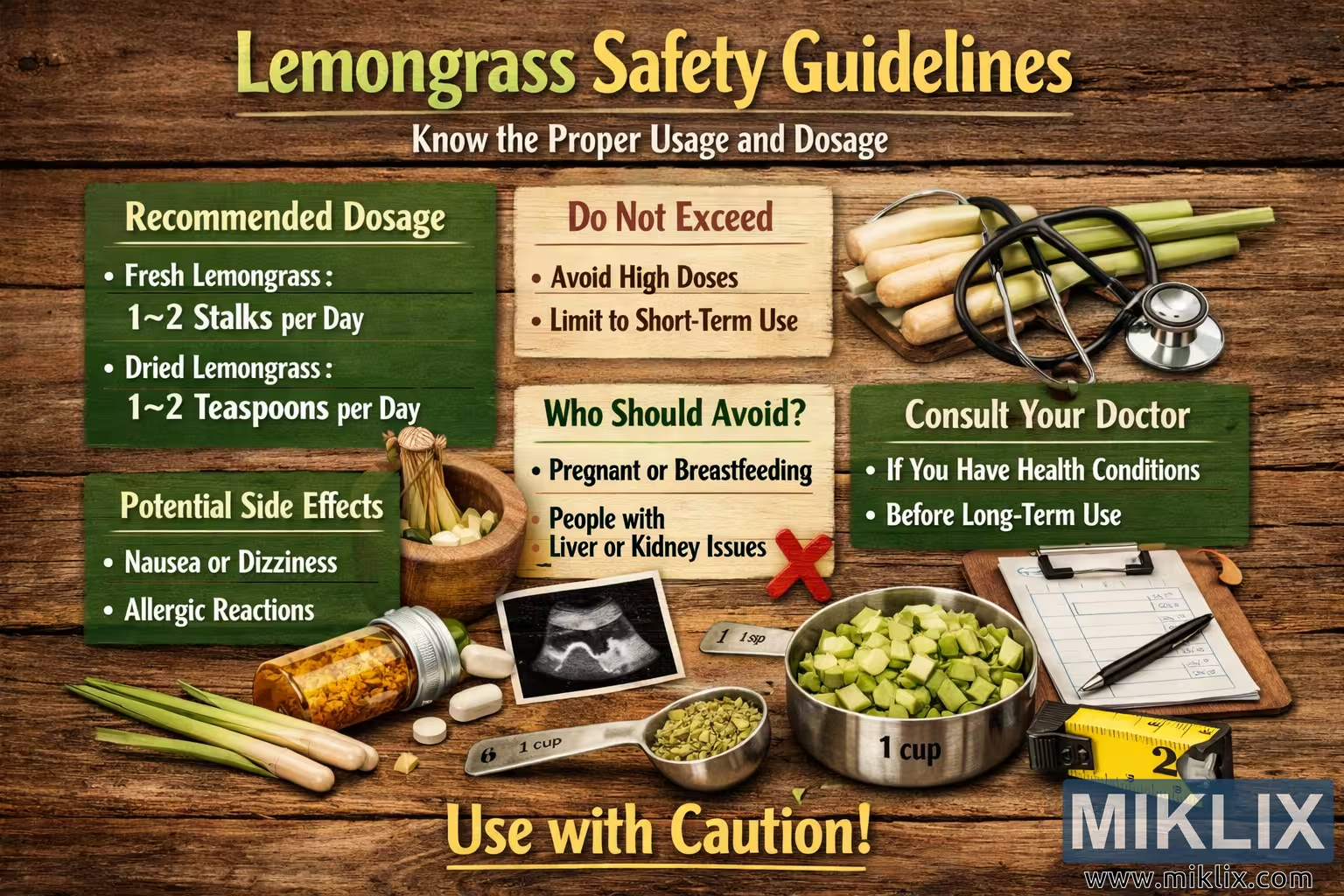
Informative landscape image illustrating safe lemongrass consumption, including dosage guidelines, side effects, at-risk groups, and the importance of consulting a doctor, supported by realistic measuring tools and health-related objects on a rustic wooden background.
Comprehensive Lemongrass Safety Guidelines with Measuring Tools
Galimos šio paveikslėlio versijos
Toliau pateiktos parsisiunčiamų vaizdų rinkmenos yra mažiau suspaustos, didesnės raiškos ir dėl to kokybiškesnės nei šios svetainės straipsniuose ir puslapiuose įterpti vaizdai, kurių dydis optimizuotas siekiant sumažinti duomenų srauto pralaidumą.
Įprastas dydis (1,536 x 1,024)
Didelis dydis (3,072 x 2,048)
Labai didelis dydis (4,608 x 3,072)
Ypač didelis dydis (6,144 x 4,096)
Komiškai didelis dydis (1,048,576 x 699,051)
- Vis dar įkelia... ;-)
Vaizdo aprašymas
This image presents a detailed, photograph-style educational layout focused on safe lemongrass consumption, combining clear textual guidance with realistic measuring tools and health-related objects. The overall composition is in landscape orientation, designed to resemble a professional health information poster laid out on a rustic wooden table. The wooden background runs across the entire frame, giving the image a warm, natural, and slightly textured feel, which visually connects to the herbal nature of lemongrass.
At the very top of the image, centered horizontally, a large title reads "Lemongrass Safety Guidelines" in bold, eye-catching letters. The typography uses a combination of green and yellow tones, evoking the colors of lemongrass leaves and citrus notes, and stands out clearly against the darker wooden backdrop. Just below this main heading, a smaller subtitle appears in white text: "Know the Proper Usage and Dosage." This subtitle reinforces the educational purpose of the image and signals that the content will focus on how much lemongrass to consume and under what conditions.
Beneath the title area, the image is divided into multiple rectangular sections, each with its own heading and bullet points, arranged in a visually balanced grid. On the left side, a prominent section titled "Recommended Dosage" is displayed on a green background panel. The green panel contrasts with the wood beneath it, making the text easy to read. Inside this section, two bullet points in white text provide specific dosage guidelines: "Fresh Lemongrass: 1–2 Stalks per Day" and "Dried Lemongrass: 1–2 Teaspoons per Day." These lines are written in a clean, sans-serif font, emphasizing clarity and readability. The dosage information is concise but precise, suggesting moderate daily amounts and implicitly warning against excessive intake.
To the right of the "Recommended Dosage" section, another panel is titled "Do Not Exceed." This section uses a beige background with yellow text, creating a subtle but noticeable visual distinction from the green dosage panel. The heading is bold, and the bullet points underneath read: "Avoid High Doses" and "Limit to Short-Term Use." These statements highlight the importance of moderation and caution, reminding viewers that even natural herbs like lemongrass can have risks if consumed in large quantities or over extended periods. The beige color palette gives this section a more neutral, advisory tone, complementing the cautionary content.
Below these two upper sections, the image continues with three horizontally aligned panels that address side effects, vulnerable groups, and medical consultation. On the left, a green panel titled "Potential Side Effects" lists two bullet points in white text: "Nausea or Dizziness" and "Allergic Reactions." Next to this text, there are realistic objects that visually reinforce the idea of health and medication: an amber pill bottle with white pills spilling out onto the wooden surface, and a wooden mortar containing lemongrass stalks or pieces. The pill bottle suggests that lemongrass, like medicine, should be treated with respect and caution, while the mortar and lemongrass visually connect the herbal ingredient to traditional preparation methods.
In the center of the lower row, a beige panel titled "Who Should Avoid?" addresses groups of people who may be at higher risk when consuming lemongrass. The bullet points, written in white text, state: "Pregnant or Breastfeeding" and "People with Liver or Kidney Issues." These lines are accompanied by a small ultrasound image and a bold red "X" symbol. The ultrasound photo visually represents pregnancy, while the red "X" serves as a clear warning sign, indicating that these individuals should avoid or be extremely cautious with lemongrass consumption. The beige background and medical imagery together create a serious, informative tone.
On the right side of the lower row, another green panel is titled "Consult Your Doctor." The bullet points in white text read: "If You Have Health Conditions" and "Before Long-Term Use." This section is visually supported by a stethoscope and a clipboard with a doctor’s notepad resting on the wooden surface. The stethoscope symbolizes professional medical advice, and the clipboard suggests documentation, checkups, and personalized guidance. Together, these elements emphasize that lemongrass consumption should be discussed with a healthcare provider, especially for individuals with existing health issues or those considering prolonged use.
In the foreground of the image, closer to the viewer and slightly overlapping the lower panels, several measuring tools are arranged neatly to illustrate practical dosage. On the left, a stainless steel measuring cup is filled with chopped fresh lemongrass. The cup is labeled "1 cup" in clear text, and the lemongrass pieces inside are vibrant green, with visible fibrous texture and small segments that suggest careful preparation. Next to the cup, a metal teaspoon holds dried lemongrass, labeled "1 tsp." The dried lemongrass appears as small, pale, straw-like fragments, visually distinct from the fresh version in the cup. These two measuring tools directly connect the textual dosage guidelines to tangible kitchen measurements, making it easier for viewers to understand how much lemongrass corresponds to the recommended amounts.
To the right of the measuring cup and teaspoon, a tape measure is placed on the wooden surface. The tape measure has a yellow body with a dark casing, and the extended tape shows the number "2" clearly. This measuring tool symbolically reinforces the idea of precise, controlled quantities and the importance of not exceeding recommended limits. The presence of the tape measure, alongside the cup and spoon, creates a visual metaphor for careful measurement and moderation in consumption.
At the bottom of the image, aligned with the wooden surface and spanning much of the width, a bold phrase in large yellow letters reads: "Use with Caution!" The text is slightly angled and stands out strongly against the darker wood, acting as a final, emphatic reminder. This phrase ties together all the preceding information—dosage, side effects, vulnerable groups, and medical consultation—into a single, memorable call to action. It suggests that while lemongrass can be beneficial, it must be approached thoughtfully and responsibly.
The overall color scheme of the image relies heavily on natural greens, warm beige tones, and the rich brown of the wooden background, with yellow accents used for emphasis. The green panels and lemongrass visuals evoke freshness and herbal qualities, while the beige panels and medical objects introduce a clinical, advisory feel. The yellow text and tape measure provide contrast and highlight key warnings. Lighting across the image is even and well-balanced, ensuring that all text and objects are clearly visible and legible. Shadows are soft and subtle, adding depth without obscuring any details.
The composition is carefully structured so that the viewer’s eye moves from the main title at the top, down through dosage and cautionary sections, and finally to the measuring tools and the "Use with Caution!" statement at the bottom. Each section is distinct yet visually connected, creating a cohesive educational narrative. The combination of text, realistic objects, and measuring tools makes the image suitable for use in health articles, educational materials, or safety guidelines related to herbal consumption, particularly focusing on lemongrass.
Importantly, the image avoids any reference to specific commercial brands or logos. All objects, such as the pill bottle, stethoscope, tape measure, measuring cup, and teaspoon, are generic and unbranded. This ensures that the focus remains entirely on safety, dosage, and health guidance rather than on product promotion. The result is a clear, informative, and visually engaging depiction of lemongrass safety guidelines, emphasizing proper measurement, awareness of side effects, consideration of vulnerable populations, and the importance of consulting a healthcare professional before regular or long-term use.
Vaizdas susijęs su: Lemongrass: The Aromatic Herb with Powerful Wellness Benefits