
Vaizdas: Common Questions About Persimmons Answered by Nutrition Experts
Paskelbta:
Paskutinį kartą atnaujinta: 2026 m. birželio 4 d. 18:32:45 UTC
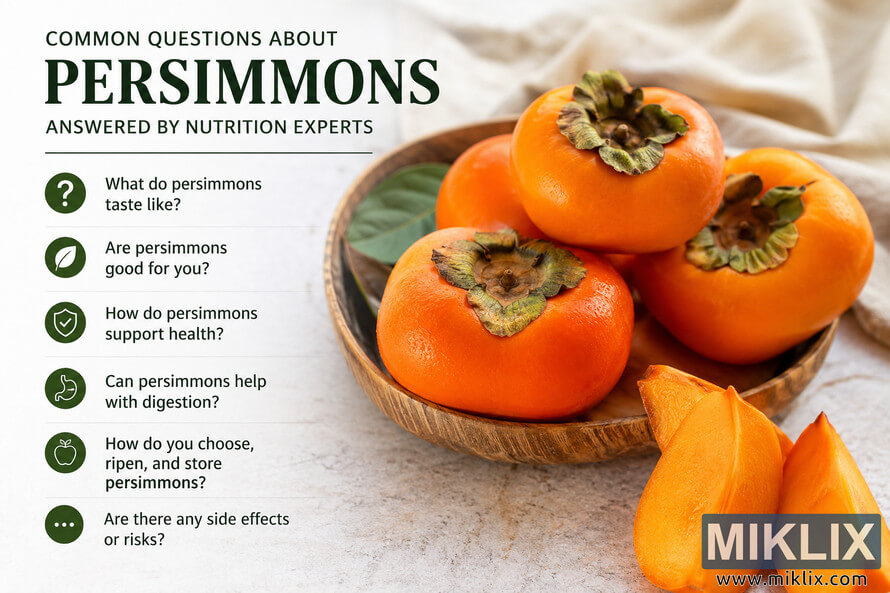
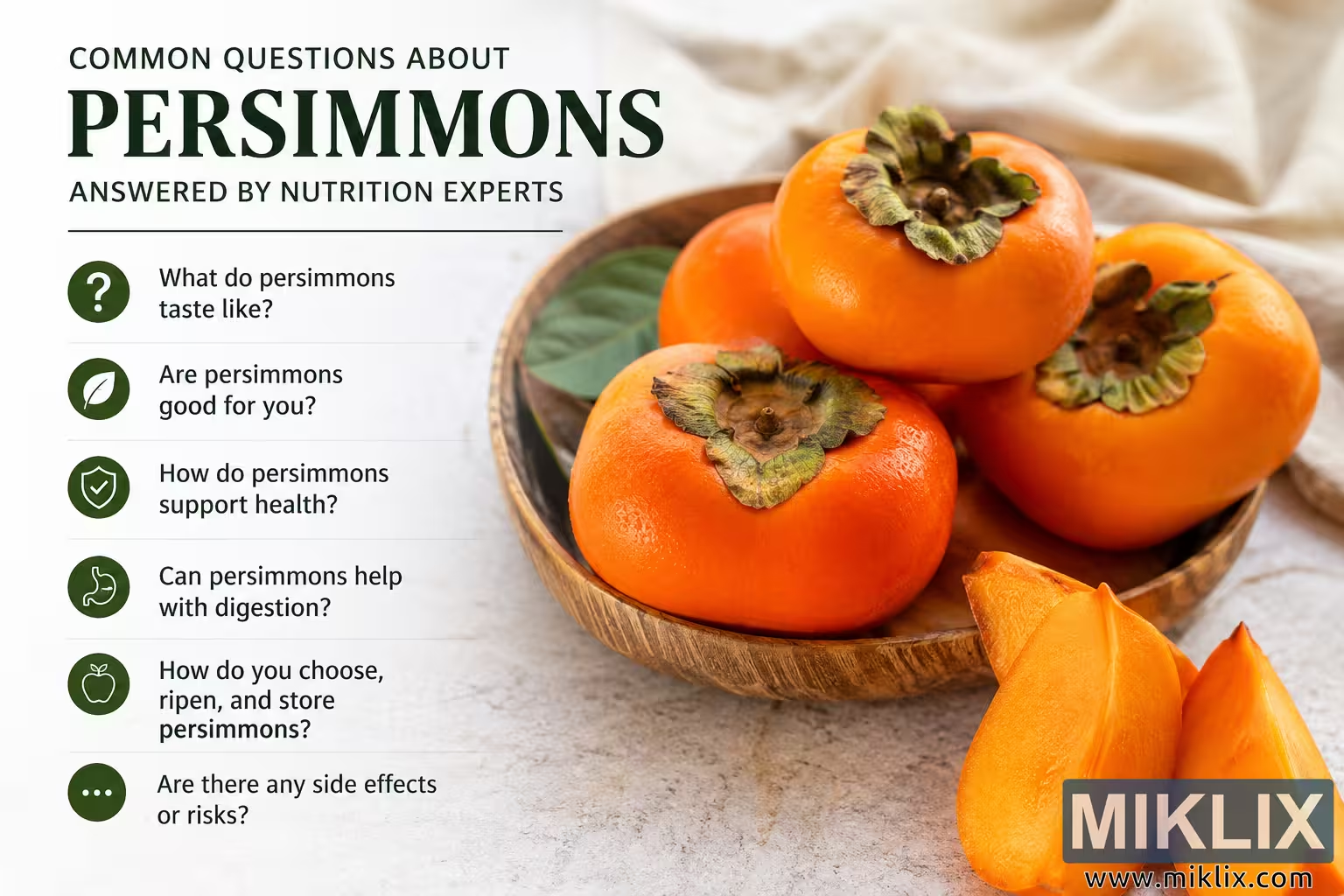
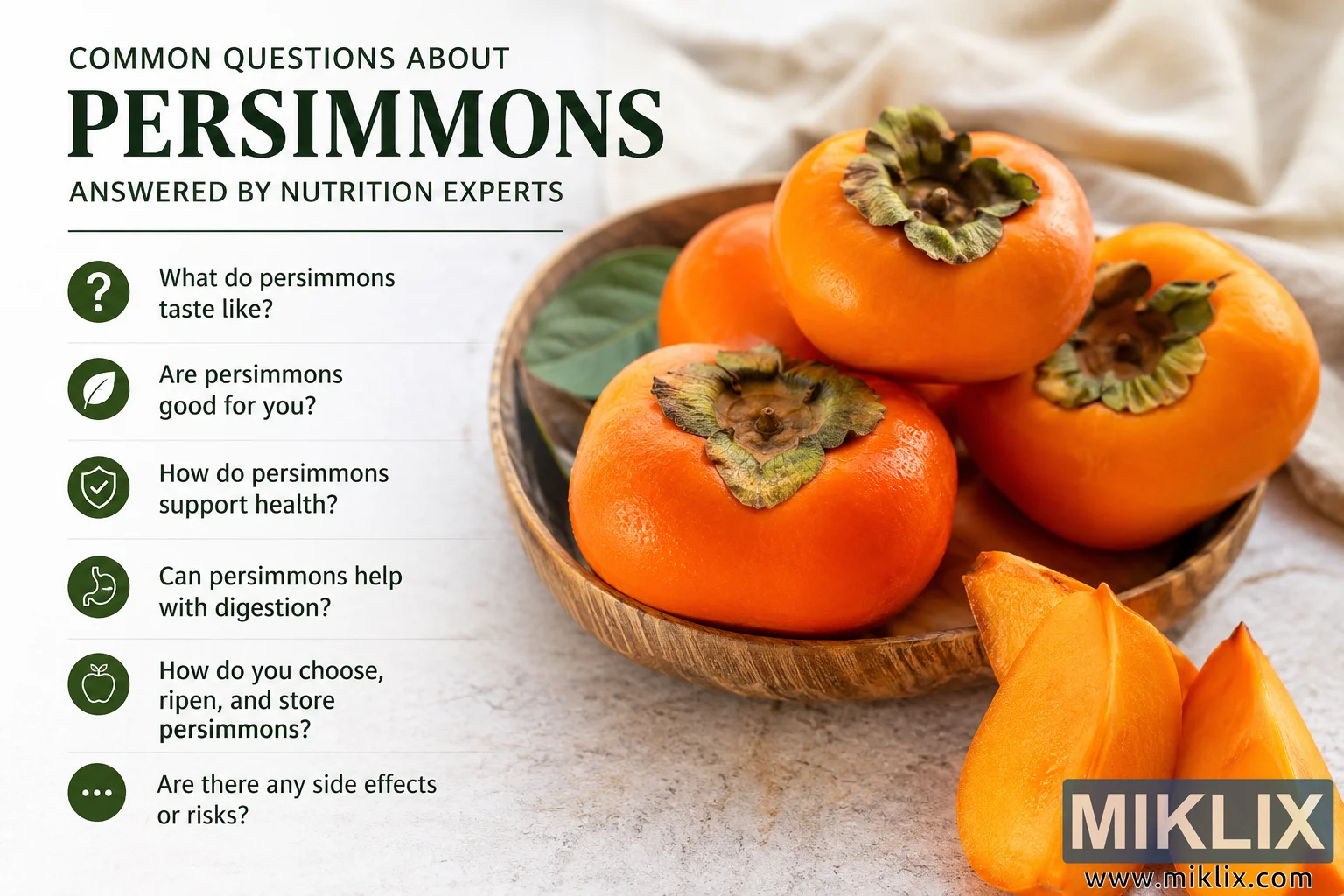
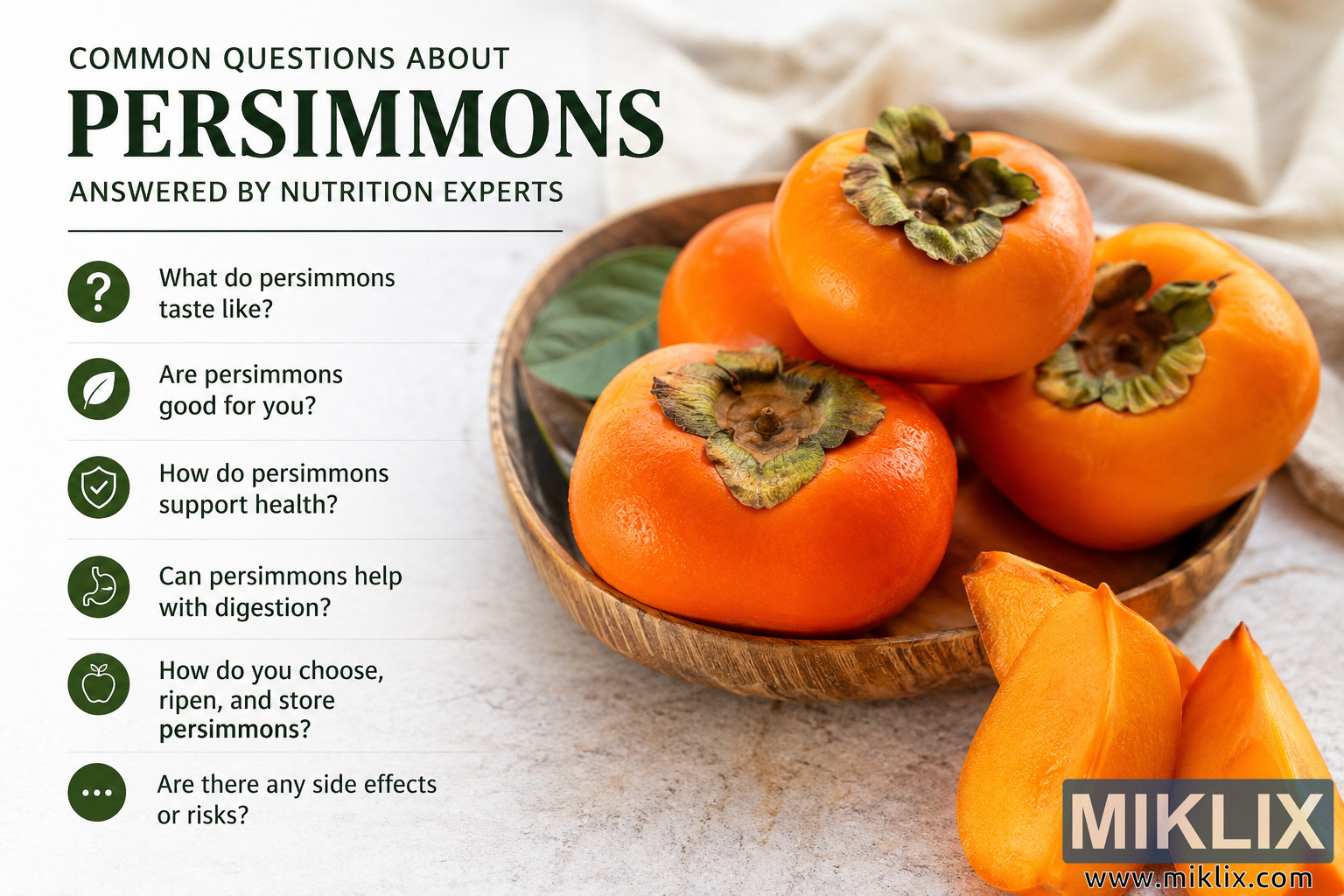
Educational nutrition-themed image about persimmons featuring fresh ripe fruit in a rustic bowl alongside common expert-answered questions about taste, health benefits, digestion, storage, ripening, and nutrition facts.
Common Questions About Persimmons Answered by Nutrition Experts
Galimos šio paveikslėlio versijos
Toliau pateiktos parsisiunčiamų vaizdų rinkmenos yra mažiau suspaustos, didesnės raiškos ir dėl to kokybiškesnės nei šios svetainės straipsniuose ir puslapiuose įterpti vaizdai, kurių dydis optimizuotas siekiant sumažinti duomenų srauto pralaidumą.
Įprastas dydis (1,536 x 1,024)
Didelis dydis (3,072 x 2,048)
Labai didelis dydis (4,608 x 3,072)
Ypač didelis dydis (6,144 x 4,096)
Komiškai didelis dydis (1,048,576 x 699,051)
- Vis dar įkelia... ;-)
Vaizdo aprašymas
A high-resolution landscape-oriented educational infographic image focuses on the topic of persimmons and nutrition. The composition combines a clean editorial design with a realistic food photography aesthetic. The image is split visually into two primary sections. On the left side is a structured text layout featuring educational headings and question prompts, while the right side contains a vivid close-up arrangement of ripe orange persimmons displayed in a rustic wooden bowl.
The overall color palette is warm, fresh, and natural. Bright orange tones from the fruit contrast with muted cream, beige, soft gray, and deep green accents throughout the design. The background surface resembles lightly textured stone or matte ceramic in pale neutral colors, helping the vibrant fruit stand out prominently. Soft natural lighting enters from the upper portion of the image, creating realistic highlights on the smooth skin of the persimmons while also casting subtle shadows that add depth and realism.
At the top left, large elegant typography presents the headline in uppercase letters. The words “COMMON QUESTIONS ABOUT” appear in a modern serif font with dark green coloring. Directly beneath it, the word “PERSIMMONS” is displayed in significantly larger bold serif lettering, dominating the title area and immediately establishing the subject of the image. Below this, a smaller subtitle reads “ANSWERED BY NUTRITION EXPERTS,” also in dark green, reinforcing the educational and health-oriented theme.
Beneath the heading section, a vertical list of common persimmon-related questions appears in neatly organized rows. Each question is paired with a circular green icon positioned to the left. The icons use simple white line illustrations symbolizing various nutrition and wellness themes. One icon contains a question mark representing curiosity and general information. Another uses a leaf shape to symbolize natural foods and nutrition. A shield icon suggests health support or immunity benefits. A stomach-related symbol references digestion and gut health. An apple-like symbol represents produce selection and storage guidance. A final icon with dots indicates additional questions or broader topics.
The listed educational prompts include questions about what persimmons taste like, whether persimmons are healthy, how they support overall wellness, whether they aid digestion, how to choose and store them properly, and whether there are side effects or risks associated with eating them. The text layout resembles a magazine feature, nutrition blog header, or educational health article graphic.
On the right half of the image, several ripe persimmons are arranged attractively inside a round wooden bowl with visible natural grain texture. The fruits appear glossy and freshly washed. Their smooth orange skin reflects soft highlights from the natural lighting. Green-brown leafy calyxes remain attached to the tops of the fruit, adding organic detail and visual authenticity.
One persimmon in the foreground has been sliced open to reveal its rich orange interior flesh. The cut sections display a soft, juicy texture with subtle gradients ranging from golden orange to deeper amber tones. The sliced fruit pieces are placed near the bottom right corner of the composition, partially overlapping the bowl and extending toward the foreground to create dimensional depth.
Behind the bowl, faint soft-focus fabric drapery in cream and beige tones creates a cozy kitchen or wellness lifestyle atmosphere. A muted green leaf is partially visible beneath the fruit arrangement, introducing another natural accent color that complements the dark green typography and icons.
The image style combines professional food photography with modern infographic design. The layout is balanced, with text information clearly separated from the fruit photography while still feeling cohesive. The composition communicates freshness, health, nutrition, and educational value without appearing overly clinical. The typography remains clean and readable, making the image suitable for use in health articles, wellness blogs, recipe websites, nutrition guides, educational presentations, or social media content related to healthy eating and seasonal fruit.
The visual tone is approachable and informative. The lighting remains soft and diffused throughout the image, avoiding harsh shadows or oversaturation. The image conveys a calm, trustworthy, expert-backed atmosphere while emphasizing the vibrant natural appeal of fresh persimmons. No commercial branding, logos, or product packaging appear anywhere in the scene, ensuring the composition remains generic, editorial, and universally usable across multiple digital publishing contexts.
Vaizdas susijęs su: The Complete Guide to the Health Benefits of Persimmons