
Vaizdas: Eye Health Benefits from Watermelon Vitamins and Antioxidants
Paskelbta:
Paskutinį kartą atnaujinta: 2026 m. rugpjūčio 16 d. 19:08:50 UTC
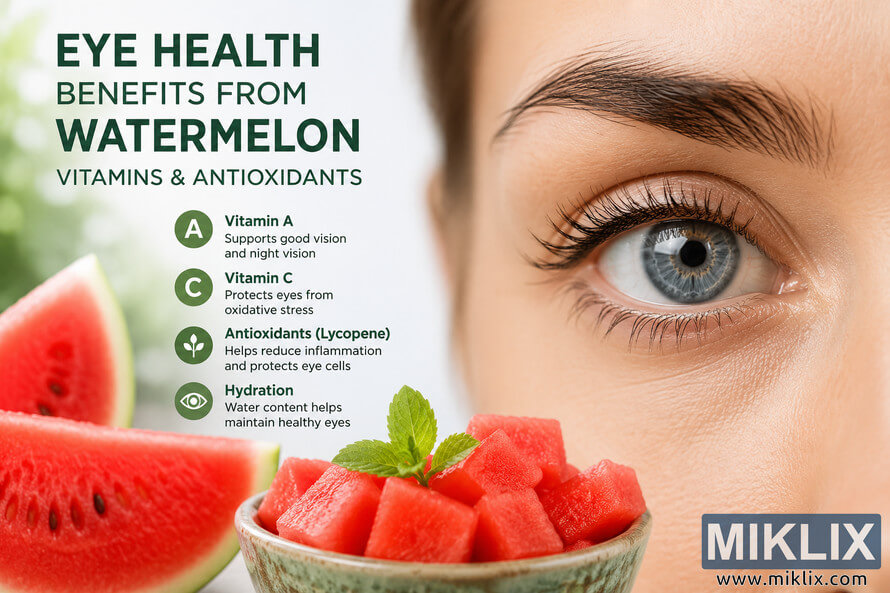
Learn how watermelon supports eye health with vitamins A and C, antioxidants such as lycopene, and hydrating properties. This landscape infographic combines fresh fruit imagery with a close-up eye illustration to present key nutritional benefits in a clean, modern educational design.
Eye Health Benefits from Watermelon Vitamins and Antioxidants
Galimos šio paveikslėlio versijos
Toliau pateiktos parsisiunčiamų vaizdų rinkmenos yra mažiau suspaustos, didesnės raiškos ir dėl to kokybiškesnės nei šios svetainės straipsniuose ir puslapiuose įterpti vaizdai, kurių dydis optimizuotas siekiant sumažinti duomenų srauto pralaidumą.
Įprastas dydis (1,536 x 1,024)
Didelis dydis (3,072 x 2,048)
Labai didelis dydis (4,608 x 3,072)
Ypač didelis dydis (6,144 x 4,096)
Komiškai didelis dydis (1,048,576 x 699,051)
- Vis dar įkelia... ;-)
Vaizdo aprašymas
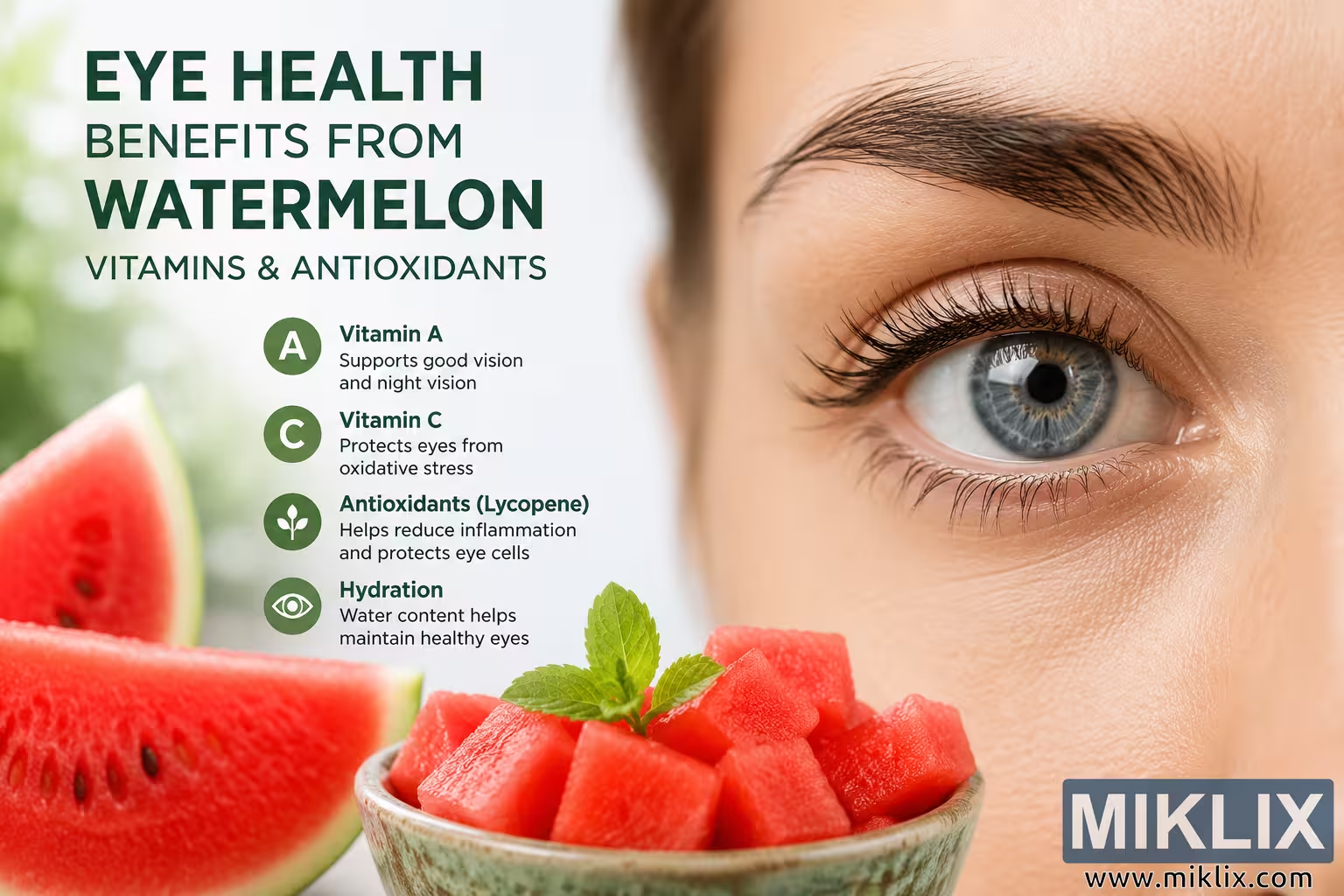
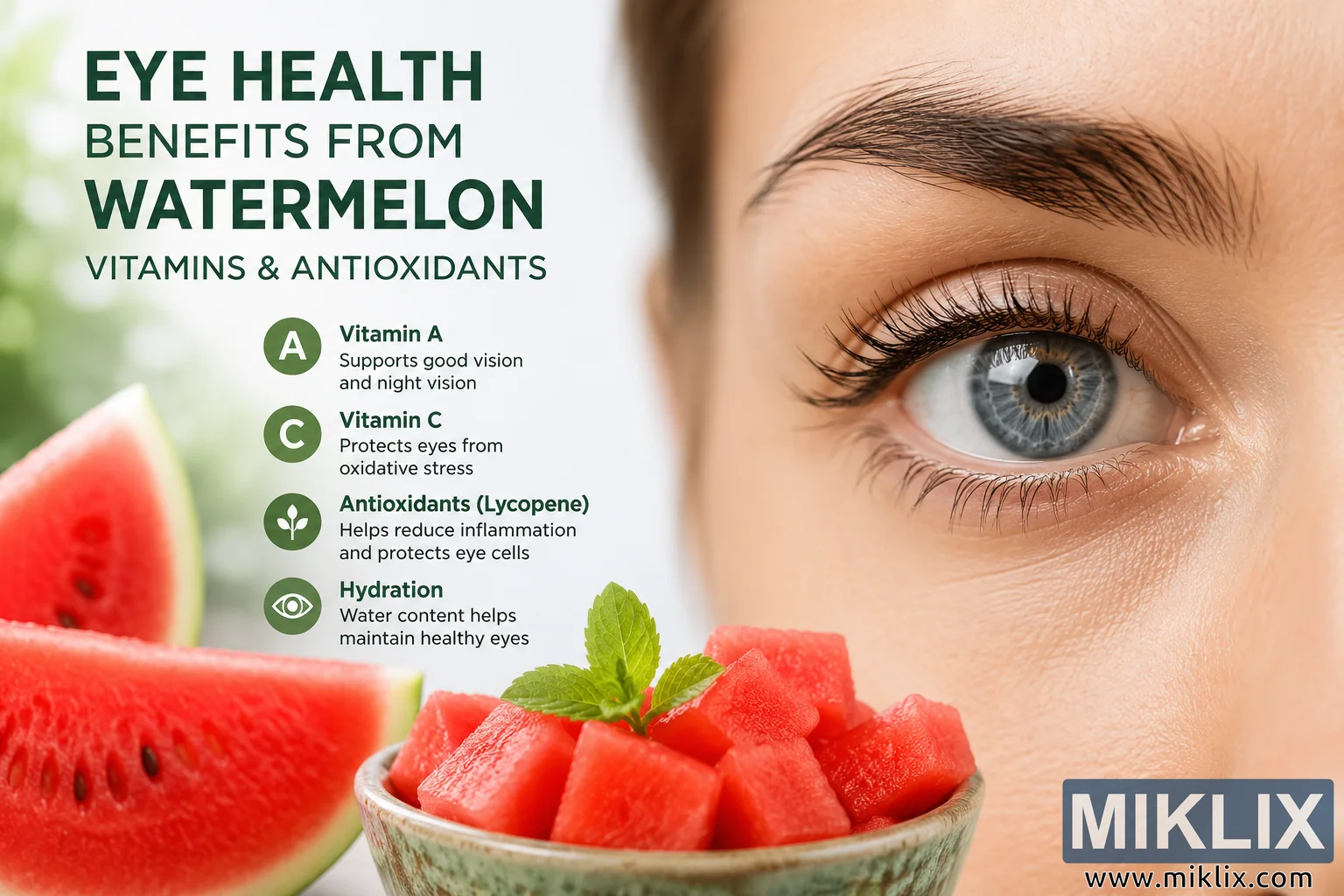
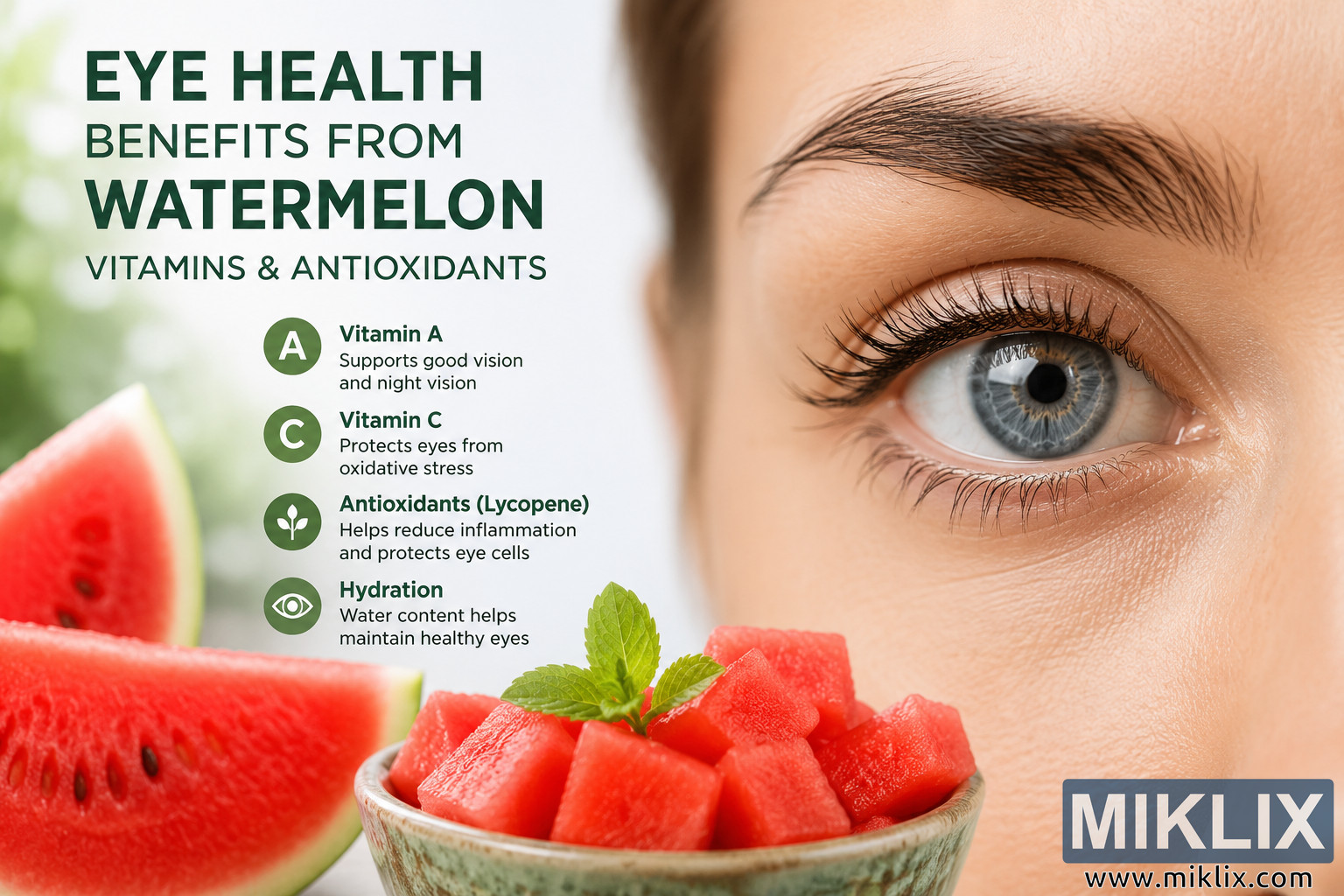
This landscape-oriented educational infographic presents a fresh, bright, and visually balanced composition focused on the relationship between watermelon nutrition and eye health. The overall design uses a clean white background with soft natural lighting and subtle out-of-focus greenery that creates an airy, healthy atmosphere. The layout is divided into two primary visual areas. On the left side, large bold typography introduces the topic with a prominent heading emphasizing eye health and the nutritional value of watermelon. The typography is modern, easy to read, and arranged in a clear hierarchy that guides the viewer naturally from the title to the supporting information. The green lettering complements the natural food theme while providing strong contrast against the light background.
Below the heading is a structured list of nutritional highlights presented with simple circular icons. Each section pairs an easily recognizable symbol with concise educational text explaining a specific nutrient or benefit. Vitamin A is presented as supporting healthy vision and helping maintain normal eyesight, particularly under low-light conditions. Vitamin C is described as contributing antioxidant protection by helping defend cells against oxidative stress. Another section highlights antioxidants, including lycopene, emphasizing their role in protecting cells from oxidative damage and supporting overall eye wellness. A hydration section explains that watermelon contains a high percentage of water, contributing to overall hydration that may support normal eye comfort and healthy body function. The iconography remains minimalistic and consistent throughout the design, reinforcing clarity without distracting from the educational message.
Occupying the right half of the composition is a detailed close-up photograph-style image of a human eye. The eye is sharply focused with realistic eyelashes, a well-defined iris, natural skin texture, and soft lighting that creates a lifelike appearance. The eyebrow is neatly groomed, and the skin surrounding the eye appears healthy and evenly illuminated. The eye itself becomes the visual focal point of the entire infographic, reinforcing the nutritional theme without appearing clinical or intimidating. The subject looks straight toward the viewer, creating a strong visual connection while symbolizing healthy vision.
Across the bottom foreground are vibrant pieces of fresh watermelon that introduce vivid reds and greens into the composition. Large watermelon slices display bright red flesh, dark seeds, and crisp green rind, while a small ceramic bowl contains neatly cut watermelon cubes topped with fresh green mint leaves. The fruit appears juicy and freshly prepared, with subtle highlights suggesting moisture and freshness. The bowl has a natural handcrafted appearance with soft earthy tones that complement the overall organic aesthetic. The placement of the watermelon partially overlaps both the text area and the photographic area, visually connecting the nutritional information with the eye imagery.
The color palette throughout the image combines crisp whites, fresh greens, vibrant watermelon reds, and natural skin tones. These colors communicate freshness, nutrition, cleanliness, and wellness while maintaining excellent readability. Soft depth-of-field effects keep the background unobtrusive, ensuring that the educational content, eye photograph, and fruit remain the primary points of attention. The lighting is bright but gentle, with no harsh shadows, producing an inviting healthcare and lifestyle aesthetic commonly associated with nutrition education materials.
The overall visual style resembles a modern health magazine feature or wellness infographic. It balances realistic photography with clean graphic design elements, making the information approachable for a broad audience. The composition avoids clutter by maintaining generous spacing between text blocks, icons, and imagery. Every major element contributes to a unified educational narrative that connects watermelon consumption with nutrients commonly associated with maintaining normal eye health and supporting general wellness.
No commercial branding, company logos, product packaging, watermarks, or promotional elements are visible anywhere within the composition. The design remains generic and educational in nature, focusing exclusively on the relationship between fresh watermelon, nutritional content, and eye health. The image conveys a positive message about healthy eating habits while using appealing food photography and an expressive close-up eye portrait to communicate its central theme in a visually engaging, accessible, and professional manner.
Vaizdas susijęs su: Watermelon: The Hydrating Superfruit You Should Eat More Often