
Vaizdas: Watermelon and Magnesium: A Natural Boost for Bone Health
Paskelbta:
Paskutinį kartą atnaujinta: 2026 m. rugpjūčio 16 d. 19:08:51 UTC
Explore how magnesium in watermelon supports bone density and overall skeletal health through a vivid visual representation combining nutrition and anatomy.
Watermelon and Magnesium: A Natural Boost for Bone Health
Galimos šio paveikslėlio versijos
Toliau pateiktos parsisiunčiamų vaizdų rinkmenos yra mažiau suspaustos, didesnės raiškos ir dėl to kokybiškesnės nei šios svetainės straipsniuose ir puslapiuose įterpti vaizdai, kurių dydis optimizuotas siekiant sumažinti duomenų srauto pralaidumą.
Įprastas dydis (1,536 x 1,024)
Didelis dydis (3,072 x 2,048)
Labai didelis dydis (4,608 x 3,072)
Ypač didelis dydis (6,144 x 4,096)
Komiškai didelis dydis (1,048,576 x 699,051)
- Vis dar įkelia... ;-)
Vaizdo aprašymas
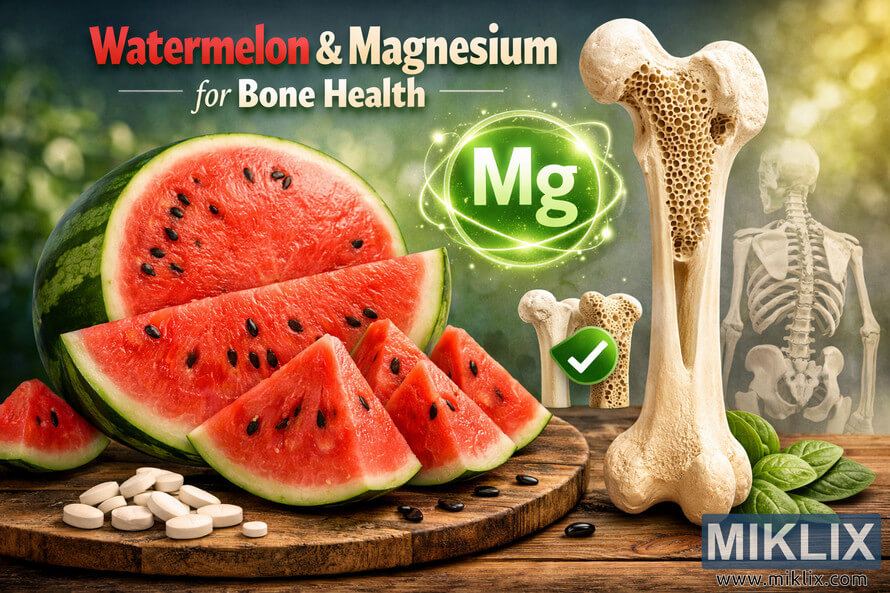
The image presents a detailed, high-resolution landscape composition that visually communicates the relationship between magnesium content in watermelon and its contribution to bone density. On the left side of the frame, a large, ripe watermelon dominates the foreground. It is sliced open to reveal its bright red, juicy flesh, dotted with small black seeds that glisten under natural light. The rind displays a gradient of greens—from deep forest green to a lighter, striped hue—creating a striking contrast against the red interior. Several triangular slices are arranged neatly on a rustic wooden surface, their moist texture reflecting sunlight, evoking freshness and vitality.
Near the watermelon, a small pile of white magnesium supplement tablets rests on the table, symbolizing the mineral’s presence in dietary sources. The juxtaposition of natural fruit and supplement form subtly emphasizes the idea that magnesium can be obtained both naturally and synthetically. A few scattered seeds and droplets of juice add realism and tactile depth to the scene.
To the right of the watermelon, a detailed anatomical model of a human femur bone stands upright. The bone is rendered with scientific precision, showing its porous internal structure—a honeycomb-like pattern that represents healthy bone tissue. Behind it, a semi-transparent illustration of a human skeleton fades softly into the background, focusing on the spine and pelvis. This layering effect connects the concept of bone density to the broader skeletal system.
Hovering above the bone model, a glowing green magnesium symbol “Mg” is encased within a circular aura of light, surrounded by faint atomic orbit lines. This visual metaphor conveys the elemental importance of magnesium in maintaining bone strength and cellular function. The glow radiates outward, blending harmoniously with the surrounding green hues of the garden backdrop.
In the upper portion of the image, bold text reads “Watermelon & Magnesium for Bone Health.” The typography uses a combination of red, green, and white tones—red for watermelon, green for magnesium, and white for clarity—creating a balanced visual hierarchy. The text placement ensures immediate comprehension of the theme while complementing the natural color palette.
To the right of the magnesium symbol, two 3D bone illustrations are displayed side by side: one dense and healthy, the other porous and weak. A green checkmark overlays the healthy bone, reinforcing the message of improved bone density through adequate magnesium intake. This comparative visual aids understanding of the physiological benefits without requiring scientific explanation.
In the lower right corner, a few fresh spinach leaves are placed beside the bone model, representing another magnesium-rich food source. Their deep green color ties back to the glowing magnesium aura, creating chromatic harmony. On the opposite side, near the watermelon slices, a small pile of calcium-like white pills rests, symbolizing the complementary role of calcium in bone health.
The background features a softly blurred garden scene bathed in warm sunlight. The diffuse light filters through green foliage, producing a serene, natural atmosphere that enhances the organic theme. The overall composition balances scientific illustration with natural beauty, merging nutrition, anatomy, and wellness into a cohesive visual narrative.
Every element—from the vibrant fruit to the anatomical bone model—works together to tell a story of how magnesium, found abundantly in watermelon, contributes to maintaining strong, healthy bones. The image evokes both freshness and scientific credibility, making it suitable for educational, health, or nutritional contexts. The landscape orientation allows ample space for visual breathing, ensuring that each component stands out while contributing to the unified message of holistic bone health supported by natural dietary sources.
Vaizdas susijęs su: Watermelon: The Hydrating Superfruit You Should Eat More Often