
Vaizdas: Proper Watermelon Storage in Refrigerator Preserving Freshness
Paskelbta:
Paskutinį kartą atnaujinta: 2026 m. rugpjūčio 16 d. 19:08:51 UTC
Learn how to store watermelon properly in your refrigerator to preserve its freshness. This detailed visual shows airtight containers, wrapped pieces, and organized placement for optimal cooling and longevity.
Proper Watermelon Storage in Refrigerator Preserving Freshness
Galimos šio paveikslėlio versijos
Toliau pateiktos parsisiunčiamų vaizdų rinkmenos yra mažiau suspaustos, didesnės raiškos ir dėl to kokybiškesnės nei šios svetainės straipsniuose ir puslapiuose įterpti vaizdai, kurių dydis optimizuotas siekiant sumažinti duomenų srauto pralaidumą.
Įprastas dydis (1,536 x 1,024)
Didelis dydis (3,072 x 2,048)
Labai didelis dydis (4,608 x 3,072)
Ypač didelis dydis (6,144 x 4,096)
Komiškai didelis dydis (1,048,576 x 699,051)
- Vis dar įkelia... ;-)
Vaizdo aprašymas
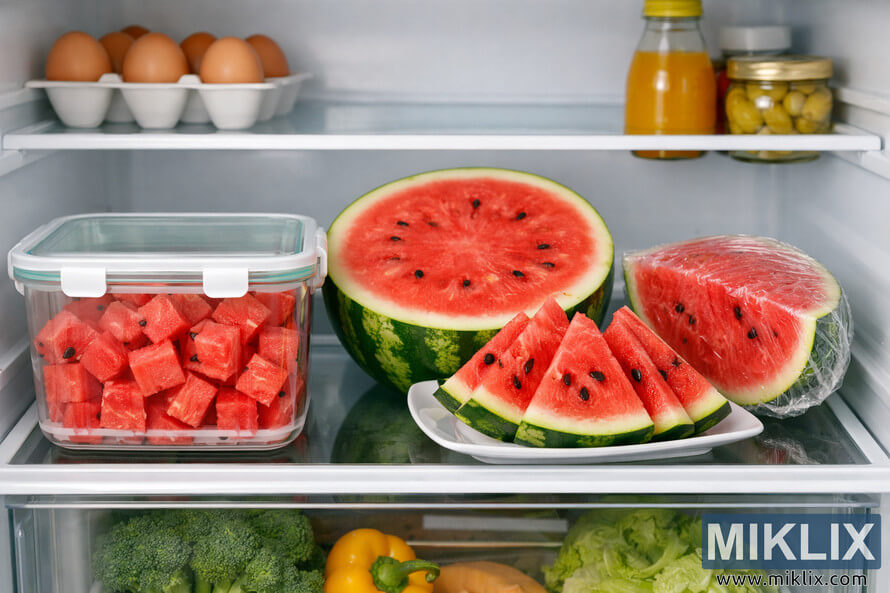
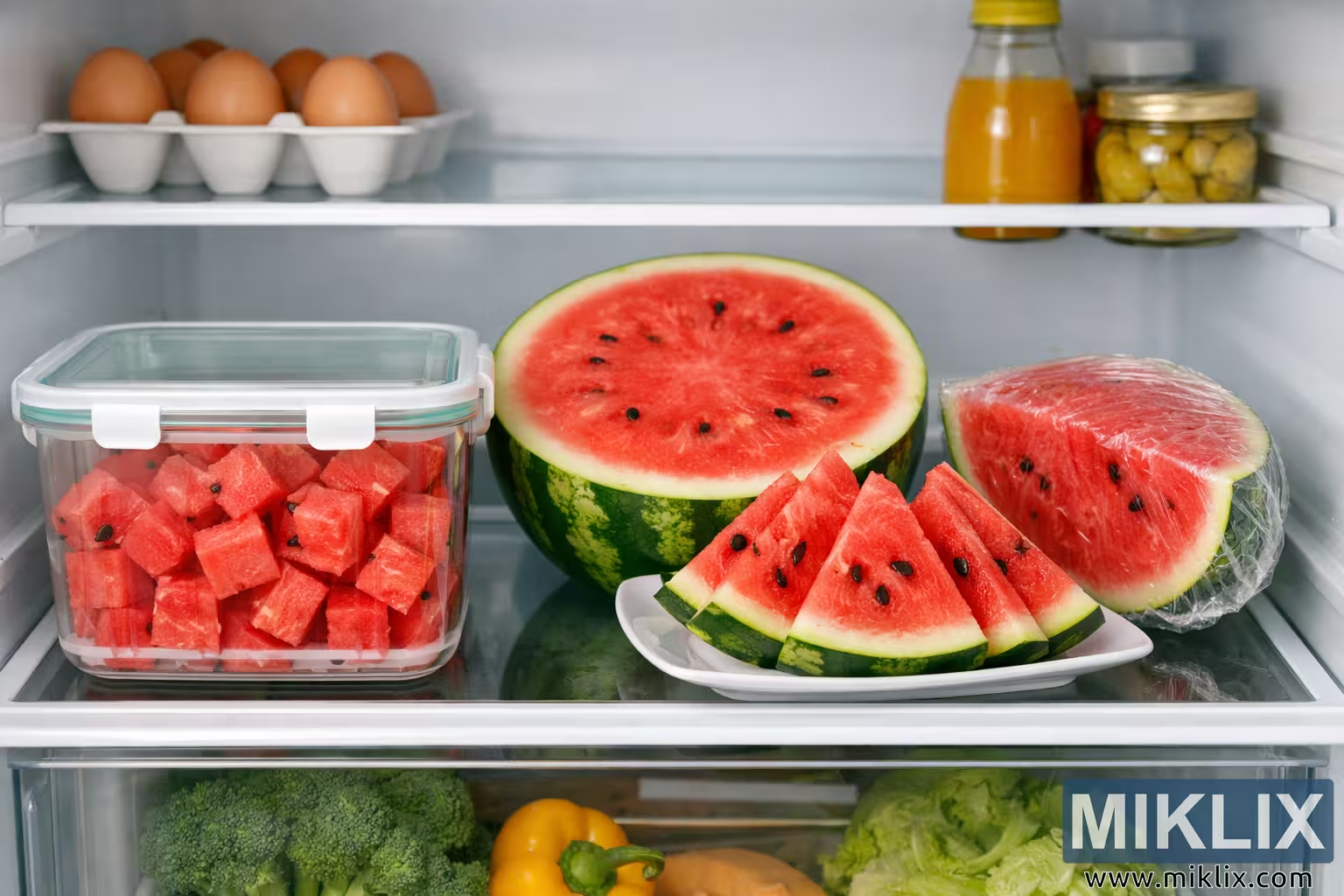
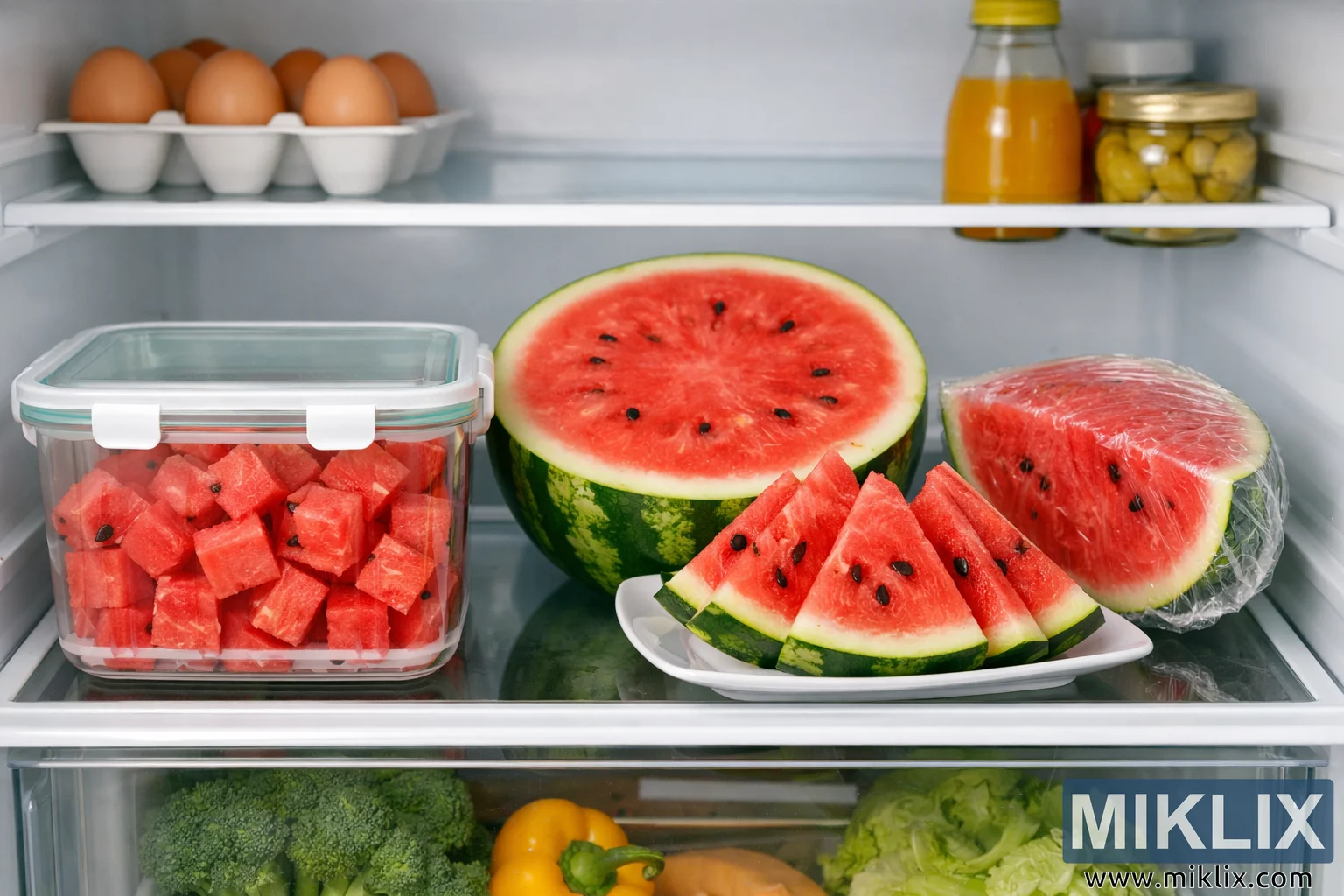
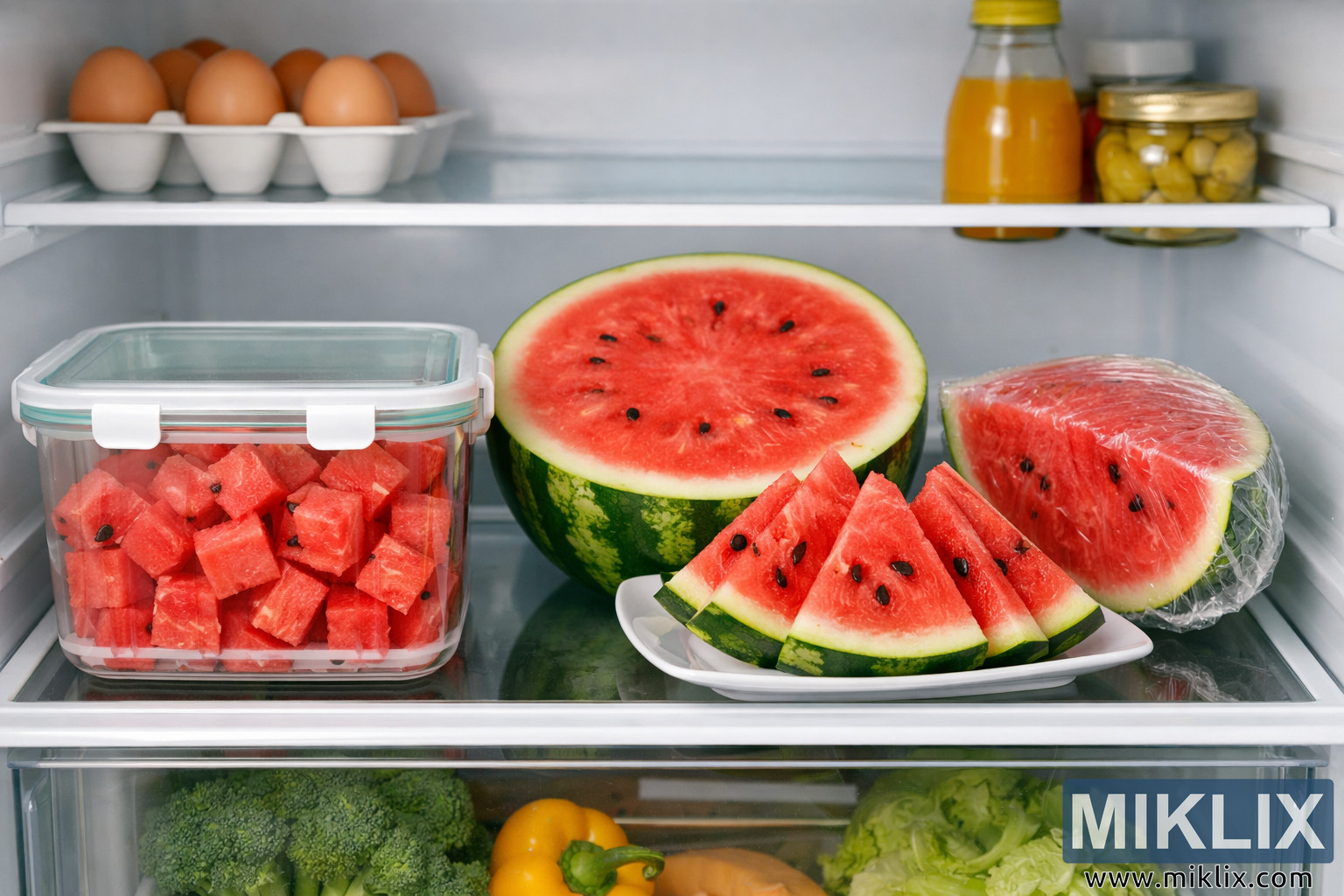
The image depicts a meticulously organized refrigerator interior focused on the proper storage of watermelon to preserve its freshness and flavor. On the central glass shelf, several forms of watermelon are displayed, each illustrating a different preservation technique. To the left, a large, transparent, airtight plastic container holds freshly cut watermelon cubes. The container has a green-edged lid with white locking clips, ensuring a tight seal that prevents moisture loss and odor absorption. Inside, the cubes are uniformly cut into bite-sized pieces, their bright red flesh glistening under the refrigerator light. Tiny black seeds are visible, adding texture and authenticity to the presentation. The cubes rest on a white, raised tray that allows air circulation and prevents condensation buildup at the bottom.
In the center of the shelf sits a half-cut watermelon, positioned with its cut side facing outward. The vibrant red flesh contrasts beautifully with the thick green rind, which features alternating light and dark green stripes. The white inner rind layer forms a clean border between the juicy interior and the outer shell. This half watermelon serves as a visual anchor, demonstrating how larger pieces can be stored uncovered for short-term use while maintaining their visual appeal.
To the right of the halved watermelon, several triangular wedges are arranged neatly on a white rectangular plate. Each wedge displays the same vivid red hue and scattered black seeds, with the green rind forming a natural handle. The wedges overlap slightly, creating a sense of abundance and freshness. Their placement on a plate suggests readiness for immediate consumption while still benefiting from the cool environment of the refrigerator.
Further to the right, a smaller quarter piece of watermelon is tightly wrapped in clear plastic film. The wrap clings to the surface, sealing in moisture and preventing exposure to air. Through the transparent film, the red flesh and green rind remain visible, emphasizing the importance of airtight wrapping for pieces that will be stored longer. This example highlights how plastic wrap can effectively preserve cut fruit without the need for bulky containers.
Above the watermelon shelf, the refrigerator’s upper section contains a carton of brown eggs resting in a white tray, and bottles of juice and jars of condiments. An orange juice bottle with a yellow cap and a jar of yellow pickles add subtle color accents to the composition. These items provide context, showing that the refrigerator is used for everyday storage while maintaining cleanliness and organization.
Below the watermelon shelf, a clear vegetable drawer holds fresh produce such as broccoli and yellow bell peppers. Their presence reinforces the theme of freshness and balanced food storage. The refrigerator’s interior is spotless, with glass shelves reflecting light evenly, creating a crisp and hygienic atmosphere.
The overall composition conveys a sense of order and care. Each watermelon portion demonstrates a specific preservation method: cubes in an airtight container for extended freshness, a halved watermelon for short-term use, wedges for immediate serving, and a plastic-wrapped quarter for medium-term storage. The lighting is bright yet soft, highlighting the natural colors without harsh reflections. The red of the watermelon contrasts vividly with the white refrigerator walls and the green of the rind, producing a visually appealing and instructive scene.
This image serves as an educational example of how to store watermelon properly in a refrigerator. It emphasizes the importance of airtight containers, clean surfaces, and temperature consistency to maintain the fruit’s texture and sweetness. The arrangement also demonstrates how different forms of watermelon—cubes, halves, wedges, and quarters—can coexist efficiently within the same space, maximizing freshness while minimizing waste. The photograph captures not only the practical aspects of food preservation but also the aesthetic harmony of well-organized refrigeration.
Vaizdas susijęs su: Watermelon: The Hydrating Superfruit You Should Eat More Often