
Attēls: Early Sunglow Sweet Corn with Bright Yellow Kernels
Publicēts:
Pēdējo reizi atjaunināts: 2026. gada 13. marts 20:38:30 UTC
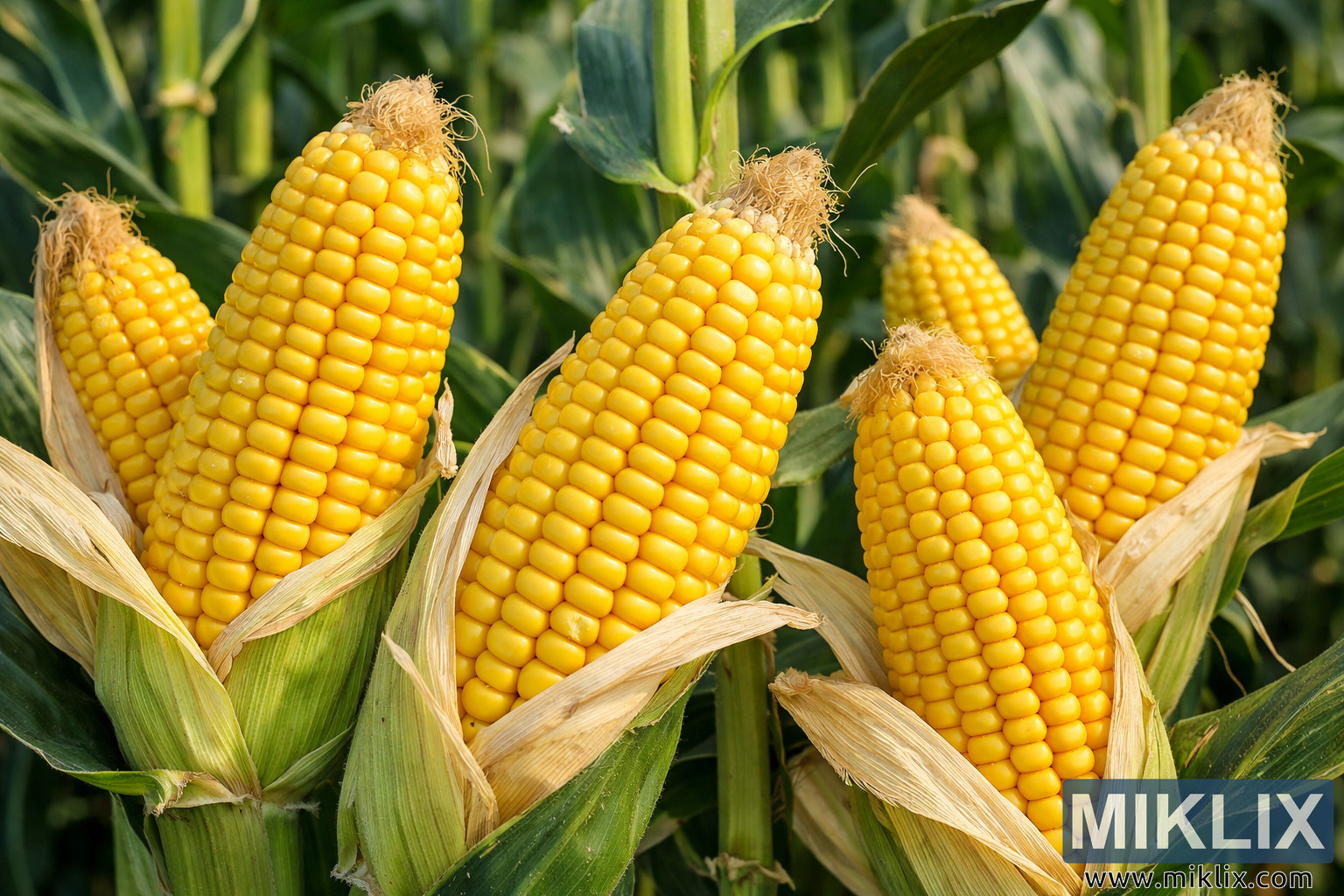
High-resolution photo of Early Sunglow sweet corn showing compact ears with vivid yellow kernels growing on green stalks in a sunlit field.
Early Sunglow Sweet Corn with Bright Yellow Kernels

Šī attēla pieejamās versijas
Tālāk lejupielādei pieejamie attēlu faili ir mazāk saspiesti un augstākas izšķirtspējas - un līdz ar to arī augstākas kvalitātes - nekā šīs vietnes rakstos un lapās ievietotie attēli, kuru izmērs ir optimizēts, lai samazinātu joslas platuma patēriņu.
Regulāra izmēra (1,536 x 1,024)


Liels izmērs (3,072 x 2,048)
Ļoti liels izmērs (4,608 x 3,072)
Īpaši liels izmērs (6,144 x 4,096)
Komiski liels izmērs (1,048,576 x 699,051)
- Joprojām augšupielādē... ;-)
Attēla apraksts
A high-resolution landscape photograph shows several ears of Early Sunglow sweet corn growing on healthy green stalks in a cultivated field. The scene is brightly lit by natural daylight, which highlights the vivid color and smooth texture of the kernels. Multiple ears are visible across the frame, each emerging from thick green husks that have been partially peeled back to reveal the densely packed kernels beneath. The ears appear relatively compact and well-formed, a characteristic associated with the Early Sunglow corn variety. The kernels are a rich, uniform golden-yellow color, arranged in tight, straight rows that run from the base of each ear toward the tapered tip. Their glossy surfaces catch the sunlight, creating subtle reflections and gentle shadows that emphasize the rounded shape and plumpness of each kernel.
At the tips of the ears, fine strands of pale corn silk extend outward, forming delicate tufts that contrast with the smooth kernel surface. Some of the silk appears slightly dried and curled, suggesting that the ears are approaching maturity. The husks surrounding the ears are a mix of fresh green and lighter yellow-green tones. A few outer leaves bend outward and downward, naturally framing the exposed sections of corn while still remaining attached to the stalks. These husks display visible veins and fibrous textures that add detail and realism to the image.
In the background, tall corn stalks and broad leaves create a softly blurred green backdrop. The shallow depth of field keeps the focus on the foreground ears while still providing context that the corn is growing in a dense field. Vertical stalks and overlapping leaves form a layered pattern of greens ranging from deep forest tones to lighter sunlit shades. Sunlight filters through the foliage, producing patches of brightness and shadow that give the scene depth and a natural agricultural atmosphere.
The composition spreads the ears across the width of the landscape frame, with several ears positioned at slightly different angles. This arrangement adds visual balance and a sense of abundance, as though the viewer is standing among healthy corn plants at peak growing season. Overall, the photograph emphasizes the distinctive qualities of Early Sunglow corn: compact ears, uniform rows of bright yellow kernels, and vigorous green growth under warm sunlight. The image conveys freshness, productivity, and the appealing visual characteristics typical of early sweet corn varieties grown in well-maintained fields.
Attēls ir saistīts ar: Growing Corn: Your Complete Guide to Sweet Success in the Garden