
Attēls: Proper Pruning Cut Angle and Location on a Citrus Branch
Publicēts:
Pēdējo reizi atjaunināts: 2026. gada 25. marts 19:05:36 UTC
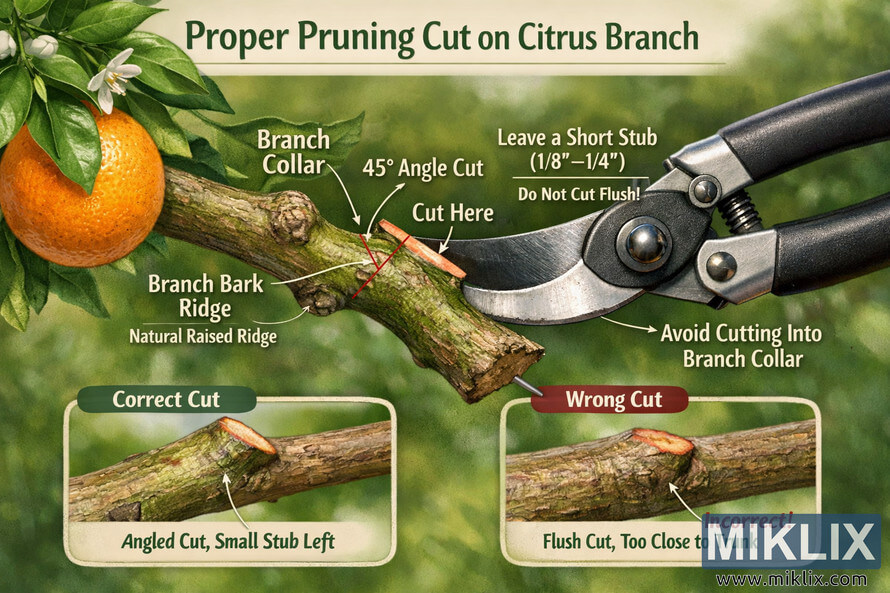
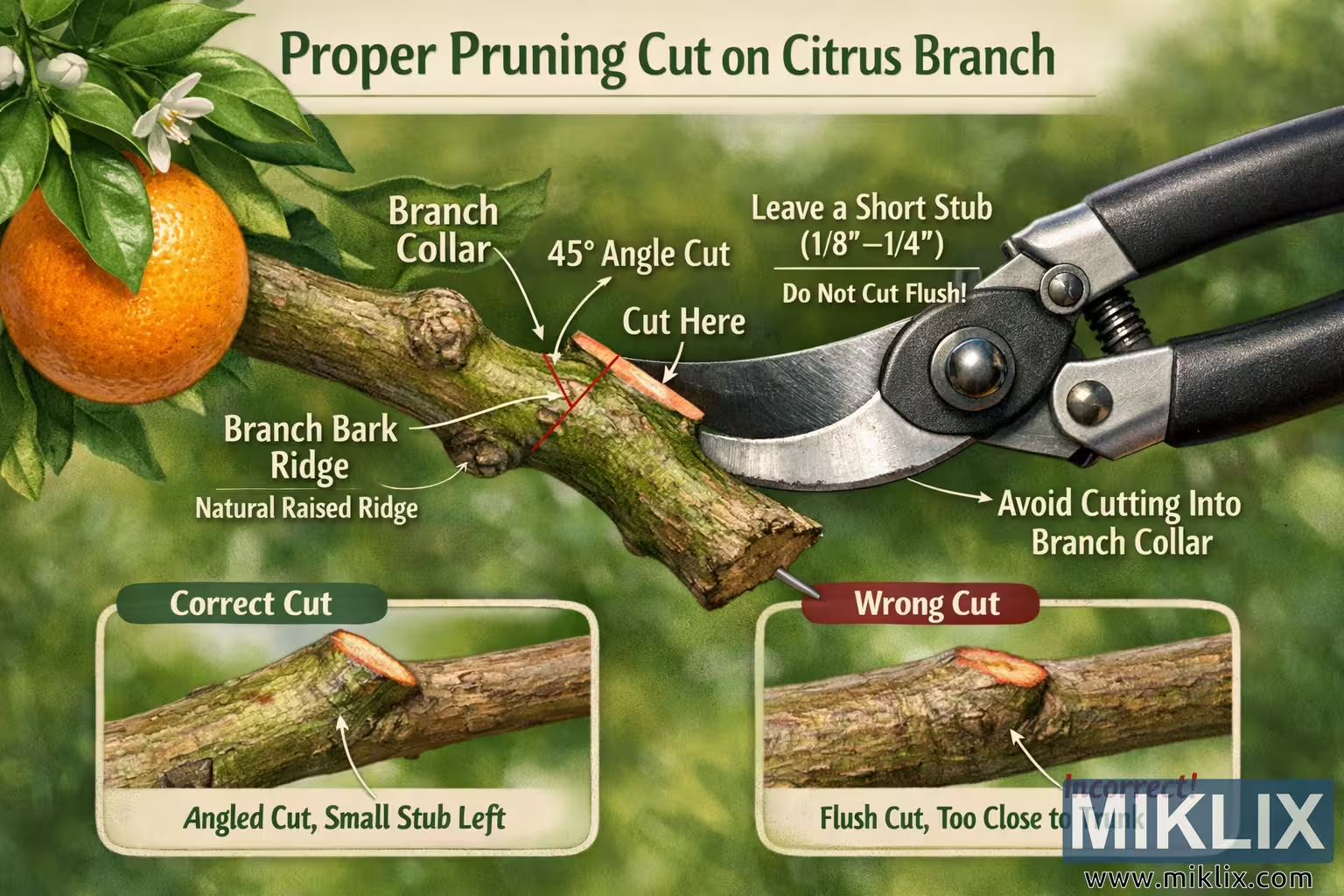
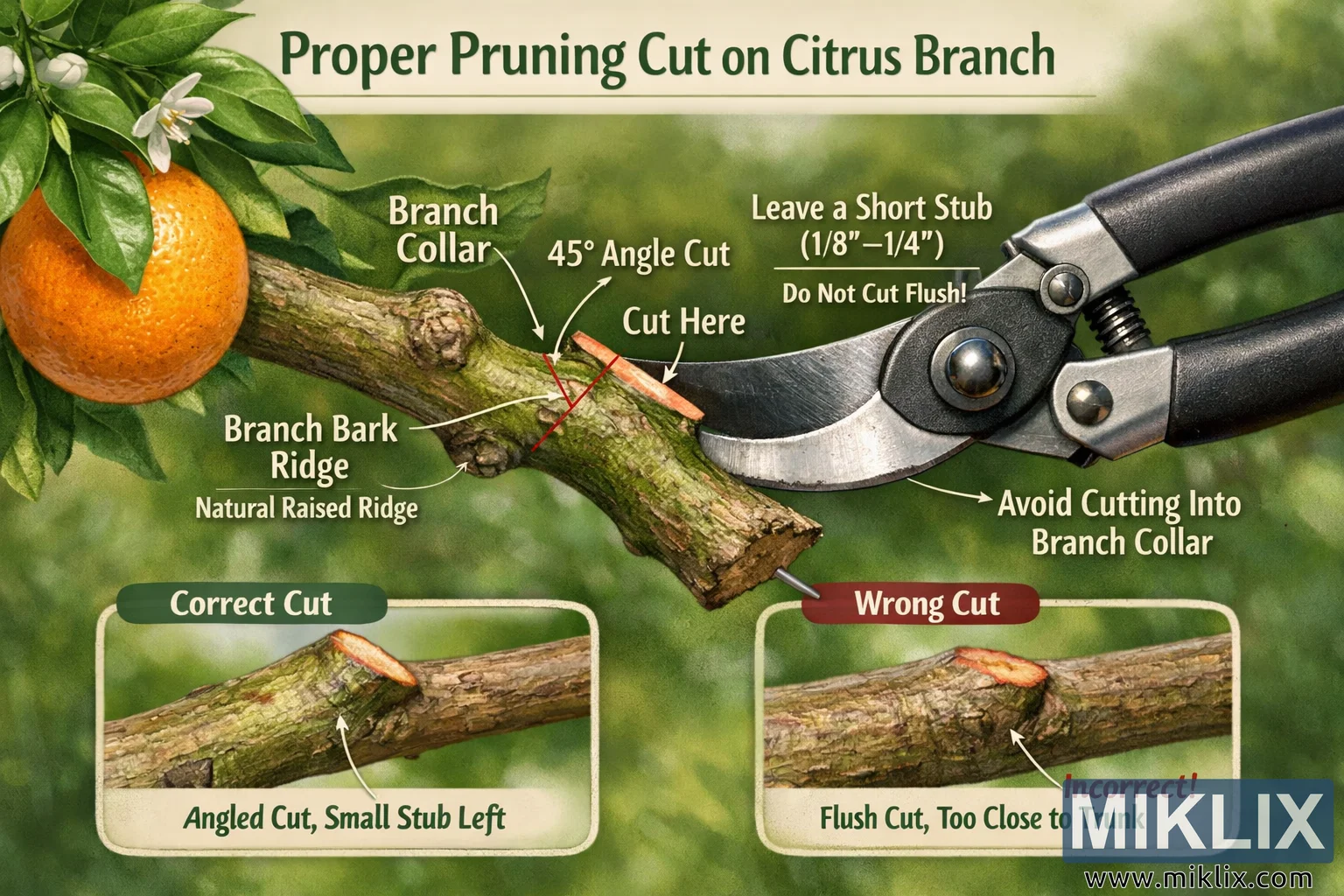
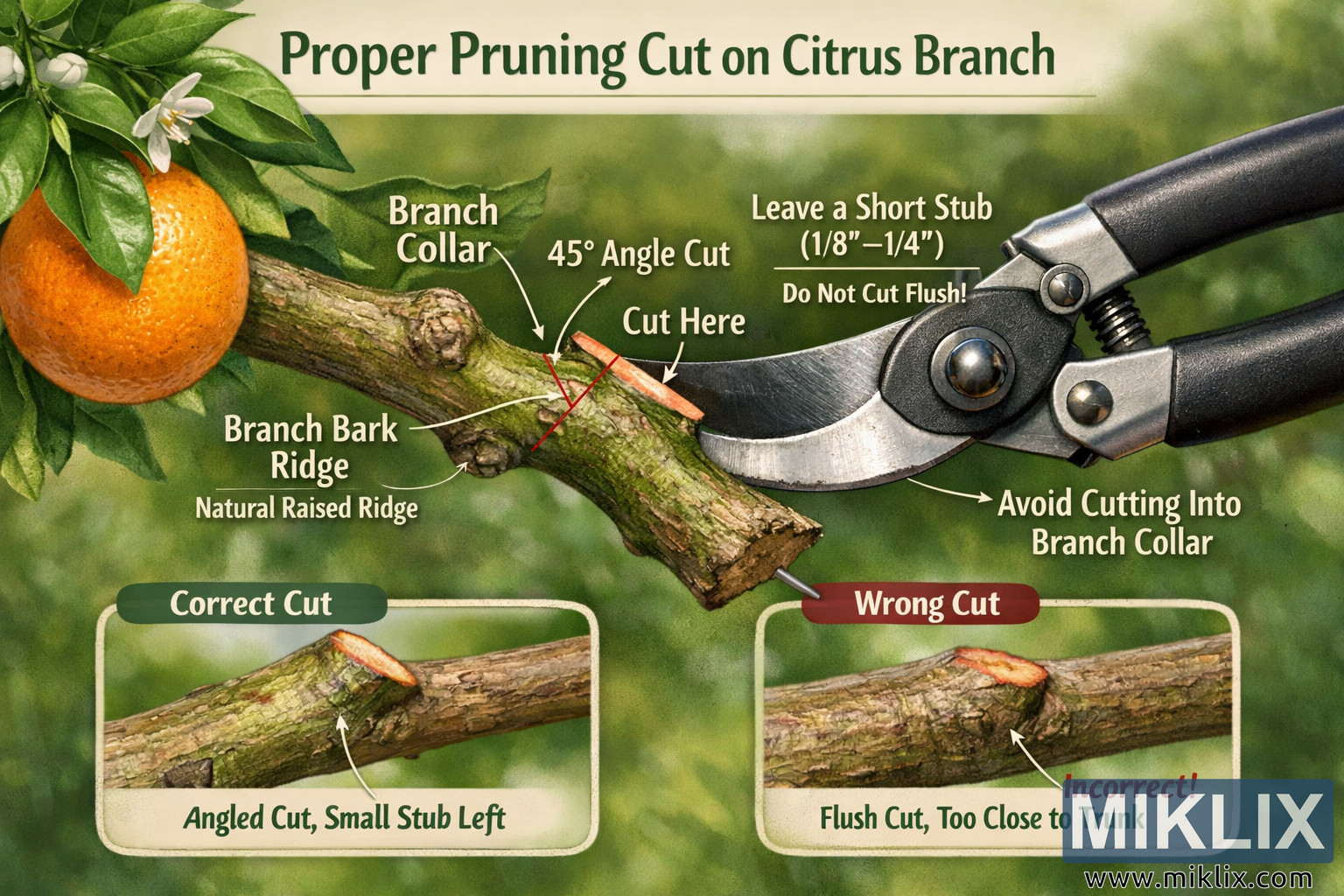
Detailed pruning diagram illustrating the correct 45° cut angle and placement on a citrus branch, including labeled branch collar, bark ridge, and comparisons of proper and improper pruning cuts.
Proper Pruning Cut Angle and Location on a Citrus Branch
Šī attēla pieejamās versijas
Tālāk lejupielādei pieejamie attēlu faili ir mazāk saspiesti un augstākas izšķirtspējas - un līdz ar to arī augstākas kvalitātes - nekā šīs vietnes rakstos un lapās ievietotie attēli, kuru izmērs ir optimizēts, lai samazinātu joslas platuma patēriņu.
Regulāra izmēra (1,536 x 1,024)
Liels izmērs (3,072 x 2,048)
Ļoti liels izmērs (4,608 x 3,072)
Īpaši liels izmērs (6,144 x 4,096)
Komiski liels izmērs (1,048,576 x 699,051)
- Joprojām augšupielādē... ;-)
Attēla apraksts
A detailed instructional diagram illustrates the correct technique for pruning a citrus tree branch. The image is presented in a landscape orientation and combines realistic botanical illustration with clear educational labeling. The central focus is a thick citrus branch extending diagonally across the frame, attached to a larger trunk section. The bark texture is highly detailed, showing rough green-brown patterns typical of citrus wood. At the left side of the branch, a ripe orange fruit and glossy green leaves with a small white citrus blossom visually indicate the plant type.
On the right side of the image, a pair of pruning shears is positioned against the branch to demonstrate the correct location and angle of the pruning cut. The metal blades are open and aligned to remove a smaller side branch near the junction with the main limb. A clearly marked guideline indicates a 45° angled cut. The diagram highlights two important anatomical features of the branch: the branch collar and the branch bark ridge. The branch collar is labeled as the slightly swollen ring of tissue at the base of the side branch, while the bark ridge is marked as the raised line of bark between the main trunk and the branch. Arrows and labels explain that the pruning cut should be made just outside the branch collar and angled away from the trunk.
A red “X” marking overlays the exact cutting location, accompanied by the text “Cut Here” and “45° Angle Cut,” helping viewers visualize the proper pruning position. Additional annotations warn the viewer not to cut into the branch collar, as doing so can damage the tree and slow healing. Another label instructs the viewer to leave a short stub of approximately one-eighth to one-quarter inch rather than making a completely flush cut.
Along the bottom of the diagram, two comparison panels illustrate the difference between correct and incorrect pruning techniques. The left panel, labeled “Correct Cut,” shows a branch trimmed at an angle with a small stub left beyond the collar. The exposed wood surface appears clean and slanted, indicating proper technique. The right panel, labeled “Wrong Cut,” shows a flush cut made too close to the trunk, accompanied by a warning label indicating that this approach is incorrect because it removes the protective collar tissue.
The overall design uses a natural green garden background with soft bokeh effects to keep the focus on the pruning demonstration. Clear typography, directional arrows, and contrasting labels help guide the viewer through each step of the pruning process. The diagram is intended as an educational visual aid for gardeners, horticulture students, and citrus growers who want to understand the correct pruning angle and placement needed to maintain healthy citrus trees and promote proper wound healing.
Attēls ir saistīts ar: Growing Tangerines: The Complete Guide to Sweet Success in Your Home Garden