
Attēls: Gardener Holding Colorful Swiss Chard Seedlings in Pots
Publicēts:
Pēdējo reizi atjaunināts: 2026. gada 16. aprīlis 19:41:16 UTC
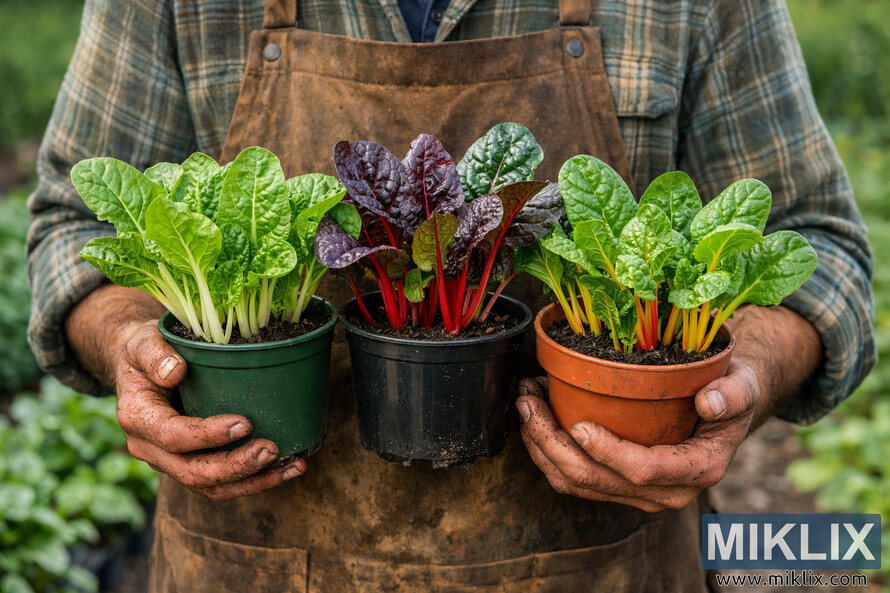
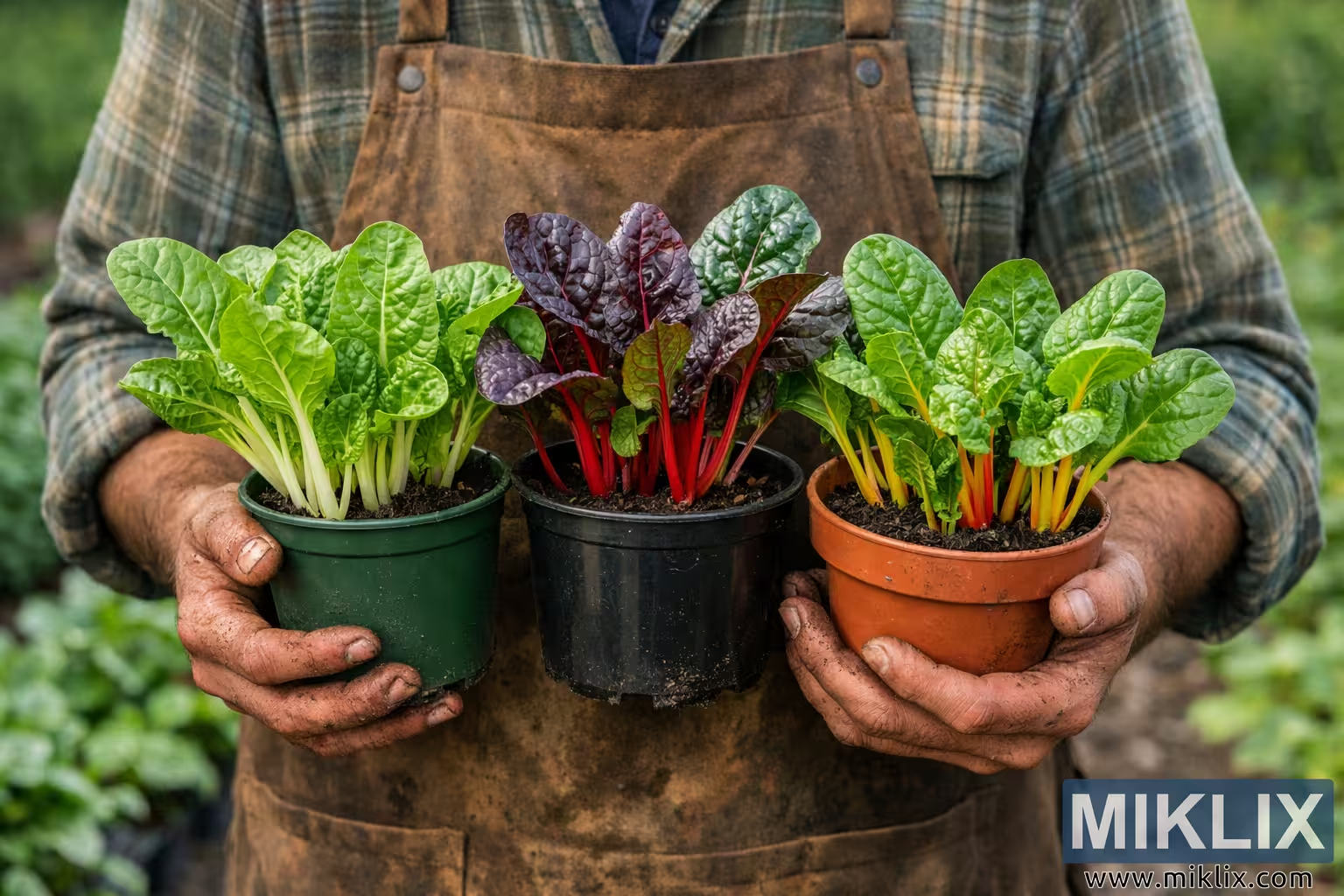
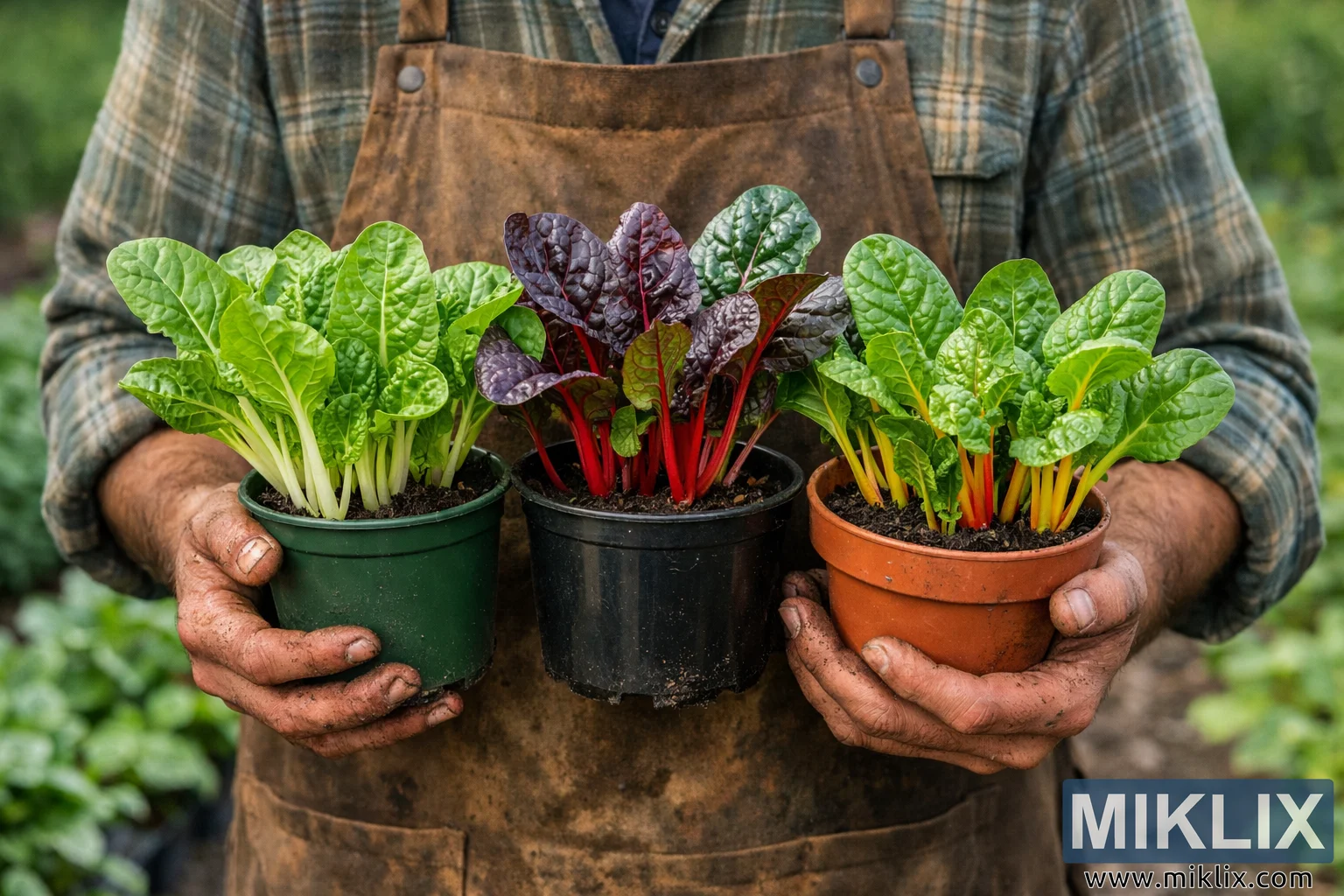
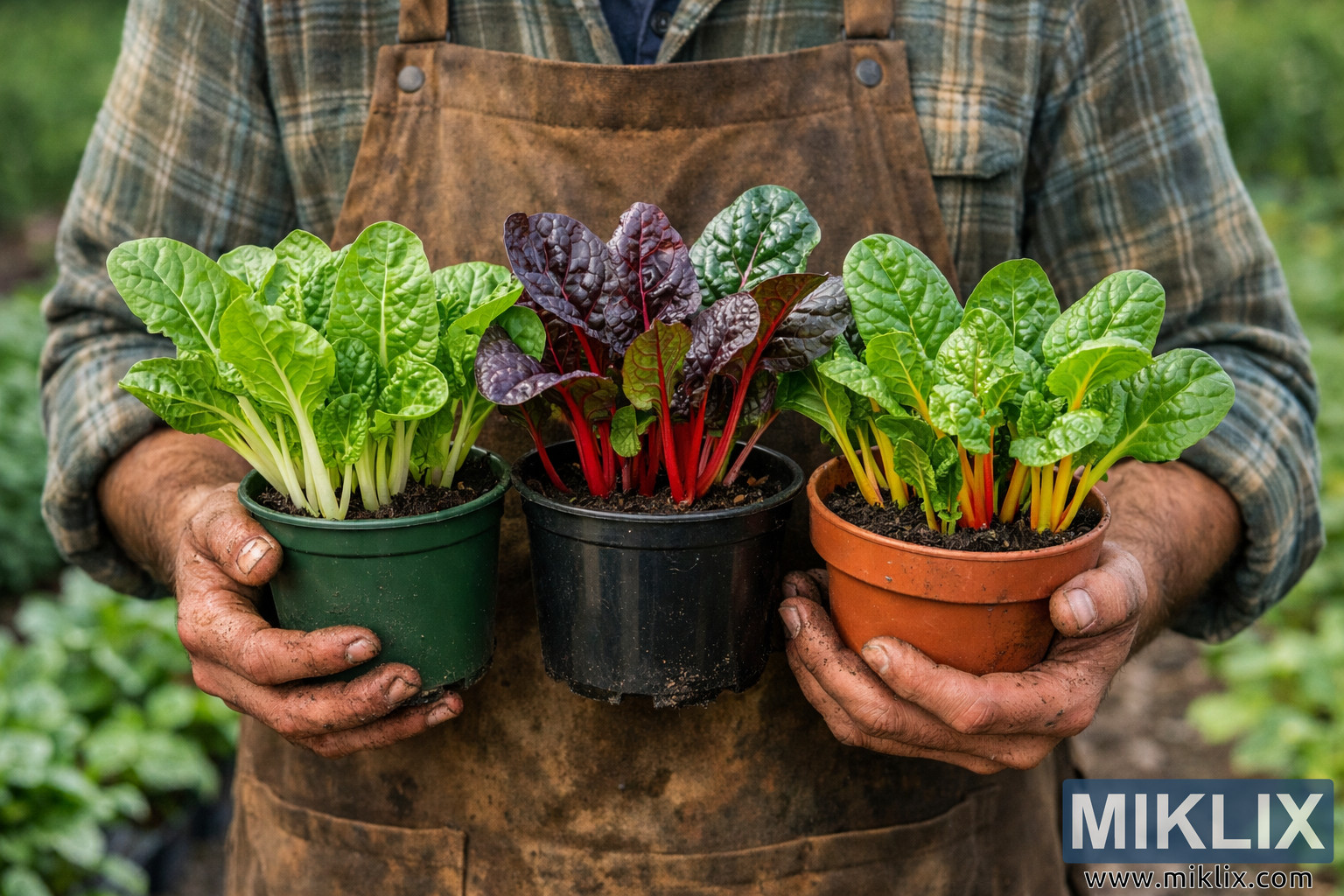
A gardener presents three pots of vibrant Swiss chard seedlings, showcasing colorful stems and healthy leaves against a softly blurred garden background.
Gardener Holding Colorful Swiss Chard Seedlings in Pots
Šī attēla pieejamās versijas
Tālāk lejupielādei pieejamie attēlu faili ir mazāk saspiesti un augstākas izšķirtspējas - un līdz ar to arī augstākas kvalitātes - nekā šīs vietnes rakstos un lapās ievietotie attēli, kuru izmērs ir optimizēts, lai samazinātu joslas platuma patēriņu.
Regulāra izmēra (1,536 x 1,024)
Liels izmērs (3,072 x 2,048)
Ļoti liels izmērs (4,608 x 3,072)
Īpaši liels izmērs (6,144 x 4,096)
Komiski liels izmērs (1,048,576 x 699,051)
- Joprojām augšupielādē... ;-)
Attēla apraksts
A close-up, landscape-oriented photograph shows a gardener holding three small pots filled with young Swiss chard seedlings. The gardener stands outdoors in a lush garden environment, visible only from the chest down, creating a strong focus on the plants and hands rather than the person’s identity. The gardener’s hands are slightly rough and covered with traces of soil, suggesting recent work in the garden. They wear a worn brown work apron over a green plaid shirt, both of which show signs of practical use. The apron is lightly dusted with dirt, reinforcing the impression of active gardening.
Each of the three pots contains a different variety of Swiss chard seedling, arranged side by side and held at chest height. The pots are simple plastic nursery containers in different colors: one dark green, one black, and one terracotta. Emerging from each pot are clusters of healthy young chard plants with broad, slightly glossy leaves and sturdy stems. The seedlings appear vibrant and well cared for, with moist soil visible at the base of the plants.
The variety in the chard is clearly visible through the striking stem colors. In the left pot, the seedlings have pale green stems and bright green leaves with prominent veins. The center pot features a variety with deep red stems and darker, slightly purplish-green leaves that contrast dramatically with the other plants. In the right pot, the seedlings display golden-yellow stems paired with lively green leaves, completing a colorful trio that highlights the diversity of Swiss chard varieties.
The gardener’s hands gently cradle the pots from below, thumbs resting along the rims for stability. The positioning suggests pride and care, as if the gardener is presenting the seedlings for inspection or sharing the results of early spring planting. Small specks of soil cling to the fingers and under the nails, adding a sense of realism and authenticity to the image.
Behind the gardener, the background is softly blurred, revealing hints of a productive garden with rows of greenery and earthy tones. The shallow depth of field draws the viewer’s attention to the seedlings while still providing context that the scene takes place in an outdoor growing space. Natural daylight illuminates the plants, highlighting the textures of the leaves and the vibrant colors of the stems. The overall mood of the image is calm, earthy, and nurturing, capturing a quiet moment of pride in young plants ready to be transplanted and grown into mature vegetables.
Attēls ir saistīts ar: How to Grow Swiss Chard: A Complete Beginner's Guide