
Слика: Side-by-Side Comparison of Turnip Cooking Methods
Објавено:
Последно ажурирано: 14 септември 2026, во 14:49:44 UTC
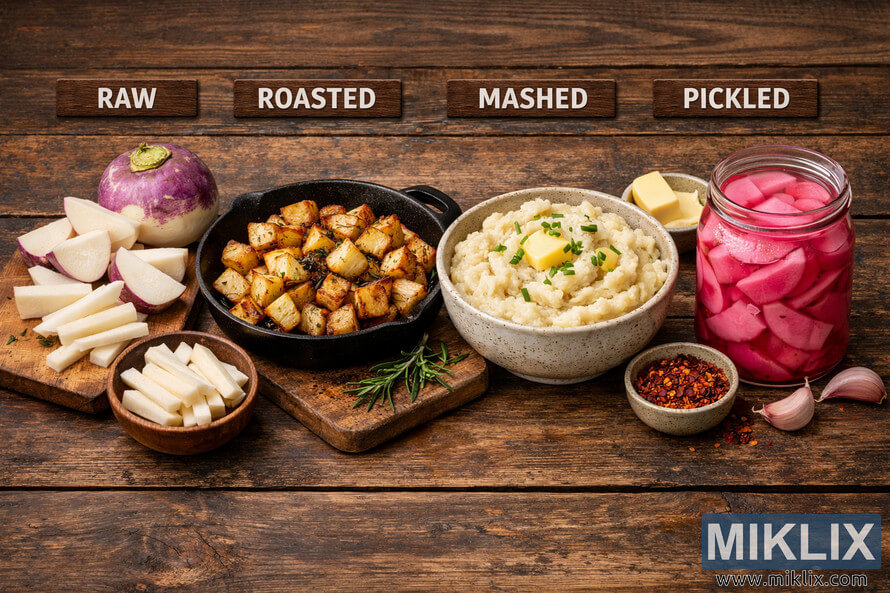
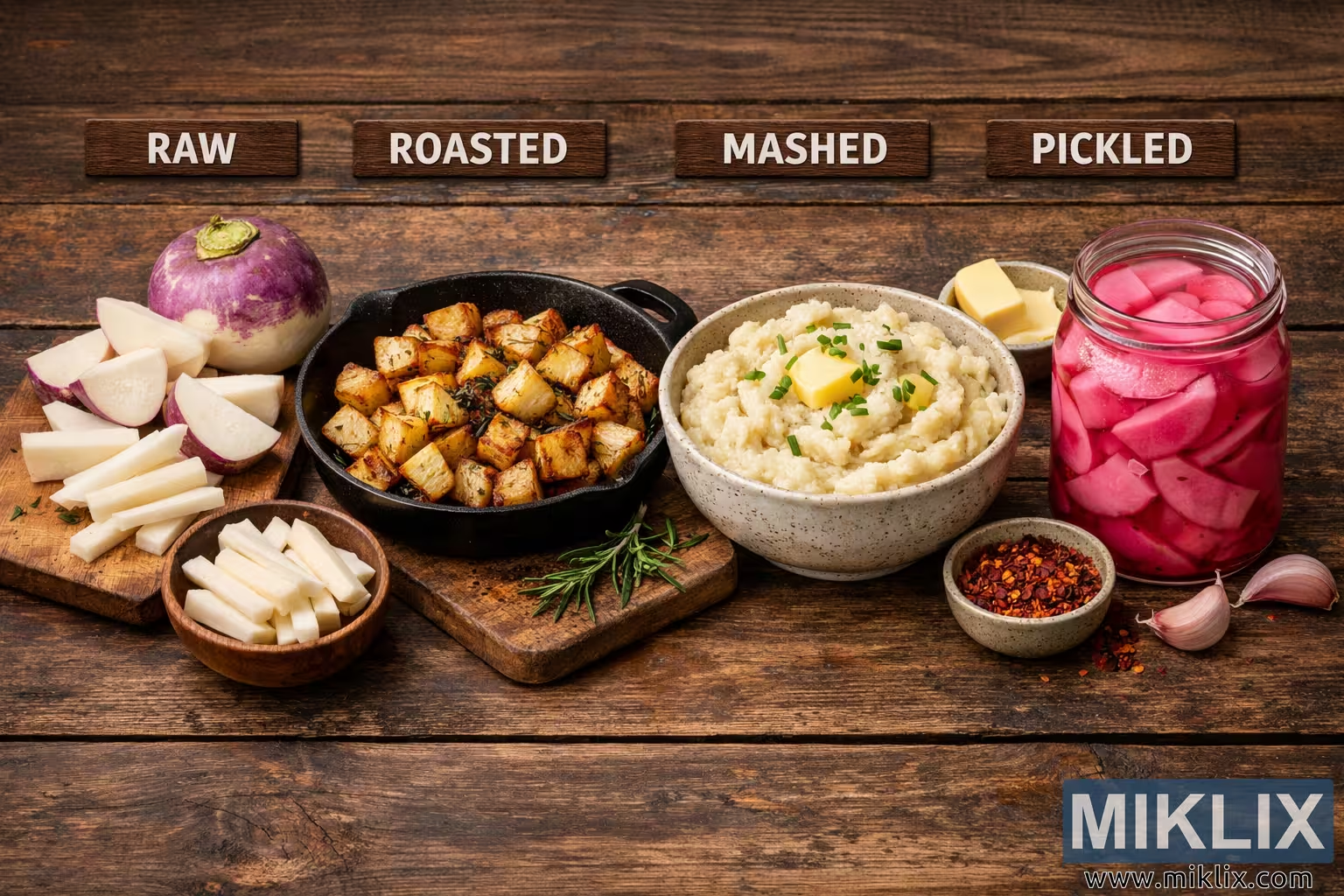
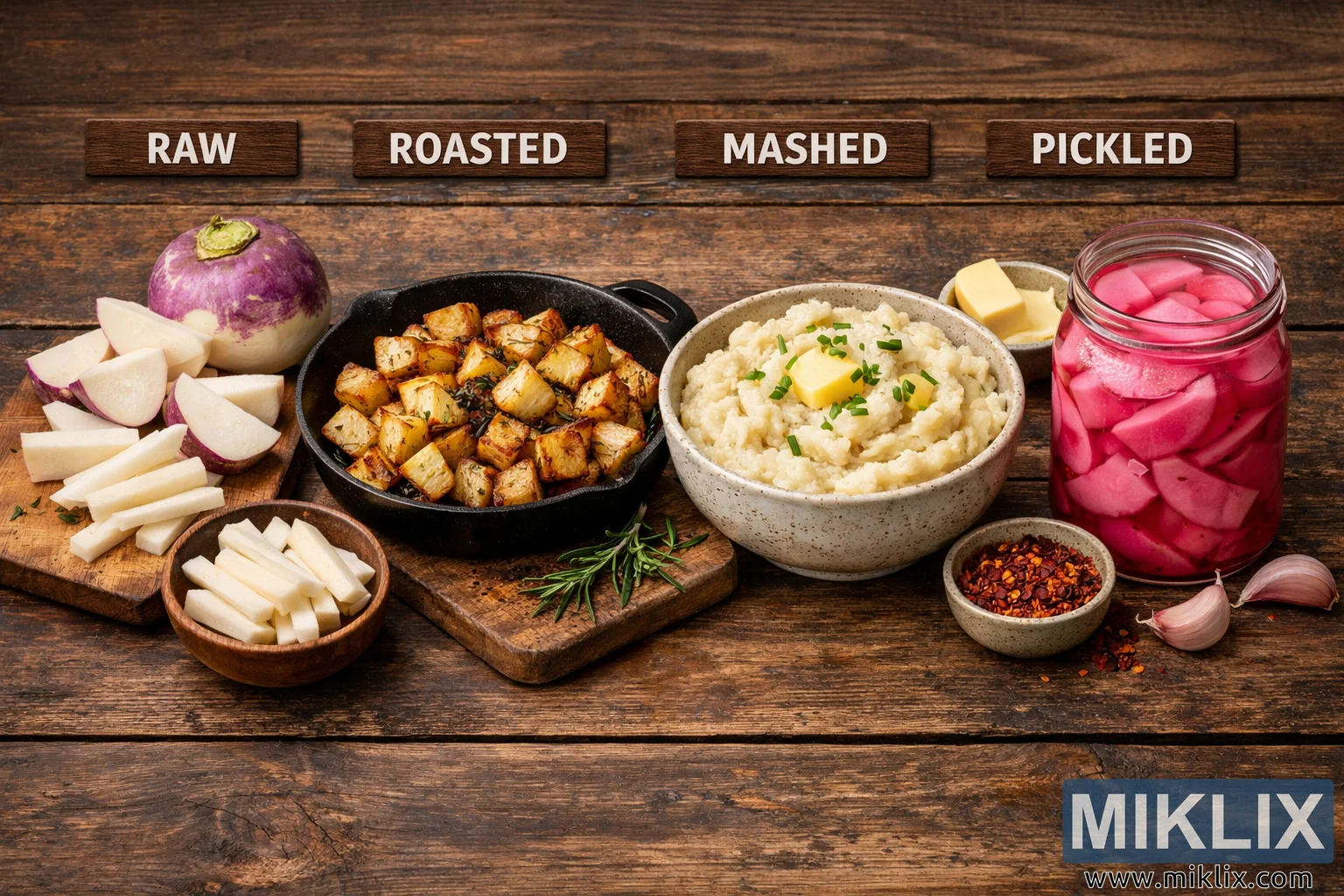
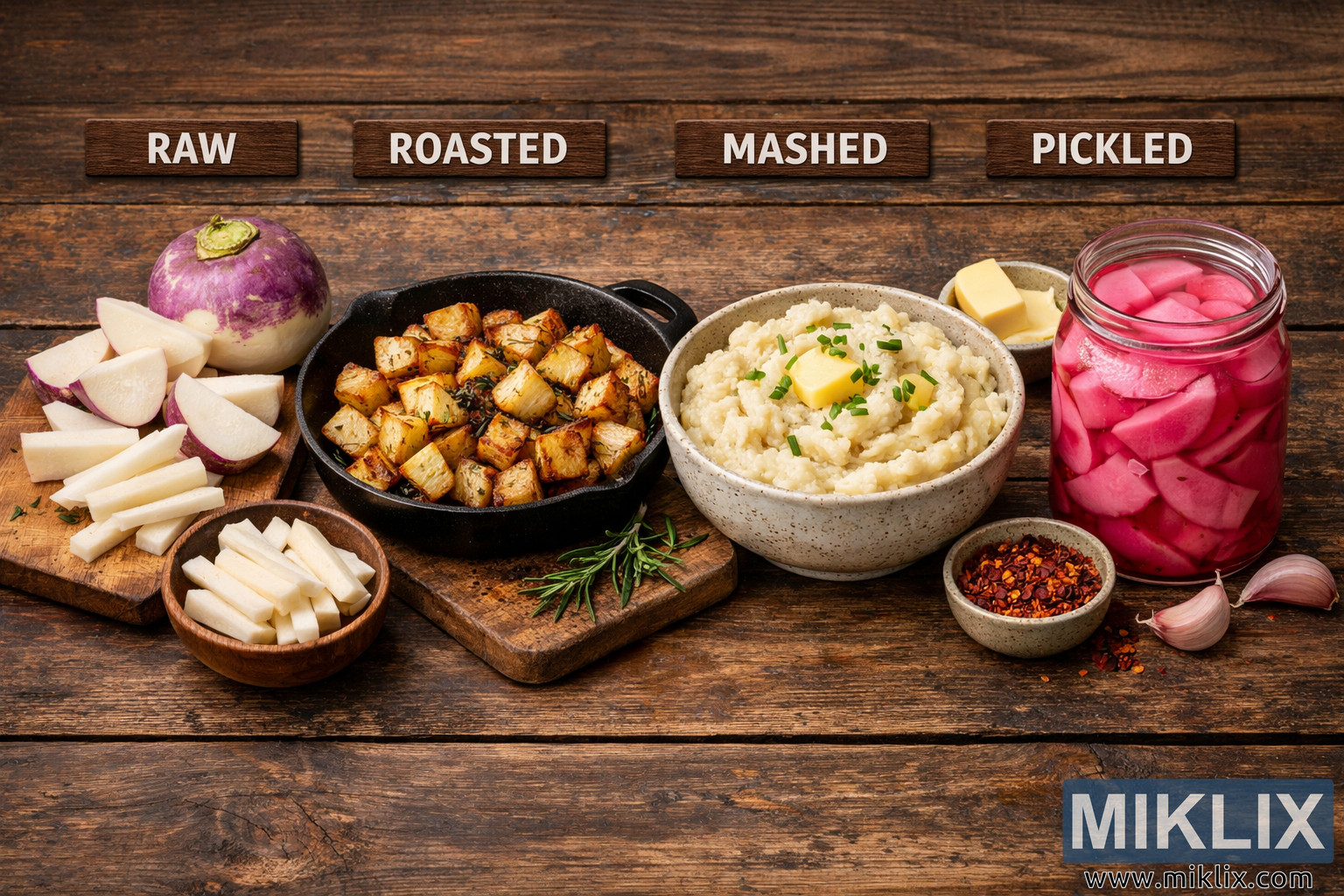
A detailed, side-by-side visual comparison of four turnip cooking methods—raw, roasted, mashed, and pickled—presented on a rustic wooden table with clearly labeled sections and thoughtfully styled ingredients.
Side-by-Side Comparison of Turnip Cooking Methods
Достапни верзии на оваа слика
Датотеките со слики достапни за преземање подолу се помалку компресирани и со повисока резолуција - а како резултат на тоа, и со повисок квалитет - од сликите вградени во статиите и страниците на оваа веб-страница, кои се пооптимизирани за големината на датотеката со цел да се намали потрошувачката на пропусен опсег.
Редовна големина (1,536 x 1,024)
Голема големина (3,072 x 2,048)
Многу голема големина (4,608 x 3,072)
Екстра голема големина (6,144 x 4,096)
Комично голема големина (1,048,576 x 699,051)
- Сè уште се прикачува... ;-)
Опис на сликата
This high-resolution, landscape-oriented food photograph presents a carefully arranged, side-by-side comparison of four distinct turnip cooking methods, all displayed on a rustic wooden table that sets a warm, homely tone. The composition is divided into four clearly defined sections, each dedicated to a specific preparation style: RAW on the far left, ROASTED in the second position, MASHED in the third, and PICKLED on the far right. Above each section, a small wooden label is positioned, featuring clean, white, capitalized text that identifies the method. These labels help guide the viewer’s eye from left to right, creating a visual narrative of transformation as the turnip moves through different culinary treatments.
In the RAW section on the far left, a wooden cutting board serves as the base for freshly prepared turnips. The turnips are cut into a mix of wedges and thin sticks, showcasing the crisp texture and pale interior of the vegetable. The slices are arranged in a slightly casual but intentional manner, suggesting a moment just after preparation. Behind the sliced pieces, a whole turnip with purple and white skin is placed, its natural coloration adding a subtle pop of color and emphasizing the vegetable’s original form before any cooking occurs. Below the cutting board, a small wooden bowl holds additional turnip sticks, reinforcing the idea of abundance and readiness for further preparation. The RAW label above this section is simple and clear, underscoring the unaltered, fresh state of the turnip.
Moving to the second section, labeled ROASTED, the mood shifts from raw freshness to rich, cooked depth. Here, a black cast iron skillet is filled with roasted turnip cubes that are golden brown, with visibly crispy, slightly charred edges. The cubes are piled generously, and their caramelized surfaces suggest a savory, slightly sweet flavor developed through roasting. To the left of the skillet, a small bowl contains a mixture of herbs, hinting at seasoning used in the roasting process. A sprig of rosemary lies nearby on the table, adding a touch of green and reinforcing the aromatic, herb-infused character of this preparation. The ROASTED label above this section stands out against the darker tones of the skillet and the warm hues of the roasted turnips, making it easy for the viewer to identify this method at a glance.
In the center of the composition, the MASHED section introduces a softer, more comforting interpretation of turnips. A rustic, off-white ceramic bowl is filled with creamy mashed turnips, the surface smooth yet slightly textured, indicating a hand-prepared mash rather than a perfectly processed puree. The mash is topped with melted butter that pools gently in shallow depressions, adding a glossy sheen and a rich, golden accent. Finely chopped chives are sprinkled over the top, providing a fresh green contrast and suggesting a mild onion-like flavor that complements the earthiness of the turnips. To the left of the bowl, a small dish holds additional butter, reinforcing the indulgent, comforting nature of this preparation. The MASHED label above the bowl is centered and clearly visible, marking this section as the heart of the composition and evoking a sense of warmth and familiarity often associated with mashed root vegetables.
On the far right, the PICKLED section introduces a vibrant, tangy twist to the turnip theme. A glass jar is filled with pink pickled turnip slices, fully submerged in a bright, almost luminous pink brine. The slices are stacked and layered within the jar, their translucent edges catching the light and creating a visually striking effect. The color of the brine suggests the presence of beet or another natural coloring ingredient, though no specific brand or product is referenced. To the right of the jar, a small dish contains red pepper flakes, hinting at a spicy element that might be part of the pickling process. Nearby, a garlic clove rests on the table, further suggesting the aromatic complexity of the pickled preparation. The PICKLED label above this section is crisp and legible, clearly identifying this final method and completing the progression from raw to fully transformed.
The overall lighting in the image is even and well-balanced, illuminating each section without harsh shadows or overexposure. The light appears soft and natural, possibly mimicking daylight, which enhances the textures of the turnips and the surrounding props. The rustic wooden table provides a cohesive backdrop, its grain and subtle imperfections adding character and grounding the scene in a cozy, kitchen-like environment. The color palette is warm and inviting, with the golden tones of the roasted turnips, the creamy whites of the mashed turnips, and the vivid pink of the pickled slices all standing out against the neutral browns of the table and the muted hues of the bowls and boards.
The photograph’s composition is carefully balanced, with each section occupying roughly equal visual space, creating a harmonious, linear flow from left to right. The RAW section introduces the viewer to the natural state of the turnip, the ROASTED section showcases a hearty, savory transformation, the MASHED section emphasizes comfort and richness, and the PICKLED section highlights brightness and tang. Together, these four methods tell a story of versatility, demonstrating how a single root vegetable can be prepared in multiple ways to achieve different flavors, textures, and visual effects. The absence of any visible brands or logos keeps the focus entirely on the ingredients and the cooking methods themselves, making the image suitable for educational, editorial, or culinary inspiration purposes.
Overall, this image functions as both an aesthetically pleasing food photograph and an informative visual guide. It invites the viewer to compare the appearance of raw, roasted, mashed, and pickled turnips side by side, encouraging curiosity about how each method might taste and how the texture changes with each preparation. The clear labels, thoughtful styling, and cohesive rustic setting combine to create a scene that feels both approachable and refined, ideal for illustrating the diversity of turnip-based dishes in a cookbook, blog post, or culinary presentation.
Сликата е поврзана со: Turnip: The Root Vegetable That Supports Better Health