
Bilde: Cekin Hops Aroma Wheel: Dried Summer Grass, Garden Spices and Forest Loam
Publisert:
Sist oppdatert: 19. september 2026 kl. 10:22:02 UTC
Explore a Cekin hops aroma wheel visualizing dried summer grass, garden spices and forest loam through fresh hops, herbs, grasses and earthy woodland textures.
Cekin Hops Aroma Wheel: Dried Summer Grass, Garden Spices and Forest Loam
Tilgjengelige versjoner av dette bildet
Bildefilene som kan lastes ned nedenfor, er mindre komprimerte og har høyere oppløsning - og dermed høyere kvalitet - enn bildene som er innebygd i artikler og sider på dette nettstedet, som er mer optimalisert med tanke på filstørrelse for å redusere båndbreddeforbruket.
Vanlig størrelse (1,536 x 1,024)
Stor størrelse (3,072 x 2,048)
Svært stor størrelse (4,608 x 3,072)
Ekstra stor størrelse (6,144 x 4,096)
Komisk stor størrelse (1,048,576 x 699,051)
- Laster fortsatt opp... ;-)
Bildebeskrivelse
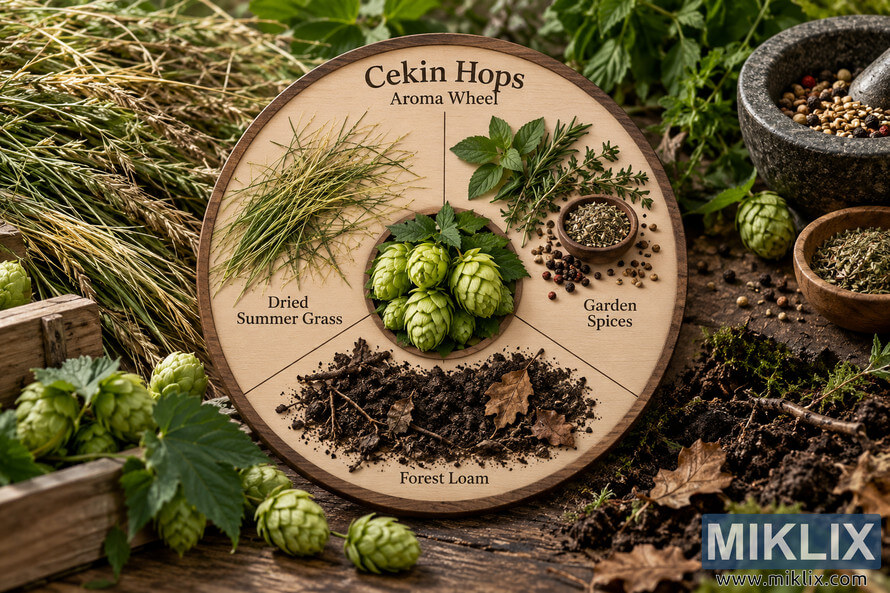
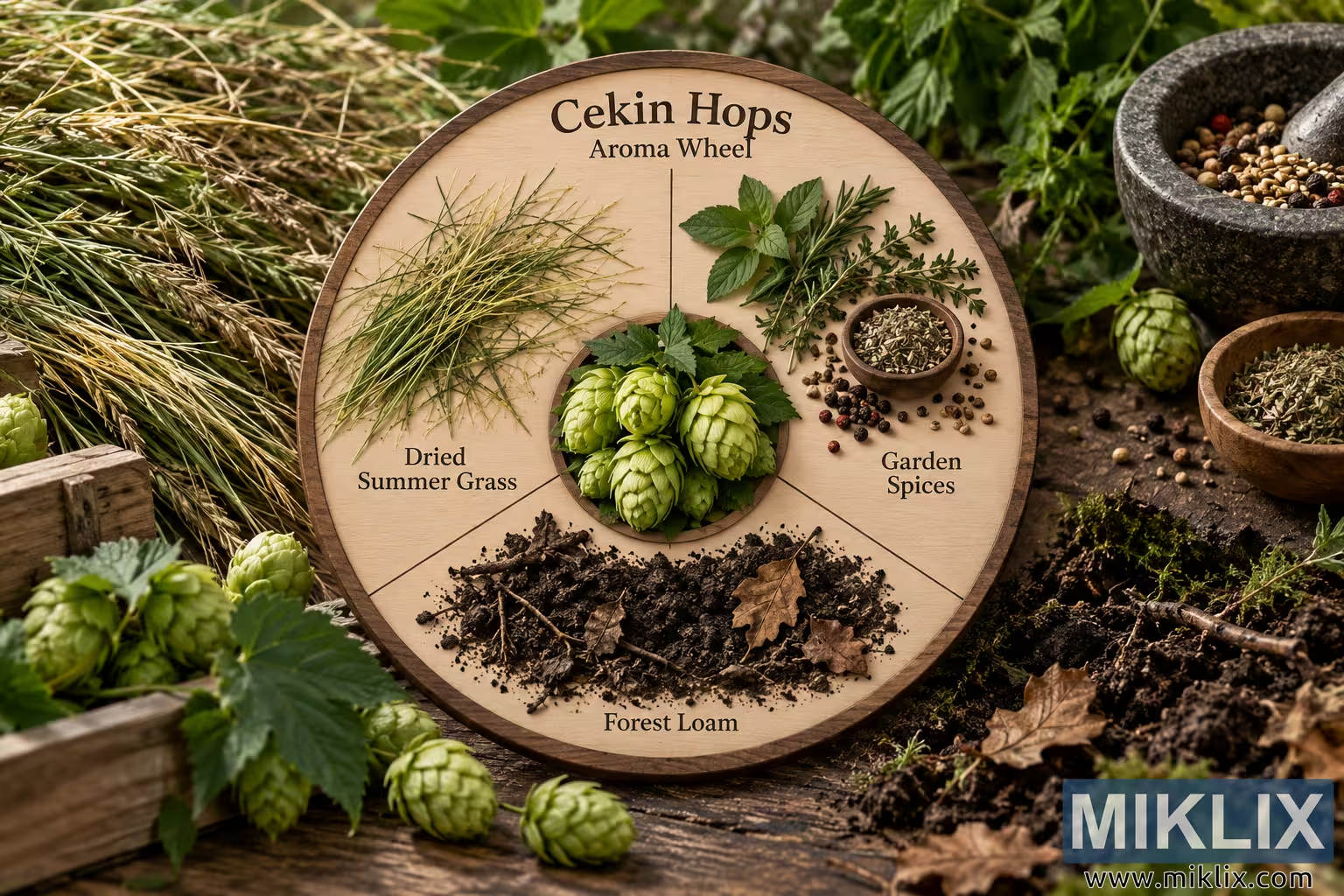
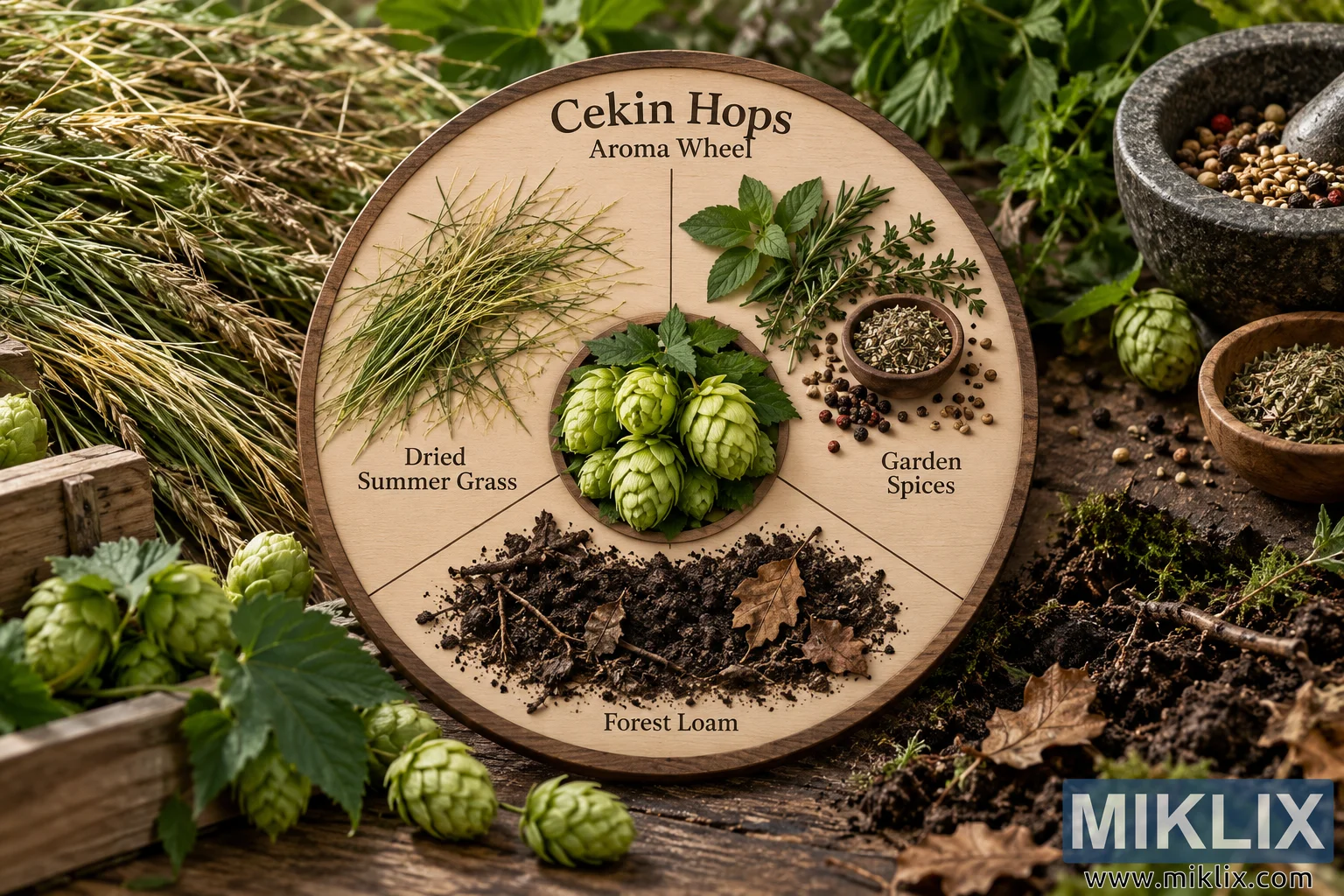
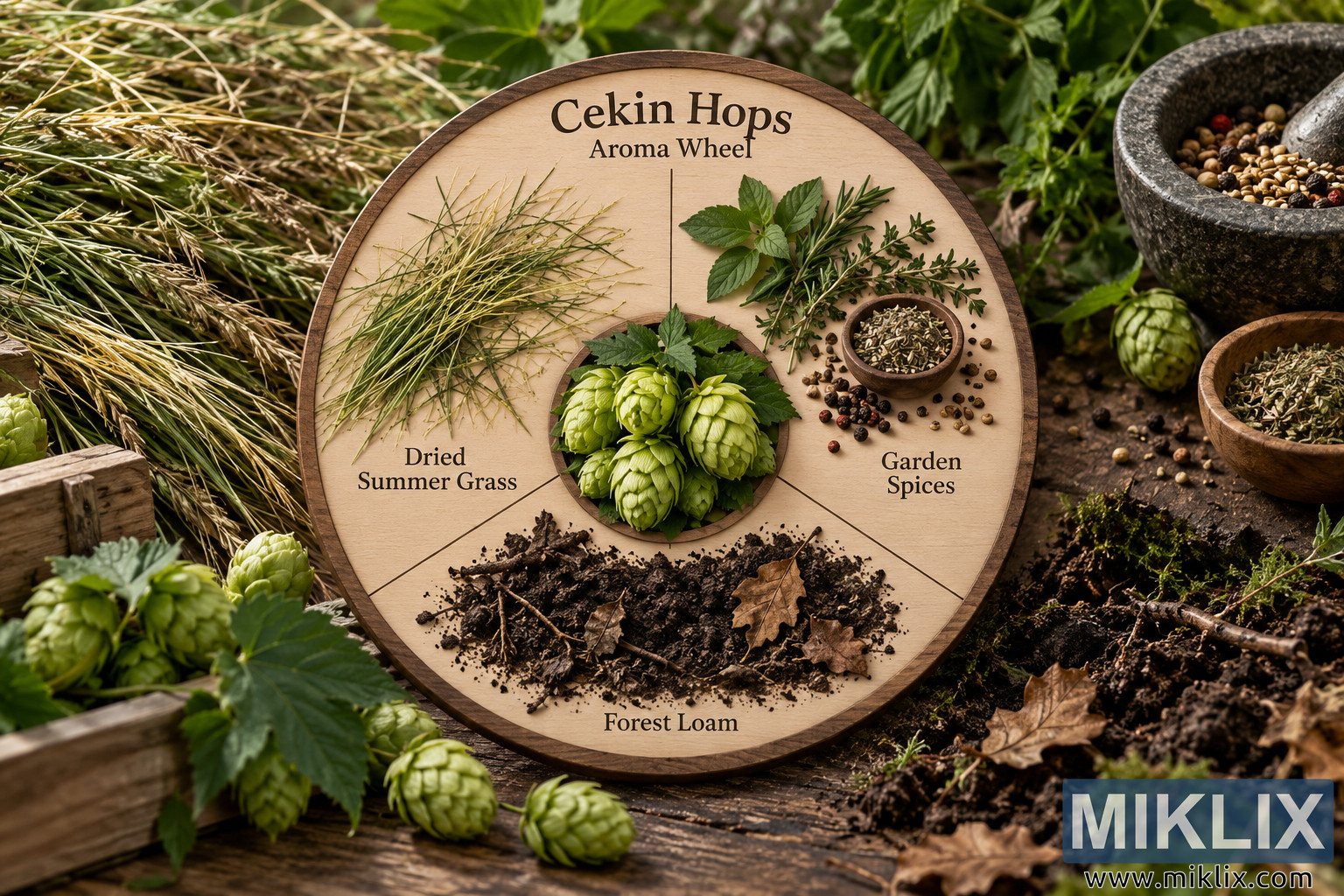
A richly detailed, landscape-oriented still-life photograph presents a handcrafted aroma wheel dedicated to Cekin hops, arranged in a rustic botanical setting that visually communicates three principal aromatic impressions: dried summer grass, garden spices, and forest loam. The composition is dominated by a large circular wooden aroma wheel positioned near the center of the frame. The wheel is made from pale, smooth wood with a darker brown wooden rim, giving it the appearance of a carefully crafted tasting or sensory reference tool. At the top of the circular panel, dark engraved-style lettering reads “Cekin Hops” with the smaller subtitle “Aroma Wheel” immediately beneath it. Fine radial lines divide the wheel into distinct sensory sections, while a central circular area holds a generous cluster of fresh green hop cones surrounded by deep green hop leaves. The hops are plump, layered, and highly textured, with overlapping pale-green bracts that catch the natural light and provide the brightest botanical focal point in the image. The left-hand section of the wheel represents the dried summer grass aroma. It contains a loose arrangement of slender, dry grasses and seed-bearing stems in muted straw, beige, olive, and faded green tones. The material looks naturally dried rather than decorative, evoking a meadow or field late in the summer when grasses have begun to lose their fresh spring color. The label “Dried Summer Grass” appears beneath this arrangement in dark lettering. Beyond the wheel, the same theme continues across the upper-left background, where a substantial bundle of long dried grasses and grain-like stems spreads diagonally through the scene. This surrounding material gives the image a tactile, agricultural quality and reinforces associations with hay, warm fields, sun-dried vegetation, and the slightly herbal character suggested by the aroma wheel. The upper-right portion of the wheel illustrates the garden spices character. Several fresh green herb sprigs are arranged directly on the wood, including needle-like and small-leaved herbs that visually suggest a mixture of savory garden seasonings. Beside them sits a small round wooden bowl filled with dried chopped herbs or seasoning, while scattered peppercorn-like seeds and spice particles create a natural, informal presentation. The words “Garden Spices” identify this section. The herbs introduce a fresher, greener visual counterpoint to the dry grass and dark earth elsewhere in the image. Their crisp leaves and varied shapes imply aromatic complexity, combining leafy, resinous, peppery, and savory impressions without depicting commercial packaging or branded ingredients. In the surrounding background, additional leafy vegetation and a dark stone mortar filled with mixed whole spices extend this garden-spice theme. A separate wooden bowl containing dried herbs is visible farther to the right, adding another layer of texture and suggesting the process of smelling, crushing, and evaluating botanical ingredients. The bottom section of the aroma wheel represents forest loam and is substantially darker in tone. Loose, rich brown-black soil covers part of the wooden panel, mixed with small roots, thin twigs, fragments of bark, and dry brown leaves. A prominent oak-like leaf rests among the soil, reinforcing the impression of a woodland floor. The label “Forest Loam” is placed beneath this earthy arrangement. The soil is rendered with considerable photographic detail, showing irregular clumps, fine particles, organic fragments, and subtle variations in moisture and color. This section evokes the smell of humus, fallen leaves, damp earth, decomposing plant matter, roots, and shaded forest ground. The forest-floor motif continues into the lower-right background, where more dark soil, moss, tangled roots, small branches, and curled brown leaves occupy the wooden tabletop. Patches of green moss provide small areas of fresh color against the dark earth and help suggest a cool, living woodland environment rather than simple garden soil. The broader composition integrates all three aroma categories into a continuous natural environment. Fresh hop cones appear not only at the center of the wheel but also around its edges and in the foreground. Several hop cones are visible among leafy vines near the lower-left corner, while additional cones rest along the bottom of the image. Their pale yellow-green color distinguishes them clearly from the darker leaves and brown wood. A single hop cone also appears in the upper-right area near the mortar, subtly balancing the concentration of hops on the left. Rustic wooden crates or shallow boxes containing hop plants occupy portions of the lower-left foreground, suggesting freshly gathered agricultural material. The supporting surface is composed of weathered dark wooden boards with visible grain, scratches, seams, and tonal variation. This rough surface contrasts with the smoother, lighter wood of the aroma wheel and contributes to the handcrafted, farm-to-brewery aesthetic. Lighting is warm and natural, resembling soft daylight entering from the upper left. It creates gentle highlights across the hop cones, herbs, grasses, and wooden wheel while allowing the forest soil and background foliage to remain comparatively deep and shadowed. The light reveals fine textures without making the composition look artificially polished. Depth of field is moderate: the central aroma wheel and the ingredients immediately around it are sharply defined, while some peripheral foliage becomes subtly softer, maintaining a convincing photographic sense of depth. The overall palette is earthy and botanical, dominated by fresh and olive greens, straw yellow, tan, warm beige, dark brown, charcoal soil, and weathered wood. There are no people, buildings, industrial brewing machines, bottles, cans, logos, trademarks, or commercial brand elements visible. Instead, the image communicates hop aroma through natural materials and sensory associations. The circular aroma wheel functions as both the conceptual and visual center of the photograph, connecting the fresh hops with recognizable environmental references for each aromatic note. The dried grasses suggest warm, sun-cured vegetation; the herbs and spices suggest an aromatic kitchen garden; and the dark organic soil, leaves, moss, and roots suggest the deep earthy fragrance of a forest floor. Together, these elements form a coherent sensory portrait of Cekin hops in which agricultural, herbal, spicy, and earthy characteristics are expressed through a carefully arranged still life. The resulting image has the character of an artisanal hop-tasting guide photographed in a rustic garden or woodland workspace, with abundant natural texture, warm directional light, and an immersive arrangement of botanical materials.
Bildet er relatert til: Hops in Beer Brewing: Cekin