
Bilde: Corn Plant Heavily Infested by Corn Flea Beetles
Publisert:
Sist oppdatert: 13. mars 2026 kl. 20:38:31 UTC
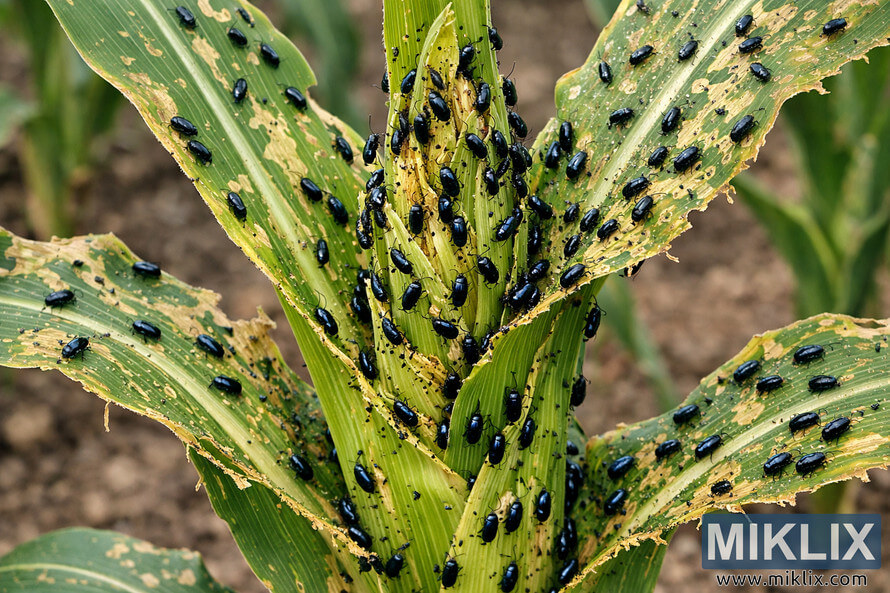
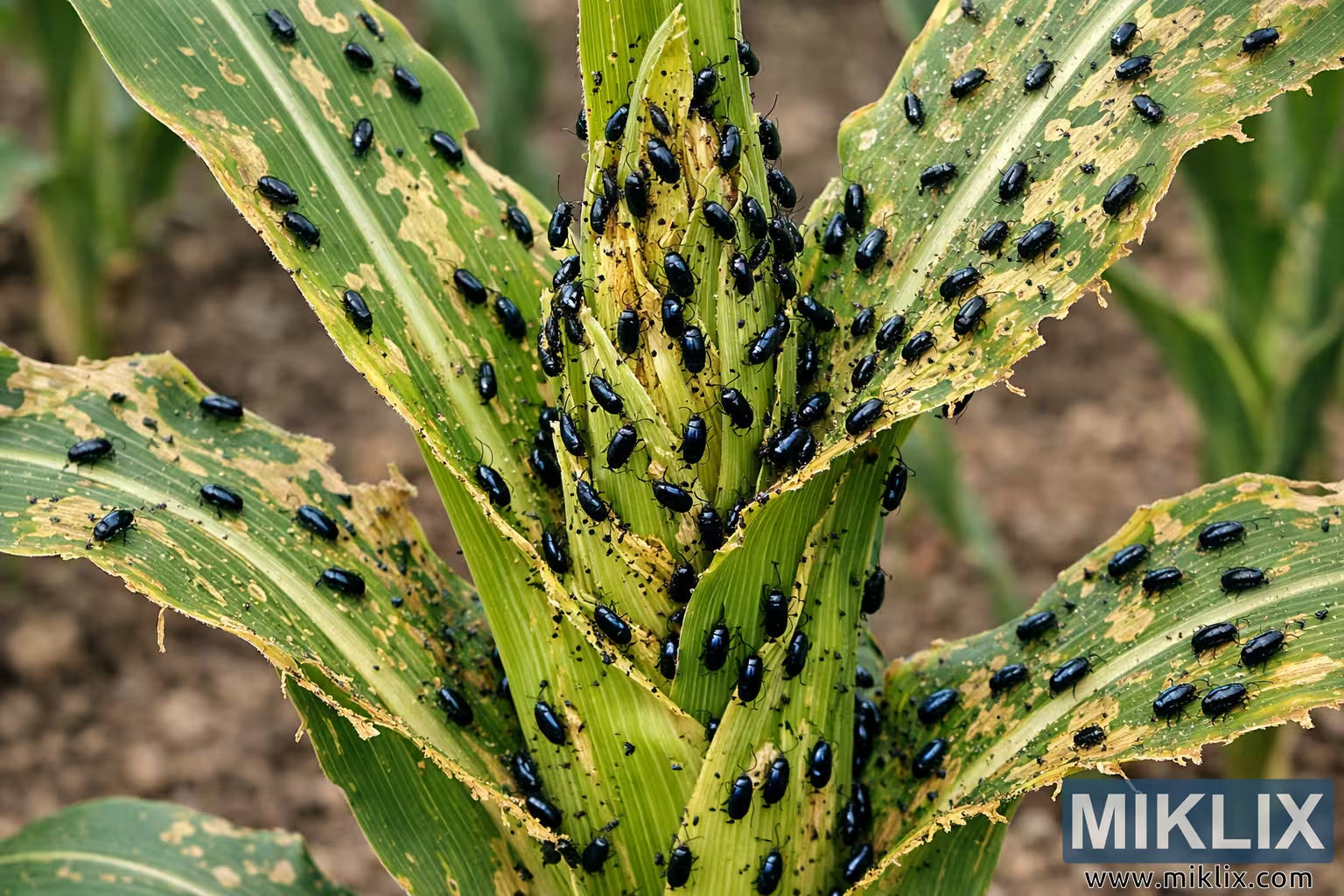
Detailed close-up image of a corn plant under attack by corn flea beetles, showing clusters of small black beetles feeding on leaves and creating streaked feeding damage.
Corn Plant Heavily Infested by Corn Flea Beetles
Tilgjengelige versjoner av dette bildet
Bildefilene som kan lastes ned nedenfor, er mindre komprimerte og har høyere oppløsning - og dermed høyere kvalitet - enn bildene som er innebygd i artikler og sider på dette nettstedet, som er mer optimalisert med tanke på filstørrelse for å redusere båndbreddeforbruket.
Vanlig størrelse (1,536 x 1,024)
Stor størrelse (3,072 x 2,048)
Svært stor størrelse (4,608 x 3,072)
Ekstra stor størrelse (6,144 x 4,096)
Komisk stor størrelse (1,048,576 x 699,051)
- Laster fortsatt opp... ;-)
Bildebeskrivelse
A high-resolution, close-up photograph captures a corn plant experiencing a severe infestation of corn flea beetles. The image focuses on the central whorl and surrounding leaves of a young corn plant growing in a field environment. Dozens of small beetles are clearly visible across the plant surface, their glossy, dark bodies contrasting sharply with the bright green and yellowing corn leaves. The beetles appear oval-shaped and metallic black, scattered across multiple layers of the plant while many cluster around the inner whorl where the leaves are tightly folded and tender.
The damage caused by the feeding insects is evident across the foliage. The corn leaves display numerous elongated scrape marks, pale streaks, and irregular holes where the beetles have chewed through the leaf tissue. These feeding scars run parallel along the veins of the leaves and create a mottled pattern of light tan and yellow patches against the green leaf surface. In several places the leaf edges appear ragged or torn, indicating sustained feeding pressure. Small dark specks, likely insect frass, are also visible near the feeding sites and along the folds of the leaves.
The plant’s central stalk and emerging leaves form a tight vertical cluster in the middle of the frame, where the highest concentration of beetles can be observed. Many insects crawl over one another as they move along the smooth leaf surfaces, particularly near the plant’s growing point. The shiny exoskeletons of the beetles reflect ambient daylight, making them stand out as numerous dark dots against the damaged plant tissue. Their presence across both the upper and lower leaf surfaces highlights the intensity of the infestation.
The background is softly blurred, suggesting a shallow depth of field typical of macro or close-up agricultural photography. Out-of-focus soil and hints of surrounding vegetation indicate the plant is growing in an outdoor agricultural setting such as a corn field. This blurred background helps emphasize the subject: the infested corn plant and the visible insect activity.
Overall, the image illustrates the characteristic appearance of a corn plant under attack by corn flea beetles. The combination of visible insects, feeding scars, streaked leaf tissue, and clustered activity around the plant’s whorl demonstrates the damaging impact these pests can have on young corn plants during early growth stages. The photograph provides a clear and detailed visual reference for identifying both the insects and the symptoms of their feeding on corn foliage.
Bildet er relatert til: Growing Corn: Your Complete Guide to Sweet Success in the Garden