
Bilde: Healthy Corn Seedlings vs Poor Germination in Garden Soil
Publisert:
Sist oppdatert: 13. mars 2026 kl. 20:38:31 UTC
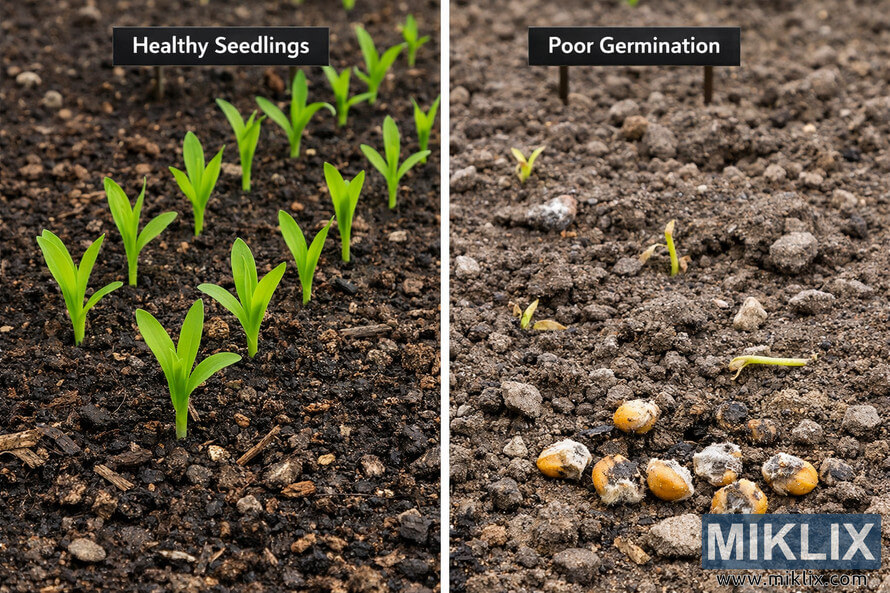
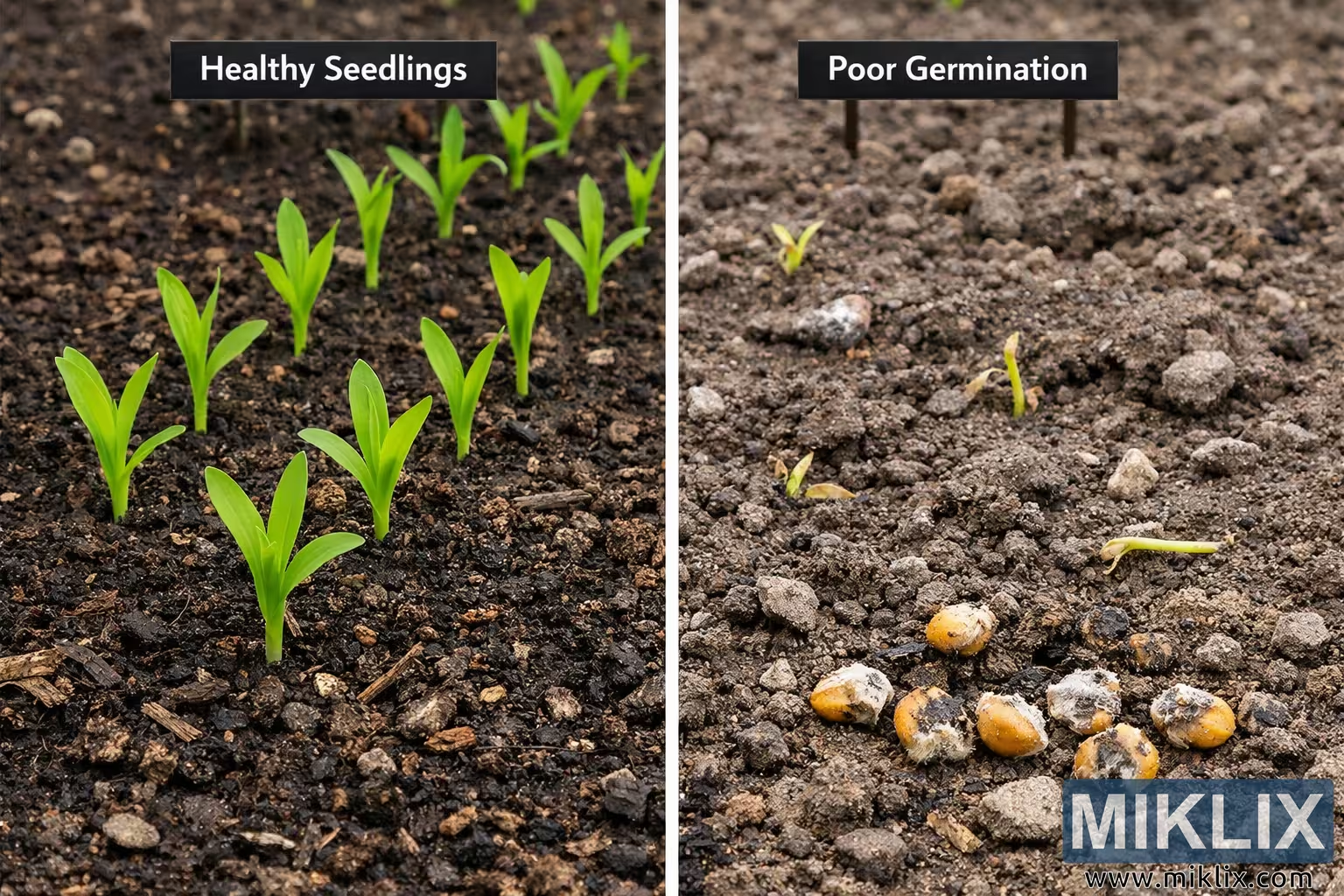
Visual comparison of healthy corn seedling emergence and poor germination in garden soil, highlighting strong growth versus failed sprouting conditions.
Healthy Corn Seedlings vs Poor Germination in Garden Soil
Tilgjengelige versjoner av dette bildet
Bildefilene som kan lastes ned nedenfor, er mindre komprimerte og har høyere oppløsning - og dermed høyere kvalitet - enn bildene som er innebygd i artikler og sider på dette nettstedet, som er mer optimalisert med tanke på filstørrelse for å redusere båndbreddeforbruket.
Vanlig størrelse (1,536 x 1,024)
Stor størrelse (3,072 x 2,048)
Svært stor størrelse (4,608 x 3,072)
Ekstra stor størrelse (6,144 x 4,096)
Komisk stor størrelse (1,048,576 x 699,051)
- Laster fortsatt opp... ;-)
Bildebeskrivelse
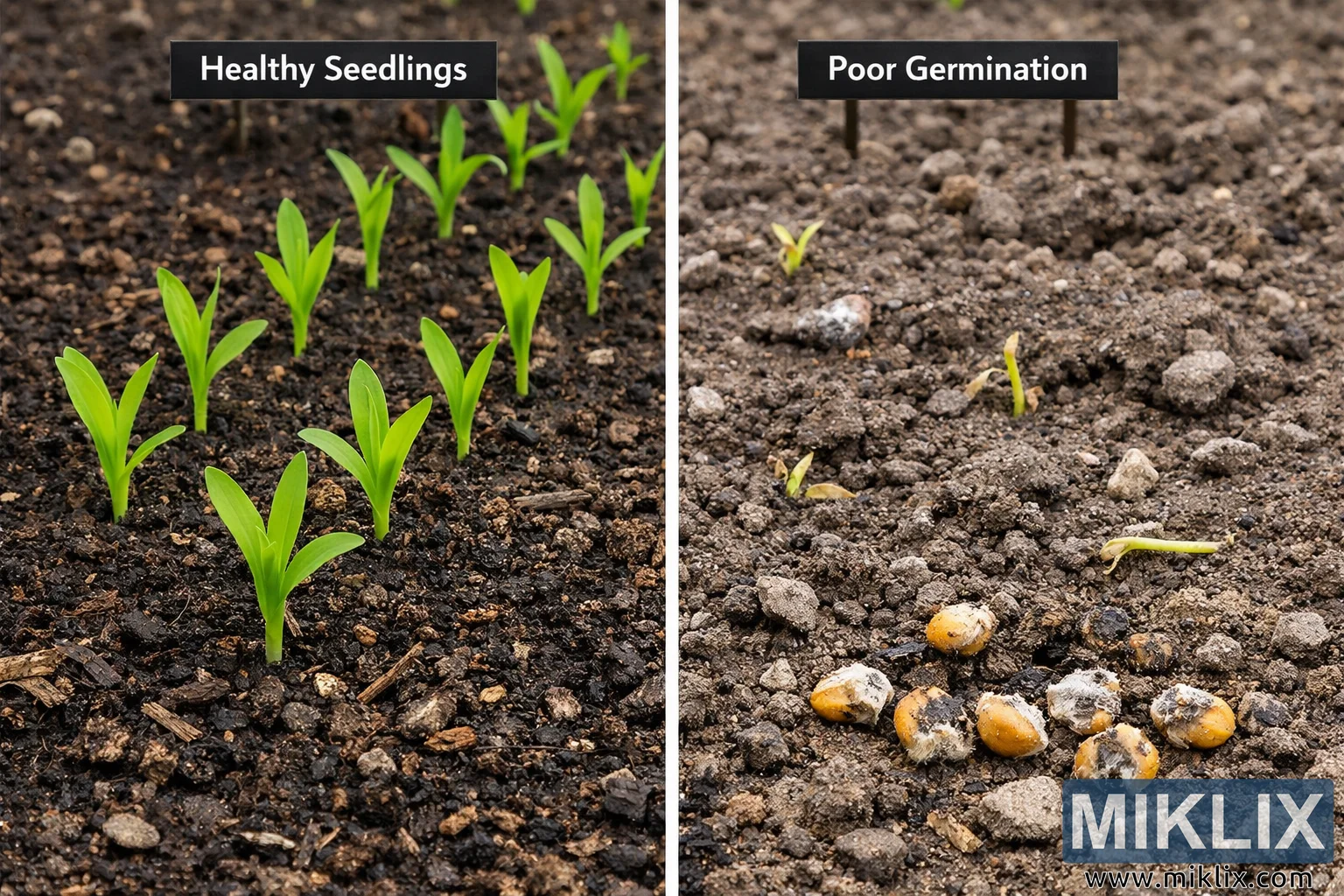
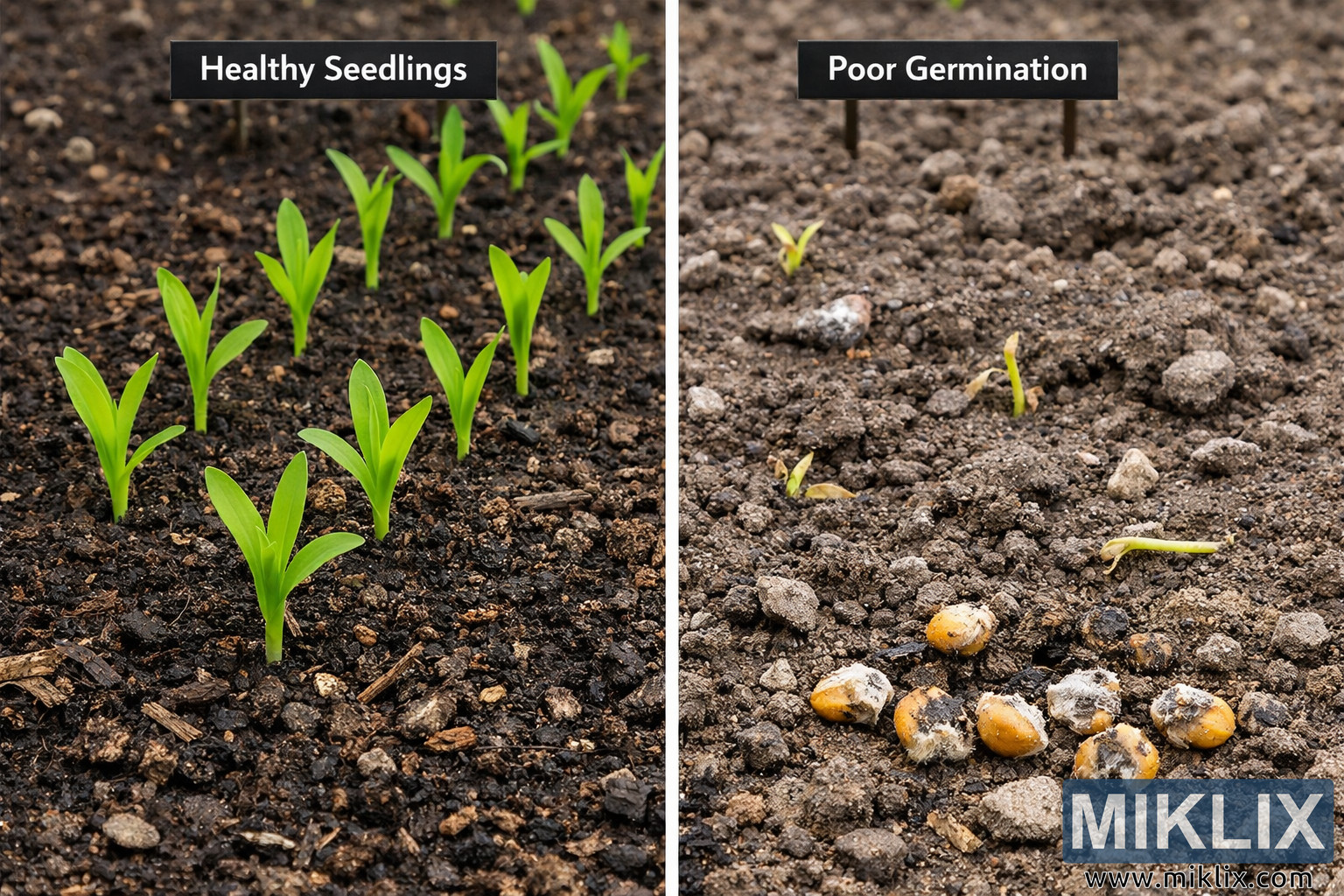
This image presents a side-by-side comparison illustrating the difference between healthy corn seedling emergence and poor germination in garden soil. The photograph is divided vertically into two equal sections, creating a clear visual contrast between successful plant development and failed or weak germination.
On the left side of the image, labeled "Healthy Seedlings," a series of vibrant young corn plants are emerging uniformly from rich, dark garden soil. The soil appears moist, crumbly, and well-structured, with small organic particles and a loose texture that suggests good aeration and nutrient availability. The corn seedlings are bright green and evenly spaced in rows, each displaying upright growth and well-formed leaves typical of healthy early-stage corn plants. Their leaves are narrow, smooth, and slightly glossy, reaching upward toward the light. The stems appear sturdy and properly anchored in the soil, indicating strong early root development. The plants are at a similar stage of growth, demonstrating consistent germination and successful establishment. The overall appearance of this section communicates vitality, proper soil conditions, and effective seed germination.
In contrast, the right side of the image is labeled "Poor Germination" and depicts an area of garden soil where corn seeds have struggled to sprout. The soil here appears dry, compacted, and uneven, with visible clumps and a rough texture that suggests poor moisture retention and limited soil structure. Several corn kernels lie partially exposed on the soil surface. Some seeds appear discolored or covered with white mold, indicating decay or fungal activity. A few weak sprouts are visible, but they are pale, thin, and bent rather than upright. These small shoots look fragile and underdeveloped, showing signs of stress or failure to establish properly.
The sparse and irregular emergence on this side contrasts sharply with the uniform growth on the left. The poor soil conditions and damaged seeds visually communicate common problems associated with unsuccessful germination, such as inadequate moisture, soil compaction, disease, or improper planting conditions.
Together, the two halves of the image provide an educational comparison that highlights how soil quality and growing conditions influence corn seed germination and early seedling development. The clear visual difference between the healthy, thriving seedlings and the struggling seeds helps illustrate best practices and potential pitfalls in garden planting.
Bildet er relatert til: Growing Corn: Your Complete Guide to Sweet Success in the Garden