
Bilde: Tangerine Tree Infested with Aphids
Publisert:
Sist oppdatert: 25. mars 2026 kl. 19:05:37 UTC
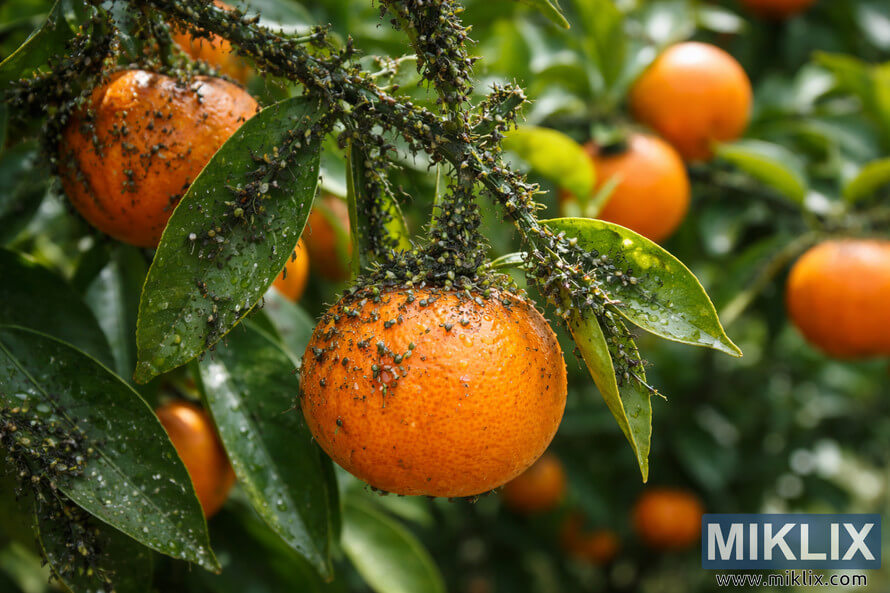
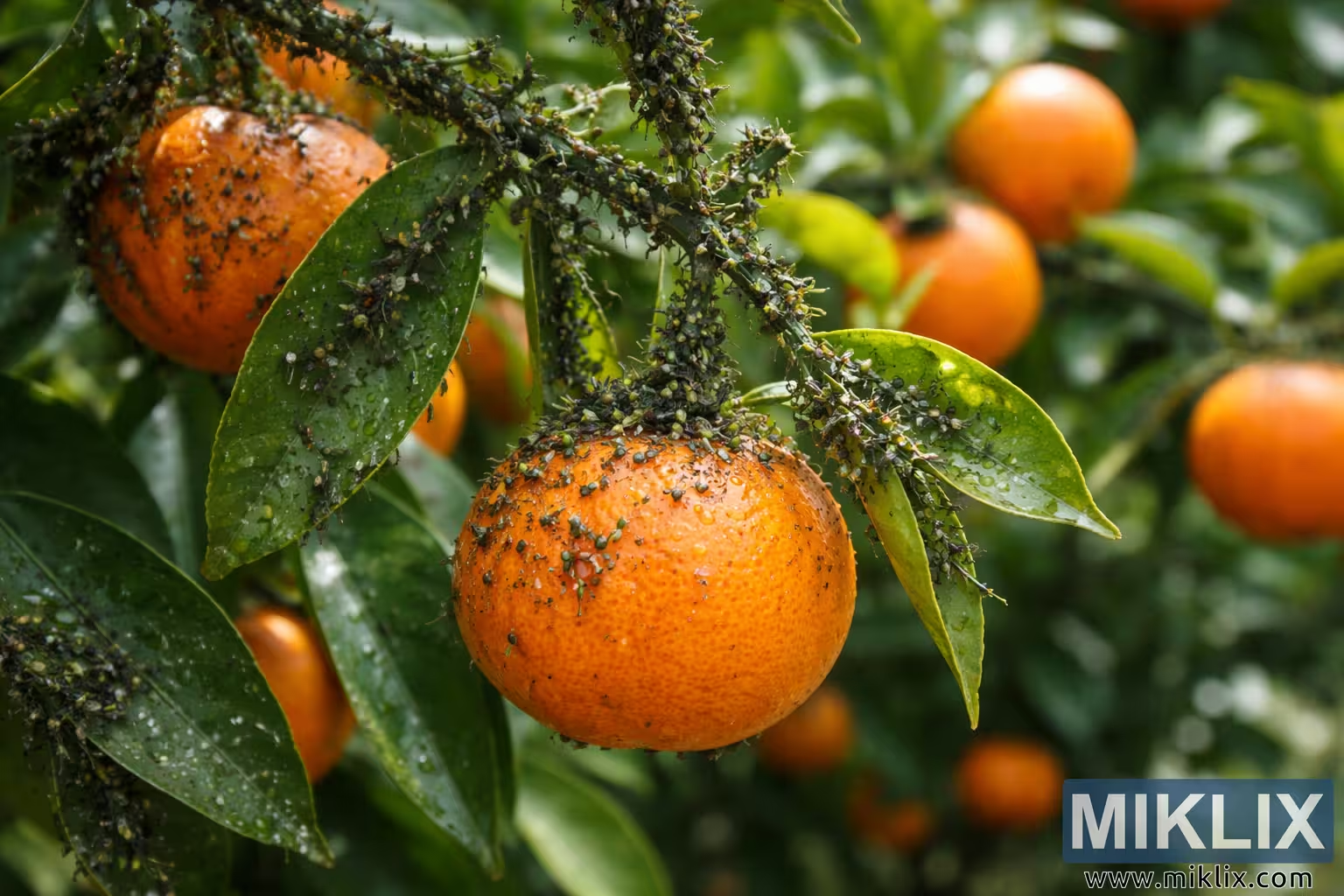
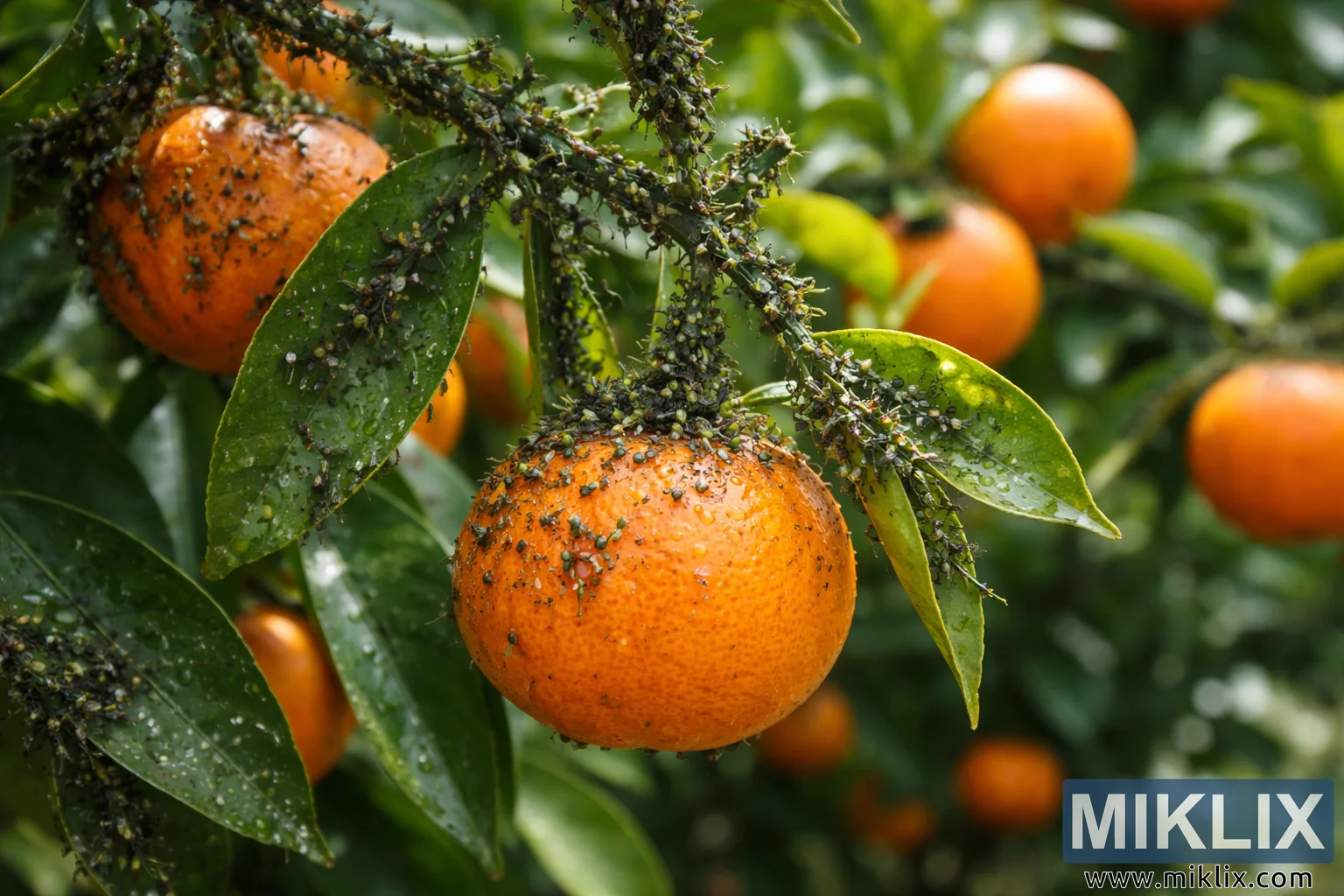
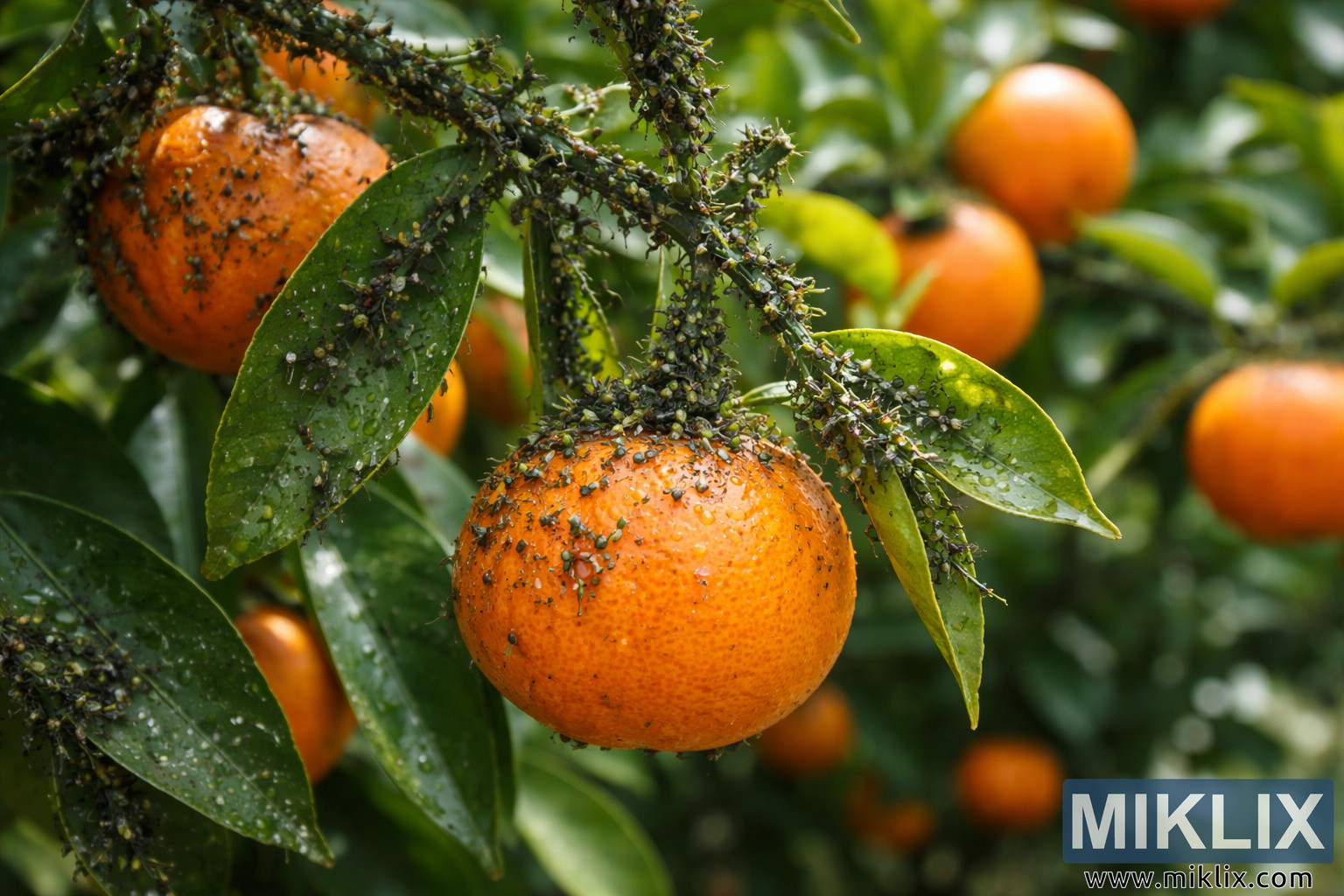
Detailed close-up photo of a tangerine tree with a ripe fruit and surrounding leaves heavily infested with aphids and honeydew droplets in natural daylight.
Tangerine Tree Infested with Aphids
Tilgjengelige versjoner av dette bildet
Bildefilene som kan lastes ned nedenfor, er mindre komprimerte og har høyere oppløsning - og dermed høyere kvalitet - enn bildene som er innebygd i artikler og sider på dette nettstedet, som er mer optimalisert med tanke på filstørrelse for å redusere båndbreddeforbruket.
Vanlig størrelse (1,536 x 1,024)
Stor størrelse (3,072 x 2,048)
Svært stor størrelse (4,608 x 3,072)
Ekstra stor størrelse (6,144 x 4,096)
Komisk stor størrelse (1,048,576 x 699,051)
- Laster fortsatt opp... ;-)
Bildebeskrivelse
A high-resolution landscape photograph shows a close-up view of a tangerine tree branch heavily infested with aphids. In the center of the composition hangs a ripe, vibrant orange tangerine with a slightly textured peel that catches the light. The fruit is surrounded by glossy green leaves and thin stems that branch outward across the frame. Clusters of small aphids—visible as tiny dark and green insects—cover the stems, gather along the leaf veins, and scatter across the surface of the fruit. Their presence creates dense, uneven patterns that contrast with the bright orange color of the tangerine and the rich green foliage.
The aphids appear in large numbers, forming tight groups along the tender new growth of the branch where the stems intersect. Many of them cling to the underside and edges of the leaves, while others concentrate around the fruit’s stem and along the central veins of nearby leaves. Small droplets of sticky honeydew glisten on the leaf surfaces and stems, catching the sunlight and creating reflective highlights that emphasize the scale of the infestation. Some leaves show slight curling and distortion, a typical sign of aphid feeding activity.
The lighting suggests bright midday sun filtering through the tree canopy. Sunlight illuminates the main tangerine and nearby leaves, creating vivid color saturation and crisp detail. The background fades into a soft blur of additional orange fruits and green foliage, producing a natural bokeh effect that isolates the foreground subject while still conveying the sense of a dense citrus tree. Several other tangerines appear in the background as softly focused orange circles, hinting that the tree is productive despite the pest presence.
Fine textures are visible throughout the scene: the pebbled citrus skin, the smooth waxy leaf surfaces, and the delicate segmented bodies of the aphids. The insects vary slightly in color from dark brown to pale green, and their tiny legs and antennae can be seen clinging to the plant tissue. The branch itself is thin and slightly curved, supporting the weight of the fruit while also serving as a central pathway where aphids gather in clusters.
Overall, the image captures a moment of plant stress within an otherwise vibrant orchard environment. The combination of bright fruit, healthy green leaves, and the heavy infestation creates a striking contrast between agricultural abundance and pest damage. The photograph functions both as a visually engaging macro-style nature image and as a clear illustration of aphid infestation on citrus plants.
Bildet er relatert til: Growing Tangerines: The Complete Guide to Sweet Success in Your Home Garden