
Bilde: Comparison of Watermelon Varieties by Size and Flesh Color
Publisert:
Sist oppdatert: 27. mars 2026 kl. 17:51:41 UTC
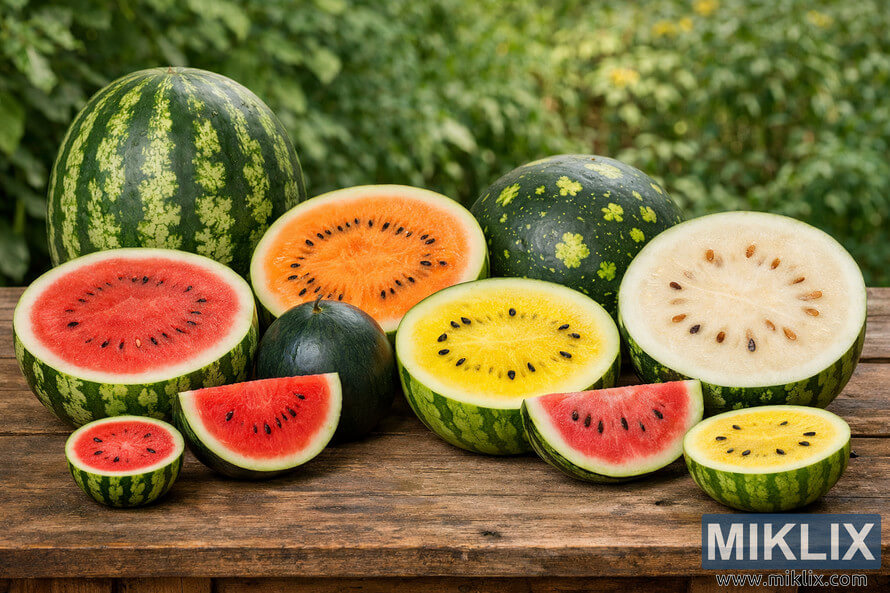
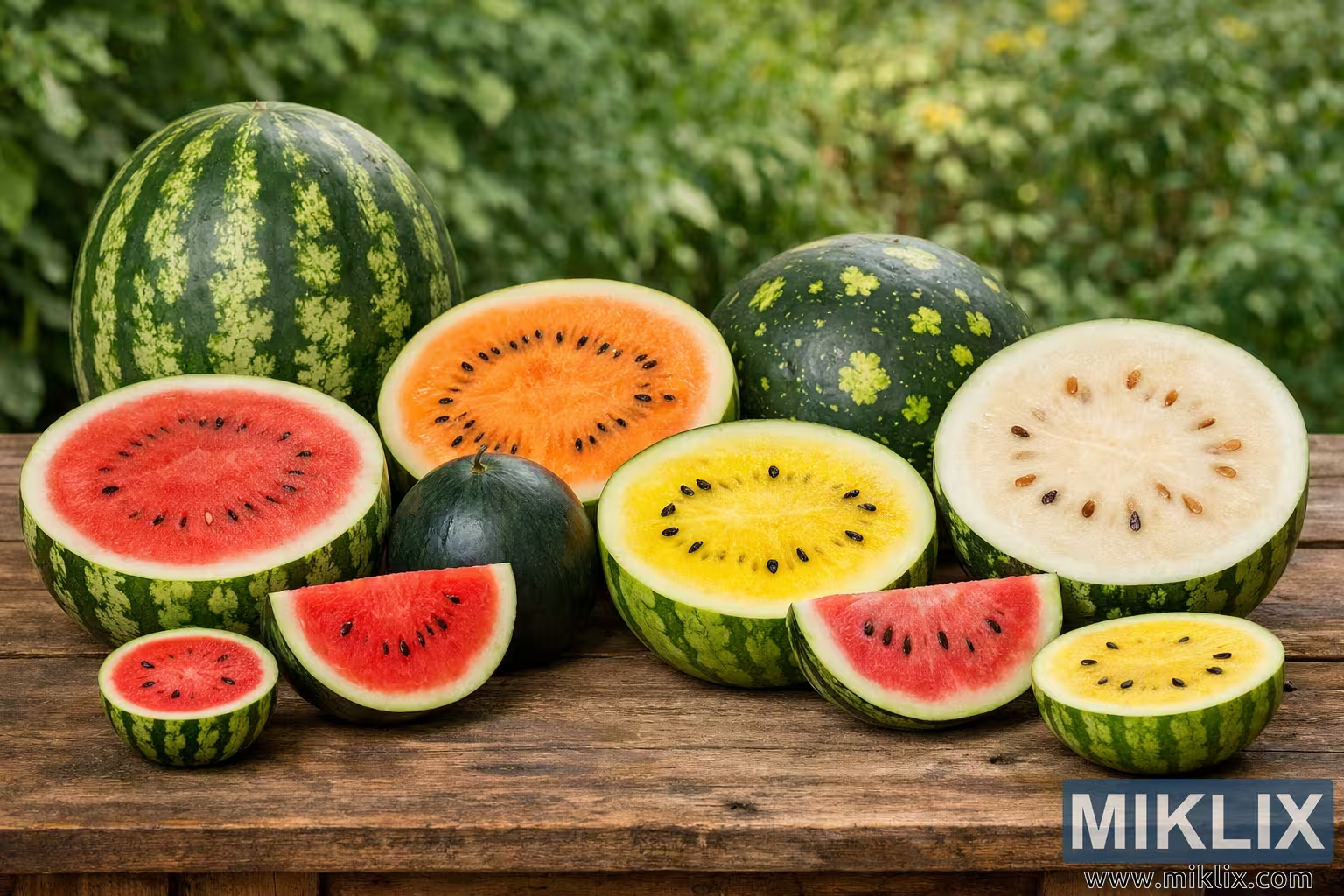
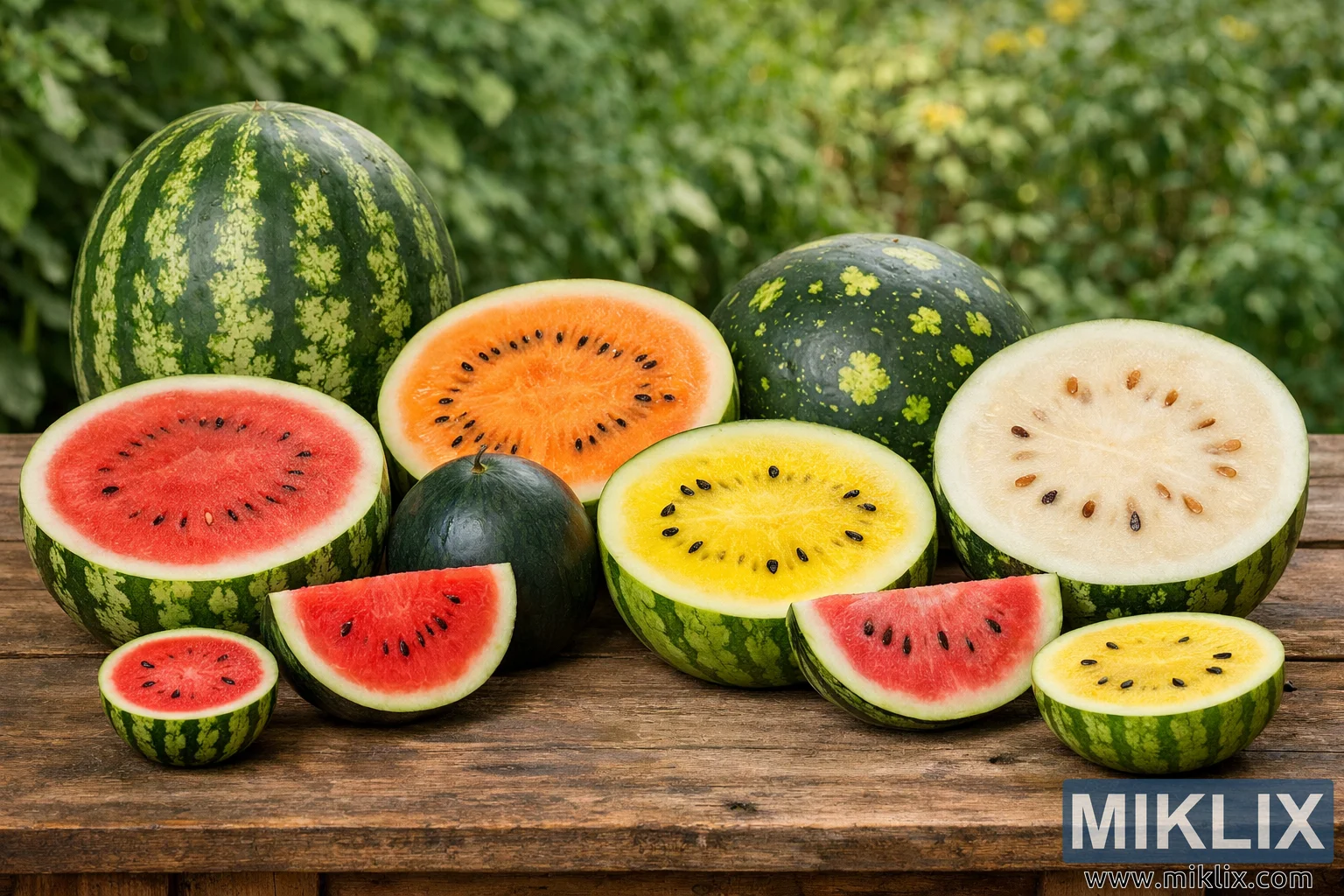
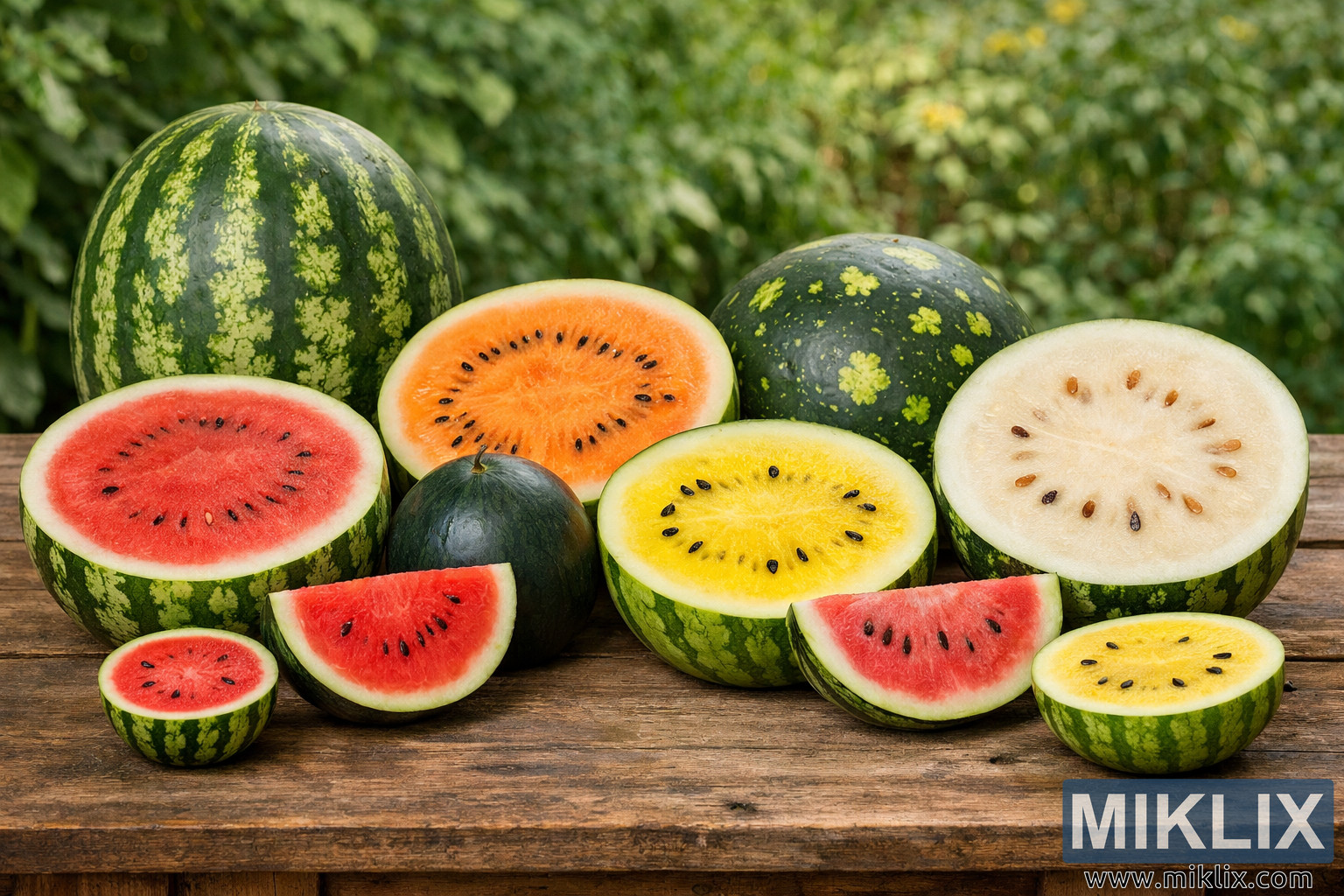
High-resolution landscape photo comparing multiple watermelon varieties, highlighting differences in size, rind patterns, and flesh colors such as red, orange, yellow, and white.
Comparison of Watermelon Varieties by Size and Flesh Color
Tilgjengelige versjoner av dette bildet
Bildefilene som kan lastes ned nedenfor, er mindre komprimerte og har høyere oppløsning - og dermed høyere kvalitet - enn bildene som er innebygd i artikler og sider på dette nettstedet, som er mer optimalisert med tanke på filstørrelse for å redusere båndbreddeforbruket.
Vanlig størrelse (1,536 x 1,024)
Stor størrelse (3,072 x 2,048)
Svært stor størrelse (4,608 x 3,072)
Ekstra stor størrelse (6,144 x 4,096)
Komisk stor størrelse (1,048,576 x 699,051)
- Laster fortsatt opp... ;-)
Bildebeskrivelse
A high-resolution landscape photograph presents a carefully arranged comparison of several watermelon varieties displayed across a rustic wooden table outdoors. The scene is brightly lit with soft natural daylight, and the background is filled with gently blurred green foliage that suggests a garden or farm setting. This shallow depth of field keeps the focus on the fruit while creating a calm, natural atmosphere that emphasizes freshness and agricultural variety.
Across the table, whole watermelons and sliced halves are placed side by side so their differences in size, shape, rind patterns, and flesh color can be easily observed. Some of the melons are small and round, while others are noticeably larger and more elongated, illustrating the wide range of watermelon types grown around the world. The outer rinds vary in color and pattern: some show classic dark-green stripes against lighter green backgrounds, while others appear darker and more solid with scattered lighter markings. These visual differences highlight the diversity of cultivars even before the fruit is cut open.
Several melons have been sliced cleanly in half and positioned so their interiors face the viewer. The cross-sections reveal strikingly different flesh colors. Traditional bright red flesh appears in some varieties, packed with small black seeds arranged in gentle arcs. Other melons display vibrant orange interiors that glow warmly against the pale rind. A few halves show vivid yellow flesh with scattered dark seeds, while another variety reveals an almost creamy white interior, offering a surprising contrast to the more familiar red types. These variations demonstrate how watermelon breeding has produced fruits with many unique flavors, textures, and appearances.
Additional wedges and smaller cut pieces are arranged near the larger halves, reinforcing the comparison of internal color and fruit size. The slices show the juicy, granular texture typical of ripe watermelon, with glossy seed surfaces and moist flesh that reflects the sunlight. The wooden tabletop beneath them adds a warm, natural texture that complements the organic subject matter and enhances the farm-fresh visual theme.
Overall, the composition functions as an educational visual comparison of watermelon diversity. By displaying whole fruits alongside cut sections, the image clearly illustrates differences in scale, rind pattern, and flesh color in a single cohesive scene. The vibrant palette of reds, oranges, yellows, whites, and greens creates an appealing and informative display that celebrates the remarkable variety found within this familiar summer fruit.
Bildet er relatert til: Growing Watermelons: Your Complete Guide to Juicy, Homegrown Success