
Bilde: Healthy Scallions with Organic Pest Prevention in a Garden Bed
Publisert:
Sist oppdatert: 14. april 2026 kl. 21:15:12 UTC
High-resolution garden scene showing healthy scallions protected with organic pest prevention techniques including sticky traps, companion planting, and natural deterrents.
Healthy Scallions with Organic Pest Prevention in a Garden Bed
Tilgjengelige versjoner av dette bildet
Bildefilene som kan lastes ned nedenfor, er mindre komprimerte og har høyere oppløsning - og dermed høyere kvalitet - enn bildene som er innebygd i artikler og sider på dette nettstedet, som er mer optimalisert med tanke på filstørrelse for å redusere båndbreddeforbruket.
Vanlig størrelse (1,536 x 1,024)
Stor størrelse (3,072 x 2,048)
Svært stor størrelse (4,608 x 3,072)
Ekstra stor størrelse (6,144 x 4,096)
Komisk stor størrelse (1,048,576 x 699,051)
- Laster fortsatt opp... ;-)
Bildebeskrivelse
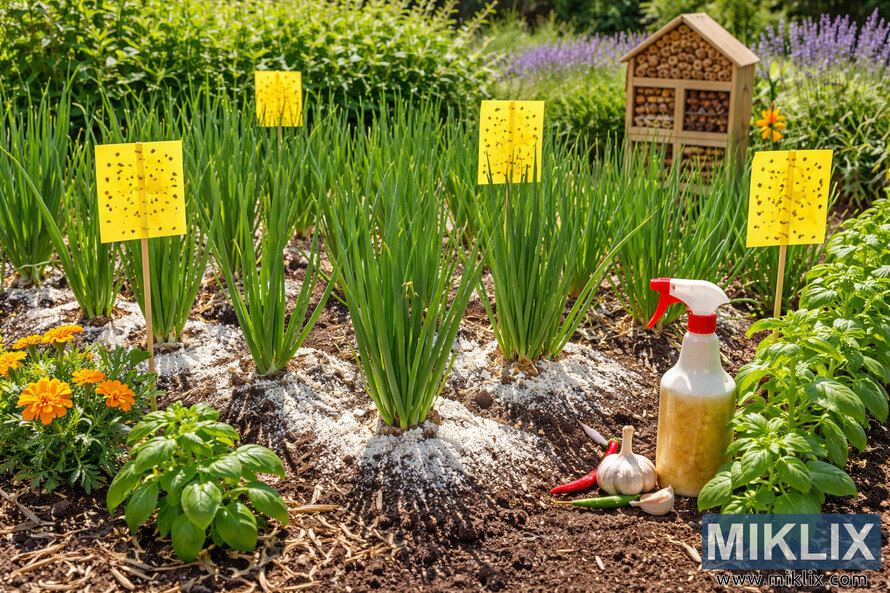
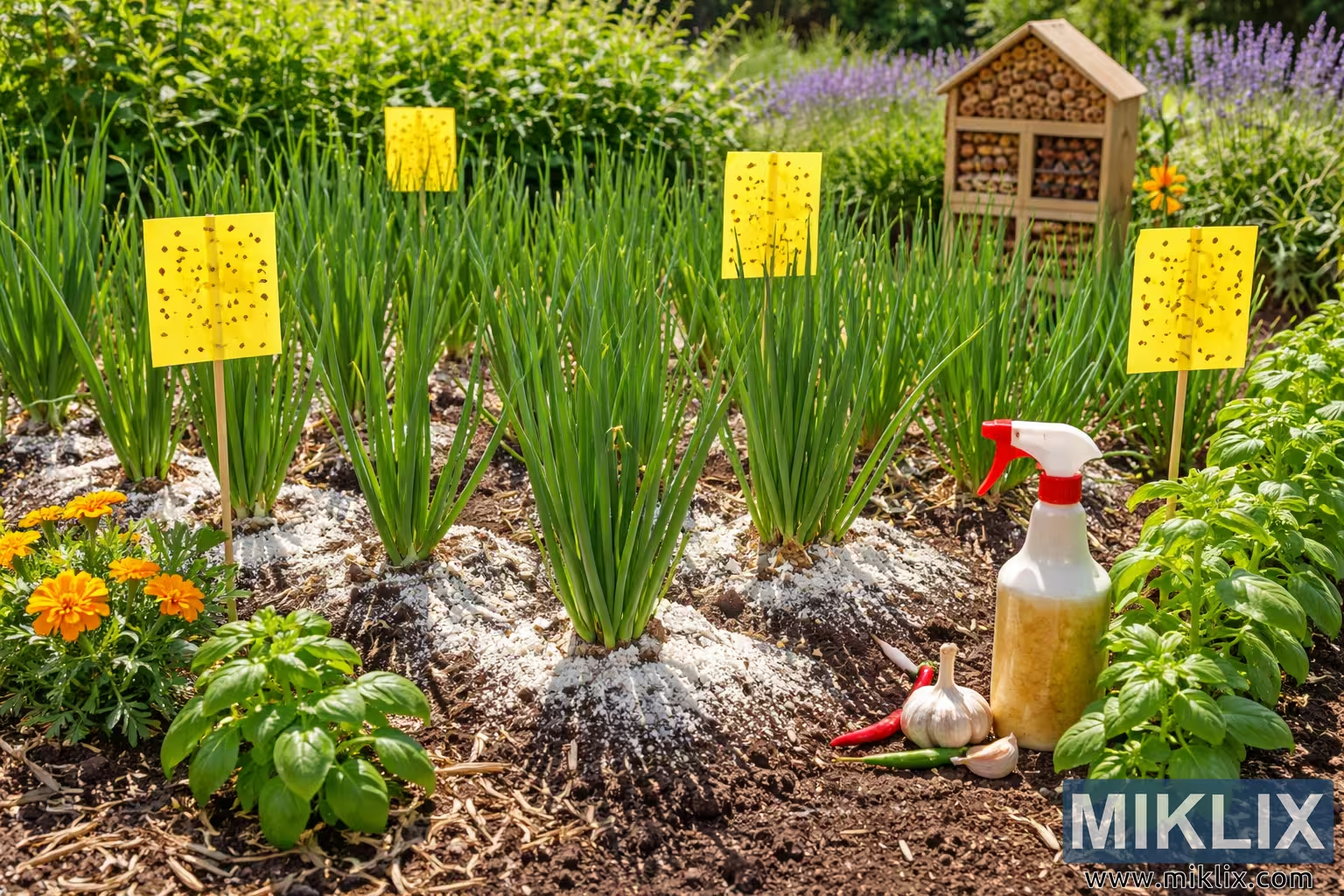
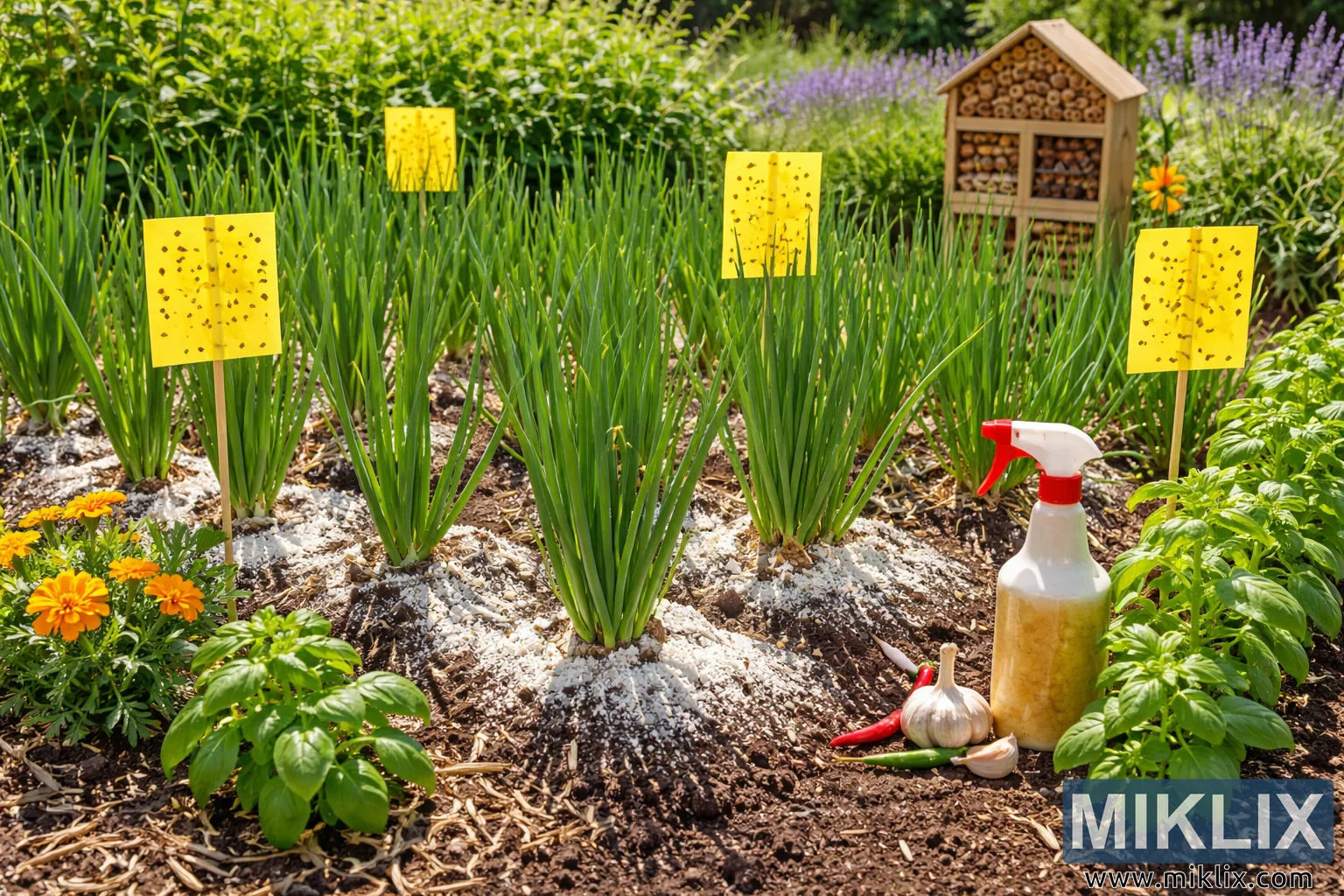
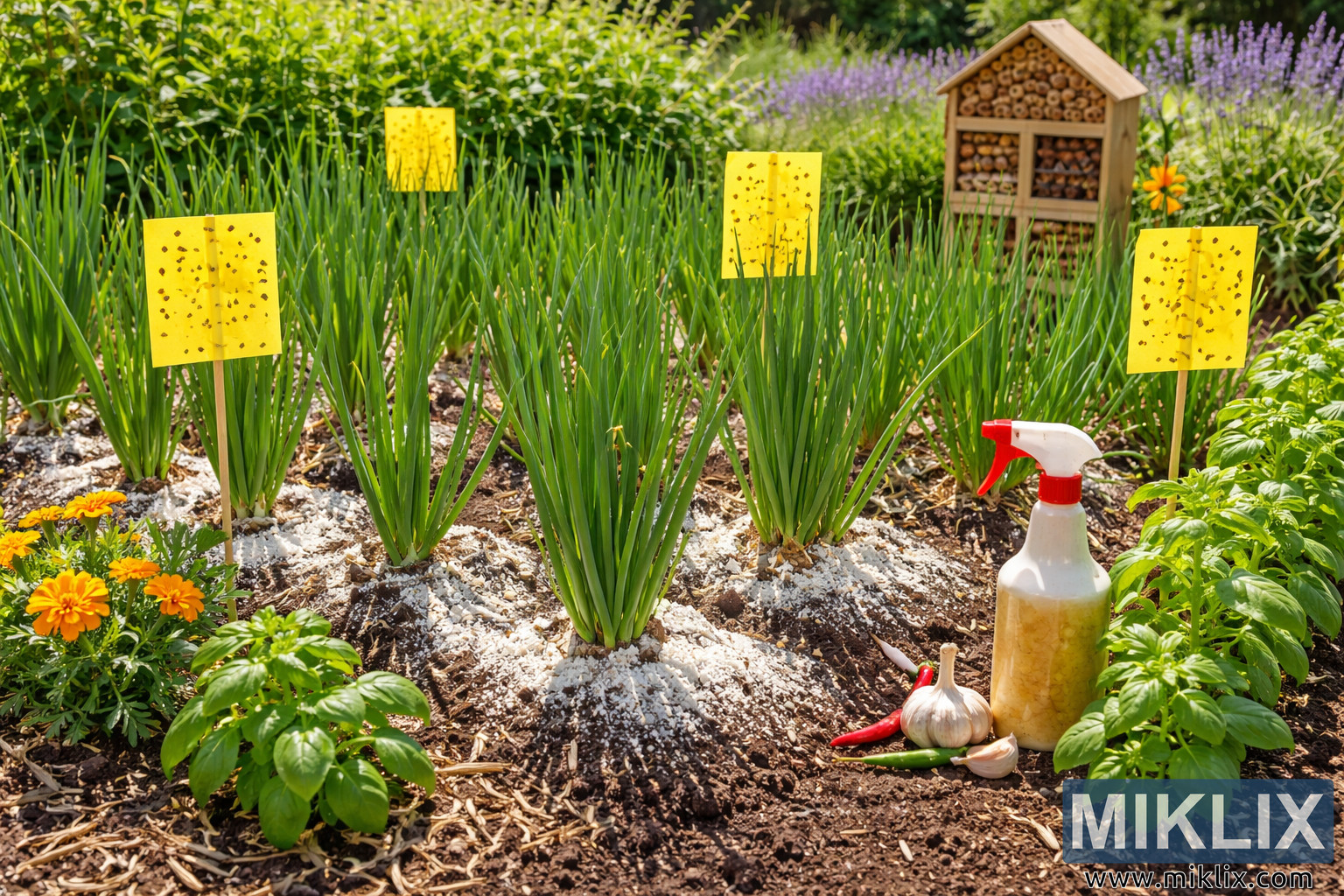
A bright, high-resolution landscape photograph shows a well-maintained garden bed filled with healthy scallions growing in evenly spaced rows. The scallions stand upright with vibrant green stalks and firm bases emerging from dark, freshly cultivated soil. Around the base of many plants is a light dusting of white powder, suggesting the use of a natural pest control substance such as diatomaceous earth. The garden bed appears carefully organized and intentionally designed to demonstrate several organic pest prevention techniques.
In the foreground and along the edges of the bed, companion plants are visible, including lush basil plants with broad, glossy green leaves and bright orange marigolds in bloom. These plants are commonly used in organic gardening because their scent and natural properties can help repel insects or attract beneficial predators. Their presence adds a layer of biodiversity to the garden while visually framing the scallion rows.
Several yellow sticky traps mounted on thin wooden stakes rise above the scallions at regular intervals. The traps are dotted with small insects that have been captured, indicating their role in monitoring and controlling flying garden pests. Their bright yellow color contrasts with the green foliage and brown soil, making them clearly visible as part of the pest management strategy.
Near the right side of the image, a small spray bottle filled with a pale yellow liquid stands on the soil, suggesting a homemade or organic pest spray. Beside it lie several natural ingredients, including a bulb of garlic, peeled garlic cloves, and red chili peppers, commonly used to create natural insect deterrent solutions. These items reinforce the theme of environmentally friendly pest control.
In the background, partially framed by greenery, sits a small wooden insect hotel filled with bamboo tubes and drilled wood blocks. This structure provides shelter for beneficial insects such as solitary bees and predatory species that help maintain ecological balance in the garden. Surrounding plants and soft purple flowers blur gently into the distance, giving the image depth while emphasizing the central scallion bed.
The lighting suggests midday sunshine, casting soft shadows and highlighting the healthy texture of the plants and soil. Overall, the image communicates a thriving, sustainable garden environment where scallions grow vigorously while being protected through a thoughtful combination of natural pest prevention methods.
Bildet er relatert til: How to Grow Scallions: Complete Guide for Beginners