
Bilde: Sautéed Swiss Chard with Garlic in Cast Iron Skillet
Publisert:
Sist oppdatert: 16. april 2026 kl. 19:41:18 UTC
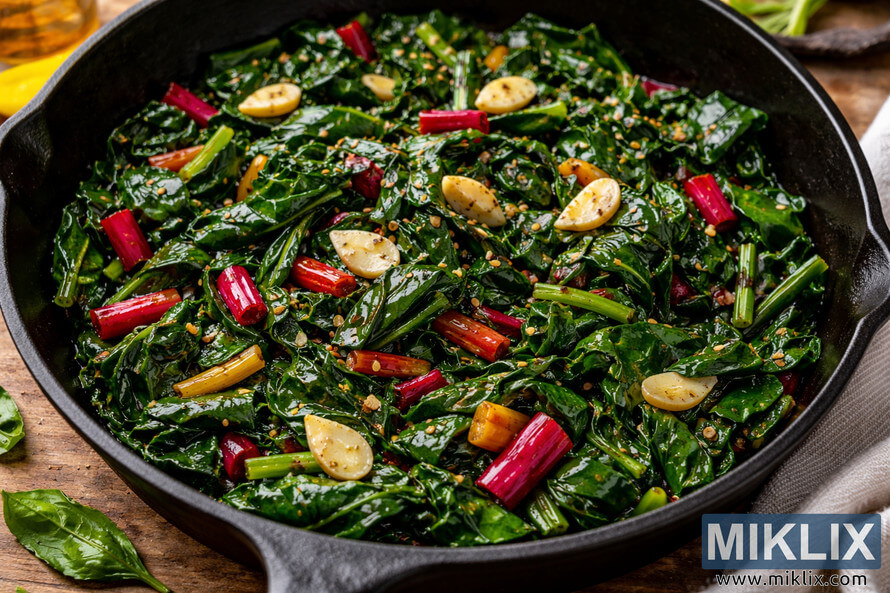
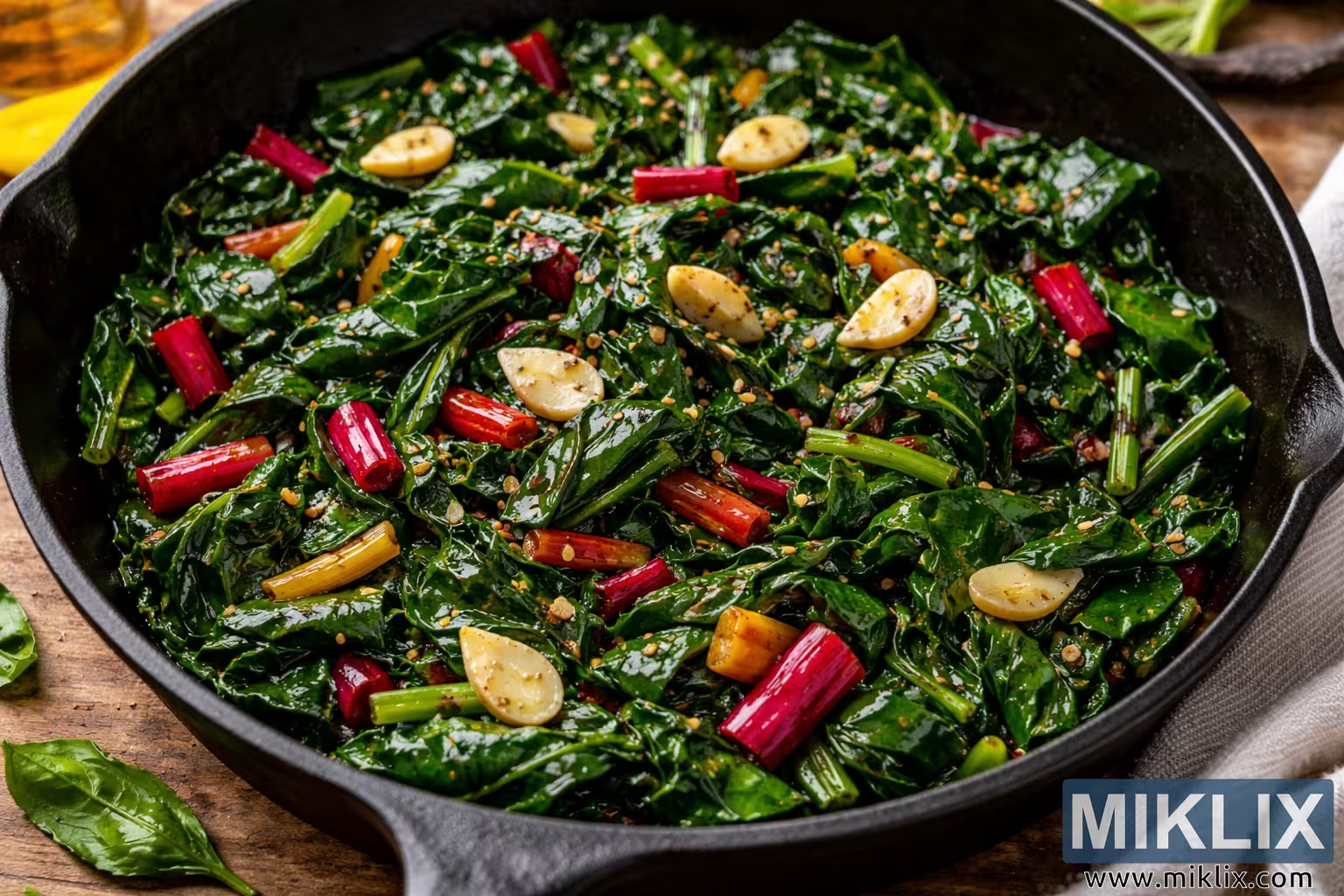
Close-up food photo of sautéed Swiss chard with garlic and olive oil in a cast iron skillet, featuring glossy greens and vibrant red, yellow, and pink stems.
Sautéed Swiss Chard with Garlic in Cast Iron Skillet
Tilgjengelige versjoner av dette bildet
Bildefilene som kan lastes ned nedenfor, er mindre komprimerte og har høyere oppløsning - og dermed høyere kvalitet - enn bildene som er innebygd i artikler og sider på dette nettstedet, som er mer optimalisert med tanke på filstørrelse for å redusere båndbreddeforbruket.
Vanlig størrelse (1,536 x 1,024)
Stor størrelse (3,072 x 2,048)
Svært stor størrelse (4,608 x 3,072)
Ekstra stor størrelse (6,144 x 4,096)
Komisk stor størrelse (1,048,576 x 699,051)
- Laster fortsatt opp... ;-)
Bildebeskrivelse
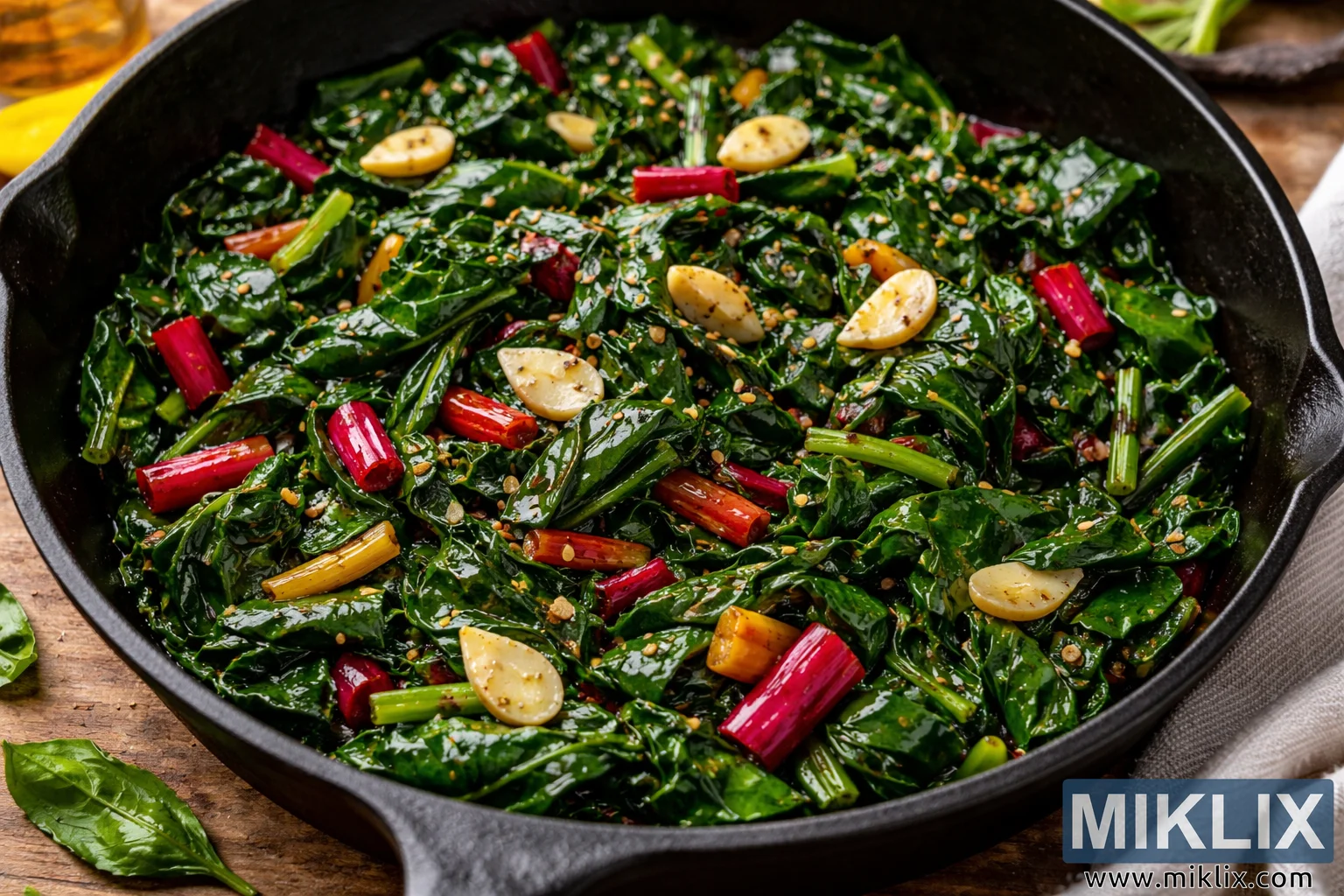
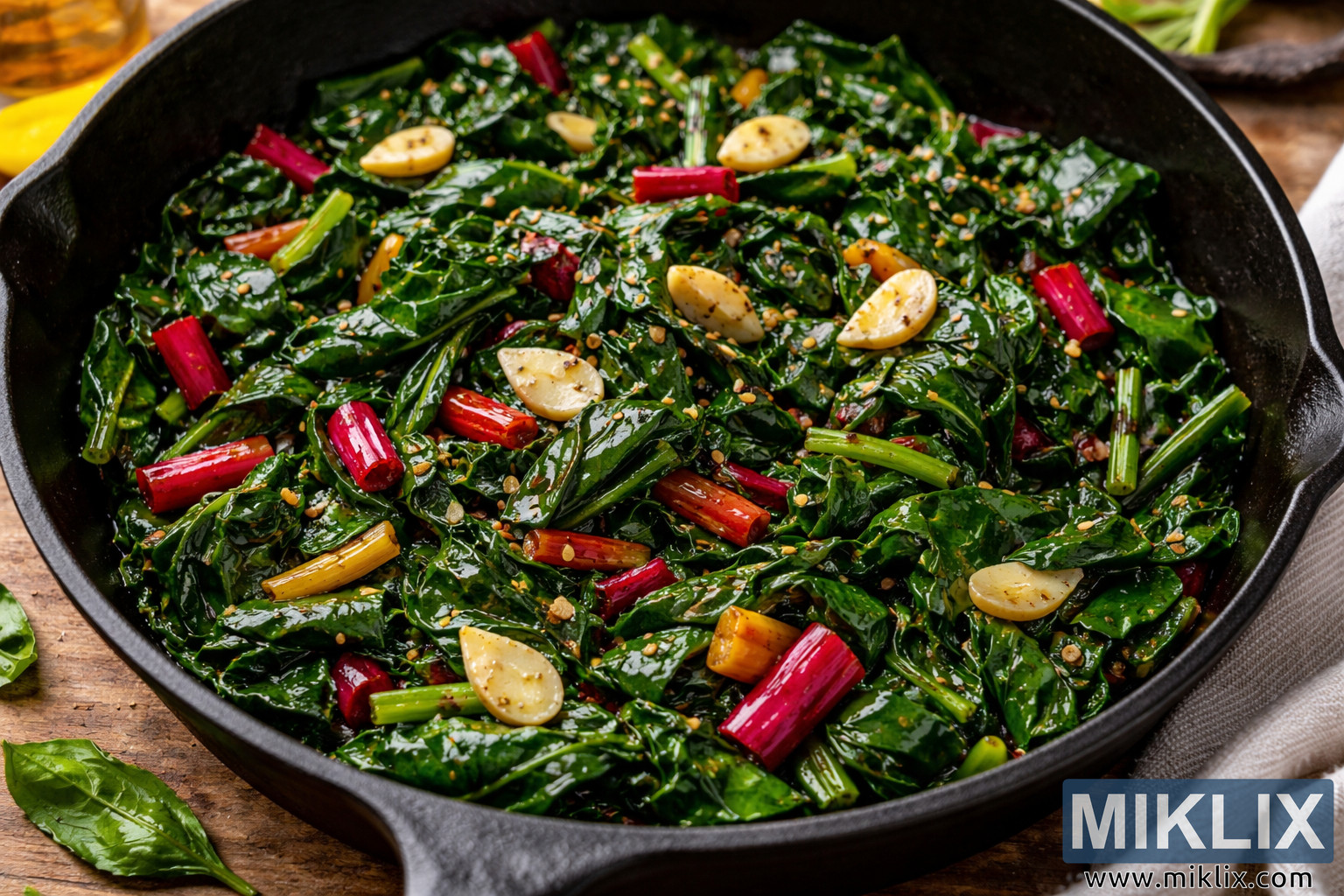
A richly detailed, close-up food photograph captures a cast iron skillet filled with freshly sautéed Swiss chard. The dark, matte surface of the skillet frames a vibrant mixture of glossy green leaves and brightly colored stems in shades of crimson red, rosy pink, and golden yellow. The chard has been gently wilted in olive oil, giving the leaves a silky sheen that reflects the soft, warm light falling across the pan. Scattered throughout the greens are thin slices of lightly browned garlic, their pale golden surfaces hinting at their aromatic sweetness after sautéing. Tiny specks of seasoning are visible across the leaves, including coarse black pepper and small flakes of red pepper that add visual texture and suggest a subtle hint of heat.
The chard leaves appear tender yet still structured, curled slightly as they rest against one another in the skillet. Their deep emerald color contrasts beautifully with the vivid stems, which remain bright and firm even after cooking. The olive oil lightly coats the vegetables, pooling in small reflective droplets along the folds of the leaves and along the edges of the skillet. The skillet itself is sturdy and rustic, its heavy cast iron construction adding a sense of warmth and traditional cooking technique to the scene.
The composition emphasizes freshness and simplicity. The chard fills most of the frame, drawing the viewer’s eye to the glossy textures and the interplay of color between the greens and the jewel-like stems. The garlic slices are distributed naturally across the dish, some resting on top of the leaves and others nestled deeper among the stems. The overall presentation evokes the aroma of garlic gently sizzling in olive oil and the earthy fragrance of freshly cooked greens.
In the softly blurred background, hints of a wooden surface can be seen beneath the skillet, reinforcing a rustic kitchen setting. A folded cloth napkin lies near the edge of the frame, and faint shapes of additional ingredients or kitchen items appear out of focus, providing context without distracting from the main subject. The lighting is warm and natural, highlighting the moisture on the leaves and the subtle texture of the skillet’s surface.
Altogether, the image conveys a sense of wholesome, home-style cooking. The sautéed Swiss chard looks vibrant, nourishing, and flavorful, showcasing how a few simple ingredients—fresh greens, garlic, olive oil, and seasoning—can come together in a cast iron skillet to create a visually striking and appetizing dish.
Bildet er relatert til: How to Grow Swiss Chard: A Complete Beginner's Guide