
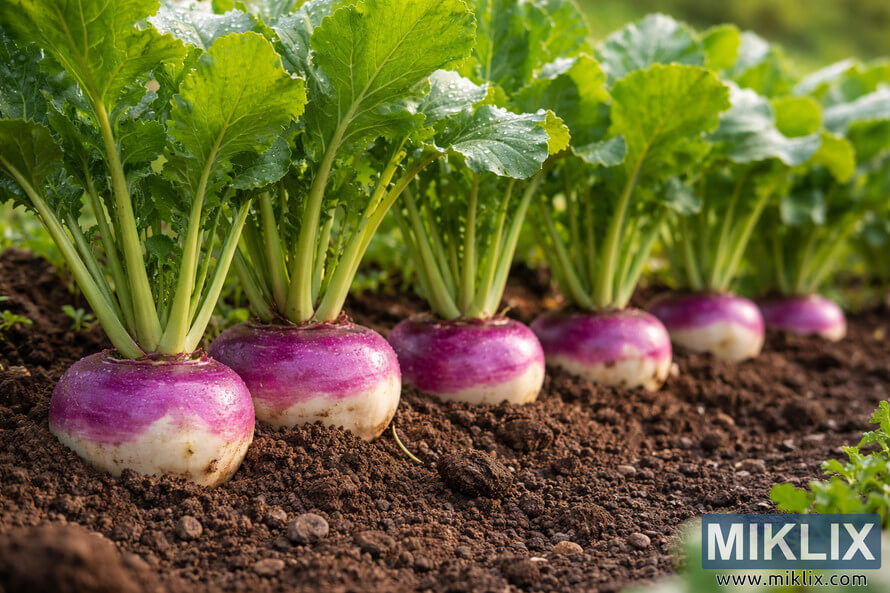
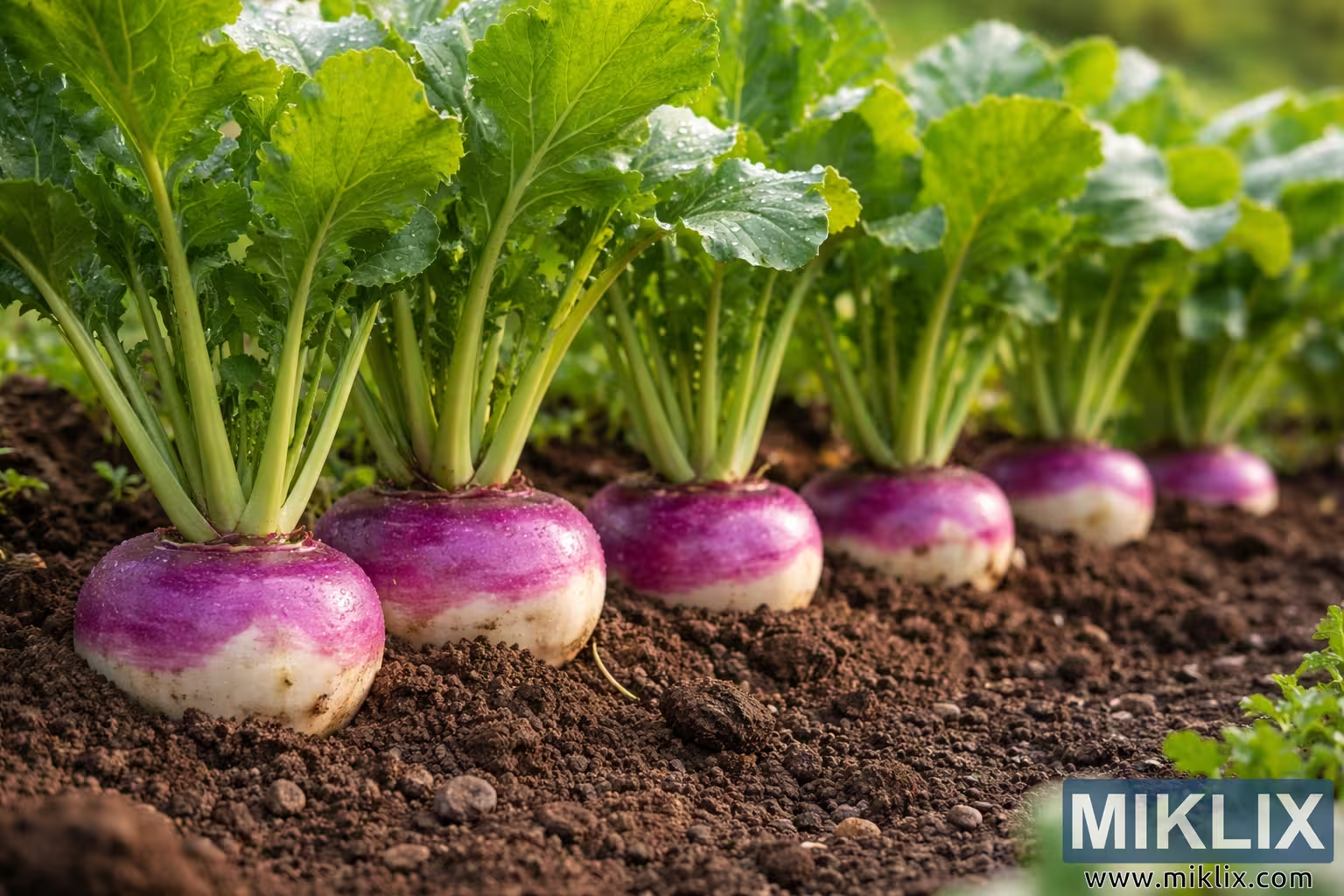
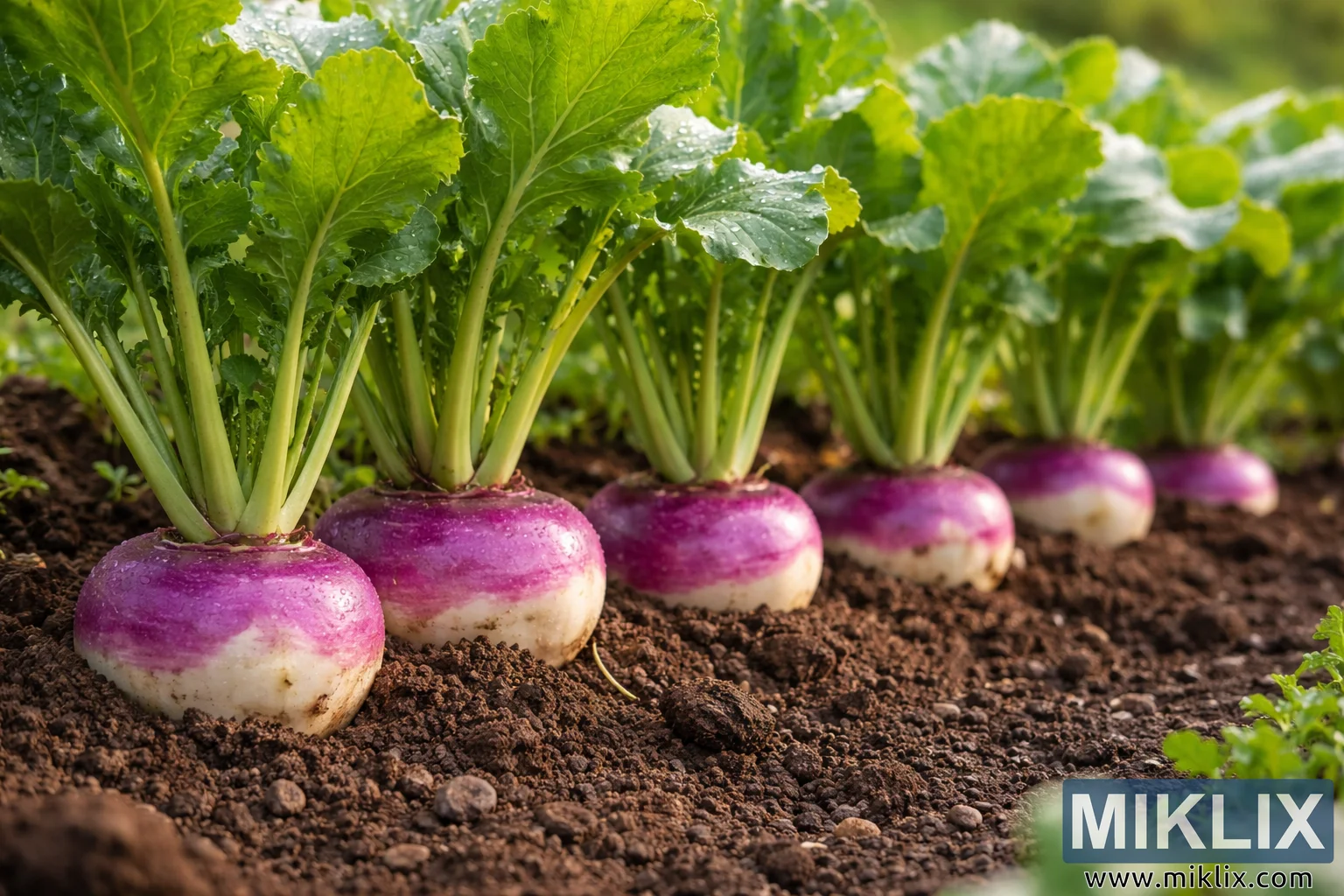
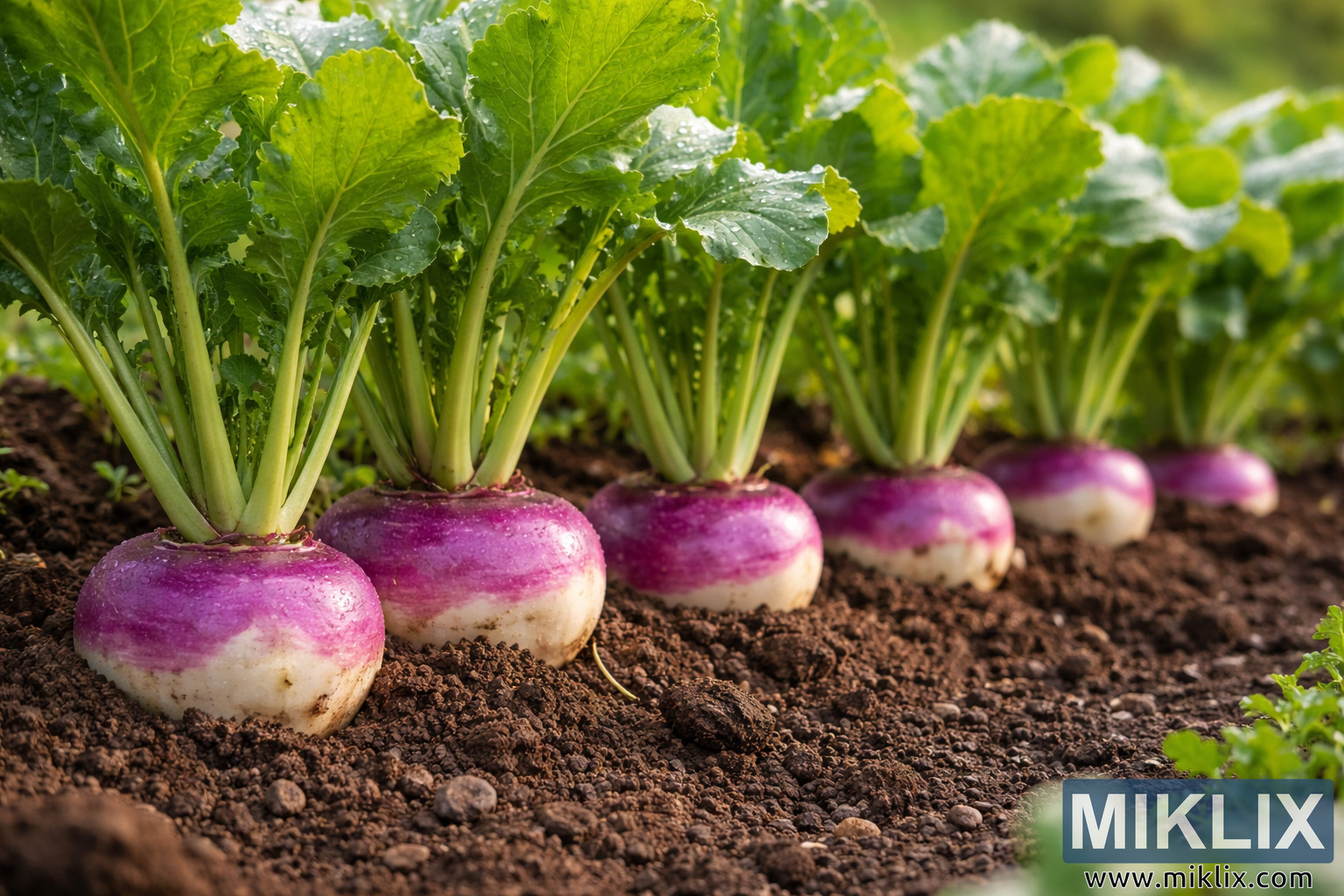
Bilde: Healthy Turnip Plants Growing in Rich Garden Soil
Publisert:
Sist oppdatert: 19. april 2026 kl. 21:37:03 UTC
High-resolution image of vibrant turnip plants with purple tops growing in rich garden soil, showing lush green leaves and fresh vegetables in a cultivated garden bed.
Healthy Turnip Plants Growing in Rich Garden Soil
Tilgjengelige versjoner av dette bildet
Bildefilene som kan lastes ned nedenfor, er mindre komprimerte og har høyere oppløsning - og dermed høyere kvalitet - enn bildene som er innebygd i artikler og sider på dette nettstedet, som er mer optimalisert med tanke på filstørrelse for å redusere båndbreddeforbruket.
Vanlig størrelse (1,536 x 1,024)
Stor størrelse (3,072 x 2,048)
Svært stor størrelse (4,608 x 3,072)
Ekstra stor størrelse (6,144 x 4,096)
Komisk stor størrelse (1,048,576 x 699,051)
- Laster fortsatt opp... ;-)
Bildebeskrivelse
A high-resolution landscape photograph captures a row of healthy turnip plants growing in rich, dark garden soil. The composition is shot from a low, close perspective at soil level, allowing the viewer to see the rounded tops of the turnip roots partially exposed above the earth. Each turnip bulb displays the characteristic coloration of this vegetable: a creamy white lower half transitioning into a vibrant purple upper section where the root meets the soil surface. The bulbs are plump, smooth, and slightly glossy, suggesting they are fresh and well-hydrated.
Above the bulbs, sturdy pale-green stems rise upward into clusters of lush leaves. The leaves are broad and slightly textured with gently serrated edges and clearly visible veins running through them. Their healthy green color indicates vigorous growth and a well-maintained garden environment. Tiny droplets of moisture cling to the leaf surfaces and stems, catching the light and adding a fresh, early-morning atmosphere to the scene.
The soil surrounding the plants appears dark, crumbly, and nutrient-rich. Individual grains, small clumps, and organic particles are visible, giving the ground a realistic and tactile texture. The soil has been carefully cultivated, forming a neat garden bed that supports the evenly spaced turnip plants. Small bits of organic matter and subtle variations in the soil surface further enhance the natural look of the garden environment.
The turnips are arranged in a gentle line extending into the background, creating depth and perspective across the frame. The plants closest to the camera appear crisp and sharply detailed, while those farther away gradually soften into a subtle blur due to shallow depth of field. This photographic effect draws the viewer’s attention to the foremost turnips while still conveying the sense of a productive garden row.
Soft, warm natural lighting illuminates the plants from the side, likely from early morning or late afternoon sunlight. The light highlights the smooth surfaces of the bulbs and the delicate textures of the leaves, producing soft shadows beneath the foliage and across the soil. The background is filled with additional greenery that fades gently out of focus, suggesting a thriving garden or vegetable patch beyond the main row.
Overall, the image conveys freshness, vitality, and careful cultivation. The healthy turnip plants, their vibrant purple tops, and the fertile soil together create a scene that represents successful home gardening and the natural beauty of freshly growing vegetables.
Bildet er relatert til: How to Grow Turnips: Your Complete Growing Guide