
Bilde: Tokyo Cross White Globe Turnips with Fresh Green Tops
Publisert:
Sist oppdatert: 19. april 2026 kl. 21:37:03 UTC
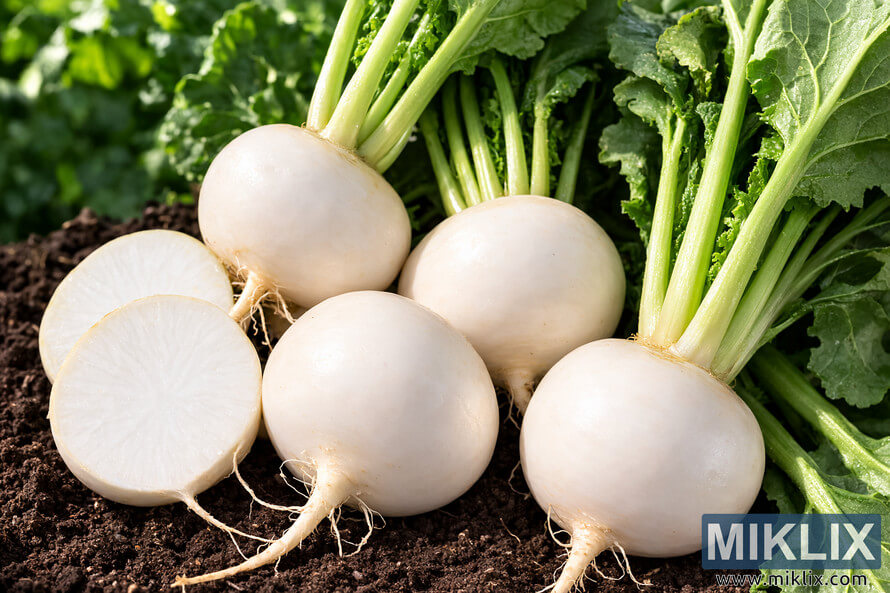
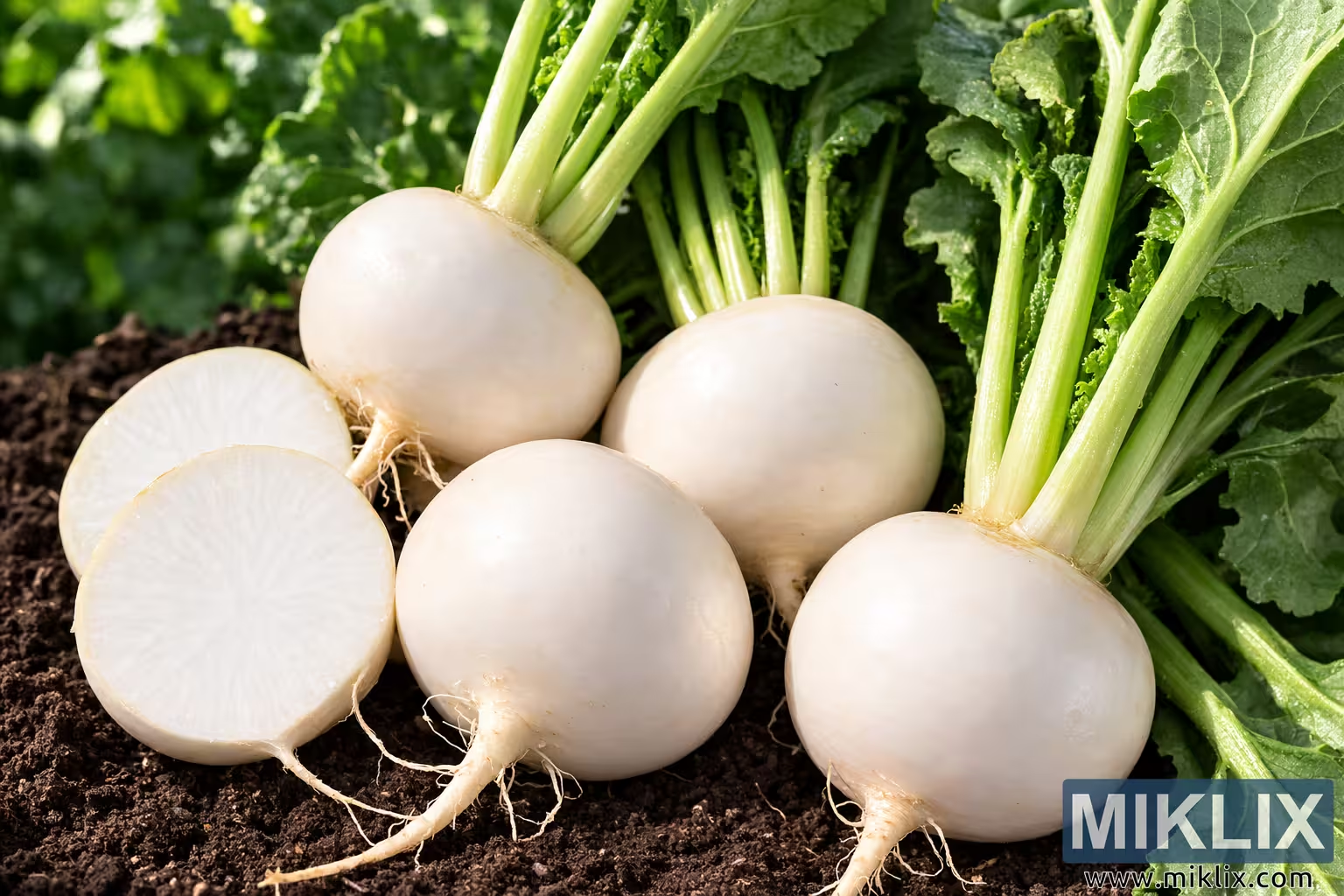
High-resolution image of Tokyo Cross white globe turnips with vibrant green leaves and a sliced bulb revealing the crisp white interior, arranged on rich garden soil.
Tokyo Cross White Globe Turnips with Fresh Green Tops
Tilgjengelige versjoner av dette bildet
Bildefilene som kan lastes ned nedenfor, er mindre komprimerte og har høyere oppløsning - og dermed høyere kvalitet - enn bildene som er innebygd i artikler og sider på dette nettstedet, som er mer optimalisert med tanke på filstørrelse for å redusere båndbreddeforbruket.
Vanlig størrelse (1,536 x 1,024)
Stor størrelse (3,072 x 2,048)
Svært stor størrelse (4,608 x 3,072)
Ekstra stor størrelse (6,144 x 4,096)
Komisk stor størrelse (1,048,576 x 699,051)
- Laster fortsatt opp... ;-)
Bildebeskrivelse
This high-resolution photograph features a small group of freshly harvested Tokyo Cross white globe turnips arranged on rich, dark soil. The turnips display the classic appearance of this Japanese variety, with smooth, round bulbs that are bright white and slightly glossy under soft natural lighting. Their surfaces are clean and unblemished, emphasizing the vegetable’s tender skin and freshly harvested quality. Each bulb tapers gently toward a thin root tail that extends downward into the soil, adding a natural, just-pulled-from-the-garden authenticity to the composition.
Attached to the bulbs are vibrant green stems that rise upward into dense clusters of leafy tops. The leaves are broad and textured, with visible veins and slightly serrated edges typical of young turnip greens. Their lively green color contrasts strongly with the pale white bulbs, creating a visually appealing balance between cool and warm tones. The stems are crisp and pale green near the bulb, gradually deepening in color as they transition into the leafy canopy above.
Among the whole turnips, one bulb has been sliced cleanly in half and placed with its cut surface facing the viewer. The interior flesh appears bright white, moist, and finely grained, highlighting the tender, mild character for which the Tokyo Cross variety is known. Subtle radial patterns are visible in the flesh, revealing the natural internal structure of the root. The smooth cross-section catches the light slightly, suggesting crispness and freshness.
The vegetables rest directly on a bed of loose, dark garden soil that appears slightly moist and crumbly. Small clumps of earth surround the bulbs, reinforcing the impression that the turnips have just been harvested. In the softly blurred background, hints of additional greenery suggest a garden or cultivated growing area, while the shallow depth of field keeps the viewer’s attention focused on the turnips themselves.
Overall, the composition emphasizes freshness, natural growth, and the distinctive appearance of Tokyo Cross white globe turnips. The contrast between the clean white bulbs, the vibrant leafy greens, and the dark soil creates a simple yet striking presentation that highlights the vegetable’s shape, texture, and farm-fresh character. The image conveys both the agricultural origin and culinary appeal of this popular turnip variety, making it suitable for use in gardening guides, seed catalogs, or food and agriculture publications.
Bildet er relatert til: How to Grow Turnips: Your Complete Growing Guide