
Bilde: Okra Plant Growing in a Large Container Garden
Publisert:
Sist oppdatert: 17. mars 2026 kl. 21:37:49 UTC
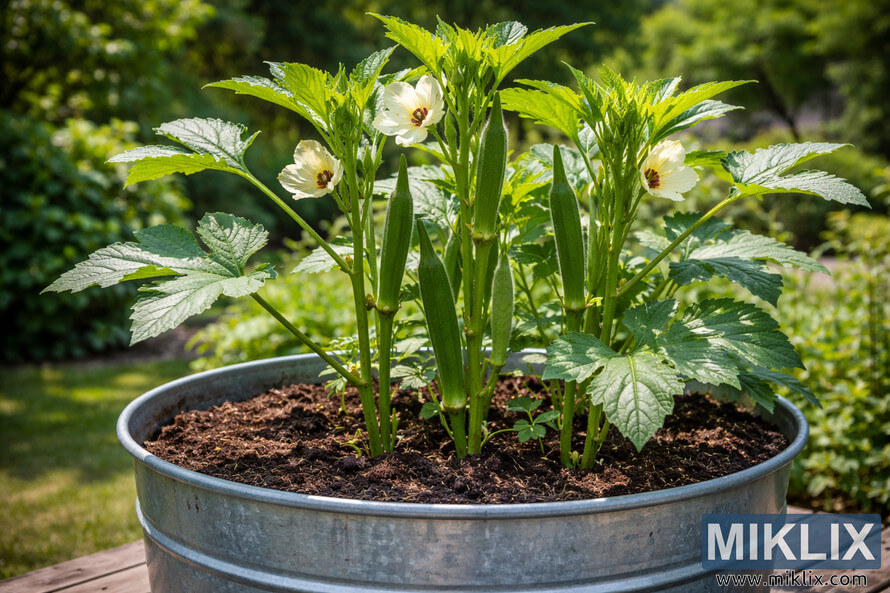
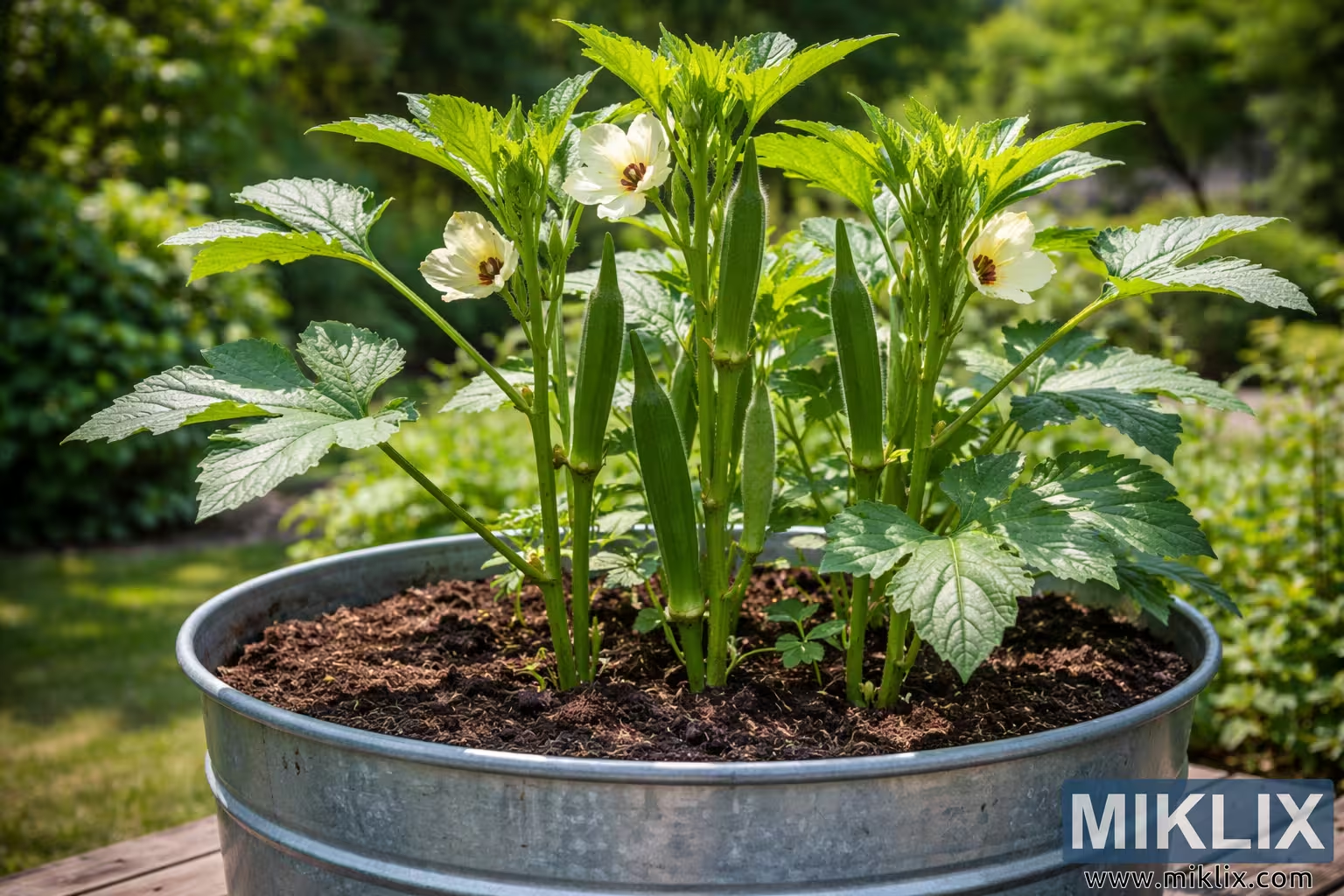
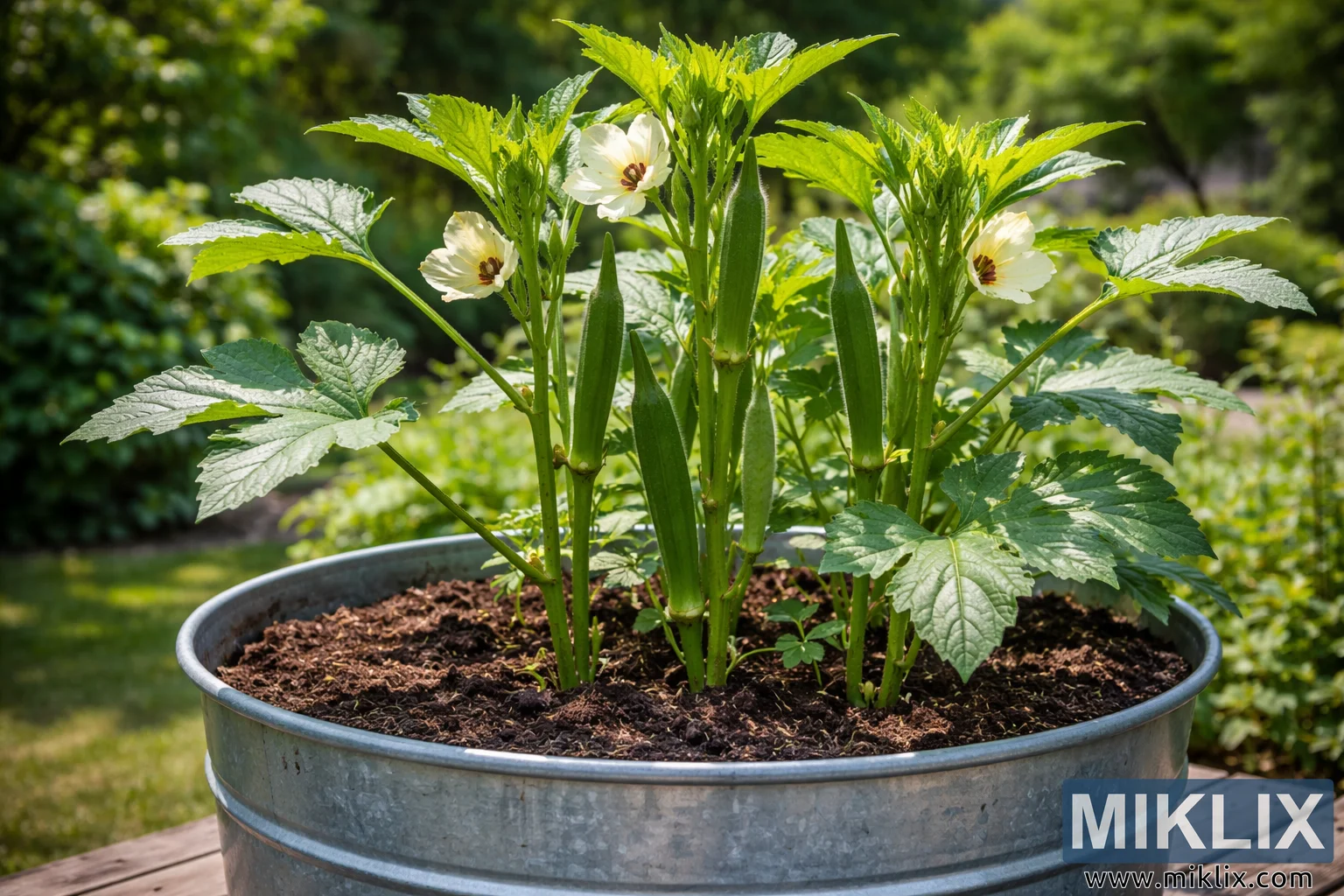
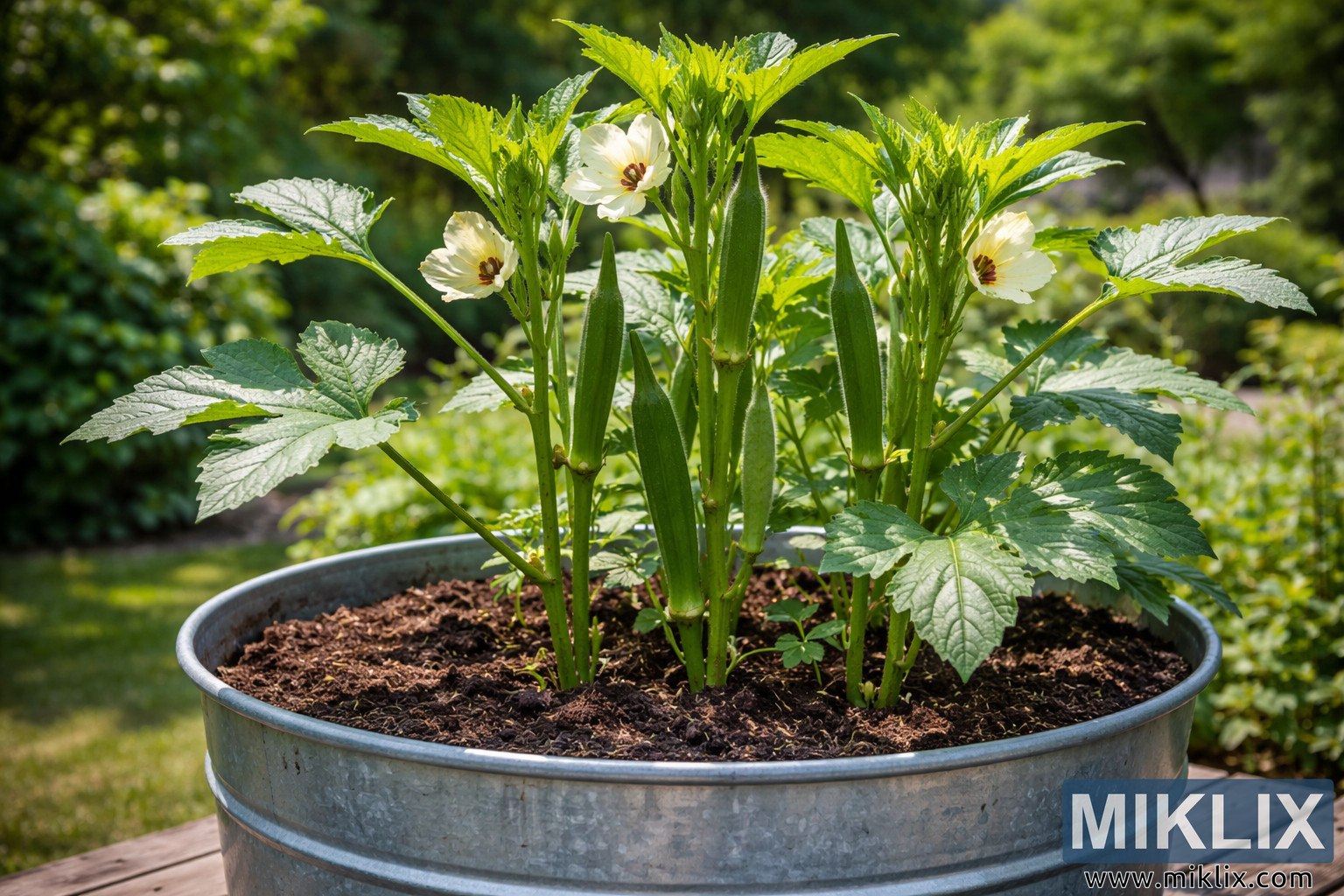
Photo of a thriving okra plant growing in a large container, showing lush green leaves and young okra pods in a patio container garden setting.
Okra Plant Growing in a Large Container Garden
Tilgjengelige versjoner av dette bildet
Bildefilene som kan lastes ned nedenfor, er mindre komprimerte og har høyere oppløsning - og dermed høyere kvalitet - enn bildene som er innebygd i artikler og sider på dette nettstedet, som er mer optimalisert med tanke på filstørrelse for å redusere båndbreddeforbruket.
Vanlig størrelse (1,536 x 1,024)
Stor størrelse (3,072 x 2,048)
Svært stor størrelse (4,608 x 3,072)
Ekstra stor størrelse (6,144 x 4,096)
Komisk stor størrelse (1,048,576 x 699,051)
- Laster fortsatt opp... ;-)
Bildebeskrivelse
A high-resolution landscape photograph showing a healthy okra plant growing in a large container. The container is a wide, deep garden pot made from dark terracotta or matte plastic, positioned on a patio or balcony surface with natural daylight illuminating the scene. The okra plant rises vertically from rich, dark potting soil that appears slightly moist and well-aerated, suggesting careful gardening and proper watering.
The plant itself is vibrant and robust, with a sturdy green stem branching into multiple leaf stalks. Each leaf is large and palm-shaped with distinctive lobes, displaying the characteristic texture and structure typical of okra plants. The leaves are a lush medium to deep green, with visible veins spreading outward from the center, catching soft sunlight that highlights their slightly matte surface.
Several young okra pods can be seen forming along the stem where the leaf stalks meet the main plant. The pods are slender, ridged, and tapering toward the tip, displaying a fresh green color that contrasts gently with the darker foliage. Some pods appear newly formed and small, while others are slightly longer, suggesting different stages of growth.
The container provides ample space for the plant’s root system, and the soil surface may show small pieces of organic matter or mulch, indicating a well-maintained container garden. Around the base of the plant, the soil is slightly uneven with subtle textures created by watering and planting.
The background of the image is softly out of focus, emphasizing the okra plant as the central subject. Hints of a home garden environment can be seen—possibly wooden decking, a balcony railing, or additional potted plants placed further away. The blurred backdrop contains warm natural tones and soft greenery that complement the vivid green of the okra plant without distracting from it.
Sunlight enters from one side of the frame, creating gentle highlights along the edges of the leaves and subtle shadows beneath them. This lighting adds depth and dimension to the image, making the leaves appear layered and lively. The overall composition feels calm and natural, representing a productive container garden setup suitable for small spaces.
The landscape orientation allows the viewer to see the full height of the okra plant along with the breadth of the container and surrounding patio environment. The scene conveys the idea of successful home vegetable gardening, illustrating how okra can thrive even when grown in a large container rather than directly in the ground.
Bildet er relatert til: The Complete Guide to Growing Okra in Your Home Garden