
Bilde: Healthy vs Nutrient-Deficient Okra Leaves Comparison
Publisert:
Sist oppdatert: 17. mars 2026 kl. 21:37:49 UTC
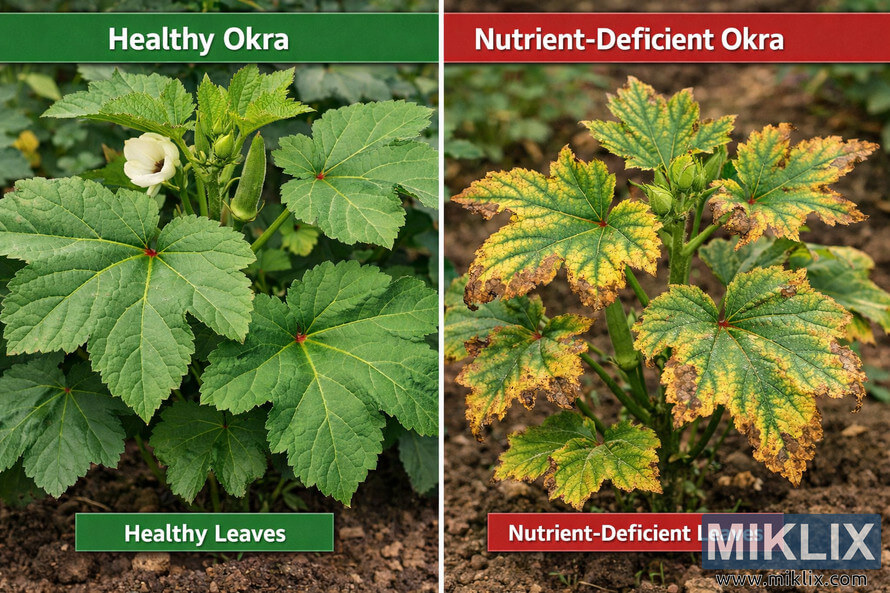
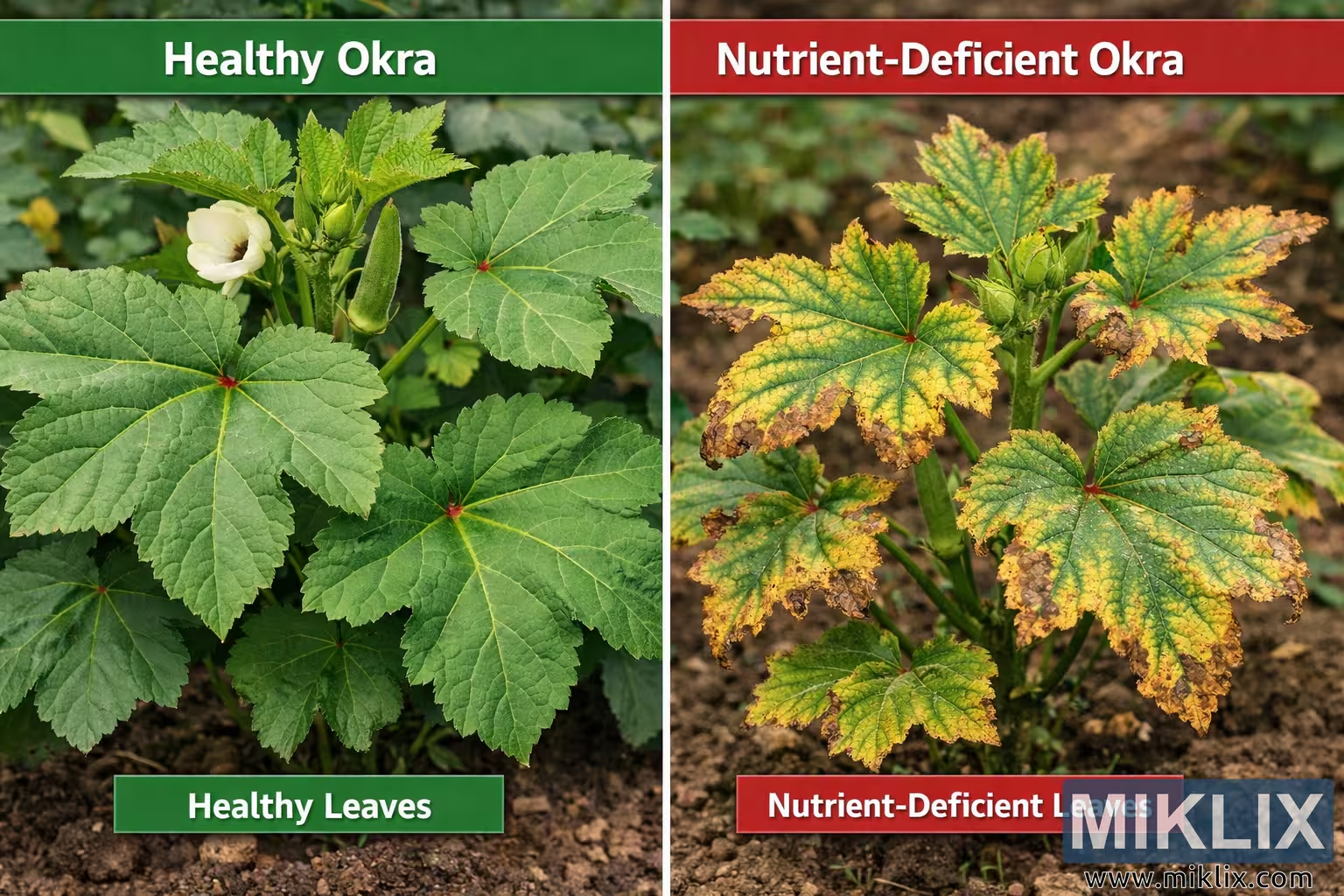
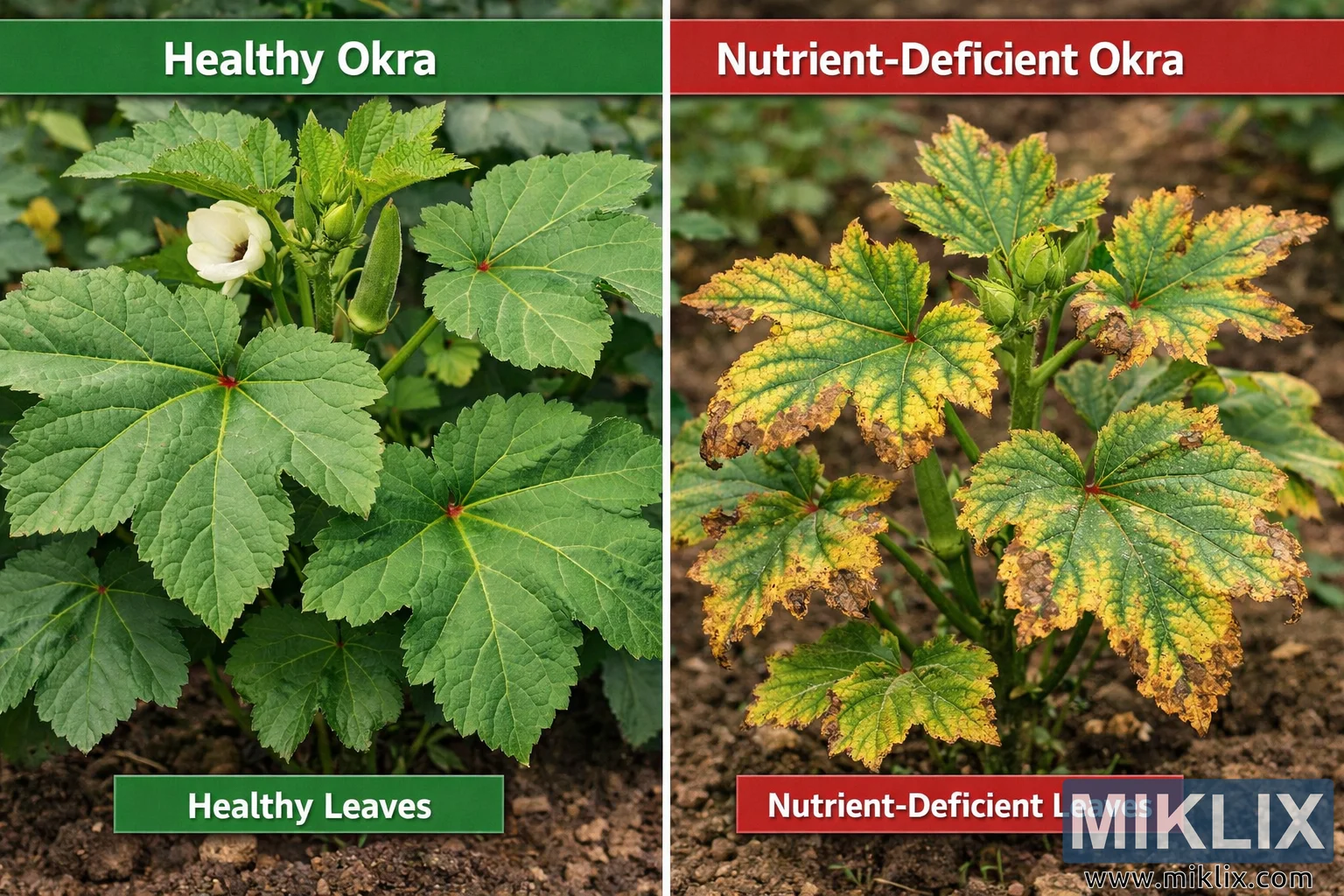
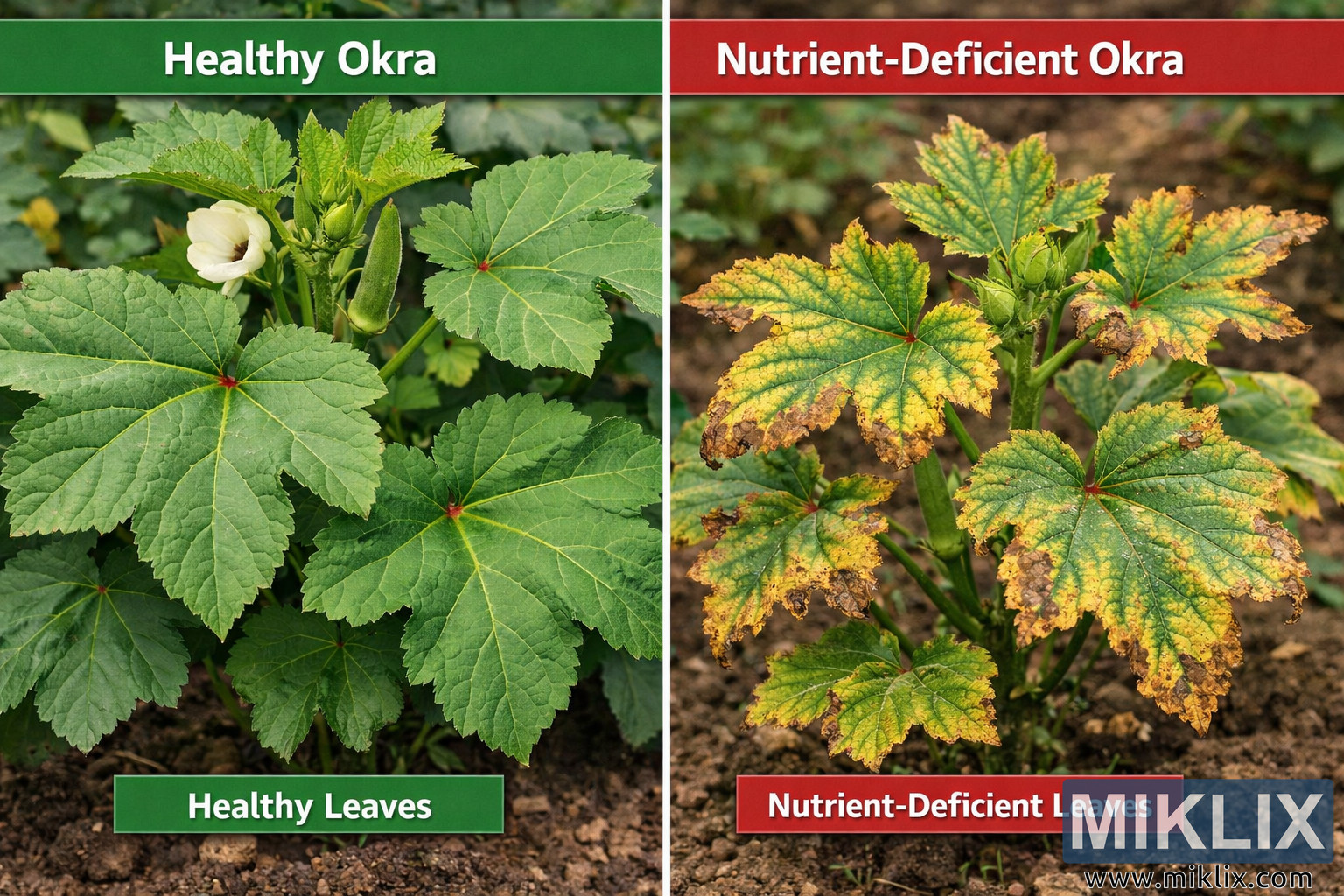
Visual comparison showing healthy okra leaves versus nutrient-deficient okra leaves with yellowing, browning, and damaged edges in a garden setting.
Healthy vs Nutrient-Deficient Okra Leaves Comparison
Tilgjengelige versjoner av dette bildet
Bildefilene som kan lastes ned nedenfor, er mindre komprimerte og har høyere oppløsning - og dermed høyere kvalitet - enn bildene som er innebygd i artikler og sider på dette nettstedet, som er mer optimalisert med tanke på filstørrelse for å redusere båndbreddeforbruket.
Vanlig størrelse (1,536 x 1,024)
Stor størrelse (3,072 x 2,048)
Svært stor størrelse (4,608 x 3,072)
Ekstra stor størrelse (6,144 x 4,096)
Komisk stor størrelse (1,048,576 x 699,051)
- Laster fortsatt opp... ;-)
Bildebeskrivelse
This educational comparison image presents two okra plants displayed side by side to illustrate the visual differences between healthy foliage and leaves affected by nutrient deficiency. The image is arranged in a landscape format with a clear vertical division separating the two conditions for easy visual comparison. The left side of the image represents a healthy okra plant growing in well-maintained garden soil. Its leaves are broad, symmetrical, and vibrant green, with clearly defined veins radiating from the center of each leaf. The leaf surfaces appear smooth and evenly colored, showing no discoloration or damage. The plant’s structure looks strong and upright, and a developing okra pod and pale cream-colored flower are visible among the foliage, indicating active growth and good plant vitality. The soil beneath the healthy plant appears rich and well-textured, reinforcing the impression of a supportive growing environment. A green label at the top reads "Healthy Okra," while a matching label at the bottom highlights "Healthy Leaves," emphasizing the plant’s robust condition.
On the right side of the image, the okra plant demonstrates clear signs of nutrient deficiency. The leaves appear mottled with yellowing between the veins, a condition often associated with chlorosis and mineral imbalance. Several leaves show browning and necrotic patches along the edges, and some sections look dry or slightly curled. The coloration ranges from pale yellow to dull green, creating a stark contrast with the deep green foliage of the healthy plant. The overall plant structure appears weaker and less vigorous, with the foliage looking stressed and uneven. The surrounding soil is visible and appears similar in texture but the plant itself exhibits clear symptoms of nutritional stress. A red label at the top reads "Nutrient-Deficient Okra," while the bottom label identifies "Nutrient-Deficient Leaves," reinforcing the diagnostic purpose of the comparison.
Together, the two sides provide a clear visual guide for gardeners, farmers, and plant enthusiasts to recognize the differences between properly nourished okra plants and those suffering from nutrient shortages. By presenting the plants under similar lighting and garden conditions, the image emphasizes how leaf color, texture, and damage patterns can serve as important indicators of plant health and soil fertility.
Bildet er relatert til: The Complete Guide to Growing Okra in Your Home Garden