
Bilde: Common Okra Leaf Pests Feeding on an Okra Plant
Publisert:
Sist oppdatert: 17. mars 2026 kl. 21:37:49 UTC
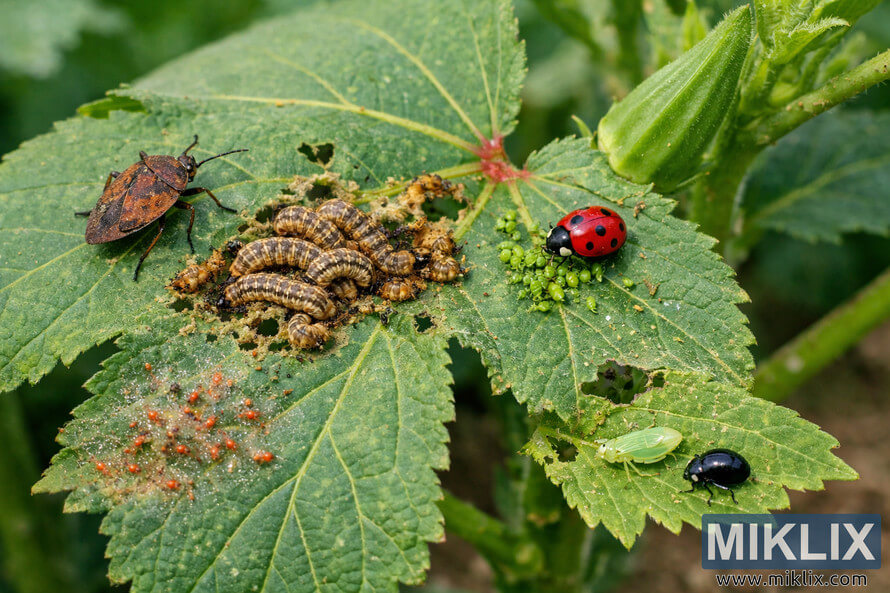
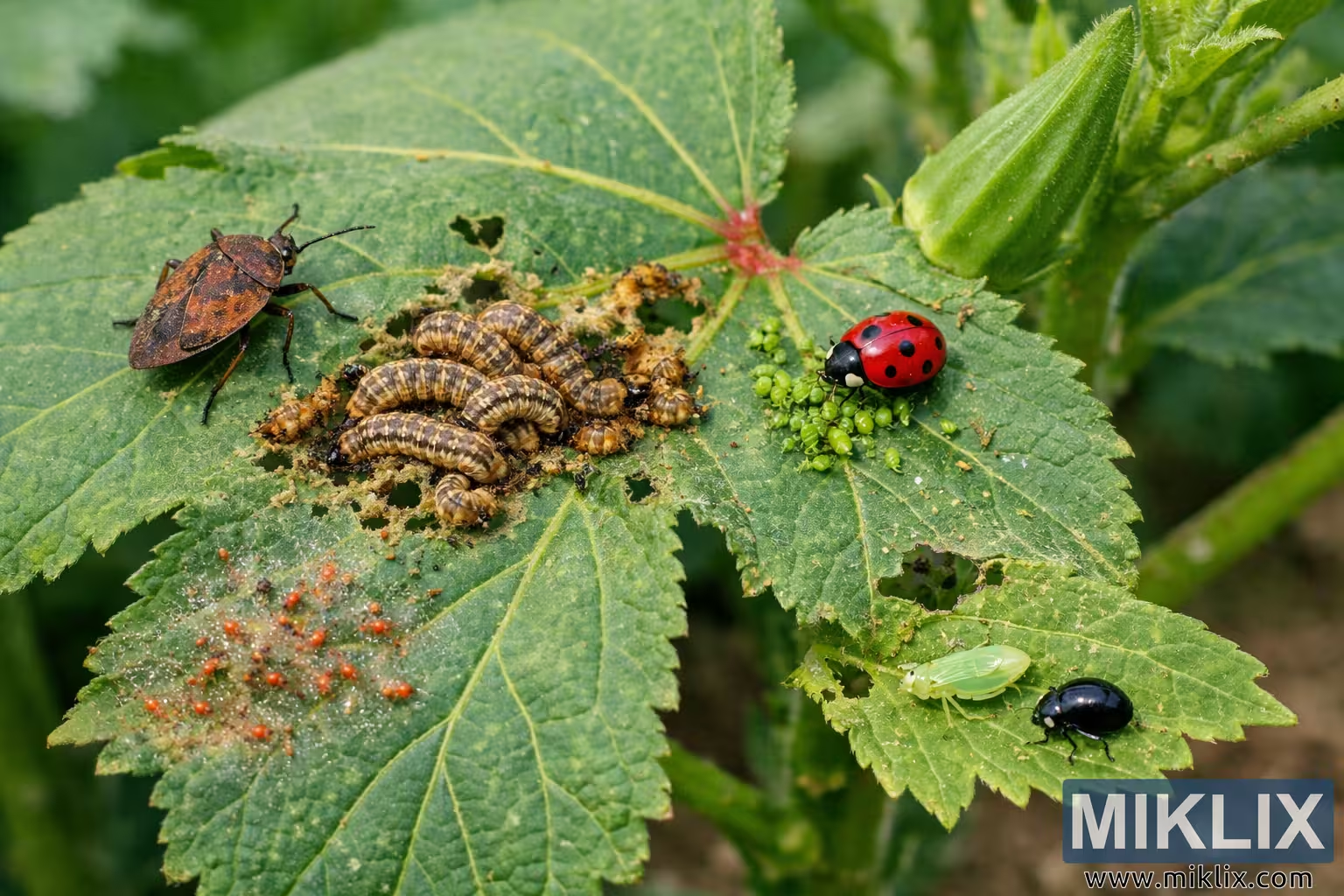
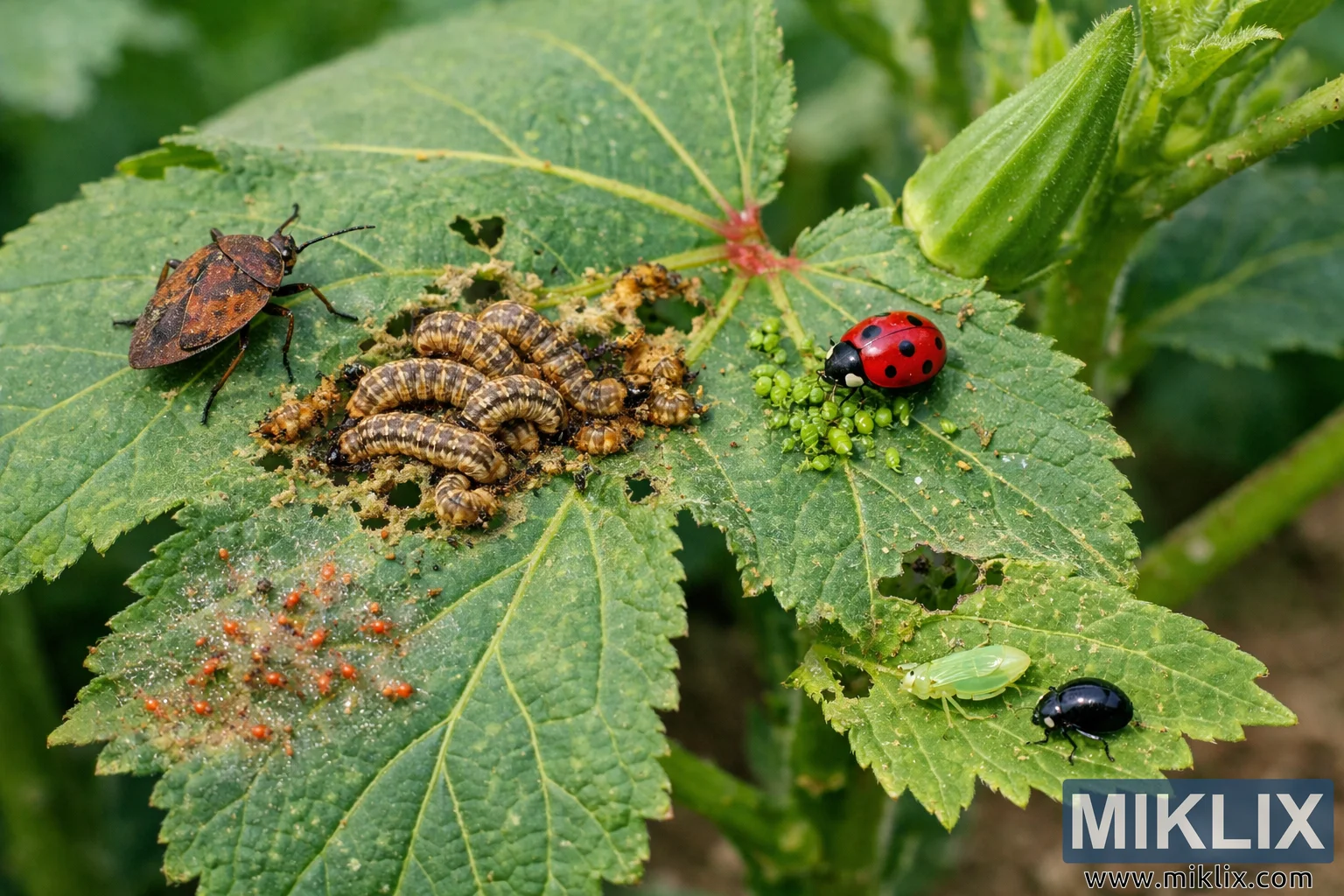
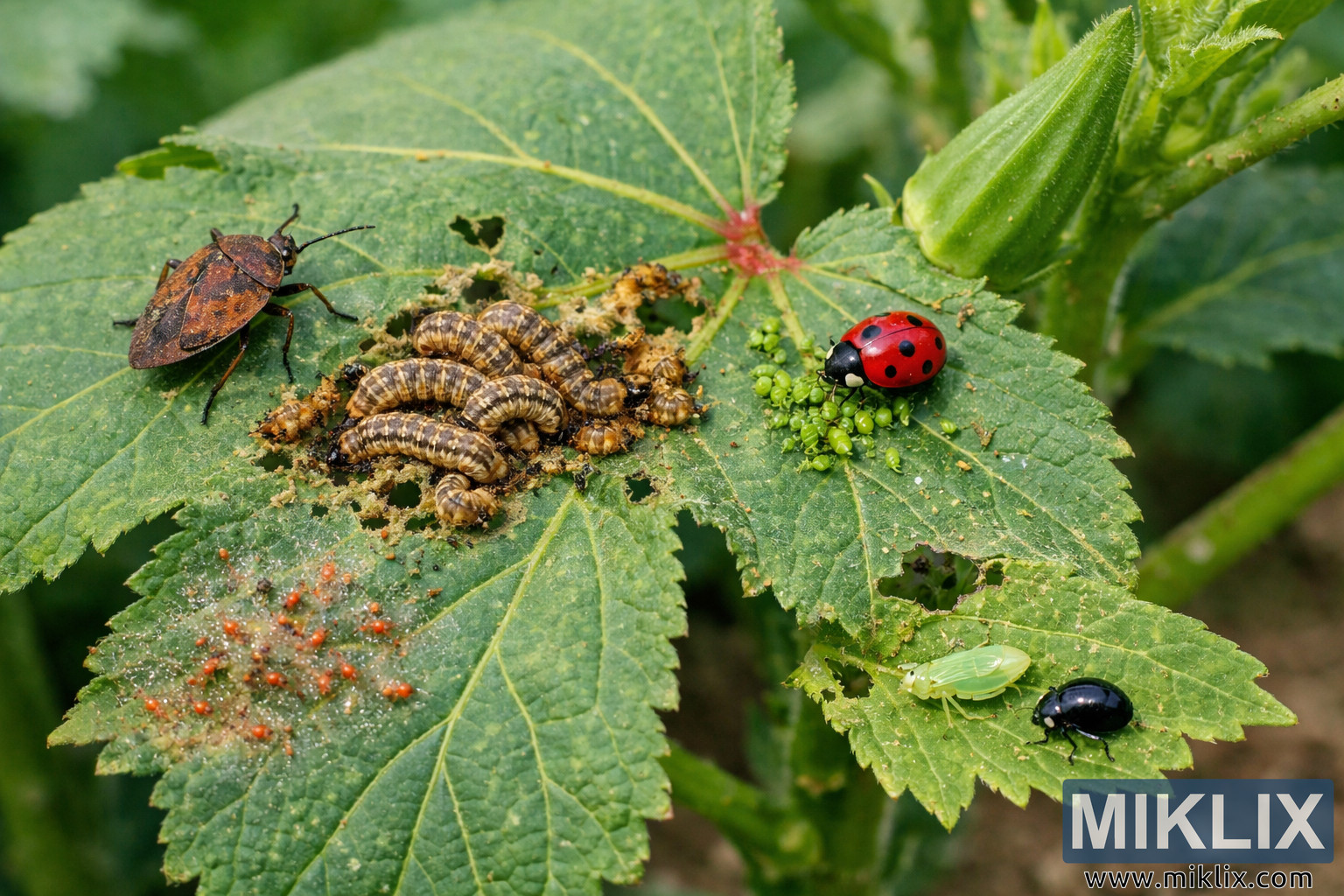
Detailed close-up image of an okra plant leaf with several common agricultural pests such as caterpillars, aphids, stink bug, flea beetle, leafhopper, and spider mites feeding on the foliage.
Common Okra Leaf Pests Feeding on an Okra Plant
Tilgjengelige versjoner av dette bildet
Bildefilene som kan lastes ned nedenfor, er mindre komprimerte og har høyere oppløsning - og dermed høyere kvalitet - enn bildene som er innebygd i artikler og sider på dette nettstedet, som er mer optimalisert med tanke på filstørrelse for å redusere båndbreddeforbruket.
Vanlig størrelse (1,536 x 1,024)
Stor størrelse (3,072 x 2,048)
Svært stor størrelse (4,608 x 3,072)
Ekstra stor størrelse (6,144 x 4,096)
Komisk stor størrelse (1,048,576 x 699,051)
- Laster fortsatt opp... ;-)
Bildebeskrivelse
This high-resolution close-up photograph shows an okra plant leaf during daylight, illustrating a variety of common insect pests that can attack okra crops. The scene is centered on two overlapping green okra leaves with clearly visible veins and slightly serrated edges. The leaves display multiple signs of pest damage, including irregular holes, chewing marks, and small patches of discoloration where insects have fed on the plant tissue. The background consists of softly blurred green foliage and stems of the okra plant, giving depth to the scene while keeping the focus on the insects present on the leaves.
On the left side of the leaf sits a brown stink bug with a shield-shaped body and long antennae. Its mottled brown coloration blends with the natural tones of the leaf surface. Nearby, a cluster of striped caterpillars is actively feeding on the leaf. The caterpillars have segmented bodies with alternating light and dark bands and are positioned close together around a patch where the leaf has been heavily chewed away, leaving ragged holes and fragments of leaf tissue.
Toward the right side of the leaf, a bright red ladybug with distinct black spots is visible among a dense group of small green aphids. The aphids are clustered along the leaf surface and appear to be feeding on plant sap. The ladybug, a natural predator of aphids, stands prominently among them, adding a striking contrast of color against the green leaf and the pale green aphids.
Lower on the leaf, a pale green leafhopper rests near a glossy black flea beetle. The leafhopper has a slender, wedge-shaped body and delicate legs suited for jumping, while the flea beetle appears rounder and darker with a smooth, reflective shell. Both insects represent common pests that feed on plant foliage and contribute to visible damage on okra leaves.
In the bottom left portion of the leaf, tiny red spider mites are clustered together within a faint web-like patch. These mites are extremely small but noticeable due to their bright reddish coloration and the delicate webbing that surrounds them. Their feeding activity often causes stippling and weakening of the leaf tissue.
In the upper right of the image, a young okra pod is visible attached to the plant stem, emphasizing that the pests are present on a productive crop plant. The overall composition highlights the diversity of insects that may inhabit okra plants simultaneously and demonstrates the different types of damage they can cause to the leaves.
Bildet er relatert til: The Complete Guide to Growing Okra in Your Home Garden