
Bilde: Ladybug Feeding on Aphids on Mustard Plant
Publisert:
Sist oppdatert: 7. mars 2026 kl. 18:30:03 UTC
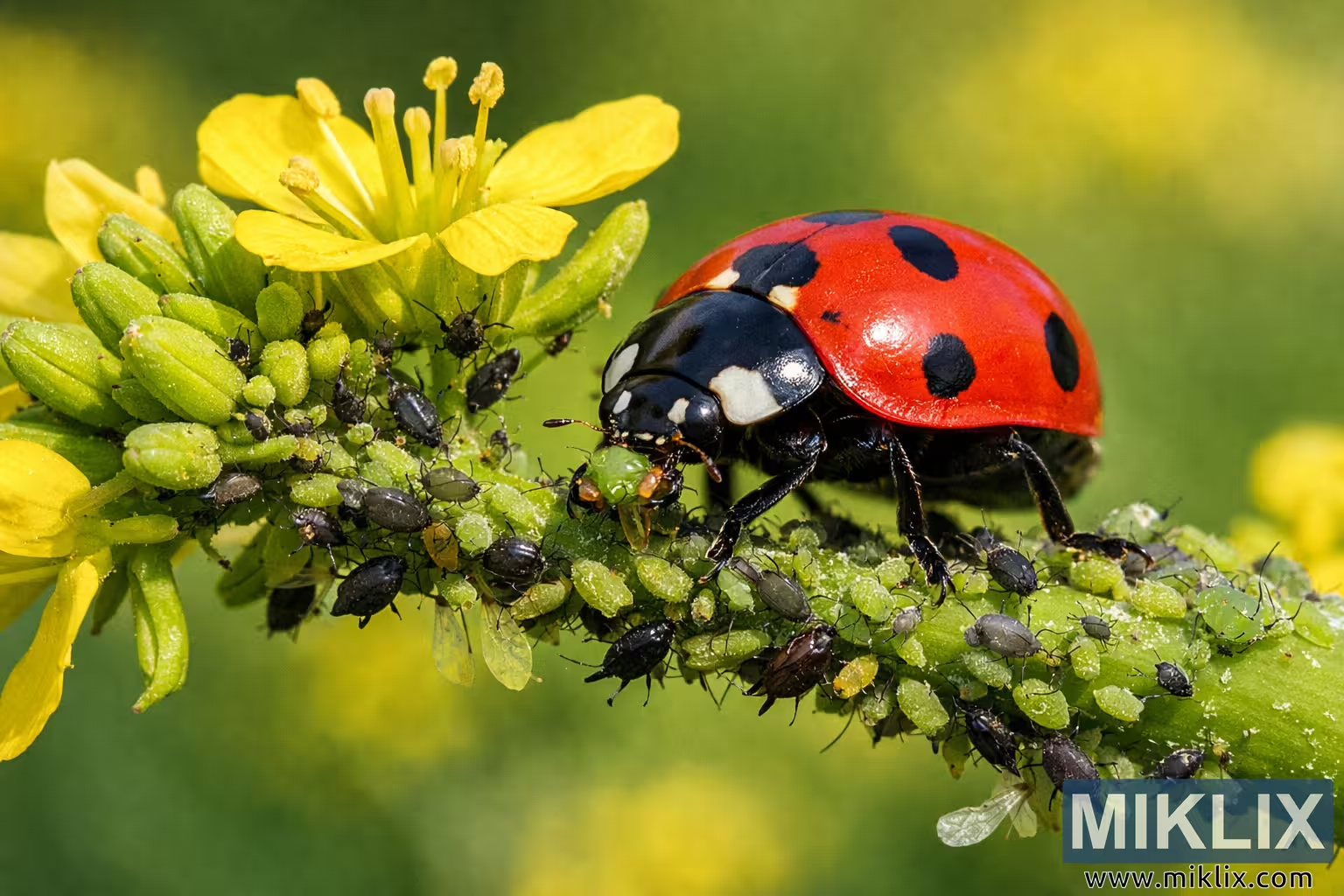
High-resolution landscape image of a seven-spotted ladybug feeding on aphids along a green mustard plant stem, surrounded by bright yellow blossoms and soft natural daylight.
Ladybug Feeding on Aphids on Mustard Plant
Tilgjengelige versjoner av dette bildet
Bildefilene som kan lastes ned nedenfor, er mindre komprimerte og har høyere oppløsning - og dermed høyere kvalitet - enn bildene som er innebygd i artikler og sider på dette nettstedet, som er mer optimalisert med tanke på filstørrelse for å redusere båndbreddeforbruket.
Vanlig størrelse (1,536 x 1,024)
Stor størrelse (3,072 x 2,048)
Svært stor størrelse (4,608 x 3,072)
Ekstra stor størrelse (6,144 x 4,096)
Komisk stor størrelse (1,048,576 x 699,051)
- Laster fortsatt opp... ;-)
Bildebeskrivelse
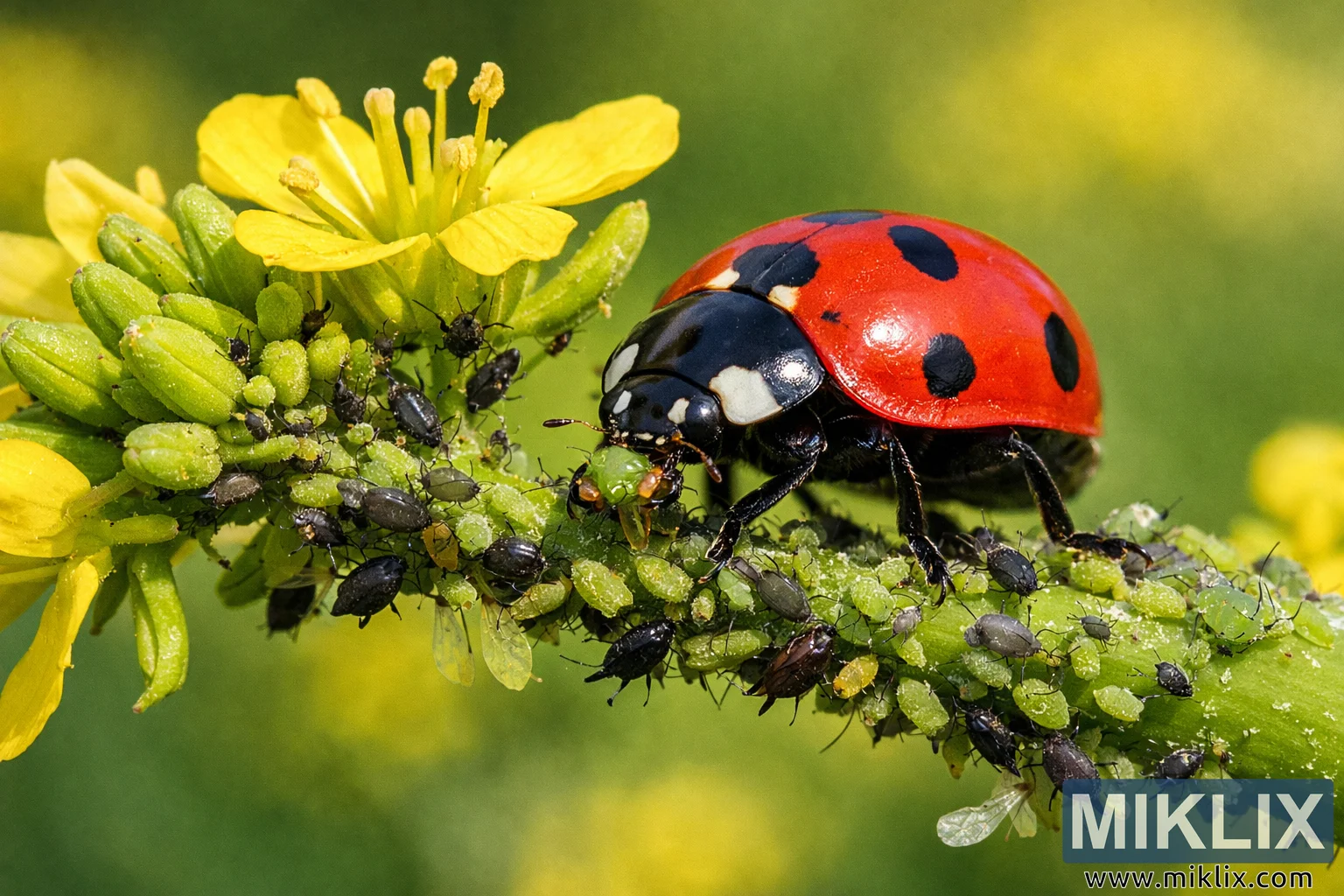
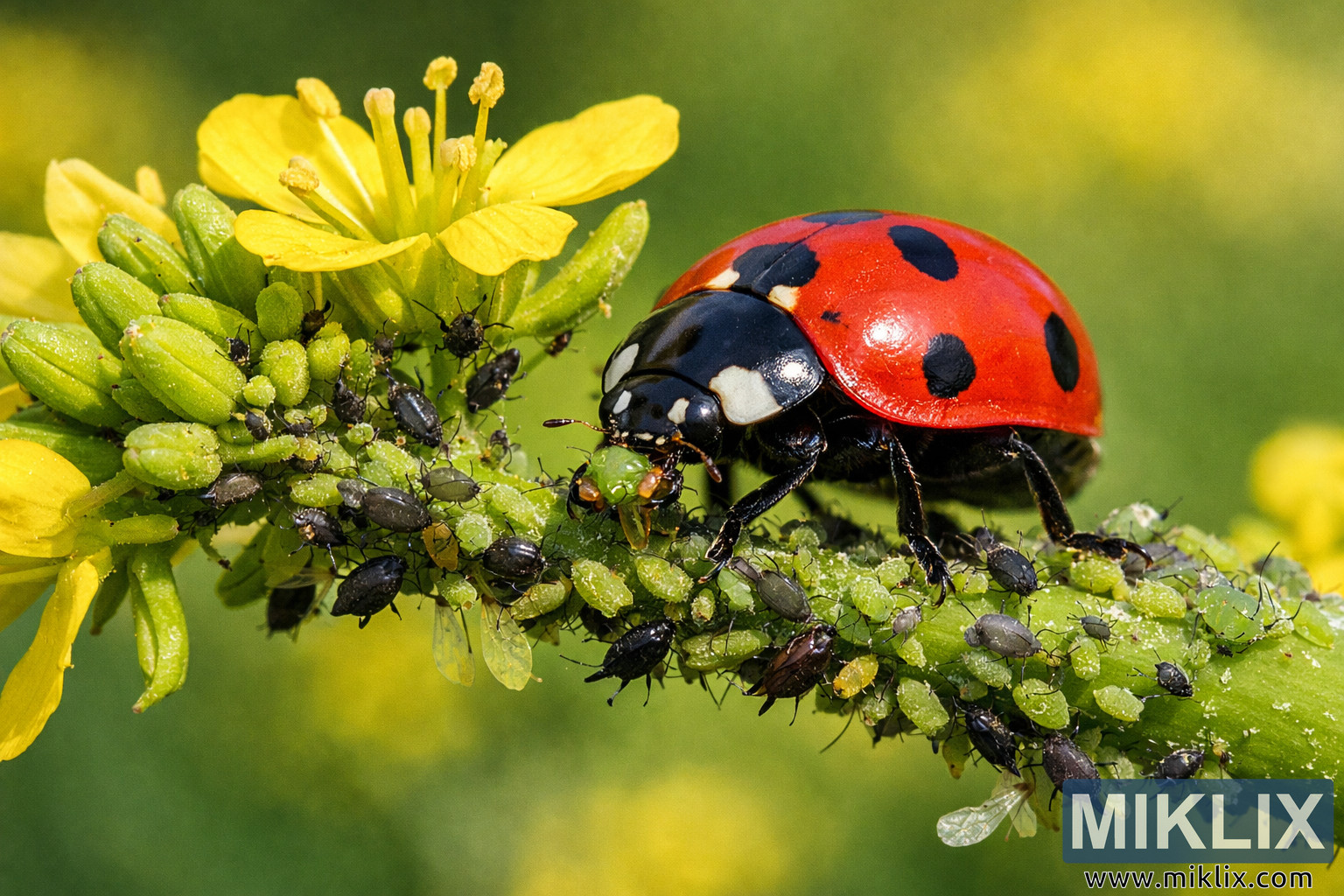
A high-resolution landscape photograph captures a vivid close-up of a seven-spotted ladybug feeding on a dense colony of aphids clustered along the green stem of a mustard plant. The scene is illuminated by bright natural daylight, which enhances the rich contrast between the ladybug’s glossy red elytra and its distinct black spots. The insect’s domed back reflects subtle highlights, emphasizing its smooth, polished surface. Its black head, marked with pale patches near the pronotum, tilts downward as its mandibles grasp a plump green aphid. The predatory interaction is frozen in crisp detail, revealing the delicate legs of the ladybug braced firmly against the textured plant stem.
The mustard plant’s stem stretches diagonally across the frame, supporting clusters of tightly packed aphids in varying shades of green and deep charcoal. Some aphids appear translucent in the sunlight, their tiny legs and antennae clearly visible. A few winged aphids can be seen among the mass, their fragile, veined wings catching the light. The surface of the stem is slightly ridged and dotted with minute plant hairs, adding tactile realism to the composition. Near the top left portion of the frame, bright yellow mustard flowers bloom, their petals open wide and glowing warmly against the soft green background.
The shallow depth of field isolates the main subjects in sharp focus while transforming the distant foliage into a creamy blur of green and yellow hues. This bokeh effect draws the viewer’s eye directly to the ladybug and its prey, reinforcing the natural drama unfolding at a miniature scale. The background gradients blend seamlessly, suggesting a lush garden or agricultural field in peak growing season. The interplay of light and shadow adds dimensionality, accentuating the curvature of the ladybug’s shell and the clustered forms of the aphids.
Every element of the composition underscores the ecological relationship between predator and pest. The ladybug’s poised stance conveys both balance and intent, while the aphids’ crowded formation emphasizes the abundance of food. The photograph not only highlights the intricate beauty of small-scale wildlife but also subtly illustrates a natural method of pest control in agricultural ecosystems. The vibrant color palette—dominated by reds, yellows, and fresh greens—creates a dynamic yet harmonious visual experience. Overall, the image presents a striking macro perspective of nature’s delicate balance, rendered with exceptional clarity and lifelike detail.
Bildet er relatert til: Complete Guide to Growing Your Own Mustard Plants