
Bilde: Artichoke Health Considerations and Benefits
Publisert:
Sist oppdatert: 19. juli 2026 kl. 13:00:56 UTC
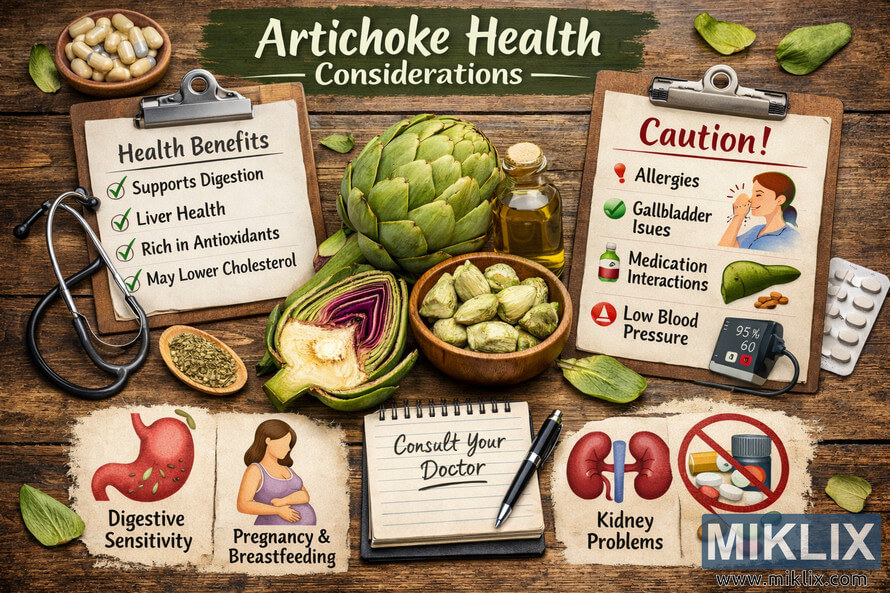
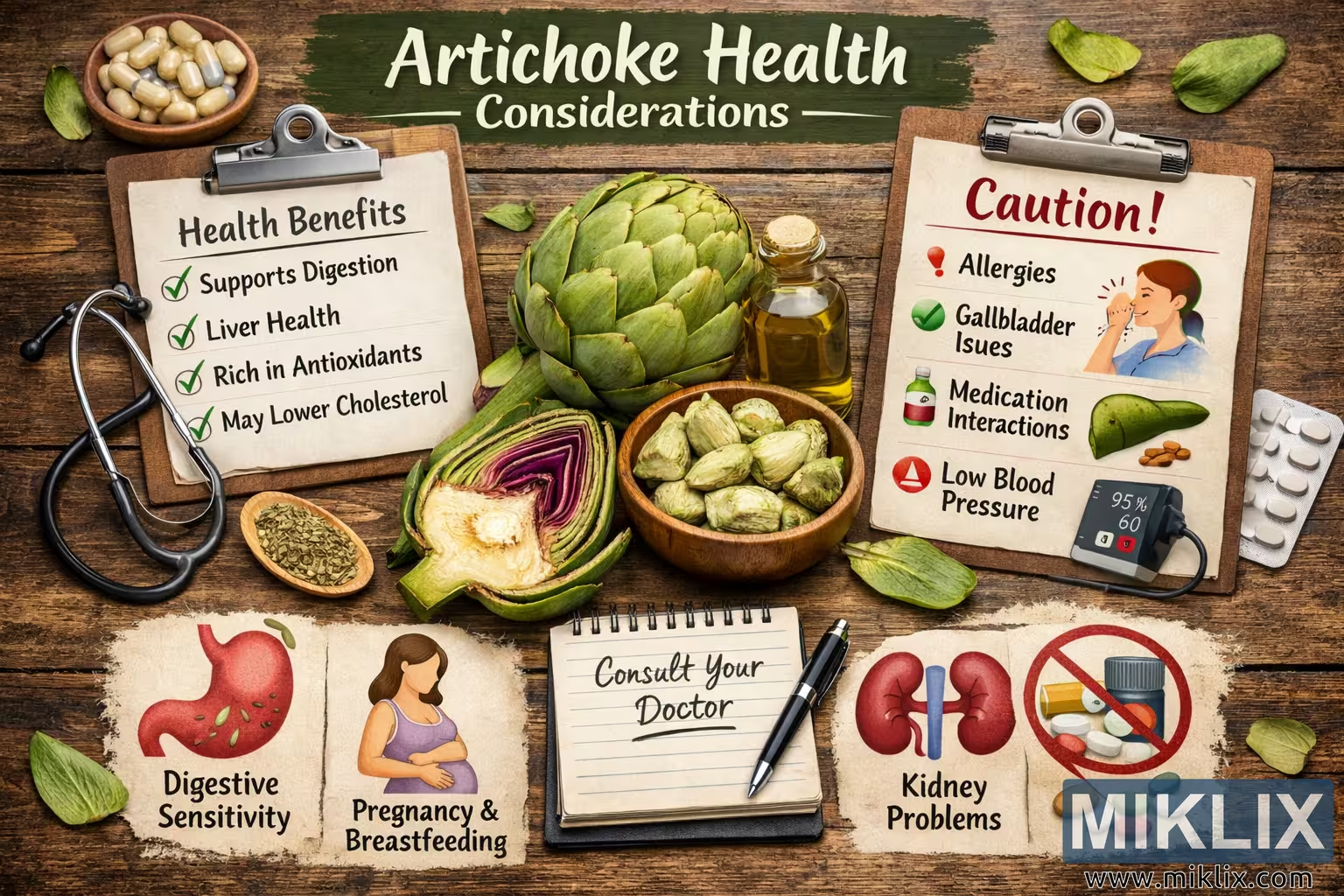
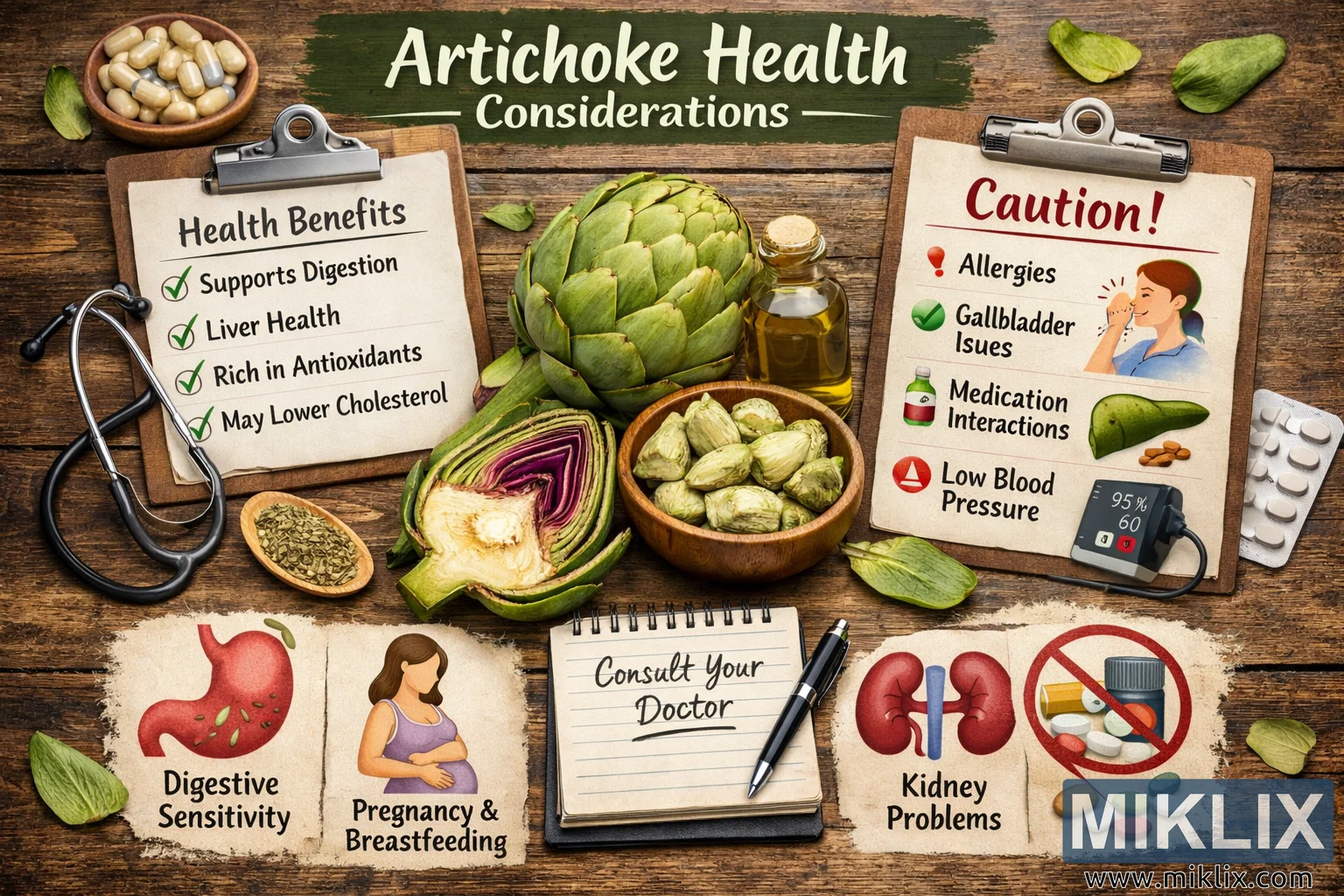
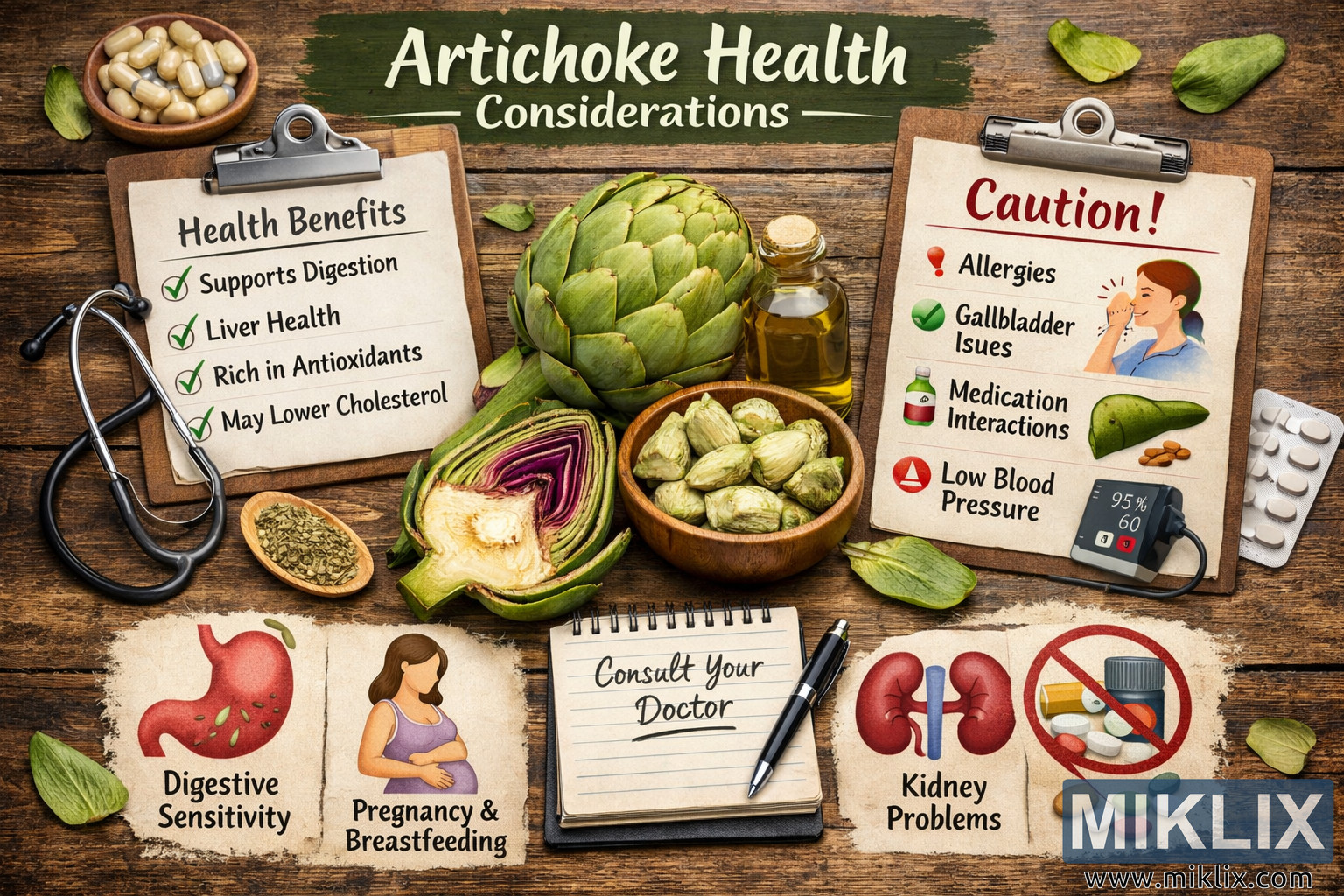
Explore the health benefits and medical considerations of artichoke consumption through a detailed educational visual. Learn about its digestive support, antioxidant properties, and potential cautions such as allergies, gallbladder issues, and medication interactions.
Artichoke Health Considerations and Benefits
Tilgjengelige versjoner av dette bildet
Bildefilene som kan lastes ned nedenfor, er mindre komprimerte og har høyere oppløsning - og dermed høyere kvalitet - enn bildene som er innebygd i artikler og sider på dette nettstedet, som er mer optimalisert med tanke på filstørrelse for å redusere båndbreddeforbruket.
Vanlig størrelse (1,536 x 1,024)
Stor størrelse (3,072 x 2,048)
Svært stor størrelse (4,608 x 3,072)
Ekstra stor størrelse (6,144 x 4,096)
Komisk stor størrelse (1,048,576 x 699,051)
- Laster fortsatt opp... ;-)
Bildebeskrivelse
The image presents a comprehensive and visually engaging educational composition centered around the theme of artichoke health considerations and benefits. Arranged on a rustic wooden surface, the scene combines natural textures with medical and nutritional symbolism to create a balanced representation of wellness and caution.
On the left side of the image, a fresh artichoke with tightly layered green leaves stands as the central organic element. In front of it, a halved artichoke reveals its intricate structure—the tender heart surrounded by purple-tinted inner leaves and creamy flesh. Nearby, a wooden bowl filled with cooked artichoke hearts adds a sense of culinary realism, while a small glass bottle of golden oil and a wooden spoon filled with dried herbs evoke the idea of natural remedies and dietary supplements. These items collectively symbolize the nutritional richness and therapeutic potential of artichokes.
Above this arrangement, a clipboard titled “Health Benefits” lists several positive attributes associated with artichoke consumption. Each benefit is marked with a green checkmark, reinforcing the sense of approval and evidence-based wellness. The listed points include “Supports Digestion,” “Liver Health,” “Rich in Antioxidants,” and “May Lower Cholesterol.” A stethoscope and a small bowl of capsules accompany the clipboard, bridging the connection between natural food and medical science. The visual language here emphasizes that artichokes are not merely a culinary ingredient but also a subject of nutritional research and health interest.
At the top center of the image, the title “Artichoke Health Considerations” appears in bold green and white lettering, serving as the thematic anchor. The typography is clean and professional, suggesting a credible and informative tone suitable for educational or health-related contexts.
On the right side, another clipboard labeled “Caution!” introduces the medical considerations and potential risks associated with artichoke consumption. The warnings are presented with clear icons and concise text, including “Allergies” illustrated by a person sneezing, “Gallbladder Issues” represented by a gallbladder and stones, “Medication Interactions” shown with a pill bottle and warning symbol, and “Low Blood Pressure” depicted with a blood pressure monitor reading 95/60. These cautionary notes balance the optimistic health claims on the left, reminding viewers that even natural foods can have contraindications depending on individual health conditions.
Below the main section, three illustrated icons provide additional context for specific health scenarios. On the bottom left, an image of an upset stomach labeled “Digestive Sensitivity” highlights that artichokes may cause discomfort for some individuals with sensitive digestion. In the center bottom, a drawing of a pregnant woman holding her belly with the caption “Pregnancy & Breastfeeding” suggests that medical consultation is advisable before consuming artichokes during these stages. On the bottom right, an illustration of kidneys with a crossed-out pill bottle and the text “Kidney Problems” warns against potential complications for those with renal issues.
In the lower center area, a doctor’s notepad with the handwritten phrase “Consult Your Doctor” reinforces the importance of professional medical advice. A pen and stethoscope rest nearby, symbolizing the intersection of personal health responsibility and professional guidance. This detail ties the entire composition together, emphasizing that while artichokes offer numerous benefits, informed consumption is key to safety and effectiveness.
Additional small elements, such as a blister pack of pills and scattered artichoke leaves, add realism and texture to the composition. The lighting is even and natural, highlighting the vibrant greens of the artichoke and the warm tones of the wooden background. The overall color palette—earthy browns, greens, and golds—creates a sense of harmony between nature and science.
The image successfully communicates a dual message: artichokes are a valuable source of nutrients and antioxidants that support digestion and liver health, yet they require mindful consumption for individuals with allergies, gallbladder conditions, or specific medical treatments. The visual balance between benefit and caution makes this image suitable for educational materials, health blogs, or dietary awareness campaigns. It encourages viewers to appreciate the artichoke not only as a flavorful vegetable but also as a complex botanical subject with both therapeutic and medical dimensions.
Overall, the composition is detailed, informative, and aesthetically pleasing, merging culinary beauty with scientific clarity. It invites reflection on how everyday foods can influence well-being and underscores the importance of consulting healthcare professionals before making dietary changes.
Bildet er relatert til: Artichokes: The Delicious Vegetable That's Good for Your Health