
Bilde: Cellular Mechanisms of Cancer Prevention
Publisert:
Sist oppdatert: 16. juli 2026 kl. 20:44:13 UTC
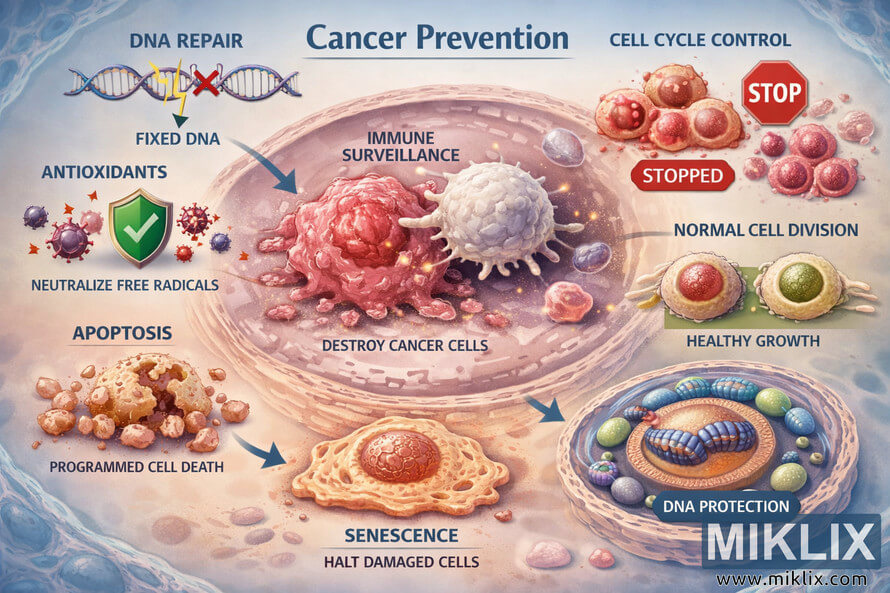
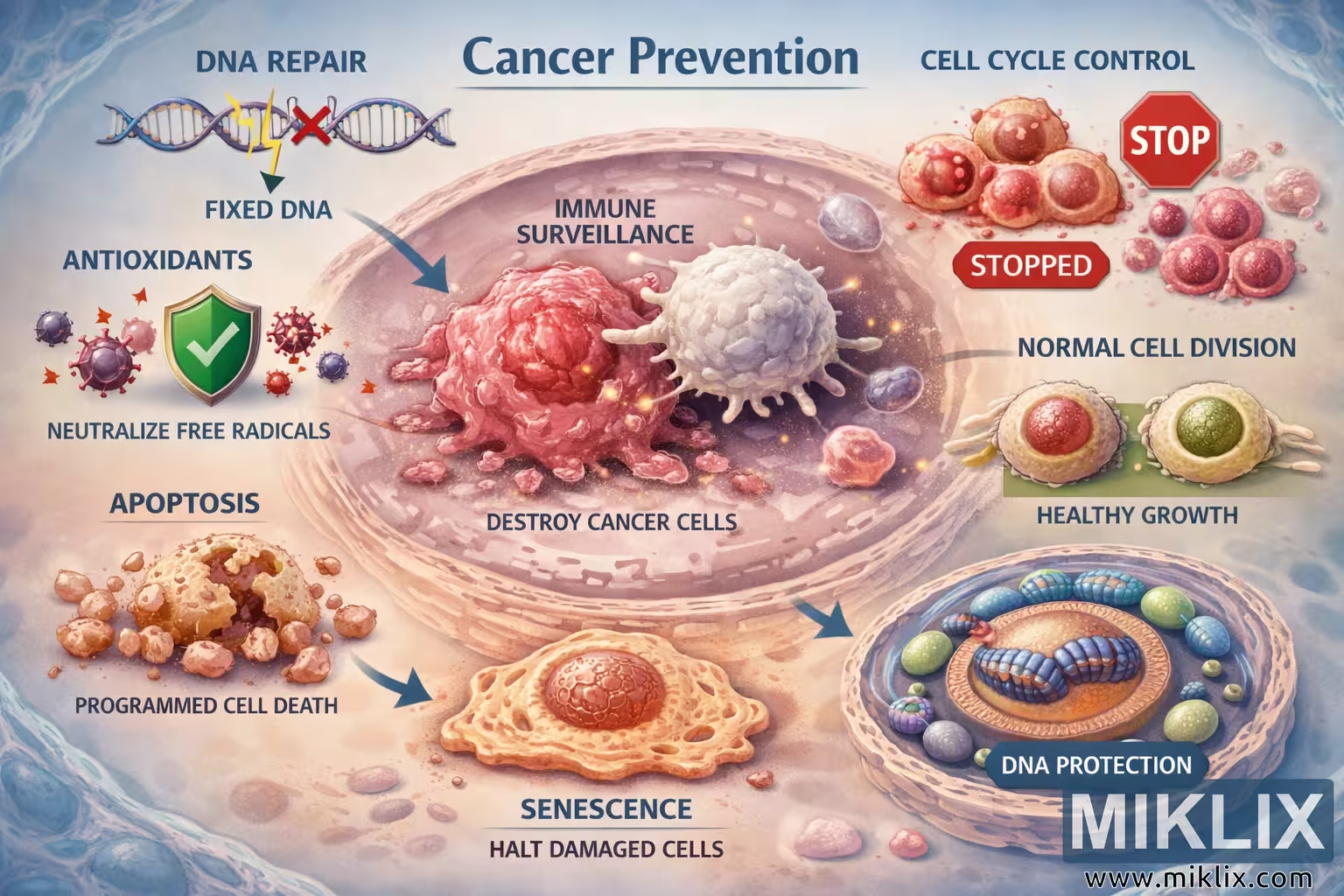
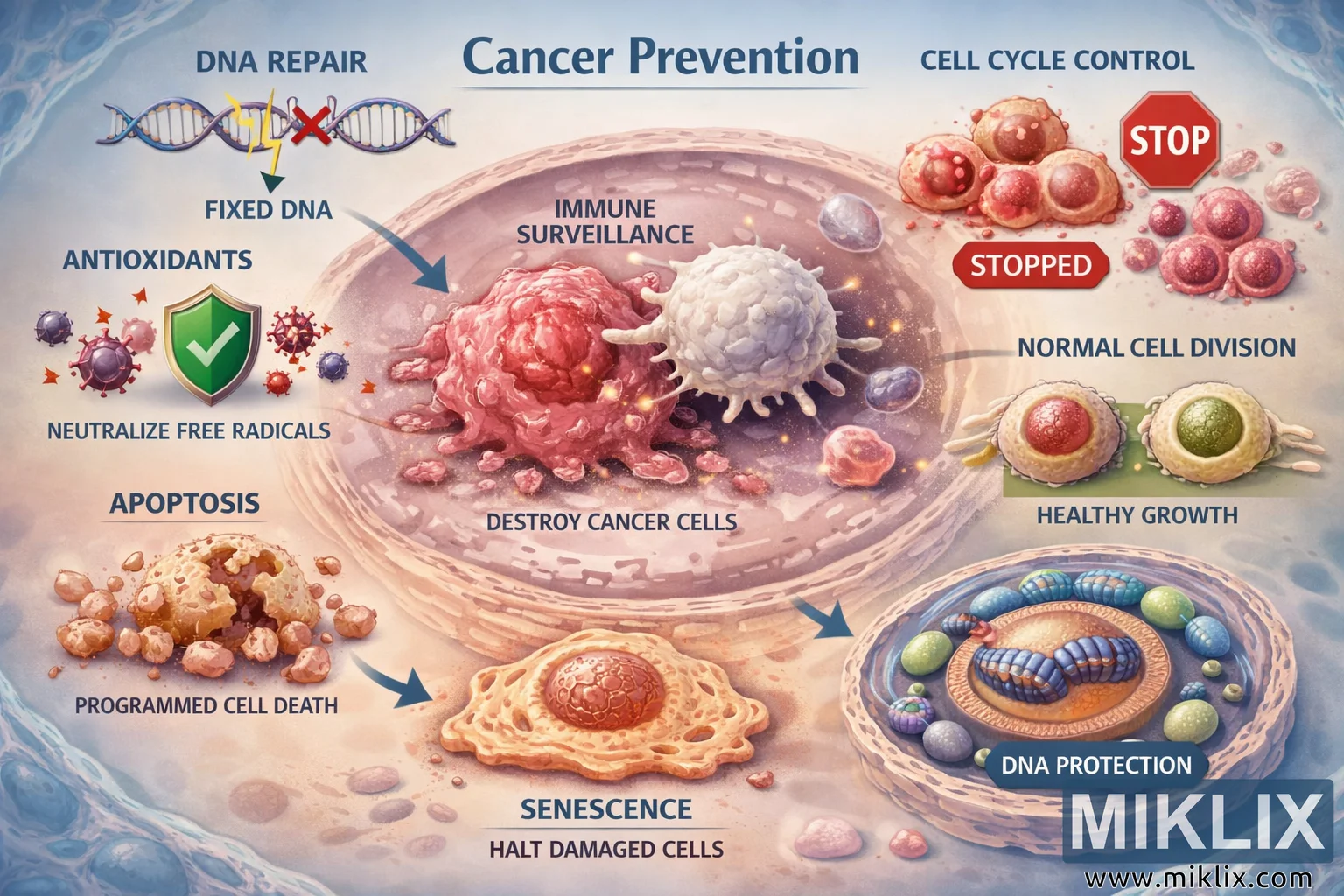
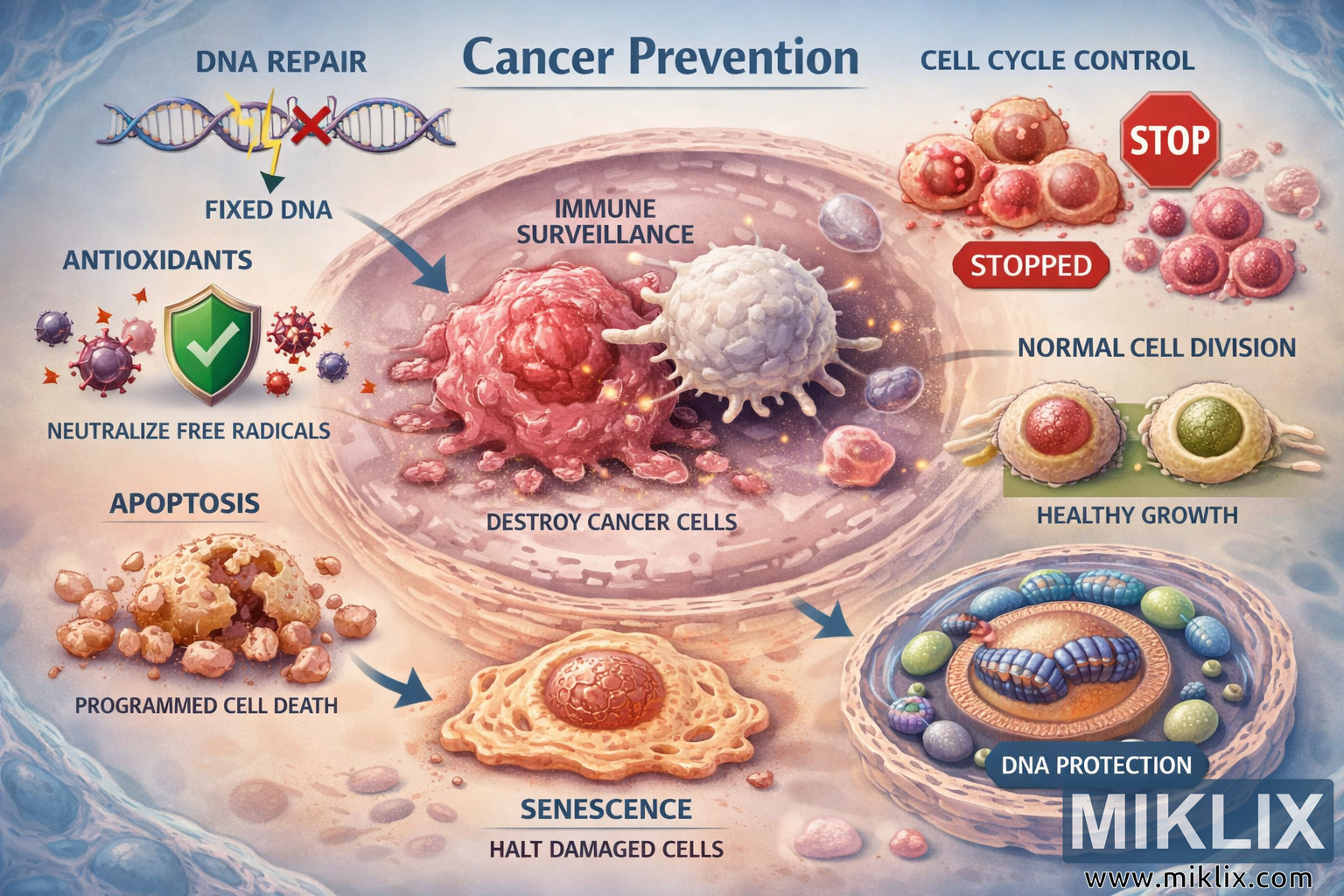
Educational scientific illustration depicting cellular cancer prevention mechanisms such as DNA repair, immune surveillance, antioxidants, apoptosis, cell cycle control, DNA protection, and senescence, highlighting how cells maintain genomic stability and prevent tumor formation.
Cellular Mechanisms of Cancer Prevention
Tilgjengelige versjoner av dette bildet
Bildefilene som kan lastes ned nedenfor, er mindre komprimerte og har høyere oppløsning - og dermed høyere kvalitet - enn bildene som er innebygd i artikler og sider på dette nettstedet, som er mer optimalisert med tanke på filstørrelse for å redusere båndbreddeforbruket.
Vanlig størrelse (1,536 x 1,024)
Stor størrelse (3,072 x 2,048)
Svært stor størrelse (4,608 x 3,072)
Ekstra stor størrelse (6,144 x 4,096)
Komisk stor størrelse (1,048,576 x 699,051)
- Laster fortsatt opp... ;-)
Bildebeskrivelse
This educational scientific illustration presents a detailed and visually rich depiction of cellular cancer prevention mechanisms, designed to communicate complex biological processes in an accessible and aesthetically engaging way. The composition is arranged in a landscape orientation, allowing each mechanism to occupy its own distinct region within the cellular environment while maintaining a cohesive narrative flow from left to right. The central theme, 'Cancer Prevention,' is prominently displayed at the top, serving as the conceptual anchor for the entire image.
On the left side, the process of DNA repair is illustrated through a sequence of molecular events. A damaged DNA double helix, marked by a yellow lightning bolt and a red 'X,' symbolizes genetic injury caused by mutagens or radiation. Below it, an intact DNA strand labeled 'Fixed DNA' demonstrates successful repair, emphasizing the cell's intrinsic ability to correct errors before they lead to malignant transformation. This section highlights the importance of repair enzymes and checkpoint proteins that maintain genomic integrity.
Adjacent to DNA repair, the antioxidants mechanism is represented by a shield bearing a green checkmark, intercepting reactive oxygen species depicted as red and purple molecules emitting sparks. The label 'Neutralize Free Radicals' reinforces the protective role of antioxidants in preventing oxidative stress, which can damage cellular components and DNA. This visual metaphor conveys how dietary and endogenous antioxidants contribute to cancer prevention by stabilizing free radicals and reducing mutational burden.
At the center of the illustration, immune surveillance takes prominence. A large white immune cell is shown attacking a pink cancer cell, releasing cytotoxic molecules illustrated as glowing particles. The label 'Destroy Cancer Cells' captures the essence of immunological defense, where natural killer cells and cytotoxic T lymphocytes identify and eliminate aberrant cells before they proliferate uncontrollably. The dynamic interaction between the immune cell and the cancer cell is rendered with fine detail, emphasizing the precision and power of the immune system in maintaining tissue homeostasis.
Below this central scene, apoptosis—or programmed cell death—is depicted as a cell fragmenting into smaller vesicles labeled 'Programmed Cell Death.' This process ensures that damaged or potentially cancerous cells are systematically dismantled and removed. The visual representation of apoptosis underscores its role as a fail-safe mechanism, preventing the accumulation of defective cells that could otherwise form tumors.
On the right side, cell cycle control is portrayed through contrasting states of cellular division. At the top, a red 'STOP' sign halts abnormal cells labeled 'Stopped,' symbolizing the activation of tumor suppressor pathways such as p53. Beneath it, healthy dividing cells labeled 'Healthy Growth' represent normal proliferation under regulated conditions. This juxtaposition illustrates how checkpoints and regulatory proteins ensure balanced growth and prevent uncontrolled cell division—a hallmark of cancer.
Further down, DNA protection is visualized within a cell nucleus containing tightly coiled DNA strands labeled 'Stable DNA,' surrounded by protective proteins. This section emphasizes the structural and biochemical safeguards that preserve genetic material from damage, including chromatin remodeling and histone stabilization. The depiction conveys the idea that cellular architecture itself contributes to cancer prevention by shielding DNA from harmful influences.
At the lower right, senescence is depicted with an enlarged, aged cell labeled 'Aging Cell' and the phrase 'Halt Damaged Cells.' This process represents the permanent cessation of division in cells that have accumulated damage, serving as a natural barrier against tumorigenesis. The senescent cell appears inactive yet stable, symbolizing the balance between aging and protection.
The overall color palette combines warm and cool tones to differentiate biological processes while maintaining harmony. Soft blues and purples dominate the background, evoking a microscopic environment, while reds, yellows, and greens highlight active mechanisms. The lighting is even and clear, ensuring that each labeled component is legible and visually distinct.
The composition integrates scientific accuracy with artistic clarity, making it suitable for educational materials, medical presentations, and public health communication. Each labeled mechanism—DNA repair, antioxidants, immune surveillance, apoptosis, cell cycle control, DNA protection, and senescence—collectively illustrates the multifaceted defense system that prevents cancer development. The image not only informs but also inspires appreciation for the complexity and resilience of cellular life, portraying prevention as an active, ongoing process within every cell.
Bildet er relatert til: Health Benefits of Chives: Nature's Nutritional Powerhouse